REVIEW · TANGIER
Tangier Jewish heritage tour
Book on Viator →Operated by Upscale Tours Tangier · Bookable on Viator
Tangier’s Jewish story starts with the sea. You’ll trace that story from the coast toward the medina with a private certified guide (often Hamid) who keeps the details clear, and I like the built-in walking route that connects viewpoints, markets, synagogues, and the Jewish cemetery without turning it into a scavenger hunt. One possible drawback: each stop is time-boxed, so if you’re the type who likes to linger, you may feel the pace.
For $146.84 per person, this is a strong value if you want context as you move through Tangier’s changing neighborhoods. The mix also helps: Cap Spartel and the Caves of Hercules give you scale, then the medina and its Jewish sites do the meaning work.
In This Review
- Quick highlights from the Tangier Jewish Heritage Tour
- Why a Jewish heritage route works so well in Tangier
- Cap Spartel: the sea stop that sets the whole mood
- Caves of Hercules: quick legendary stop, no ticket panic
- The medina segment: Gran Socco and Petit Socco in real-world context
- Moshe Nahon and Rebi Akiba: synagogue visits that feel specific
- Beit Hahayim cemetery and the American Legation Museum pass-by
- Price and logistics: what you’re really paying for
- Who should book this tour, and who might not
- FAQ
- How long is the Tangier Jewish heritage tour?
- What’s included in the tour price?
- Are tickets included for Cap Spartel and the Caves of Hercules?
- Is pickup available?
- When does the tour operate?
- Is free cancellation available?
Quick highlights from the Tangier Jewish Heritage Tour
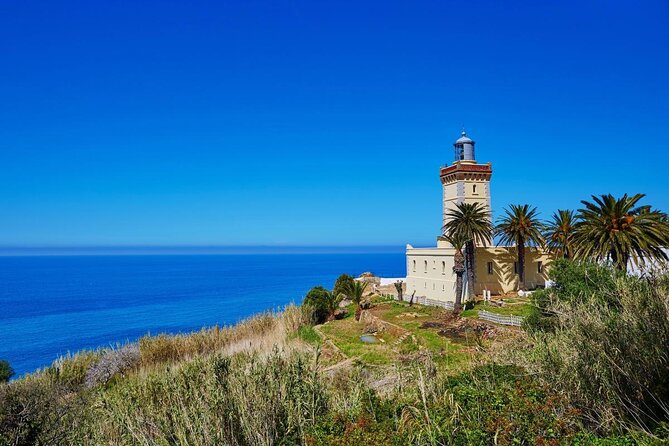
- Cap Spartel first: a short, scenic stop about 14 km west of Tangier, with the Atlantic and Mediterranean meeting in view
- Synagogues inside the old lanes: you visit named synagogues connected to Tangier’s Jewish community, including Moshe Nahon and Rebi Akiba (and you’ll hear about others like Assayag as part of the route)
- Beit Hahayim (Jewish Cemetery of Tangier): a focused cemetery stop that adds weight to everything you saw earlier
- Gran Socco into the medina rhythm: market time at Gran Socco (spices, fruits, vegetables, meats, fish) plus a turn through Petit Socco
- American and British echoes: you pass by the Tangier American Legation Museum area for quick explanations, tying the neighborhood history to the Jewish story
- What’s included vs not: Medina, Gran Socco, Petit Socco, Moshe Nahon synagogue, and Beit Hahayim are included, while Cap Spartel and the Caves of Hercules tickets are not
Why a Jewish heritage route works so well in Tangier
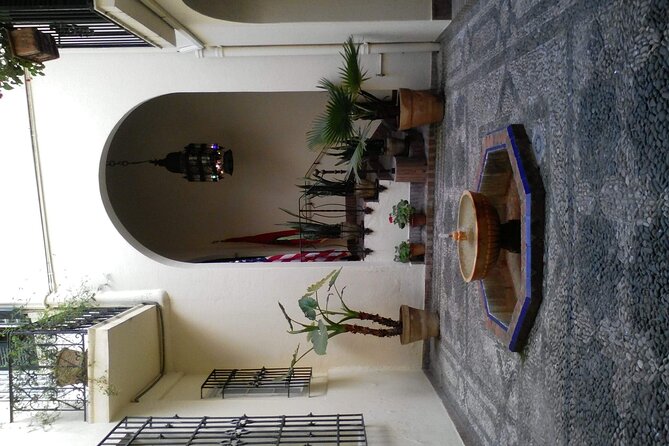
Tangier is a city of layers—different foreign influences, different neighborhoods, and a lot of cultural overlap. This tour follows that logic instead of treating the Jewish sites like isolated “must-sees.”
You start outside and build a sense of geography: the route moves through areas described as French, Spanish, and American, then continues toward the coast. That matters because Tangier’s Jewish story here didn’t sit in a vacuum. It shifted with the city’s connections to Europe and the broader Mediterranean world.
Then the tour tightens its focus inside the medina. Markets first, synagogues next, and the Jewish cemetery last. That order helps your brain connect daily life (Gran Socco and Petit Socco) with sacred spaces (the synagogues) and, finally, with memory (Beit Hahayim). If you enjoy history but also like seeing how people actually lived, this sequence feels practical.
You can also read our reviews of more tours and experiences in Tangier.


Cap Spartel: the sea stop that sets the whole mood
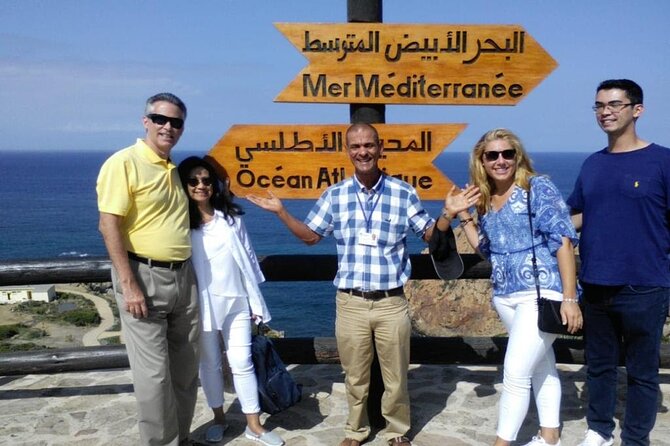
You’ll head to Cap Spartel, about 14 km west of Tangier, for a visit that’s roughly 20 minutes. The admission ticket for Cap Spartel isn’t included, so you’ll want to be ready to cover that on the day if the entrance is required at your time slot.
Why it’s worth it anyway: even with a short visit, the payoff is big. Cap Spartel is where the Mediterranean and the Atlantic are described as meeting, and it’s also framed as a key point in the separation between Africa and Europe. It’s the kind of view that makes the rest of the day click—you can feel why this coastline mattered for trade, migration, and cultural contact.
There’s also an optional camel ride at Cap Spartel. If you’re interested, ask your guide what’s best on the day and whether it’s an extra cost. One simple tip: keep your phone secure and your timing flexible, because these add-ons can stretch a tight schedule.
Caves of Hercules: quick legendary stop, no ticket panic
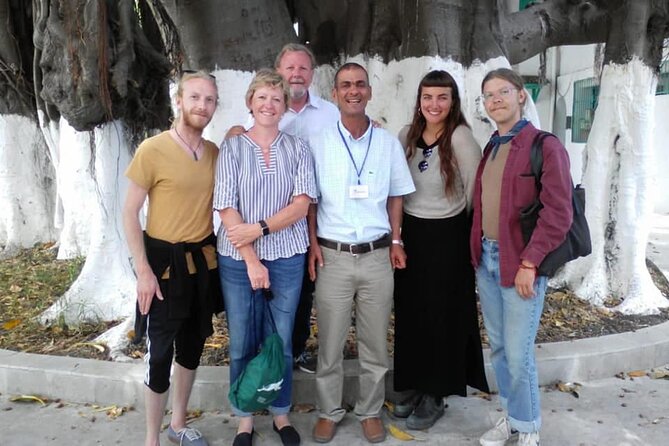
After Cap Spartel, the tour moves to the Caves of Hercules for about 45 minutes. Entrance isn’t included here either, so you’ll likely pay extra for the cave admission on site.
This stop plays a useful role: it breaks up the day and gives you a famous Tangier landmark before you switch into medina mode. And it’s the kind of location where a guide’s explanations can turn “just a cave” into something more. If you like myth plus place—ancient stories attached to real streets and routes—this works.
The main consideration is time. Forty-five minutes is enough to see what you need, but not enough to treat it like your only attraction. If you’re the type who needs slow, unhurried wandering, you’ll want to keep the rest of your day energy level high so you don’t run out of steam before the synagogues.
The medina segment: Gran Socco and Petit Socco in real-world context

Once you enter the medina, the tour shifts from big views to daily life. You get around 2 hours for the Medina of Tangier, and that portion includes admission.
Gran Socco comes next, tied to Place du Grand 9 Avril 1947. This is where the tour leans into the sensory side of Tangier—spices, fruits, vegetables, meats, and fish—so it’s not just a photo stop. There’s also a garden stop mentioned as Jardin de mindobia, with about 45 minutes in that phase and admission included.
Then you finish up with Petit Socco and nearby areas for around 15 minutes, with admission included.
Here’s why I think this market timing is smart: it gives you “normal life” first, so when you later step into synagogue spaces and a cemetery, the day feels connected rather than chopped into separate attractions. It also helps you understand how old religious communities fit into the everyday city fabric.
If markets aren’t your thing, you’ll still likely appreciate the guide’s commentary. It turns the streets into a map of meaning, not just a crowd of stalls.
Moshe Nahon and Rebi Akiba: synagogue visits that feel specific
In the medina, the tour brings you to the synagogue area and includes visits to named sites, including Moshe Nahon and Rebi Akiba. This segment is about 15 minutes, with admission included.
One thing I’d watch for (and plan around) is how quickly 15 minutes disappears. In this kind of stop, your guide’s job is to point out what matters—where you are, what the place represents, and how the community connects across time. If you want details, listen closely right at the start; that’s when you’ll get the most from the limited time.
The tour also frames the Jewish neighborhood as a cluster of sites rather than a single “big synagogue.” That approach is especially helpful in Tangier, where history can feel scattered across areas with different architectural and cultural influences. By naming Moshe Nahon and Rebi Akiba and weaving them into the walking route, the tour helps you build a mental picture that lasts longer than a quick visit.
Beit Hahayim cemetery and the American Legation Museum pass-by
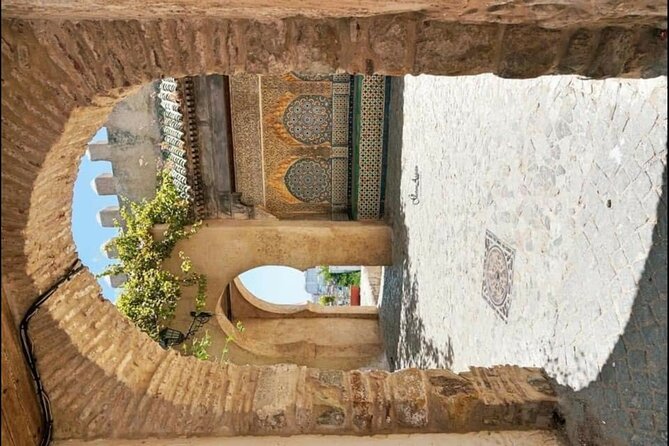
To close the day, you visit Beit Hahayim—the Jewish Cemetery of Tangier—for about 15 minutes, with admission included. Cemetery stops can be emotionally heavier than markets, but that’s part of the value. Seeing a cemetery after you’ve walked past marketplaces and synagogue spaces gives the day an ending that’s not just visual.
Right before or around this area, you also pass by the Tangier American Legation Museum. It’s described as a pass-by with explanations (about 10 minutes), but museum admission isn’t included.
That pass-by matters because it anchors Tangier’s story in foreign presence and shifting political-cultural influence. It also supports the idea of Tangier as a crossroads, not a one-note city. You’re not going deep into the museum collection here, but you’re getting enough context to make the Jewish heritage stops feel like part of the wider Tangier picture.
Price and logistics: what you’re really paying for

The price is $146.84 per person for a tour that runs about 4 to 5 hours. That time window is tight enough to cover a lot, but not so long that you feel trapped.
What you get that supports the value:
- Private certified guide: this is the biggest cost driver, and it’s the difference between a list of places and an actual story you can follow
- Air-conditioned vehicle: useful for moving between the coastal sites and town areas
- Admissions included for key parts: Medina of Tangier, Gran Socco/Place du Grand 9 Avril 1947, Petit Socco, Moshe Nahon synagogue, and Beit Hahayim
What costs extra (so there are no surprises):
- Cap Spartel entrance (not included)
- Caves of Hercules admission (not included)
- Coffee or tea (not included)
There are also some convenience features: pickup is offered, and you’ll use a mobile ticket. The tour is private, so it’s only your group, and group discounts are available.
Two practical considerations:
- This tour needs good weather. If conditions are poor, you may be offered a different date or a full refund.
- The medina portion involves walking through old streets. Even if you aren’t doing a long hike, you should plan on uneven ground and tight lanes at market and synagogue stops.
Who should book this tour, and who might not
Book it if you want Tangier with a guided spine. I’d especially recommend it for:
- First-timers who want to see key parts of the city in one go
- People interested in Jewish heritage as a living, place-based story (markets, synagogues, cemetery together)
- Travelers who prefer a private guide who can keep the day coherent without you checking maps
You might think twice if:
- You want more time at fewer stops (this is time-boxed)
- You’re sensitive to walking and crowds in market areas
- You strongly prefer a museum-only format (part of this is outdoors and in religious/cultural spaces, not a long indoor exhibition)
If you like structured storytelling and you appreciate context as you move, this is one of the more focused ways to experience Tangier beyond the usual quick sights.
FAQ
How long is the Tangier Jewish heritage tour?
It runs about 4 to 5 hours total.
What’s included in the tour price?
You get an air-conditioned vehicle and a private certified guide. Admission is included for the Medina of Tangier, Gran Socco (Place du Grand 9 Avril 1947) and Jardin de mindobia, Petit Socco, Moshe Nahon synagogue, and Beit Hahayim (Jewish Cemetery of Tangier).
Are tickets included for Cap Spartel and the Caves of Hercules?
No. Cap Spartel entrance and Caves of Hercules admission are not included.
Is pickup available?
Yes, pickup is offered.
When does the tour operate?
The experience is listed as running Monday through Sunday, from 9:00 AM to 4:00 PM.
Is free cancellation available?
Yes. You can cancel for a full refund up to 24 hours in advance. The experience also requires good weather, and if it’s canceled due to poor weather you’ll be offered a different date or a full refund.