REVIEW · TUCSON
Tucson Food Tours- Locally Owned Mural and History Tour
Book on Viator →Operated by Tucson Food Tours · Bookable on Viator
Tucson has stories on brick and stucco—if you know where to look. This locally run mural and history walk strings together landmark buildings along a downtown route, mixing picture-worthy facades with hands-on context so the city feels less random. I like how it keeps moving at a steady pace, and I love that you get both history and street art in one outing.
Two favorites for me: first, the stops are specific and time-boxed (so you don’t wander for hours), and second, the guide-driven explanation sounds built for real understanding, not just dates. One thing to keep in mind: it depends on good weather, so if Tucson is acting up, you’ll want a backup plan.
In This Review
- Key highlights to notice on this Tucson mural and history walk
- Tucson murals + history: a smart combo for your first days
- Meeting at 311 E Congress St: start clean, shoes ready
- Stop 1: Southern Arizona Transportation Museum and the 1907 railroad era
- Stop 2: Presidio San Agustín del Tucson Museum and the Chuk-shon connection
- A landmark tied to the 1970 fire: how tragedy becomes part of the street story
- Stop 3: Pima County Courthouse and Spanish Colonial Revival details
- Mural time: reading Tucson’s community messages on walls
- Pace and group size: why max 16 works well for this format
- Value check: included admissions and where you’ll spend less
- Weather and timing: plan like it’s an outdoor walk
- Who this Tucson tour is best for
- Should you book Tucson Food Tours’ mural and history walk?
- FAQ
- Where is the tour meeting point?
- What time does the tour start?
- How long is the Tucson Food Tours mural and history tour?
- Is the tour offered in English?
- Is this a small group tour?
- Do I get a mobile ticket?
- Which stops have free admission and which include admission?
- When will I receive confirmation after booking?
- What is the cancellation policy?
- What happens if the tour is canceled due to weather or too few travelers?
Key highlights to notice on this Tucson mural and history walk
- Southern Arizona Transportation Museum (1907): a restored landmark tied to Southern Pacific Railroad life.
- Presidio San Agustín del Tucson Museum (since 1775): you’ll connect the Spanish fort story to the Santa Cruz River and the Chuk-shon area.
- A landmark marked by the 1970 fire: learn how a tragic event became part of Tucson’s public memory.
- Pima County Courthouse: Spanish Colonial Revival architecture with a pink facade and a mosaic dome.
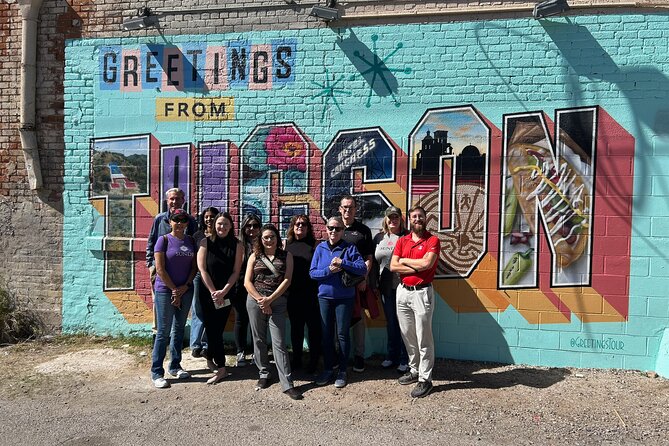
- Tucson murals as living community markers: street art used to reflect local culture and neighborhood spirit.
- Small group size (max 16): makes it easier to hear your guide and keep a good pace.
Tucson murals + history: a smart combo for your first days
If this is your first trip to Tucson, a mural-and-history route is a great way to start reading the city. Paintings on walls are one layer. The buildings around them are another. Put them together, and the streets start to make sense.
This tour is built around walking. You’ll spend your time outdoors, moving between landmarks that shaped the city—rail power, Spanish-era military presence, courthouse design, and later-life tragedies that people still talk about. Then you’ll round it out with mural culture: colorful public art that reflects the community’s identity and its mixed background.
I also like the rhythm. The tour runs about 2 hours 30 minutes, which is long enough for real context, but not so long that you’re stuck in “standing around and hoping it’s over” mode.
You can also read our reviews of more tours and experiences in Tucson.
Meeting at 311 E Congress St: start clean, shoes ready
You’ll meet at 311 E Congress St, Tucson, AZ 85701. The start time is 9:00 am, and the tour ends back at the same place. That matters more than it sounds—no complicated transfers, no guessing where you’ll end up.
Since this is a walking format, treat it like a morning walk with stops. Wear shoes you’re comfortable in for a couple of hours outdoors. And if you’re the type who likes photos, plan to slow down at each stop while still staying with the group.
One practical perk: it uses a mobile ticket. Make sure your phone battery is decent for the morning, because that’s how you’ll check in.
Stop 1: Southern Arizona Transportation Museum and the 1907 railroad era
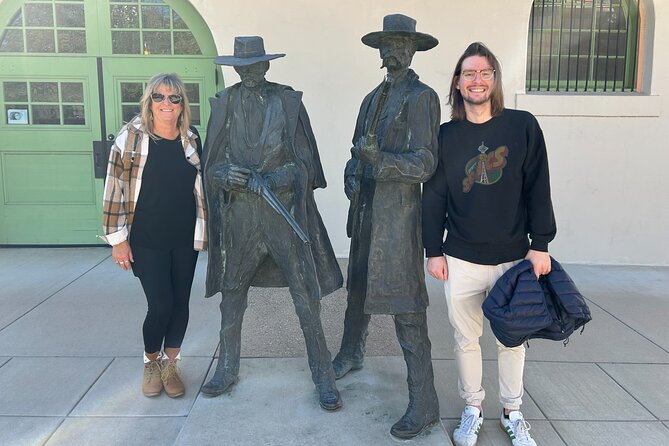
This first stop is Southern Arizona Transportation Museum, built in 1907. It’s described as a beautifully restored landmark that once worked as a key hub for the Southern Pacific Railroad. Today, it houses a museum and a café.
Why it’s a strong opener: railroads explain why certain parts of Tucson developed when they did. If you want to understand modern downtown patterns, the railroad story is a fast route to that answer. A building like this also makes history feel physical. You’re not just looking at a signboard—you’re standing where rail activity shaped daily life.
Time-wise, plan on about 15 minutes here. The admission ticket is free for this stop, which is nice because it keeps your morning focused on the tour instead of budget math.
My advice: keep your attention split between the building itself and what the guide highlights. Railroad-era sites have a lot going on, but you’ll get more out of it if you listen for the specific details your guide points to.
Stop 2: Presidio San Agustín del Tucson Museum and the Chuk-shon connection
Next up is Presidio San Agustin Del Tucson Museum. The fort story begins in 1775, when Spanish military forces founded the site. It was located along the Santa Cruz River, near a Native American village known as Chuk-shon.
A detail I find especially helpful: the fort originally covered 11 acres and was surrounded by a thick adobe wall. Today, the museum sits on the site of the northeast corner of the original presidio, and that portion has been reconstructed to help you picture Tucson’s earlier layout.
This is also one of the most “you can visualize it” stops. When guides talk through where the fort would have been relative to the river and nearby settlement, you start to understand how geography drives history—water, movement, defense.
The stop lasts around 15 minutes, and admission is included. That’s good value for you because it avoids extra ticket decisions mid-walk.
One consideration: this stop is history-heavy. If you’re the type who likes to balance heavy info with visual breaks, this might feel like the densest stop—so keep an eye out for the next architecture and mural moments to reset your brain.
A landmark tied to the 1970 fire: how tragedy becomes part of the street story
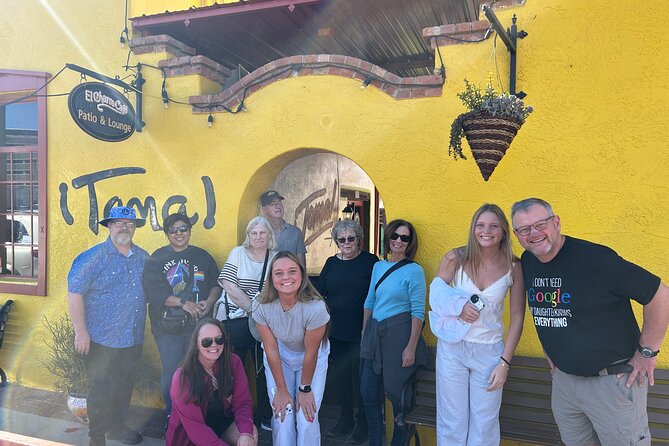
Between the presidio stop and the courthouse, you’ll visit a landmark famous for two things: a luxurious past and the tragic 1970 fire that claimed 29 lives.
Even with limited time, this kind of stop can be powerful—because it reminds you that buildings aren’t only about styles or aesthetics. They hold moments people never forgot. A city’s most talked-about tragedies often get folded into the way locals describe the neighborhood today.
Because the tour keeps things moving, expect this to be a short explanation rather than a long museum-style session. Still, it’s worth slowing down for a minute. Look at the location and imagine daily life before the fire, then compare that to how the site is remembered afterward.
Stop 3: Pima County Courthouse and Spanish Colonial Revival details
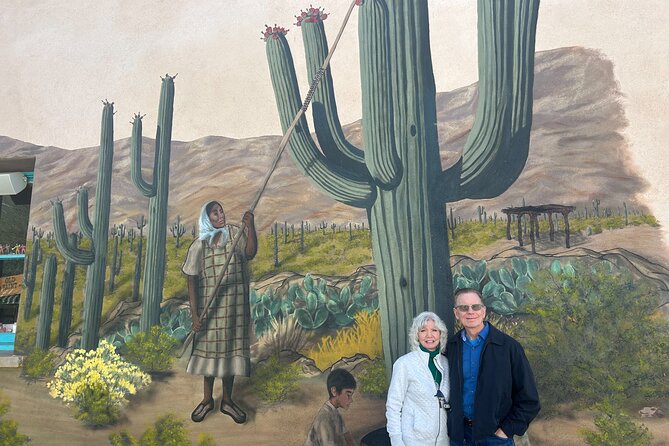
Then you get to the Pima County Courthouse, described as a stunning example of Spanish Colonial Revival architecture. The big visual details are its vibrant pink facade and its iconic mosaic dome.
Even if you’re not an architecture nerd, a courthouse like this is a great “Tucson signal.” It tells you what the city valued when it wanted to project authority, stability, and civic pride through design.
The stop runs about 15 minutes, and admission is free. That makes it a smart use of tour time—high visual payoff without extra costs.
My photo tip: don’t only shoot the dome. Try a corner angle that includes the facade and the dome together. That’s where Spanish Colonial Revival style reads best.
Mural time: reading Tucson’s community messages on walls
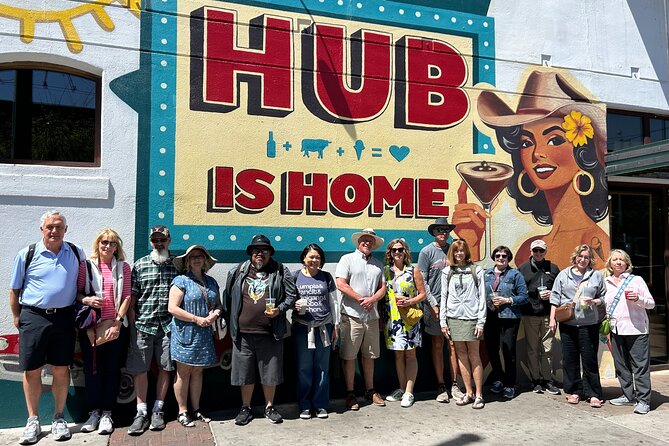
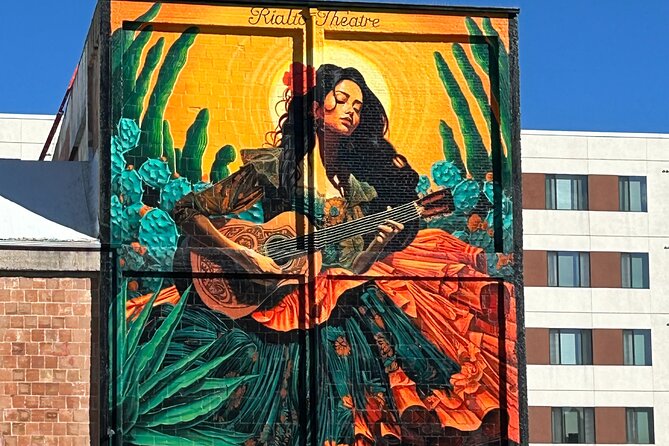
The tour ends with mural-focused exploration. The idea is simple: Tucson murals are described as vibrant expressions of the city’s cultural heritage, showing art that reflects diverse history and community spirit.
This is where the tour shifts from buildings-as-records to walls-as-voices. Murals are often created by local artists with neighborhood input, and they can show you what residents want to emphasize or remember. On a walking route like this, murals work like punctuation—small scenes that tell you what the city feels like right now.
You’ll likely get guidance on what to look for as you see the murals up close. That’s useful, because the meaning of public art is often tied to symbols, layout, and local references. Without a guide’s pointers, you might enjoy the artwork but miss why it’s there.
Practical note: mural viewing is easiest when the light is decent. Since the tour starts at 9:00 am, you’ll usually be working with good morning visibility.
Pace and group size: why max 16 works well for this format

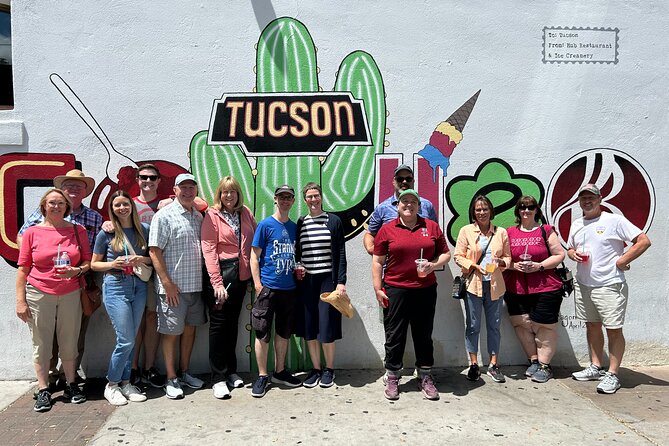
The tour caps at 16 travelers, and that’s a sweet spot for a walking experience. Small enough that your guide can actually answer questions and keep the group together, but not so small that it feels rushed.
The reviews highlight guide quality. One guide name that shows up strongly is Karen, described as very friendly and knowledgeable, with explanations that brought the murals and Tucson history into focus. Even if you don’t have Karen specifically, the key takeaway is what you should expect from good guiding here: direct, friendly storytelling, and attention to details you might otherwise skip.
Also, the tour runs at a human pace—around 15 minutes per major stop. That gives you time to look, listen, and then move on before you get bored.
Value check: included admissions and where you’ll spend less
Even without ticket prices listed, you can still judge value based on what’s included and what isn’t.
Here’s what the structure tells you:
- The first big museum stop is free (Southern Arizona Transportation Museum).
- The presidio museum stop has admission included (Presidio San Agustin Del Tucson Museum).
- The courthouse is also free for you.
That’s smart planning. You’re getting multiple “major” viewpoints with minimal extra spending during the walk. And because the tour includes interpretation—what you’re seeing and why it matters—you’re not paying just for access. You’re paying for understanding.
Weather and timing: plan like it’s an outdoor walk
This experience requires good weather. If it’s canceled due to poor weather, you’ll be offered either a different date or a full refund.
That’s the main logistical consideration you should plan around. Tucson mornings can be pleasant, but plans still change fast when conditions shift. If your schedule is tight, choose a date that has at least some flexibility later in your trip.
The tour also has a minimum number of travelers. If it doesn’t meet that minimum, you’ll be offered a different date or a full refund.
Who this Tucson tour is best for
This is a good fit if:
- You want a first-timer primer on Tucson that goes beyond random photo stops.
- You care about how places connect—railroad influence, Spanish-era military presence, civic architecture, and later events that shaped memory.
- You like murals and street art but want help understanding what you’re looking at.
- You prefer a small group guided walk over a big bus tour.
It’s less ideal if:
- You hate walking and standing outside for stretches, even though each stop is time-boxed.
- You’re seeking only food and beer tasting. This is a history and murals focus, with the route described as aligned with a brew-tour style walking path rather than a formal sampling lineup.
Should you book Tucson Food Tours’ mural and history walk?
I’d book it if you want a morning that builds context fast: where Tucson came from, what shaped it, and how it shows up now on walls and in architecture. The included admission at the presidio stop plus free entry at other key locations makes it feel efficient.
Book it especially if you’re the type who likes to look longer at details—because the best part here is the way the guide helps you connect dots between buildings, events, and public art.
FAQ
Where is the tour meeting point?
The tour meets at 311 E Congress St, Tucson, AZ 85701, USA, and it ends back at the same location.
What time does the tour start?
The tour starts at 9:00 am.
How long is the Tucson Food Tours mural and history tour?
The duration is approximately 2 hours 30 minutes.
Is the tour offered in English?
Yes. The tour is offered in English.
Is this a small group tour?
Yes. The tour has a maximum of 16 travelers.
Do I get a mobile ticket?
Yes, this experience includes a mobile ticket.
Which stops have free admission and which include admission?
Southern Arizona Transportation Museum (stop 1) is listed as free. Presidio San Agustin Del Tucson Museum (stop 2) includes admission. Pima County Courthouse (stop 3) is listed as free.
When will I receive confirmation after booking?
Confirmation is received within 48 hours of booking, subject to availability.
What is the cancellation policy?
This experience is non-refundable and cannot be changed for any reason. If you cancel or ask for an amendment, the amount you paid will not be refunded.
What happens if the tour is canceled due to weather or too few travelers?
If it’s canceled due to poor weather, you’ll be offered a different date or a full refund. If it’s canceled because the minimum number of travelers isn’t met, you’ll also be offered a different date or a full refund.