REVIEW · DUBROVNIK
Dubrovnik: Ancient City Walls & Wars Walking Tour
Book on Viator →Operated by Dubrovnik Walks · Bookable on Viator
Dubrovnik’s walls come with war stories. I really like how this tour pairs City Walls views with clear context about how the city stayed independent for centuries, plus it moves at a pace that makes the 2 km walk feel doable. The big downside: it’s stairs-heavy, and the wall is mostly in sun with limited shade in summer.
You’ll meet your guide near Pile Gate, then work your way through Stari Grad to the walls entrance, where you’ll also buy your City Walls tickets separately. The tour runs about 2 hours, includes English guidance (with audio headsets in groups of 4+), and typically stays small enough—up to 35 people—that questions don’t get lost. Guides like Davor, Goran/Gorun, Mara, Andrea, and Devo show up often, and the common theme is humor plus real local perspective.
In This Review
- Key things I’d focus on before you go
- Entering Through Pile Gate: what this tour does well fast
- Stari Grad streets to the walls entrance: get your bearings before you climb
- City Walls in real time: views plus Fort Revelin and Minceta Tower
- Walls & Wars: the independence story that makes the climb matter
- Timing the walk: heat, stairs, and photo opportunities near the port
- Price and value: what you pay for and what you still need to buy
- Who should book this Walls & Wars tour, and who should skip it
- Should you book? My straight answer
- FAQ
- How long is the Dubrovnik Ancient City Walls & Wars walking tour?
- Where do I meet the guide?
- Is the City Walls entrance fee included in the tour price?
- How much is the City Walls ticket?
- Is this tour good for kids?
- Will there be stairs and is it physically demanding?
- What if the weather is bad?
Key things I’d focus on before you go

- Pile Gate start, quick orientation so the Old Town feels less like a maze
- 2 km wall walk with big photo angles over the port and Adriatic
- Fort Revelin and Minceta Tower in context (not just names on a sign)
- Fort Lovrijenac explained before you see it from the distance
- War and independence stories that give the walls meaning
- Plan for heat and steps; this isn’t a stroll for everyone
Entering Through Pile Gate: what this tour does well fast
Dubrovnik can overwhelm you in the best and worst ways. The Old Town is gorgeous, but it’s also crowded, steep in spots, and easy to wander without understanding why the city looks the way it does. This tour starts right where it should: near Pile Gate, the classic entry point to Stari Grad.
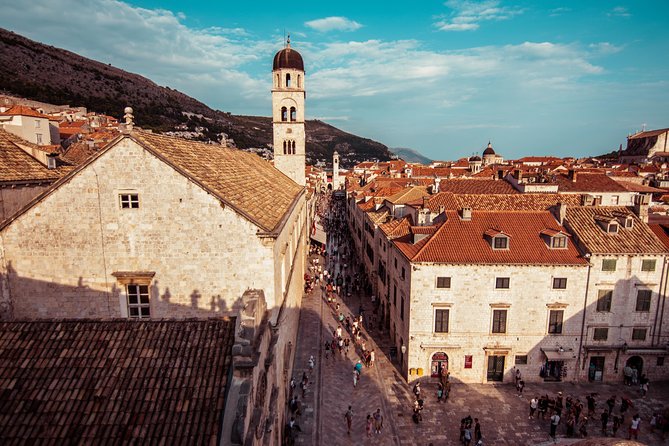
From the start, the guide’s job is to help you read the city. You don’t just hear that the walls exist; you learn what they were built to do and what problems they had to solve over time. Guides steer you through the limestone-paved streets of the Old Town first, giving you the sense that you’re walking a living defensive system, not a museum wall.
Another thing I like: the tour is built around a straightforward rhythm. Meet, walk streets, reach the walls, buy tickets, climb and follow the route, then finish near the port. That structure matters because it helps you spend your limited time in Dubrovnik on the parts you’ll remember: views, forts, and story connections.
Two practical notes to keep in mind right away. First, you’ll need to pay the City Walls entrance fee separately. Second, you should expect stairs and warm weather—especially in summer. Even when the pace is friendly, the wall route is still physically demanding.
You can also read our reviews of more tours and experiences in Dubrovnik.

Stari Grad streets to the walls entrance: get your bearings before you climb
The itinerary doesn’t waste time on long detours. After meeting your guide (Dubrovnik Walks at the Orange umbrella, Brsalje ul. 8), you head into Stari Grad and then toward the walls entrance. This is a smart move because it lets you learn the city’s layout before you’re stuck focusing only on your footing.
As you walk the Old Town lanes, you’re learning what makes Dubrovnik distinctive: the city’s churches, monasteries, and palaces are all part of the broader story of a fortified trading and political center. You also get a key historical thread early on—how the sea relationship changed. In the 11th century, the sea channel separating the city from the mainland was filled in, which meant the city’s defensive logic shifted from something more separated to something more enclosed.
That matters because the walls won’t feel random once you understand the geography. You’ll start noticing how the wall line creates a boundary, how it shapes movement, and why certain forts fit where they do.
Also, this is where the guide’s ability to answer questions can change the whole experience. Since the tour includes audio headsets for groups of 4+, you’re not just relying on one person’s voice at the back of the group. In most cases, it’s easier to follow along. One minor caution from past experiences: headsets can lose clarity when the guide gets further ahead, so if you’re toward the back, try to keep your position closer to the front of your cluster.
City Walls in real time: views plus Fort Revelin and Minceta Tower
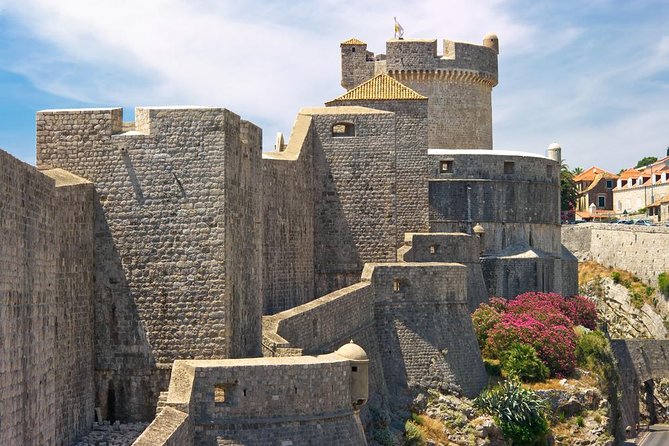
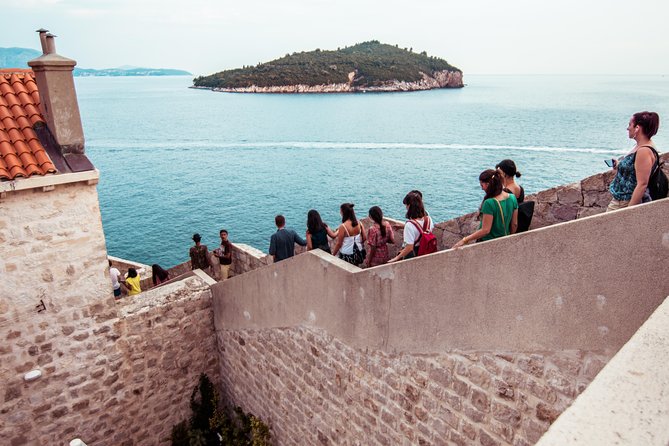
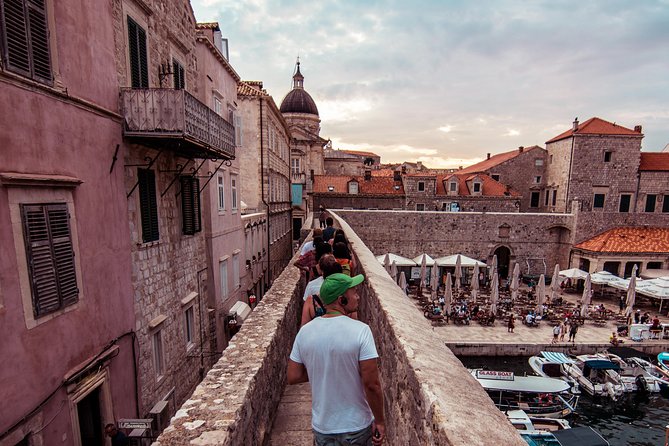
Once you reach the walls entrance, the flow becomes very practical: you buy your City Walls tickets, then you start walking the walls. The route is about 2 km (1.2 miles), but don’t let the number fool you. Stairs, uneven spots, and elevation make it feel longer than a flat promenade.
This is where the tour earns its value. Dubrovnik’s walls are famous for a reason, but walking without context can turn into a loop of taking photos and hoping you remember which fort is which. With a guide, you learn the purpose behind the scenery.
Here are the specific features your guide will point out on the wall walk:
- Fort Revelin: explained as part of the city’s defensive setup
- Minceta Tower: identified and tied to the walls’ strategic position
- Fort Lovrijenac: visible from the distance, with the key detail that it belongs to the overall wall system but is physically separated
That last point is a big deal. “Belongs to the city walls” sounds simple until you learn it’s separated from them—then you start seeing how Dubrovnik’s defenses weren’t only about one continuous barrier. They were about placement, control of approaches, and creating overlapping lines of security.
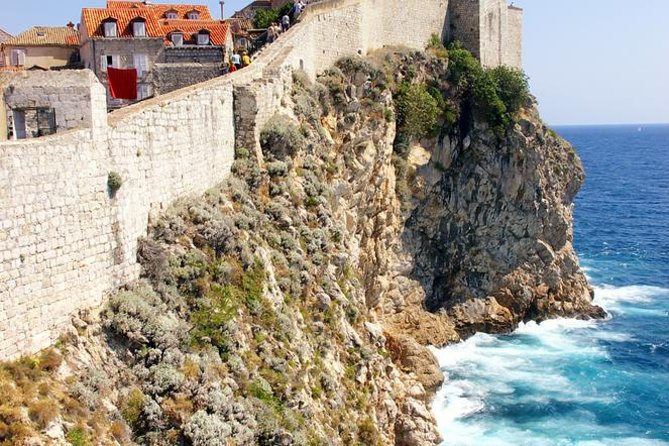
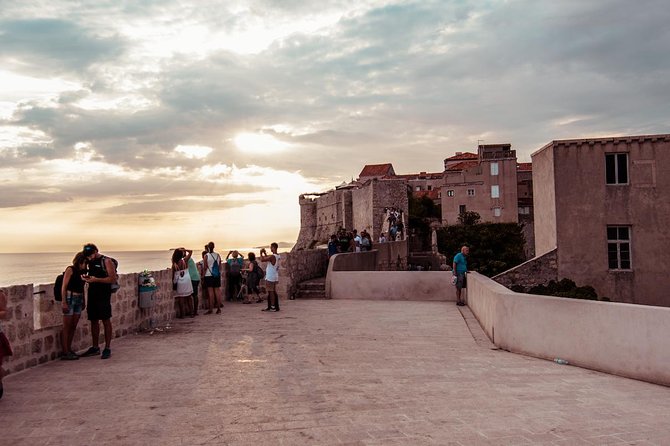
The wall route also gives you the payoff view over the Old Town and the port, plus blue glimpses of the Adriatic. And because the Old Town is a UNESCO World Heritage Site, you’re looking at a city plan that has kept its identity through major change. The guide’s narration helps you understand that the walls weren’t built once and finished forever. They were restored multiple times to resemble earlier appearances, meaning you’re seeing a living layer-cake of repair and political will.
Walls & Wars: the independence story that makes the climb matter
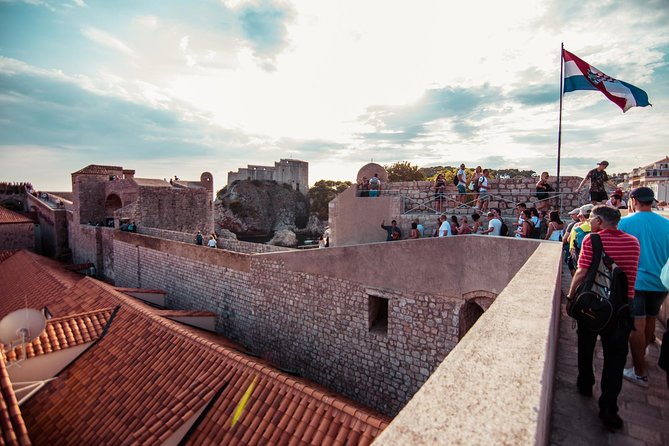
The tour is called Walls & Wars for a reason. You’re not just getting architecture talk; you’re getting the political story behind the fortifications.
You’ll hear how Dubrovnik functioned as an autonomous republic and how it had to navigate pressure from major powers, including the Ottoman and Venetian Empires. That theme is what turns the wall into more than scenery. Instead of thinking of defenses as only military, you start to understand them as part of diplomacy—how a small city-state could stay independent by managing relationships and projecting strength.
There’s also a modern layer. Some guides share personal perspective connected to the conflict in the 1990s. If that part matters to you, the tour can feel unusually human because it connects what you see on the ground to what people endured later. In my view, that’s the biggest reason to book a guided version rather than doing a self-guided loop: the guide connects the past to the present without making it feel like a history lecture.
One small caution: a guide can bring up pop-culture tangents if the group seems interested. In at least one case, Game of Thrones came up and ran longer than expected for someone who wanted the focus on war effects. If you want strict city-and-wars attention, you can steer the conversation by asking questions directly about the siege history, fort function, and how the republic survived. Good guides usually bring it back fast.
If you care about understanding how a city protects itself—physically and politically—this is the heart of the experience.
Timing the walk: heat, stairs, and photo opportunities near the port
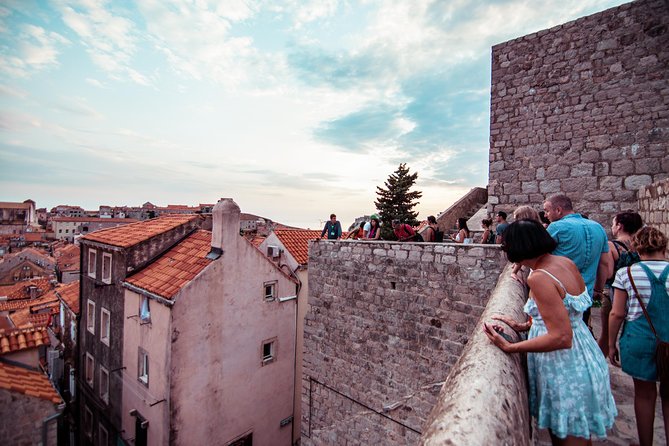
This tour is short on paper—about 2 hours—but you’re moving through a real medieval environment with steep parts. The tour info is very clear: there are stairs, and it isn’t suitable for everyone. If your knees don’t love hills, take that seriously.
Heat is the other practical factor. Dubrovnik has a Mediterranean climate, and the walls are built in a way that means shade is limited. That’s why it’s smart to schedule thoughtfully. Past experience reports suggest early morning or late-day starts can help you avoid both heat and crowds from cruise schedules. You don’t need a perfect day, but you should go in expecting sun and planning for it.
How do you plan?
- Wear grippy shoes and bring water
- Use sun protection; the walk doesn’t read as “covered”
- Bring a light layer if you’re sensitive to sun exposure shifts
- Aim for comfortable pacing; you can’t speed-run a wall stair system
The good news is that the route is also made for photos. You get port and Old Town viewpoints, and because the tour ends near the port, you’re not climbing forever only to arrive at a dead end. The finishing stretch gives you a natural place to regroup, then continue exploring Stari Grad at your own pace.
Also, there are no dedicated restroom stops listed for the tour. So yes, you should handle that before you start climbing.





Price and value: what you pay for and what you still need to buy
The tour price is $30.23 per person, and it’s a fair cost for a guided experience because it includes a licensed local expert guide (licensed by the Croatian Ministry of Tourism), plus audio headsets in groups of 4+ and English language guidance.
The part that can surprise people is the City Walls entrance fee, which is not included. The details list two different adult prices depending on where you look: 40€ per adult is mentioned, and the on-the-spot figure is noted as 35€ per adult. Either way, you should budget for it and buy it in advance if possible.
There’s also a useful option: a Dubrovnik Pass can cover 1 visit to the City Walls, as long as you buy and collect it in advance. If you’re already planning multiple Dubrovnik sights, that can simplify your payment math.
So is it worth paying for a guided version when you could technically buy a ticket and walk the walls alone? For most people, yes, because the guide gives you:
- the fort names and what they mean strategically
- the sea-channel change story that explains why the city is enclosed
- the republic-versus-empires survival context
- war and independence perspective delivered in a way that connects to what you see
If you’re the kind of traveler who loves facts but also wants them tied to real places, this tour can save you time and confusion.
Who should book this Walls & Wars tour, and who should skip it
I’d recommend this tour if you want Dubrovnik to make sense quickly: Old Town context first, then walls with fort explanations, and finally a wars-and-independence story that gives the physical view emotional weight.
You’ll likely enjoy it if you:
- like guided history tied to specific spots
- want excellent English narration (the guides in this lineup are consistently praised for clarity)
- don’t mind stairs and walking about 2 km
- can handle warm weather in summer
I’d skip it or switch to something gentler if:
- stairs and steep climbs are a problem
- limited shade in hot weather will make you miserable
- you strongly prefer minimal walking or you need frequent restroom breaks
One more deciding factor: group size. The tour caps at 35 people, and past groups have been small enough that questions and interaction can happen without getting totally lost.
Should you book? My straight answer
Book it if your priority is understanding why Dubrovnik’s walls look the way they do and what they were for. The guided version is the difference between seeing a famous wall and actually getting the story behind it.
Skip or rethink if you’re worried about stairs, heights, heat, or long walking time. In that case, you’ll get more comfort from a flatter, shorter option and can still enjoy the views from the outside.
If you do book, I’d plan your day so you’re fresh when you climb—because once you’re on the walls, it’s all about footing, sun, and pacing.
FAQ
How long is the Dubrovnik Ancient City Walls & Wars walking tour?
It’s listed at about 2 hours.
Where do I meet the guide?
The meeting point is Dubrovnik Walks at the Orange umbrella on Brsalje ul. 8, Dubrovnik, and the tour meets guests just outside Pile Gate.
Is the City Walls entrance fee included in the tour price?
No. The tour price does not include the City Walls entrance fee. It can be purchased on spot or in advance, and it is also covered by a Dubrovnik Pass (1 visit), if you buy and collect the pass in advance.
How much is the City Walls ticket?
The details list 40€ per adult and 15€ per child (age 7–18). Another part of the tour info notes an on-the-spot adult price of 35€ and 15€ for children aged 7–18.
Is this tour good for kids?
Children aged 0–11 are welcome to join for free. For walls entry specifically, children aged 0–6 are eligible for free walls entrance, while children aged 7–11 are not eligible for a free walls entrance.
Will there be stairs and is it physically demanding?
Yes. There are stairs, and the tour notes that it’s not suitable for everyone. Travelers should have moderate physical fitness, and it’s not recommended if you don’t like stairs.
What if the weather is bad?
The experience requires good weather. If it’s canceled due to poor weather, you’ll be offered a different date or a full refund.