REVIEW · ATHENS
Acropolis of Athens Historical Tour For History Enthusiasts
Book on Viator →Operated by Athens Historic Experiences · Bookable on Viator
The Acropolis tells better stories with a guide. This 2 hours 40 minutes walk turns marble landmarks into a timeline of how ideas spread, starting with the origins of civilization and ending at the Parthenon. What I like most is the clear narrative thread that helps the site make sense fast, even if you have only a day or two in Athens.
Two things really sold me here: earset headsets (so you don’t miss the good parts) and a guide profile that’s a historian or archaeologist, not a script-reader. One possible drawback: you need comfortable shoes and a willingness to listen closely as you move uphill, because the stops pack a lot of meaning into short time blocks.
In This Review
- Key things that make this Acropolis tour worth it
- Starting at Dionysiou Areopagitou: easy to find, smart for timing
- How the 2 hours 40 minutes plan works for real life
- South Slope of the Acropolis: the story-first intro that saves your brain
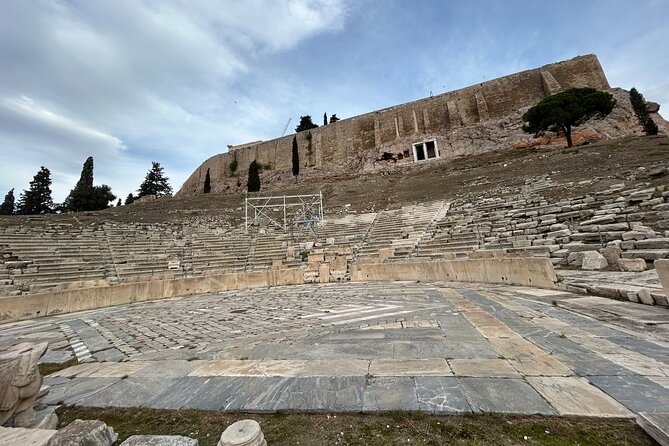
- Theatre of Dionysus: where drama became public life
- Odeon of Herodes Atticus: an ode to memory and status
- Temple of Athena Nike: victory made stone
- Propylaea gateway climb: where the view becomes the lesson
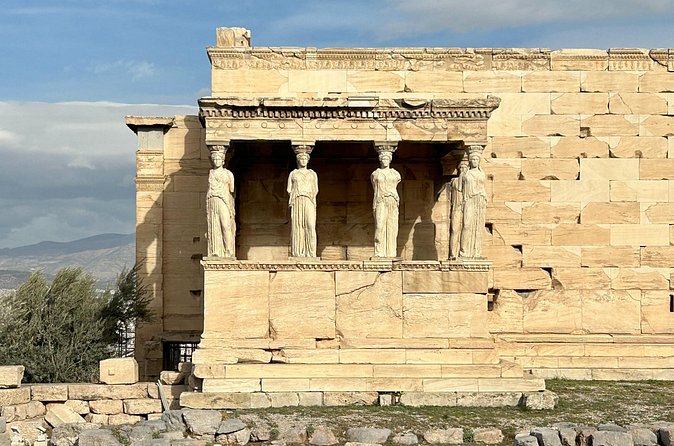
- Erechtheion: myths, legends, and sculptural personality
- Parthenon: why this masterpiece became a political symbol
- The guide experience: historian energy makes the site talk back
- Headsets and crowd control: small detail, big comfort
- Price and value: what $36.14 buys you in the real world
- Who this tour is best for
- Should you book this Acropolis Historical Tour for History Enthusiasts?
- FAQ
- How long is the Acropolis Historical Tour for History Enthusiasts?
- Is the tour offered in English?
- What are the main stops on the tour?
- Does the tour include admission tickets?
- Where does the tour start and where does it end?
- What’s the group size?
- Is good weather required?
- What’s the cancellation policy?
Key things that make this Acropolis tour worth it
- Headsets for every guest, so explanations stay clear even with crowds and wind
- A historian or archaeologist guide, focused on context instead of trivia
- Theatre and civic life connection, from Dionysus to the Athenian public
- Stop-by-stop framing, so each monument clicks into the bigger story
- End at the Parthenon top view, where the whole contrast of old Athens and modern Athens lands
- Small built-in extras, including a few surprises along the way
Starting at Dionysiou Areopagitou: easy to find, smart for timing
The tour starts at Dionysiou Areopagitou 17. That’s a practical pick because you can reach it by public transport without turning your day into a complicated shuttle plan. The group size is kept to a maximum of 25, which matters at the Acropolis because crowds can turn a “quick stop” into a slow crush.
You’ll finish at the Parthenon, up on the hill, which is exactly where most people want to end their visit. The route is structured around short, high-impact stops, so you’re not stuck wandering and guessing what you’re looking at. If you’re trying to see the Acropolis in a single morning or afternoon, this pacing does the job.
You can also read our reviews of more tours and experiences in Athens.


How the 2 hours 40 minutes plan works for real life
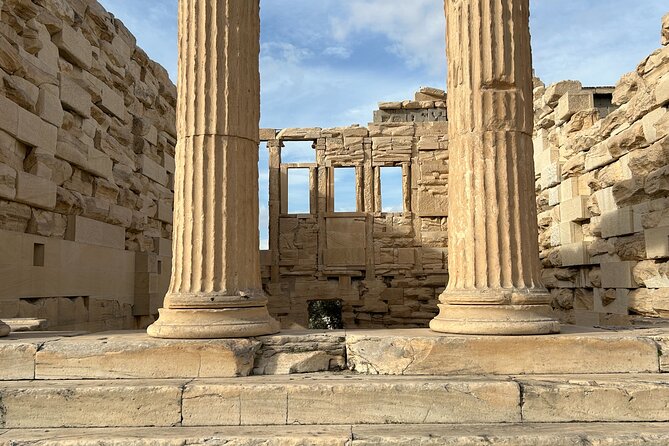
This experience runs about 2 hours 40 minutes and moves in a sequence that builds momentum. The first part sets the framework, then the middle anchors you in specific sites (theatre, victory, gateways, myths), and the final stretch lands on the Parthenon.
That structure helps because the Acropolis isn’t one thing. It’s multiple layers of religion, politics, and art stacked in one dramatic place. A good guided flow keeps you from treating each stop as a separate photo opportunity.
If you’re visiting in peak season, you’ll appreciate that the tour is designed to keep you moving while your guide interprets what’s in front of you. The downside is simple: if you’re the type who wants long silent time, you may feel a bit “on the move” for the full duration.
South Slope of the Acropolis: the story-first intro that saves your brain
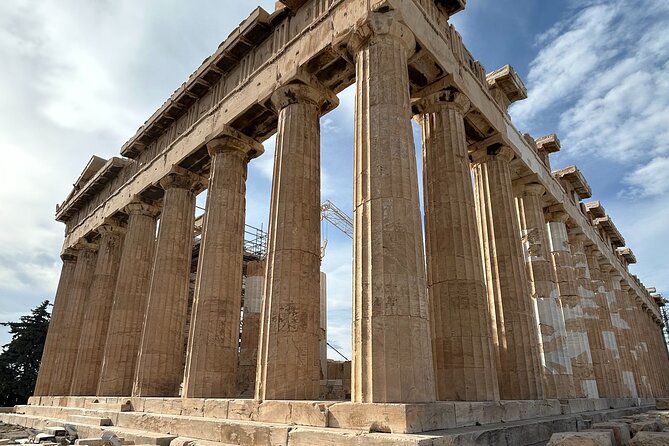
The tour begins on the South Slope of the Acropolis, and that’s a smart start. Instead of rushing straight to famous buildings, you get an introduction that places Athens within the larger evolution of human civilization. You also get a quick orientation that makes later details easier to catch.
This matters more than it sounds. The Acropolis can feel like a collection of impressive objects if you don’t know what they were trying to do. With this kind of opener, you can start noticing patterns: how religion shaped public space, how civic identity showed up in architecture, and how the Greeks used ideas to build a shared worldview.
This first stop is about 40 minutes, which gives the guide time to lay out the “why” before you see the “what.” If you want more than surface sightseeing, this is where you start benefiting.
Theatre of Dionysus: where drama became public life
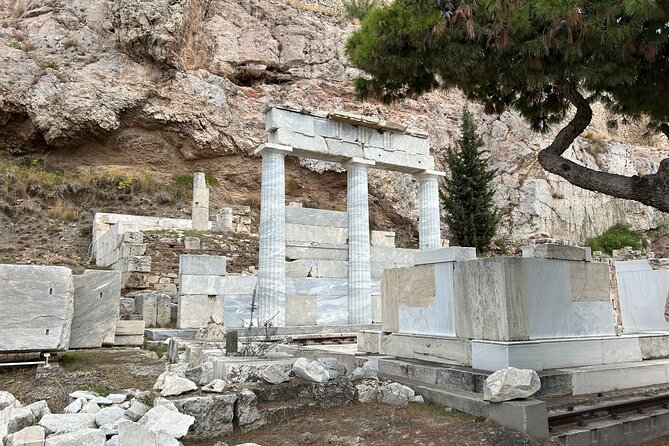
Next you head to the Theatre of Dionysus, described as the first theatre in human history. That’s a bold claim, but the point is clear: this is where theatre and drama as practiced art became part of civic culture.
You’ll also connect theatre to famous playwrights: Sophocles, Euripides, and Aeschylus, with early tragedies and comedies performed in front of the Athenian public. If you’ve ever wondered why the Greeks treated performance like something worth funding, planning, and building for, this stop gives you a direct answer.
Time here is around 20 minutes, so don’t expect a long lecture about stagecraft. Instead, you get the essentials that make the stone seats and open space feel like a real place where people argued, laughed, and grappled with big questions.
Odeon of Herodes Atticus: an ode to memory and status
As you continue upward, you reach the Odeon of Herodes Atticus. It was built by a benefactor and famous philosopher in the 2nd century AD, and it was constructed in memory of his deceased wife.
This stop is a reminder that the Acropolis story doesn’t end in the Classical period. Even later generations cared about using grand spaces to project meaning—through commemoration, power, and culture. It also gives you a break from pure myth-and-massiveness and replaces it with something more personal: memory turned into architecture.
It’s another short stop, about 20 minutes, so the value is in the context your guide provides, not in lingering alone.






Temple of Athena Nike: victory made stone

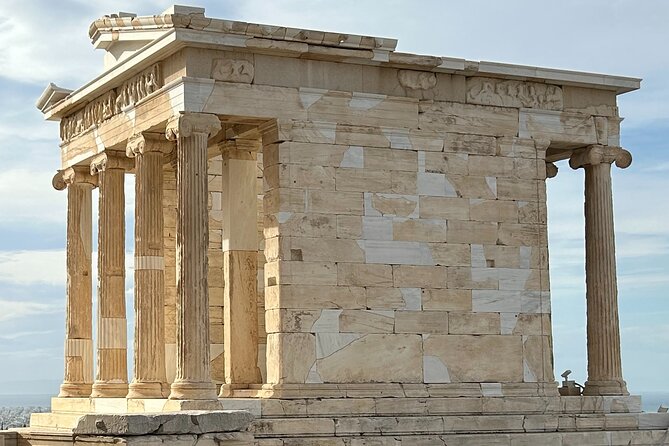
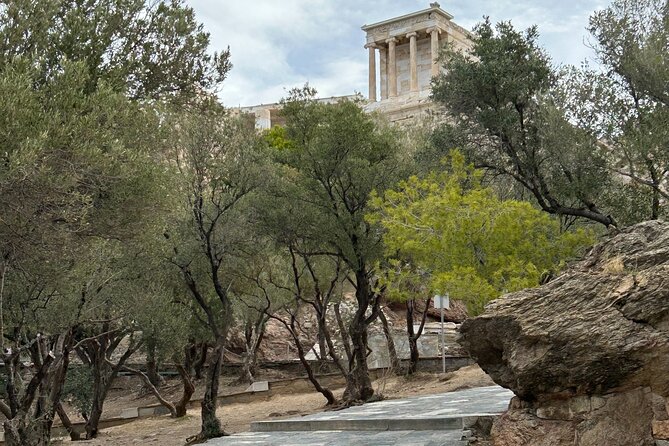
At the Temple of Athena Nike, you’ll see a shrine dedicated to the goddess of victory. Even if you don’t know every detail of Athenian religion, this is easy to understand as a statement: victory was not just a battlefield outcome, it was a civic identity.
This is a 20-minute stop at the main entrance area of the Acropolis sanctuary. It works well because you’re still in the “arrival phase” of the tour. Your eyes are adjusting, and the guide’s explanation helps you interpret why certain elements were built where they were.
If you’re sensitive to heat or fatigue, this is also a moment where you can pause and reset before the climb becomes more intense visually and emotionally.
Propylaea gateway climb: where the view becomes the lesson
Then comes the Propylaea, the monumental gateway leading into the sanctuary. This is one of those stops where the building isn’t just a backdrop; it’s part of the ritual of entering the sacred zone.
You also get views of the surrounding hills, which helps you understand the Acropolis as a command point over Athens—not just an isolated museum-like ruin. The guide’s commentary ties that geography to what the Athenians likely wanted people to feel: arrival, emphasis, and importance.
Plan for about 20 minutes here. It’s not long, but it’s enough to reframe what you’re seeing from “cool rocks” to “designed meaning in stone.”
Erechtheion: myths, legends, and sculptural personality
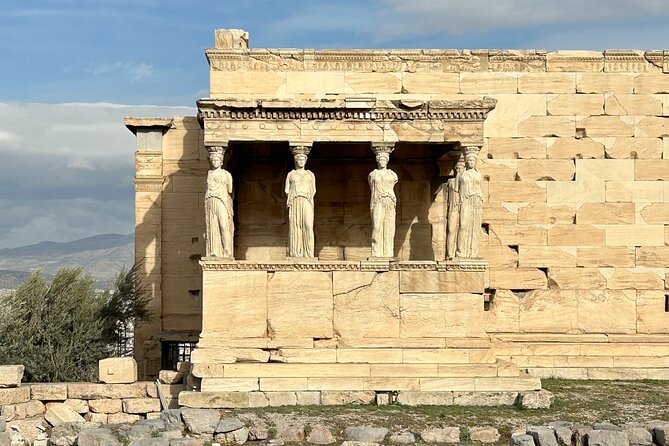
Your next stop is the Erechtheion, described as the temple of myths and legends and known for its unique sculptures. This is where the tour leans more into story again.
The Acropolis isn’t only about one god or one era. Erechtheion represents the way the sanctuary held overlapping traditions and meaning. Your guide’s job is to help you recognize that the myths aren’t random bedtime stories—they’re part of why the space mattered and why people returned to it.
Time is about 20 minutes. If you’re curious about how symbolism and art reinforce beliefs, this is a good moment to slow down and actually look at the sculptural work instead of rushing to the next photo.
Parthenon: why this masterpiece became a political symbol
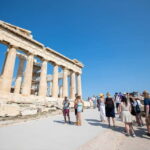
Finally you reach the Parthenon, often called the jewel of the Acropolis. This stop is about 30 minutes, and it’s the emotional payoff of the tour.
You’ll get the big-picture context: the Parthenon is a Classical-period masterpiece of Greek architecture and presented as a major technical achievement of the democratic state. It’s also treated as a symbol of Western civilization—because its influence outlasted Athens.
Here’s the part you’ll feel if your guide is good: you start noticing that the Parthenon isn’t just grand. It’s precise. And precision is political. It signals investment, organization, and the idea that public life deserves serious artistic expression.
Your guide can also help you find strong viewpoints for photos—standing positions that make it easier to appreciate scale. Even small photo-direction can make a real difference when you’re surrounded by visitors.
The guide experience: historian energy makes the site talk back
The best part of this tour is the guide style. The experience is led by a local licensed English speaker who’s always a historian or an archaeologist with real depth. In my case, the guide named Harris brought the kind of energy that doesn’t turn history into a dry lecture.
What I liked most was the balance of facts and human meaning. Harris used humor and storytelling while tying each stop to modern ideas, especially around democracy and how we inherit culture. The result is that the site feels less like a list of monuments and more like a set of arguments Athens made about what matters.
You’ll also benefit from practical, real-time pacing—especially in tight areas. In one moment, the guide paused to help with photos, and the direction on where to stand improved the results. That kind of hands-on care is a quiet value-add you don’t always get with large group tours.
And if you’re traveling with someone who needs extra planning, I was impressed by the guide’s attention to smooth access. The tour included the kind of check you want to see when mobility matters, including confirming elevator status when relevant.
Headsets and crowd control: small detail, big comfort
Each guest receives personal earset receivers, which is a huge quality-of-life upgrade. At the Acropolis, wind, distance, and crowds can make normal group audio frustrating fast. With headsets, you can focus on listening and looking instead of straining to hear.
Also, the small group size (max 25) keeps the tour from feeling like a human wave. You still deal with the site’s overall popularity, but your experience stays readable.
One note: because you’re moving between stops, pack your patience. This isn’t a “stop and lounge” style tour. It’s built for momentum.
Price and value: what $36.14 buys you in the real world
The price is $36.14 per person, for roughly 2 hours 40 minutes with a local historian/archaeologist guide and headsets. That price point is compelling when you consider what usually costs more: expert interpretation and the time advantage of a guided route.
Admission can be included or not, depending on the option you select. In the included pathway, entry fees are covered for the stops where listed. If you’re comparing options, pay attention to whether admission is actually part of your selected ticket—at the Acropolis, that can change the total price meaningfully.
The value also comes from how the tour turns each monument into a story you can carry after you leave. If you only look at stones, you’ll get photos. If you get the context, you’ll get understanding.
Who this tour is best for
This is a strong pick if you:
- love history but hate when it turns into a memorization exercise
- want your visit to connect to democracy, philosophy, theatre, and everyday public life
- prefer a guide who can answer questions and keep the tone lively without losing accuracy
It’s also good for couples and small families because the pacing is structured and the headsets help everyone follow.
If you’re the type who wants full independence with zero structure, you might prefer wandering. But if you’re trying to get meaning out of a limited timeframe, the guided approach is hard to beat.
Should you book this Acropolis Historical Tour for History Enthusiasts?
Yes, if you want your Acropolis visit to be more than a highlight reel. This tour makes the site make sense by linking monuments to ideas—starting with early civilization context, moving through theatre and civic symbolism, and ending with a Parthenon explanation that connects architecture to democracy and Western influence.
Book it if you’re okay with a guided pace and short stop windows. Skip it only if you strongly dislike walking uphill or you want a silent, self-paced experience.
FAQ
How long is the Acropolis Historical Tour for History Enthusiasts?
The tour lasts about 2 hours 40 minutes (approx.).
Is the tour offered in English?
Yes, it’s offered in English.
What are the main stops on the tour?
You’ll visit the South Slope of the Acropolis, Theatre of Dionysus, Odeon of Herodes Atticus, Temple of Athena Nike, Propylaea, Erechtheion, and end at the Parthenon.
Does the tour include admission tickets?
Admission/entry fees are included only if you choose the option that includes them. Otherwise, entry fees are not included.
Where does the tour start and where does it end?
It starts at Dionysiou Areopagitou 17, Athina 117 42, Greece and ends in front of the Parthenon at the top of the Acropolis hill.
What’s the group size?
The tour has a maximum of 25 travelers.
Is good weather required?
Yes. This experience requires good weather. If it’s canceled due to poor weather, you’ll be offered a different date or a full refund.
What’s the cancellation policy?
You can cancel for free up to 24 hours in advance for a full refund. If you cancel less than 24 hours before the start time, the amount you paid is not refunded.