REVIEW · MIDDLESBROUGH
Walkabout Durham History Tour
Book on Viator →Operated by Walkabout Durham · Bookable on Viator
Durham’s city center is built for a quick history loop. This 90-minute Walkabout Durham tour threads together key stops around Durham Market Place, the bridges, and the cathedral side of town, so you leave with way more context than you started with.
What I really liked most is the human scale: a small group (max 20), a guide who keeps things friendly and question-friendly, and a route that feels made for orienting yourself fast. I also love that the walk is packed with visual anchors—bridges, viewpoints, and the Bailey—so the stories stick.
One thing to keep in mind: Durham is hilly, so plan for steps and uneven walking. If you’re not into uphill stretches, wear good shoes and take your time between stops.
In This Review
- Key highlights to look for
- A 90-Minute Durham Loop That Actually Gets You Oriented
- Starting at Durham’s Market Place: Town Hall, Guildhall, and St Nicolas Church
- Framwellgate Bridge: The Classic Durham View and the Prince Bishops
- Prebends Bridge: Mills, Riverbanks, and Cathedral Views
- Into the Bailey: Medieval City Wall and the Scots Rivalry
- St Mary the Less and Bow Lane: Legends, Architecture, and St Cuthbert
- Palace Green Library and the Walk to Durham Cathedral Doors
- What Makes the Guide Experience Work (Small Group, Lots of Q&A)
- Price and Value: About $22 for a Fast, Guided Durham Orientation
- Practical Tips for a Smooth Walk (Yes, It’s Hilly)
- Who This Tour Suits Best
- Should You Book This Walkaround Durham History Tour?
- FAQ
- FAQ
- How long is the Walkabout Durham History Tour?
- How much does the tour cost?
- Where does the tour start and end?
- What language is the tour offered in?
- Do I need to buy admission tickets for the stops?
- Is there a mobile ticket?
- How big is the group?
- Is the tour dog-friendly?
- Are service animals allowed?
- What is the cancellation policy?
Key highlights to look for
- Durham Market Place to Framwellgate Bridge for a smooth start in the historic core
- Framwellgate Bridge views with the Castle and Cathedral in sight
- Prince Bishops and St Cuthbert stories braided into the walk, not dumped as lectures
- Durham University’s Bailey and the medieval city wall vibe in one short segment
- Palace Green and the UNESCO setting with the cathedral doors as the finish line
- Dog-friendly atmosphere and a guide who welcomes questions throughout
A 90-Minute Durham Loop That Actually Gets You Oriented
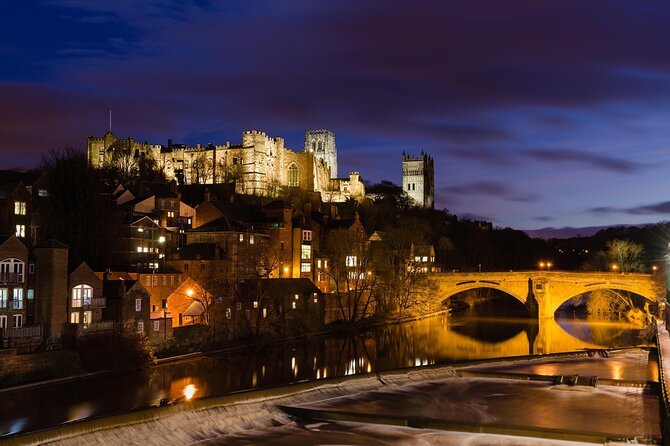
If you only have a short window in Durham, this is a smart way to make your time count. You start in the historic Market Place and end right at the main doors of Durham Cathedral, which means the tour naturally points you toward the big sights without feeling rushed.
The best part is the pacing. Each stop is brief, but the route keeps moving by foot along a tight circuit. You’ll get the “where am I?” answers early, then the walk gives you enough context to explore on your own later—whether that means popping into a college street, walking the riverside again, or just enjoying the views with a better sense of what you’re looking at.
Also, the group stays small (up to 20). That matters. It makes it easier to hear the guide, ask questions without feeling like you’re interrupting, and actually connect each story to the place you’re standing in.
You can also read our reviews of more tours and experiences in Middlesbrough.

Starting at Durham’s Market Place: Town Hall, Guildhall, and St Nicolas Church
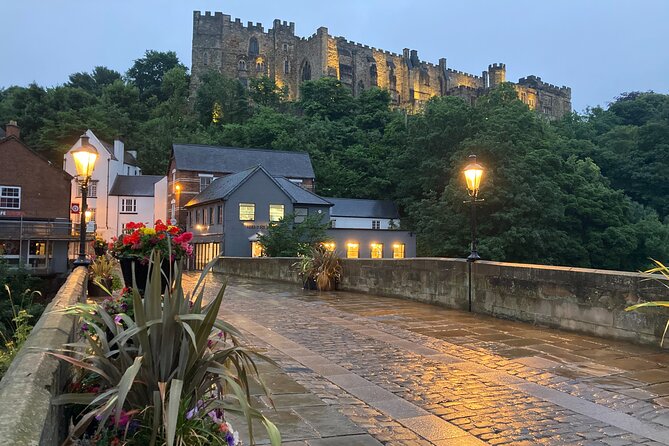
You meet at Market Place (Durham DH1 3NJ), right in the historic heart of the city. The first stop is a quick hit of civic and religious landmarks: the 19th-century Town Hall and Guildhall, St Nicolas’ church, and statues tied to Durham’s story.
This section works as a foundation. Rather than starting with the cathedral and working backward, you begin with the city itself—its institutions and the people who shaped the region. You also get names and figures that help explain why Durham looks the way it does today. It’s the difference between seeing buildings and understanding why they mattered.
From the Market Place, you take a short walk onward to Framwellgate Bridge. The move is fast enough to keep momentum, but not so fast that you feel like you missed the details.
What to expect here:
- Easy-to-follow meeting point in the center
- A mix of civic buildings and church history
- A short transfer walk that keeps the tour moving
Framwellgate Bridge: The Classic Durham View and the Prince Bishops
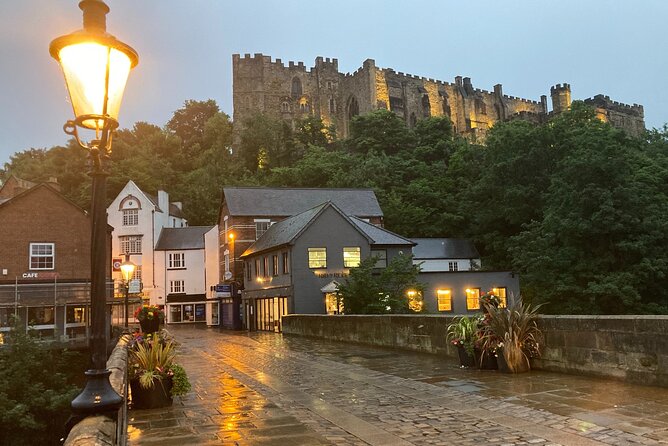
Framwellgate Bridge is where Durham really earns its postcard reputation. As you stand here, you get a magnificent view of Durham Castle and Durham Cathedral—and the guide connects those big sights to the historic power that shaped the city.
This is the segment where the stories lean into the Prince Bishops of Durham. You’ll also hear about how the Castle ties into that era before you continue along the river route. It’s a great way to connect skyline to timeline.
Then you walk along the riverside toward the next bridge. Even though the stroll is short, it gives you that “oh, I’m really in Durham” feeling. You’re not stuck indoors. You’re moving through the same angles locals use to get those scenic views.
A practical note: bridges and river areas are often where weather changes fastest. If it’s windy or rainy, plan layers. You’ll see why the guide keeps the walking portion efficient.
Prebends Bridge: Mills, Riverbanks, and Cathedral Views
Next comes Prebends Bridge, a smaller stop but a satisfying one. Along the way, you explore the city’s mills and riverbanks, plus you get the Cathedral view from a different angle than at the start.
Why this stop matters: it helps you read the river corridor like a living map. Durham didn’t grow into its current form by accident—the water shaped industry, movement, and the daily rhythm of the city. Even with a short stop time, you start to spot the logic behind the geography.
Then you move on quickly to the next section, with time built in so you can look, then listen, then look again. That loop of viewing and understanding is what makes the tour feel useful, not just scenic.
Into the Bailey: Medieval City Wall and the Scots Rivalry
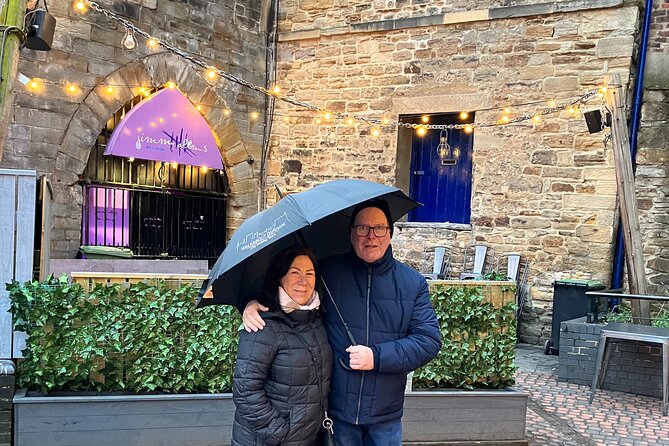
On the way to the next area, you encounter the medieval city wall. That detail changes how you see the city. It’s not just old stone—it’s proof that Durham was once something more controlled and defensive, shaped by real pressure from outside.
This part also brings in a different kind of history: the rivalry with the Scots is mentioned, and you’ll hear how that tension played into Durham’s story. After that, you head into the Bailey, which is home to Durham University.
Here’s why it’s a smart pairing in a short tour. The Bailey isn’t just a university zone; it’s within the world of Durham Cathedral and the medieval setting that gave the area its identity. So you get a bridge between ecclesiastical power and education—without needing extra transport or a separate ticket.
If you like history with atmosphere, this is where it clicks. You’re walking through space that still feels active and occupied, not just preserved behind ropes.
St Mary the Less and Bow Lane: Legends, Architecture, and St Cuthbert
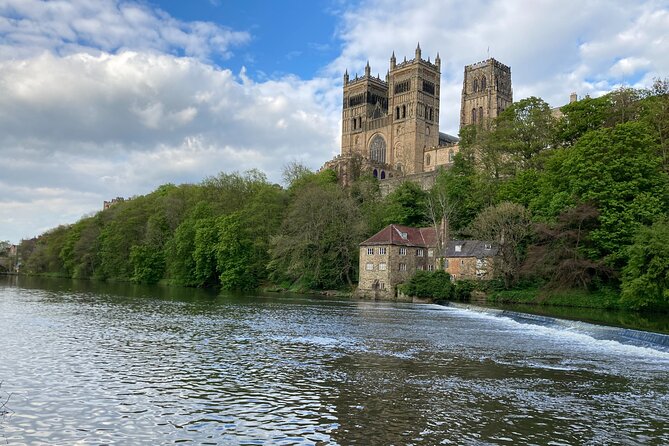
After the Bailey entry, the tour shifts to the religious and legendary threads that make Durham feel myth-soaked without getting silly.
You stop at St Mary the Less, which is affiliated with St John’s College. The key is that you’ll hear about its connections to Durham legends, and the guide ties those stories to what you can see around you—architecture and the feel of the area, not just names and dates.
Then you reach Bow Lane, which takes you toward the eastern side of the Cathedral. This segment focuses on early medieval history and stories connected to St Cuthbert, plus you learn about colleges of Durham University in the same sweep.
This is one of the most satisfying transitions on the walk because it blends three things:
- a person (St Cuthbert)
- a place (the eastern side of the Cathedral area)
- a living institution (the university colleges nearby)
It makes the city feel like one continuous story rather than separate attractions stuck side by side.
Palace Green Library and the Walk to Durham Cathedral Doors
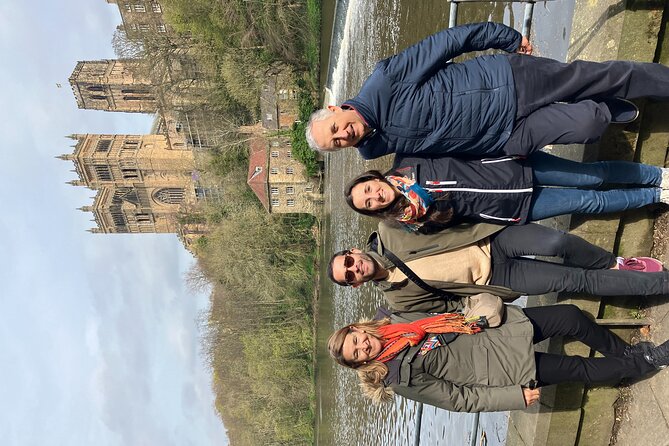
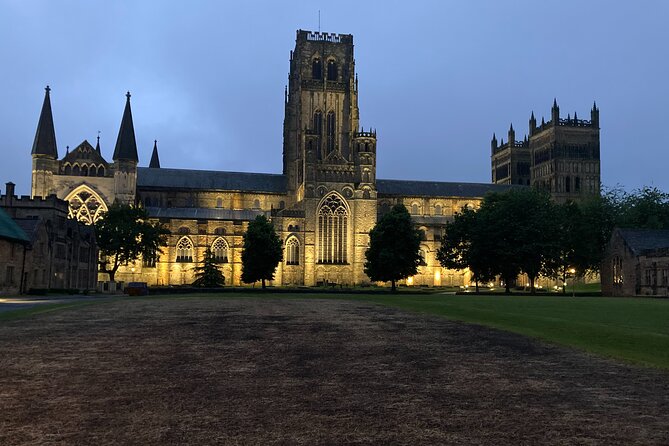
The final stretch heads to Palace Green, and you enter the heart of the UNESCO World Heritage site around the cathedral. Palace Green Library becomes the hub for the climax of the tour, where the guide talks about battles, tragedies, and miracles that show up again and again in Durham’s story.
You’ll also move toward the doors of Durham Cathedral, finishing at the main doors (Durham DH1 3EH). I love this design: the tour ends at the exact place most visitors want to reach anyway. That means you can continue right away, without doubling back or trying to figure out routes while you’re tired.
Also, because the stops have been short and focused, you’re not leaving with a head full of random facts. You’re leaving with a mental map and a set of story anchors. When you look up at the Cathedral afterward, it feels less like a monument and more like the center of a long narrative.
What Makes the Guide Experience Work (Small Group, Lots of Q&A)
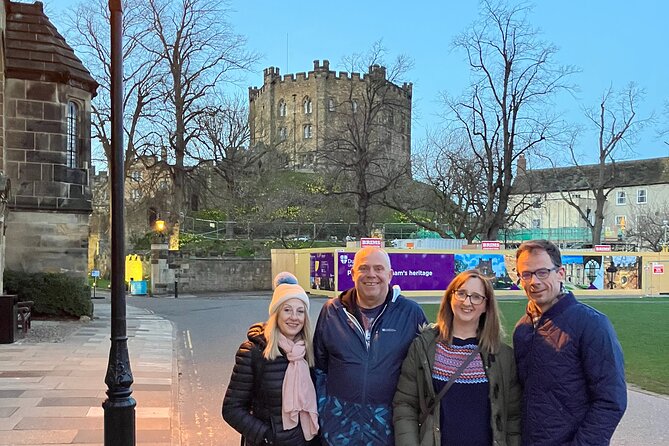
The whole tour hinges on the guide’s tone and pacing. I found that kind of thing matters more here than fancy bells and whistles, because you’re walking through tight spaces where it’s easy for information to become noise.
In this case, the guide—Peter—is consistently described as friendly and open to questions. That’s huge if you like to stop and ask why something is named a certain way, or how a legend connects to a building. The tour is also pitched at a level that doesn’t talk down, doesn’t wander off into confusing lectures, and keeps the group together.
You’ll also get practical local tips on other things to do after the walk. That makes a real difference. Durham can be easy to enjoy, but it’s also easy to miss a great street or viewpoint if you’re just guessing.
Price and Value: About $22 for a Fast, Guided Durham Orientation
At about $22.20 per person for roughly 1 hour 30 minutes, this isn’t a budget-breaking splurge. It’s closer to a “buy time and context” purchase.
Here’s where the value comes from:
- You’re guided through multiple major areas in one loop, so you don’t waste your energy on route-finding.
- Most stops are marked as admission free, meaning you’re paying for the guide and the walking plan more than for entry fees.
- You end at the Cathedral doors, which saves you from having to independently assemble the route while you’re still figuring out where everything is.
There’s also timing value. The tour averages being booked about 15 days in advance, so if you’re traveling at a busy time, booking ahead is smart. You don’t want your “easy first day” plan to vanish.
Practical Tips for a Smooth Walk (Yes, It’s Hilly)
You’ll be on your feet the whole time, with short segments between stops. Durham’s terrain can be a bit of a surprise. One review note even flags that Durham is hilly, so take that seriously.
A few things I’d do to make it painless:
- Wear supportive shoes with grip for stairs and bridge areas.
- Bring a layer. River and bridge weather can change quickly.
- Pace yourself between stops so you can actually take in views at Framwellgate and Prebends Bridge.
And if you’re the type who loves chatting, this tour gives you space for it. The guide’s stories and willingness to answer questions help the time pass quickly, even if the weather is less cooperative.
Who This Tour Suits Best
This works especially well if:
- You’re in Durham for a short stay and want a clean starting point.
- You like guided context more than independent wandering.
- You want a relaxed group walk where you can ask questions and get clear answers.
It’s also described as welcoming for all ages, and it’s dog-friendly. Service animals are allowed too.
If you already know Durham deeply and only want the most detailed cathedral-specific information, you might feel the stops are short. But for most people, this walk is a strong first step.
Should You Book This Walkaround Durham History Tour?
I’d book it if you want a guided “get your bearings” circuit that ends at Durham Cathedral and gives you story threads you can follow later.
The decision comes down to what you’re hoping to get:
- If you want quick orientation, scenic viewpoints, and a friendly guide who handles questions well, this fits.
- If you’re expecting long museum-style stops or heavy cathedral interior time, this is probably not the format you’re after.
Given the small group size, the guide-led flow, and the fact that it’s designed around the Cathedral side of Durham, it’s an easy “yes” for a first visit.
If you’re unsure, you also have the cushion of free cancellation up to 24 hours in advance, so you can lock it in and adjust if your plans shift.
FAQ
FAQ
How long is the Walkabout Durham History Tour?
It runs for about 1 hour 30 minutes.
How much does the tour cost?
The price is $22.20 per person.
Where does the tour start and end?
It starts at Durham Market Place (Durham DH1 3NJ) and ends at the main doors of Durham Cathedral (Durham DH1 3EH).
What language is the tour offered in?
The tour is offered in English.
Do I need to buy admission tickets for the stops?
The tour description lists admission ticket free for the stops.
Is there a mobile ticket?
Yes, the tour uses a mobile ticket.
How big is the group?
The tour has a maximum of 20 travelers.
Is the tour dog-friendly?
Yes, dogs are welcome, and you can bring your dog.
Are service animals allowed?
Service animals are allowed.
What is the cancellation policy?
You can cancel for a full refund if you cancel at least 24 hours before the experience starts.