REVIEW · NEW DELHI
Old Delhi Walking Tour: Food, Culture & Spice Bazaars
Book on Viator →Operated by Unzip Delhi · Bookable on Viator
Old Delhi can feel like a living puzzle. This walk is built to make sense of that chaos, with history and food linked together in a smart route near the Red Fort. You get street-level culture, including a stop at Asia’s largest spice market and a classic Mughal finish at Jama Masjid.
Two things I especially like: the guide lineup. The experience is curated by Anas Khan, who grew up in these lanes and works as an anthropologist and history writer, so you’re not just hearing facts—you’re getting context you can actually use. I also like the pacing choices: you cover a lot on foot, then switch to a tuk-tuk ride to keep your energy for the tastings and viewpoints.
One thing to consider is that Old Delhi is crowded and sensory-heavy, especially around the spice market. If you’re sensitive to strong aromas or prefer quiet sightseeing, you may find it a lot. Also, Jama Masjid admission isn’t included, so you should expect a small extra cost at the end.
In This Review
- Key highlights at a glance
- Where the Tour Starts: Chandni Chowk View Point Near Lal Qila
- Chandni Chowk: The 1.5 km Street Where Religions Share the Same Block
- Khari Baoli: Asia’s Largest Spice Market and a Proper Tasting
- The Tuk-Tuk Ride Through Old Delhi Lanes
- Naughara: Nine Houses, a Jain Temple Moment, and Much-Needed Quiet
- Jama Masjid Finish: Rooftop Views and Mughal Architecture in Red and White
- Price and Value: What $19.01 Includes (and What It Doesn’t)
- The Guide Factor: Why Anas Khan’s Context Helps
- Getting Ready: Timing, Shoes, and Handling Crowds
- Who This Walk Suits Best
- Should You Book This Old Delhi Food, Culture & Spice Bazaars Walk?
- FAQ
- How long is the Old Delhi Walking Tour?
- Where does the tour start?
- Where does the tour end?
- Is the tour focused on food and spices?
- Is the tuk-tuk ride included?
- What is included in the price?
- What isn’t included?
- What is the group format?
- Can I bring a service animal?
- What is the cancellation policy?
- Is the tour near public transportation?
Key highlights at a glance
- Chandni Chowk’s religious mix: temples, Jain derasars, mosques, churches, and gurudwaras in one 1.5 km stretch
- Khari Baoli spice tasting: learn the spice trade routes and taste what’s sold in this wholesale powerhouse
- Tuk-tuk time inside the lanes: fewer sore legs, more time to watch and photograph
- Naughara Jain temple stop: an unusually calm moment with intricate carvings
- Finish at Jama Masjid: red sandstone and white marble with panoramic rooftop views
Where the Tour Starts: Chandni Chowk View Point Near Lal Qila
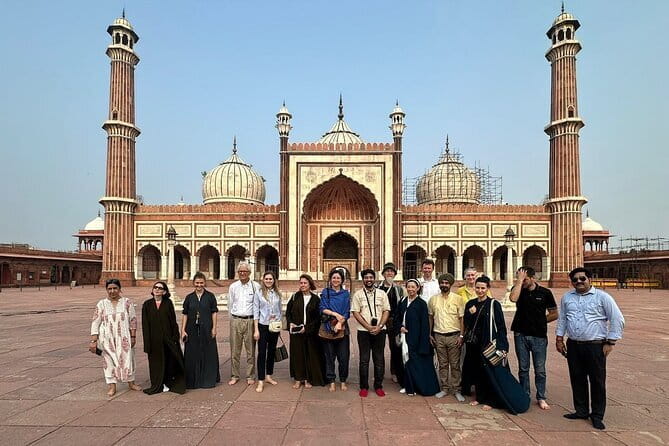
Your walk begins at Chandni Chowk View Point, at Shop No 24, Metro Gate 1, opposite Lal Qila in the Chandni Chowk area. That location matters. You’re starting right where Old Delhi’s energy concentrates, so you don’t waste time getting oriented.
This route also benefits from the timing window listed for the experience (it runs daily, 6:00 AM to 10:00 PM). If you’re the kind of person who likes cooler morning wandering, you’ll likely enjoy starting earlier. If you prefer golden light for photos, later start times can be easier on the eyes too. Either way, plan for a solid 2 to 3 hours of steady movement.
I’d also plan to arrive a few minutes early. Old Delhi streets can shift quickly, and the more smoothly you start, the more relaxed you’ll feel when you’re stepping into marketplaces.
You can also read our reviews of more tours and experiences in New Delhi.



Chandni Chowk: The 1.5 km Street Where Religions Share the Same Block
The first stop is Chandni Chowk, about a 1.5 km stretch known for an unusual mix of faith spaces right next to each other. You’ll see Hindu temples, Jain derasars, mosques, churches, and gurudwaras in close proximity. It’s not a museum-style comparison; it’s the real neighborhood life side by side.
What makes this stop valuable is how it reframes Old Delhi. Instead of treating it as one “type” of place, you see how everyday street life holds multiple traditions at once. That gives you better eyes for everything that follows, especially when you move from shrines to bazaars.
Practical note: this is also a walking-heavy part of the experience. If you’re coming with stiff legs or you don’t like close quarters, consider wearing supportive shoes and keeping your pace calm. The route is designed for most people, but Chandni Chowk’s crowd density can still surprise you.
Khari Baoli: Asia’s Largest Spice Market and a Proper Tasting
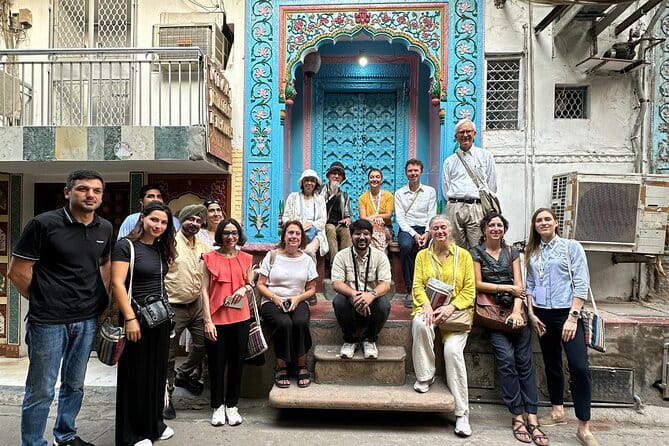
Next comes Khari Baoli, described as Asia’s largest spice market. This is where the tour gets sensory in a good way. You step into aroma, color, and a level of street motion that feels like it has its own rhythm.
You also get spice tasting here, plus background on the historical spice trade routes of medieval India and how the market still dominates Delhi’s wholesale economy. That pairing is key. Most marketplace tours show you the goods. This one helps you understand why those goods became so important and how the trade patterns shaped what you’re seeing now.
What you can expect in real terms:
- You’ll be close to bulk spice selling, not just photo backdrops
- The guide explains what you’re smelling and why particular spices matter
- The tasting gives you a way to remember the experience beyond pictures
Possible drawback: Khari Baoli can feel like sensory overload, especially if you’re not used to strong food smells. If you’re sensitive, keep that in mind and just take slow breaks when you need them.
The Tuk-Tuk Ride Through Old Delhi Lanes
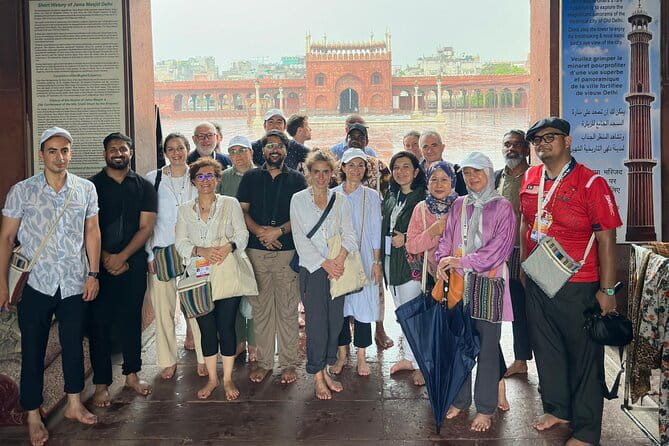
After the spice stop, you’ll take an Old Delhi rickshaw ride. This isn’t there just for fun. It’s a practical break that still keeps you inside the neighborhood’s movement. You’ll weave through centuries-old lanes where the smell of frying samosas mixes with the sounds of temple bells and azaan.
Why this works: Old Delhi streets are tight and busy. Walking alone can turn into a constant exercise in navigation. The tuk-tuk gives you a “time machine” feel while reducing the foot fatigue, so you can stay present for details.
It also helps you photograph better. From the rickshaw seat, you can catch street scenes in motion—signboards, mosque domes, and food activity—without stopping every few minutes to catch your breath.
If you get motion-sick easily, you might want to take it slowly with your posture and focus your eyes ahead. The ride is short (about 30 minutes in the plan), so it’s unlikely to be a deal breaker, but it’s worth flagging.
Naughara: Nine Houses, a Jain Temple Moment, and Much-Needed Quiet

Then you pause at Naughara, described as the row of nine houses. The highlight here is a photogenic, peaceful spot centered on a Jain temple. You get a moment of calm while surrounded by the typical Old Delhi intensity.
This stop focuses on details: intricate carvings, spiritual energy, and architecture you can actually study. Even if you only glance at buildings briefly on a normal trip, this kind of stop helps you slow down and notice why the area looks the way it does.
It’s also a smart contrast stop. You’ve just gone through sensory-heavy market time and a lively lane ride. Naughara gives your brain a reset. That means when you reach the final stop, you’ll appreciate the larger structure more instead of rushing through it.



Jama Masjid Finish: Rooftop Views and Mughal Architecture in Red and White
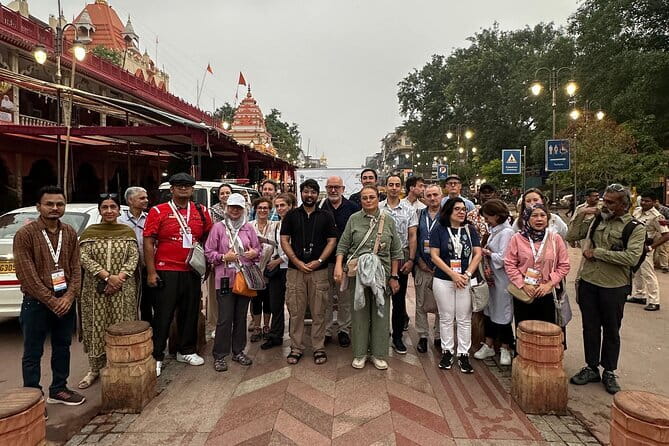
You end at Jama Masjid, one of India’s largest and most beautiful mosques. Expect Mughal architecture in red sandstone and white marble, and a finish that feels more than just sightseeing because Jama Masjid is described as a living symbol of Old Delhi’s spiritual heart.
The tour includes a panoramic rooftop view from Jama Masjid as part of this final stop time (about 1 hour). Rooftop viewpoints are where Old Delhi “clicks” visually—you understand how the streets stack, how the markets feed into bigger roads, and where the energy concentrates.
One important consideration: Jama Masjid admission is not included. So budget a little extra for the entry cost on arrival. It’s usually the kind of fee you can handle, but it’s worth planning so you don’t feel blindsided at the end.
Your meeting point to leave is also clear: you’ll finish at Jama Masjid gate number 3. From there, it’s easier to head out of the old city without wandering around looking for the right exit.
Price and Value: What $19.01 Includes (and What It Doesn’t)

At $19.01 per person, this is positioned as a low-cost way to pack in multiple high-impact stops. The real value comes from what’s included, not just the ticket price.
Included items:
- Bottled water
- Coffee and/or tea
- A local expert cum tour guide
- Tuk-tuk ride
Included experiences:
- Spice tasting at Khari Baoli
- The structured route connecting Chandni Chowk, Khari Baoli, lanes, a Jain temple stop, and Jama Masjid
Not included:
- Private hotel pickup and drop-off
- Shopping purchases
- Jama Masjid admission
That last point is the only cost surprise. Everything else is basic comfort and transportation support. If you’re traveling on a tighter budget, this matters because it means fewer add-ons in the moment. If you’re traveling with kids or you’re saving your energy, the tuk-tuk ride included in the price is also a strong value element.
The Guide Factor: Why Anas Khan’s Context Helps
This tour is curated by Anas Khan, an anthropologist, history writer, and TEDx speaker who grew up in these lanes. You’ll feel the difference in how the stops are explained. The tour isn’t just about where to stand; it’s about what you’re seeing and why it matters.
Even with excellent planning, the quality of a street tour depends on the guide’s ability to translate messy reality into something you can follow. In particular, one guide experience stands out: Lareb has been reported as helpful with last-minute timing, making sure the plan could match your schedule and arranging transportation so you could get there without panic. That’s the kind of practical problem-solving that makes a tour feel smooth instead of stressful.
What you should look for from your own guide: clear pacing, a sense of when to slow down for details, and short explanations that don’t drown you in lectures while you’re surrounded by street noise.
Getting Ready: Timing, Shoes, and Handling Crowds

Old Delhi is not a quiet walk. Even when the tour takes breaks, you’re moving through narrow lanes, busy markets, and active religious areas. So your prep should be simple and practical.
Here’s what helps most:
- Wear comfortable, grippy shoes. You’ll be on uneven street surfaces and walking continuously for several stretches.
- Bring a bottle of water if you run through it quickly. Bottled water is included, but in hot months you might want extra capacity.
- Keep your phone accessible for photos, but don’t hold it out the whole time. Crowds move fast here.
- Expect strong smells around Khari Baoli and street food zones. You can enjoy it without forcing yourself to linger right in front of the biggest stacks.
If you’re the kind of traveler who loves photos, this itinerary is strong. You’ll have religious architecture (Chandni Chowk variety, Naughara carvings, Jama Masjid structure) plus street-level color and food energy.
Who This Walk Suits Best
This experience fits best if you want Old Delhi to feel like a living place rather than a checklist. It’s also a good match for:
- history and culture lovers who like context tied to real neighborhoods
- solo travelers who want help navigating a complex area
- photographers who want viewpoints and architecture, plus market scenes
- people who like food experiences but don’t want a food-only tour
If your main goal is total silence, long museum-style time, or slow pacing with lots of downtime, you might prefer a more relaxed option. This one is designed for motion and sensory discovery.
That said, the route includes resets: the Jain temple pause and the tuk-tuk ride make it easier to keep a positive pace without burning out.
Should You Book This Old Delhi Food, Culture & Spice Bazaars Walk?
I’d book it if you want the fastest way to understand Old Delhi’s “how it works” side. The route connects food, culture, and spice trade context, and it ends with a viewpoint that actually lets you see the neighborhood as a system.
I’d think twice if you’re sensitive to heavy aromas or crowd intensity, or if you dislike the idea of paying Jama Masjid admission on top. But for most people, the structure is smart: you get tastings, transportation support, and architecture stops that give your photos meaning, not just color.
If you do book, your best move is simple: arrive a little early, wear good shoes, and treat Khari Baoli and Chandni Chowk as experiences that need slow attention, not quick snaps.
FAQ
How long is the Old Delhi Walking Tour?
It runs about 2 to 3 hours.
Where does the tour start?
The start point is Chandni Chowk View Point, Shop No 24, Metro Gate 1, opposite Lal Qila, in Chandni Chowk, Delhi.
Where does the tour end?
It ends at Jama Masjid, at gate number 3.
Is the tour focused on food and spices?
Yes. You’ll visit Chandni Chowk and Khari Baoli, with spice tasting included at Khari Baoli.
Is the tuk-tuk ride included?
Yes. The tuk-tuk ride is included in the tour.
What is included in the price?
Included items are bottled water, coffee and/or tea, a local expert tour guide, and the tuk-tuk ride.
What isn’t included?
Private hotel pickup and drop-off, shopping purchases, and Jama Masjid admission are not included.
What is the group format?
It’s listed as a private tour/activity, so only your group participates.
Can I bring a service animal?
Yes, service animals are allowed.
What is the cancellation policy?
Free cancellation is available up to 24 hours in advance for a full refund. Changes made less than 24 hours before the experience’s start time aren’t accepted, and cancellations within 24 hours aren’t refunded.
Is the tour near public transportation?
Yes. The meeting area is near public transportation.