REVIEW · LONDON
London Past & Present Backstreet Historical Tour
Book on Viator →Bookable on Viator
A walk that turns London into a timeline. This London Past & Present Backstreet Historical Tour links major landmarks with quieter streets, so you get the why behind the famous buildings.
I like the way the route starts with a big-picture orientation near St Paul’s, then tightens into street-level scenes. I also love the market-and-bridge mix, which makes the stories feel practical, not just museum facts, and the guide can answer questions along the way.
One thing to consider: it’s still a walking tour through busy central areas. If you’re not a fan of crowds near Borough Market and London Bridge, plan for a bit of jostling and bring comfortable shoes.
In This Review
- Key highlights you’ll actually use
- Why this backstreet route feels different from a standard sights tour
- The St Paul’s start: where you get your bearings fast
- Shakespeare’s Globe site: history you can spot with your own eyes
- Borough Market: the easiest way to understand London’s everyday culture
- Leadenhall Market: a classic passage with modern pop-culture echoes
- London Bridge: the story isn’t polite or gentle
- Tower Bridge and Tower of London: views that close the loop
- Price and value: is $94.61 worth it?
- What the guide experience feels like (and why Chris stood out)
- How long should you block on your calendar?
- What this tour is best for
- Quick logistics that matter day-of
- Should you book London Past & Present Backstreet Historical Tour?
- FAQ
- How long is the London Past & Present Backstreet Historical Tour?
- How much does the tour cost?
- How big is the group?
- What language is the tour offered in?
- What is included in the price?
- Where does the tour start and end?
- Do I need to buy tickets for the stops?
- Is there any guidance on cancellation or refunds?
- Can I get a mobile ticket and how does confirmation work?
Key highlights you’ll actually use
- Max 12 people keeps questions from getting lost and makes the pace feel human
- St Paul’s “lay of the land” start gives you instant orientation before the walking begins
- Shakespeare’s Globe area without the full theme-park vibe (you’ll visit the original Globe site area and pass the newer theatre)
- Markets that explain London’s everyday life with Borough Market and Leadenhall Market stop-offs
- Tower Bridge and Tower of London viewpoints end the tour with big views and famous silhouettes
Why this backstreet route feels different from a standard sights tour
London can be loud and fast. This tour slows things down on purpose by stitching together recognizable names with less-obvious corners you’re more likely to walk past on your own.
You also get a real guide, not just a prerecorded narration. The tour is built around conversation: the guide narrates, points out details, and answers questions as you move.
The small group size matters more than it sounds. With up to 12 people, the walk doesn’t feel like a school trip herd, and you can actually hear the explanations rather than strain your way through the crowd.
You can also read our reviews of more tours and experiences in London.

The St Paul’s start: where you get your bearings fast
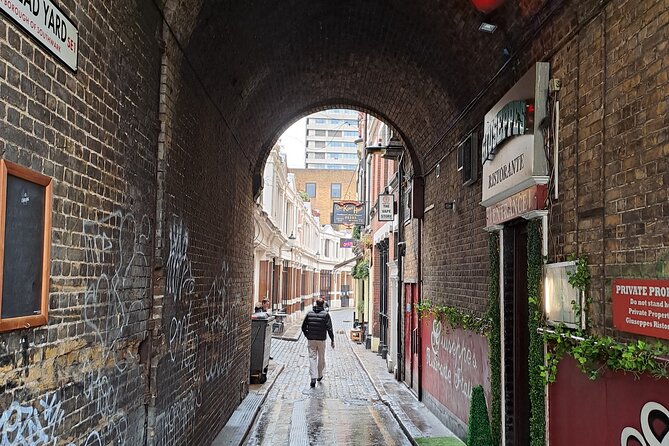
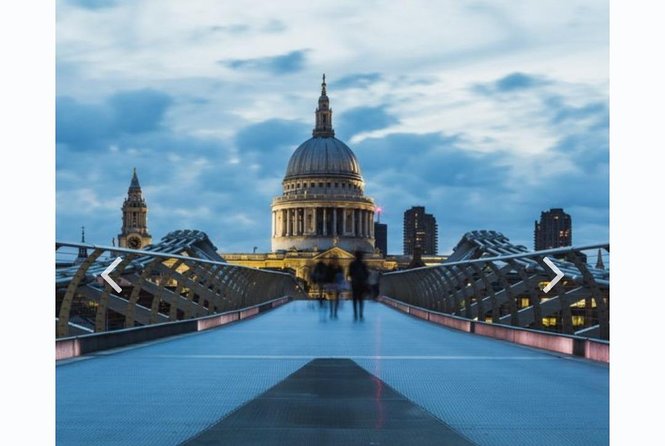
The experience begins near 1 Cheapside, and it starts with a viewpoint-style moment from the St Paul’s area. That early stop isn’t there just for photos. It’s meant to help you see the city as a 2000-year map in layers, so later stops make more sense.
From there, the walking starts with direction and framing. You’ll get an overall sense of how the city grew, shifted, and rebuilt over time, which is a big help if you only have a short visit.
In plain terms: if you often feel lost in London, this start helps. You’ll spend less time asking where you are, and more time understanding why this street matters.
Shakespeare’s Globe site: history you can spot with your own eyes
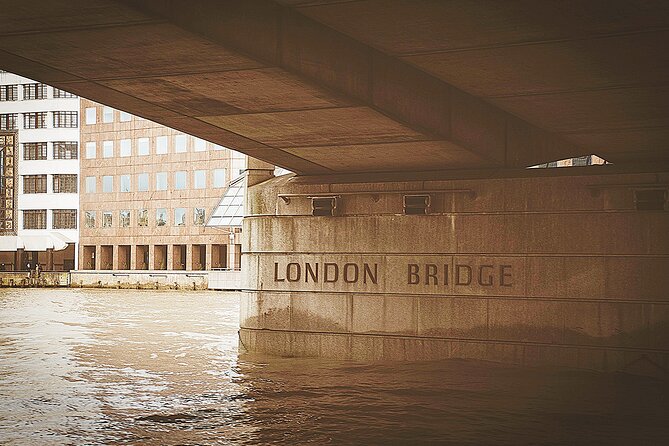
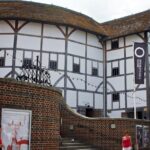
Next up is the Shakespeare’s Globe Theatre area. The tour focuses on the site of the original Globe and includes a walk past the newer theatre.
Even if you’re not a theatre superfan, the comparison is worth it. You can look at what changed, what stayed, and what London does well: keeping cultural identity visible while still moving forward.
This stop is short (about 10 minutes), so it works best as a story beat rather than a long detour. Some admissions here are listed as free, which keeps the experience moving and lowers the chances you’ll get stuck in ticket logistics.
Practical tip: if you’re arriving from jet lag, this is a good early stop to reset your attention. It’s a familiar name, but the emphasis is on context, not lines or trivia sheets.
Borough Market: the easiest way to understand London’s everyday culture
The tour then heads to Borough Market, described as London’s oldest market. The feeling here is simple: food, people, and lots of energy.
This stop is about 20 minutes. That timing is smart because Borough Market can eat time if you let it. Here, you get enough to take in the atmosphere and hear the story, without the risk of losing the rest of your route.
If you care about how London lives—not just how it looks—this is one of your best moments. You see the market as an institution, and you connect it to the city’s older rhythms.
Value angle: the tour lists admission for this stop as free, so you’re paying for narration and walking time, not paying again for entry.
Leadenhall Market: a classic passage with modern pop-culture echoes
After Borough Market, the route moves toward Leadenhall Market, another stop built around old-style architecture and its pop-culture connections (including Harry Potter use). Even if you’re not into that fandom, it’s still a good London lesson.
Markets like this tend to explain something bigger than shopping. They show how the city used covered spaces to handle weather, trade, and crowd flow over centuries.
This stop is positioned as one of the city’s quieter “stop-and-look” moments. You’re not just walking through a street; you’re getting a short explanation of why this space looks the way it does.
If you like photographing textures—brickwork, arches, roof lines—this is where your camera will feel useful rather than ornamental. Just keep an eye on foot traffic and give others room.




London Bridge: the story isn’t polite or gentle
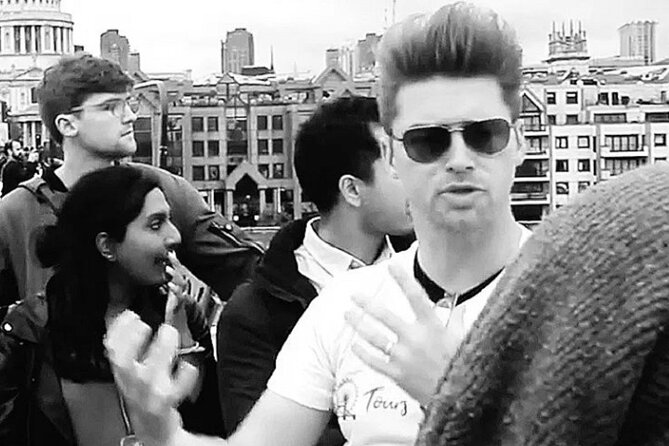
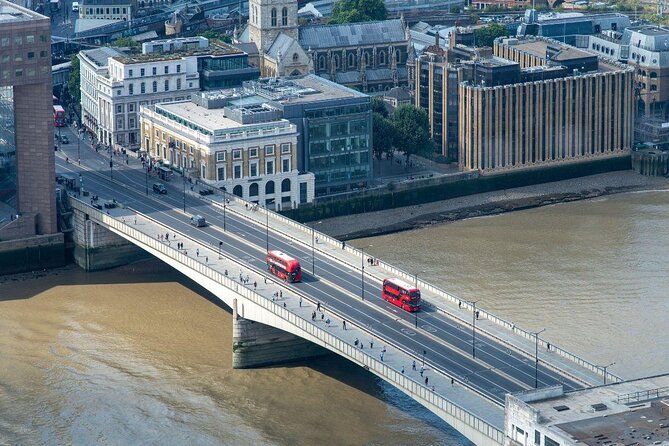
At London Bridge, you get a historical walk-through of the bridge’s “crazy past,” with a focus on what it has meant for London as traffic, power, and trade changed.
This segment is short (around 10 minutes), but it’s packed with narrative. The big theme you’ll hear about here is the Great Fire of London, and the guide explains it in a way meant to connect to the surrounding streets rather than treating it like a standalone textbook chapter.
Why that matters: the Great Fire isn’t just a date. It’s a turning point that reshaped how the city built, regulated, and recovered. Hearing it tied to a recognizable landmark helps your brain actually keep the timeline.
Practical note: London Bridge areas are often busy. The tour pace keeps you moving, but you should expect normal city noise and foot traffic. Good shoes help a lot here.
Tower Bridge and Tower of London: views that close the loop
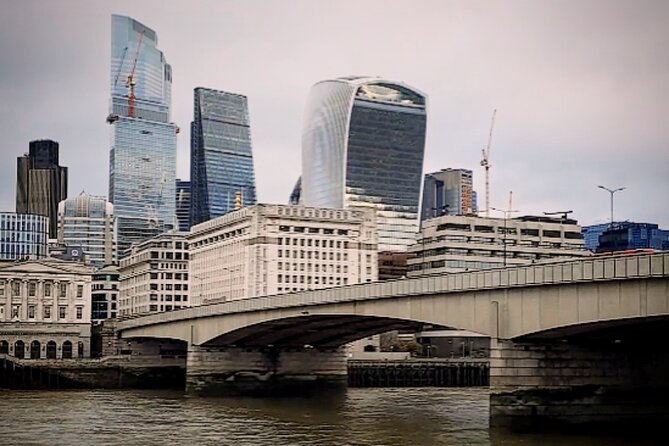
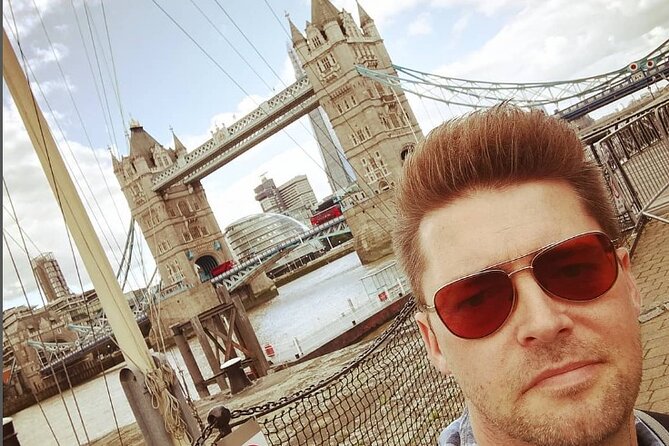
As you near the end, you’ll get views of Tower Bridge and the Tower of London. This is your big “see the skyline and remember what you learned” finish.
The tour description calls out a short walk toward London Bridge, Brick Lane, and Whitechapel area nearby. That matters because it gives you a sense of where you could go next if you want to keep the story going after the tour ends.
Even if you don’t enter the Tower itself, you’ll understand its place in the city. The narration helps you see it as part of the broader chain: protection, authority, commerce, and the constant reshaping of London’s identity.
If you like snapping photos, plan to linger for a minute after the guide’s final points. The finish area is set up for that: you’re ending by Tower Hill and close to Tower Hill Station, so it’s easy to move on.
Price and value: is $94.61 worth it?
At $94.61 per person for about 1 to 2 hours, the cost isn’t bargain-bin cheap, but it’s also not a full-day commitment. You’re paying primarily for a guide plus the route logic.
Here’s what you’re getting for that price:
- A professional guide who narrates and answers questions
- A route that includes multiple major London anchors and market stops
- Small group size (max 12)
- Some stops listed with free admission tickets
The main value is the combination. If you tried to do the same sequence on your own, you’d likely spend time figuring out what to look at and where to connect the dots. This tour does that work for you.
Also, the itinerary includes at least one “bigger picture” moment near St Paul’s. That kind of orientation often makes the rest of your day easier, because London starts to feel logical instead of chaotic.
My practical take: if you’re short on time and want an organized path through key places, this price can make sense. If you’re the type who loves wandering without structure, you might prefer a self-guided route and just pay for what you enter.
What the guide experience feels like (and why Chris stood out)
One thing that shows up clearly in the feedback is the guide quality. In the tours associated with Chris, people highlighted his great knowledge and his ability to show details they’d miss alone.
They also praised his personal style—someone who talks through what you’re seeing and treats the walk like a conversation. That’s a big deal in London, where so much is crowded and easy to skim past.
Another plus: suggestions for restaurants and other activities. Even when a tour ends right on time, that kind of practical add-on can help you avoid the common mistake of heading into a tourist-trap zone hungry and uninformed.
One review also mentioned a Roman wall as fascinating. That signals the guide pays attention to layers underfoot, not just the obvious skyline. If you enjoy learning how older London lived, this will likely land well with you.
How long should you block on your calendar?
The tour is listed at about 1 to 2 hours. In practice, that means a compact pace: short stops, frequent narration, and enough time to look and ask questions without dragging you through multiple long museum entries.
That timing makes it a strong fit for:
- Your first day in London (if you want orientation)
- A half-day with other plans after
- A history-focused itinerary where you don’t want to sit inside
It also means you should avoid booking something right on top of it that requires a long walk to reach. Build in buffer time around your start at Cheapside and your end near Tower Hill.
What this tour is best for
This tour works especially well if you want London history to feel like a walking story. You’ll get major landmarks and still spend enough time in markets and street-level spaces to make it feel real.
You’ll likely enjoy it if you:
- Like understanding how neighborhoods connect to big events
- Want a guided route through markets, bridges, and landmark views
- Prefer a small group over a massive bus setup
- Enjoy Q-and-A while you walk
It may not be the best choice if you dislike walking or if your day is packed with tight transfers and zero flexibility. Central London foot traffic isn’t optional, so comfortable shoes aren’t optional either.
Quick logistics that matter day-of
You’ll use a mobile ticket, which helps keep things simple at check-in. The tour is offered in English, and the meeting points are specific: you start at 1 Cheapside, London EC2V 6AA and finish near Tower Hill, by the Tower of London next to Tower Hill Station.
The route is near public transportation, so you can adjust your day if you’re coming in from elsewhere. Service animals are allowed, and most people can participate, but this is still a walking tour through city streets.
Should you book London Past & Present Backstreet Historical Tour?
If you want a guided shortcut through London’s past and present, I think this is a solid pick. The combination of St Paul’s orientation, markets, London Bridge, and an end with Tower Bridge/Tower of London views gives you a route that feels coherent rather than random.
Book it if you:
- Want a pro guide to explain what you’re seeing
- Like small groups and real walking conversations
- Would rather pay for structure than spend your day guessing
Skip it or consider alternatives if:
- Your itinerary needs lots of seating time
- You’re sensitive to crowds around central landmarks and markets
- You prefer self-paced wandering with no guided narration
Given the max group size and the guide-led storytelling focus, this tour is a good use of limited time. It can also set you up to explore nearby areas afterward with far more confidence.
FAQ
How long is the London Past & Present Backstreet Historical Tour?
The tour runs about 1 to 2 hours.
How much does the tour cost?
It costs $94.61 per person.
How big is the group?
The tour has a maximum of 12 travelers.
What language is the tour offered in?
The tour is offered in English.
What is included in the price?
The tour includes a tour guide. Gratuity is not included.
Where does the tour start and end?
It starts at 1 Cheapside, London EC2V 6AA, UK, and ends by the Tower of London next to Tower Hill Station (Tower Hill, London EC3N).
Do I need to buy tickets for the stops?
Some stops list admission tickets as free (for example, Shakespeare’s Globe Theatre and Borough Market). Other admissions are not listed in the details provided.
Is there any guidance on cancellation or refunds?
Yes. Free cancellation is available up to 24 hours in advance for a full refund. If you cancel less than 24 hours before the start time, the amount paid will not be refunded.
Can I get a mobile ticket and how does confirmation work?
You’ll receive a confirmation at booking time unless you book within 12 hours of travel, in which case confirmation is received as soon as possible based on availability. A mobile ticket is included.