REVIEW · DERRY LONDONDERRY
Walking Bogside History Tour in Guildhall
Book on Viator →Operated by Bogside History Tours · Bookable on Viator
A single street walk can feel like a whole era. This Bogside History Tour links Derry-Londonderry’s famous murals and memorials with the political and human fallout of Bloody Sunday, led by guides with real ties to what happened.
I love the way the route mixes major sights with context, so places like Free Derry Corner and the Bloody Sunday monument don’t just look important—they make sense. I also like that it’s a small-group, story-led format, which keeps the pace human and the questions practical.
The main thing to consider is that the subject matter is heavy. Also, a couple of past tours had audio or delivery issues (one guide was hard to hear for some people), so if you rely on clear sound, it’s worth asking about equipment.
In This Review
- Key highlights before you go
- Why the Bogside history walk hits differently than a standard tour
- Guildhall start: you begin with the city’s edges and a march traced in steps
- The Bogside sights: murals, Free Derry Corner, and why street art matters here
- Free Derry Corner to the Bloody Sunday monument: the route’s emotional endpoint
- How the guides make it work: Jimmy Toye, John, Paul, McCrea, Neil, and Peter
- Price and value: what $27.73 buys you in real terms
- Logistics that matter on the ground (and small watch-outs)
- Who this tour is best for (and who should think twice)
- Should you book the Bogside History Tour?
- FAQ
- FAQ
- How long is the Walking Bogside History Tour?
- Where does the tour start?
- Where does the tour end?
- What’s the price per person?
- Is the tour offered in English?
- Does the tour use a mobile ticket?
- How many people are in a group?
- Is there free cancellation?
- Is the tour accessible or suitable for most travelers?
Key highlights before you go
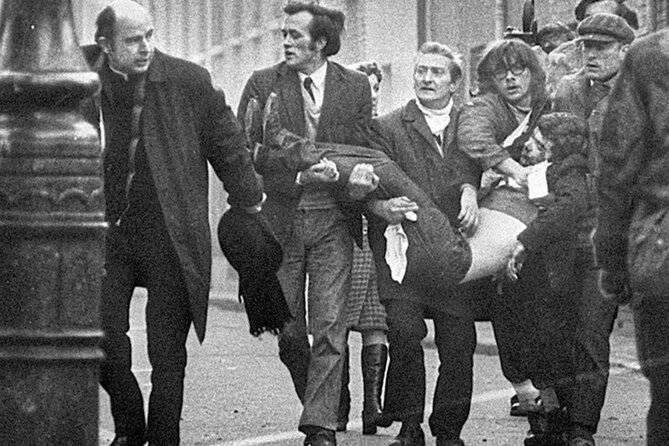
- Personal guides with firsthand connection: Many tours are led by people tied to the Troubles, including named guides like Jimmy Toye and John.
- The walk follows consequences, not just dates: You see where the dead and wounded fell, and how events shaped the community.
- You pass the Museum of Free Derry and iconic mural areas: Gable-wall murals by the Bogside Artists, Free Derry Corner, and the Gasyard Féile area set the scene.
- A focused route with a clear endpoint: The tour starts at Guildhall and ends near the Bloody Sunday monument, within sight of Free Derry Corner.
- Small group size helps the discussion: The tour caps at 20 travelers, which makes it easier to ask questions.
- A brisk, accessible walking plan: It’s about 1 hour 30 minutes total, and most people can participate.
Why the Bogside history walk hits differently than a standard tour
The Bogside isn’t just a neighborhood outside the city walls of Derry. It’s a living map of what the Troubles did to everyday life—homes, friendships, streets, and memory. A normal guided walk will show you the murals. This one ties those visuals to the events that helped define the modern story of the city.
What makes it compelling is the mix of hard history and street-level detail. You’re not only hearing about Bloody Sunday as an isolated tragedy. You’re also seeing how earlier clashes built tension, including the Battle of the Bogside, and how that period kept echoing forward.
And yes, it’s emotional. I’d frame it as a “history + human stakes” experience. You’ll likely leave with a fuller sense of why this part of Derry is still treated with such seriousness.
Guildhall start: you begin with the city’s edges and a march traced in steps
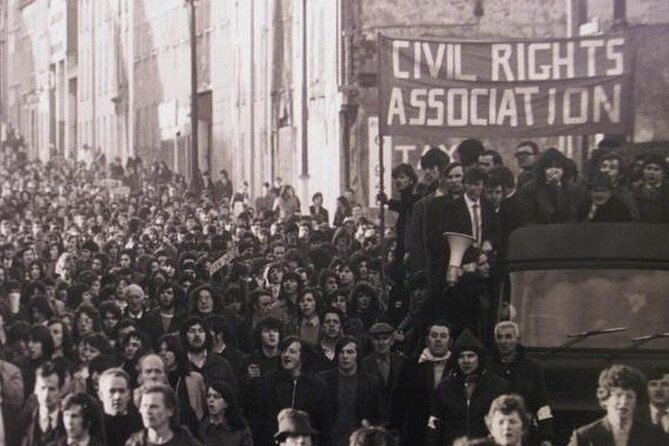
Most tours start at Derry Guildhall, Londonderry BT48 7BB. From there, you set off on a walk that retraces parts of the original march, then moves toward where the dead and wounded fell. That matters because you’re not learning history in the abstract. You’re walking a physical timeline.
This first stretch is where the guide usually lays out the basic shape of the story: political and social repercussions of Bloody Sunday, and the meaning of the Bogside’s role in the wider Troubles. The pacing here is important—this part is about orienting you before the route tightens around the memorial spaces.
You’ll also pass by major thematic landmarks along the way, including The Museum of Free Derry. You might not spend time inside during the main walk, but seeing it on your route helps you connect what you’re hearing with a place devoted to the community’s account and heritage.
If you like tours that are practical and clear, this is a strong start. A lot of the best feedback centers on guides who tell stories with humor when appropriate, which can help keep the conversation from feeling like a lecture with no air.
The Bogside sights: murals, Free Derry Corner, and why street art matters here
The Bogside is famous for big gable-wall murals by the Bogside Artists. They’re eye-catching on their own, but on this tour they act like a visual language. You’re learning what the murals are trying to preserve: memory, identity, and political meaning, all painted onto building sides where people actually live or used to gather.
You’ll also get a sense of why Free Derry Corner is such a magnet for visitors and locals alike. It’s not a random photo spot. It’s tied to how the community framed itself during the conflict, and why that framing is still remembered.
One more local touch you’ll hear about is the Gasyard Féile area—an annual music and arts festival held in a former gasyard. Even if your visit doesn’t line up with the festival, it’s a powerful reminder: culture didn’t stop. Community life kept pushing forward, even under pressure.
That combination—murals, corners, and cultural spaces—makes the tour more than a tragedy replay. It shows how art and gathering became part of survival and visibility.
Free Derry Corner to the Bloody Sunday monument: the route’s emotional endpoint
The tour’s second big segment moves you toward the conclusion point: the Bloody Sunday monument. The tour ends within sight of Free Derry Corner and beneath the city walls of Derry. That location is deliberate. It puts the memorial inside the same visual and geographic frame that explains why the city’s boundary lines mattered.
If the first half helps you understand context, this part helps you understand impact. The guide revisits the human cost of Bloody Sunday—talking about the dead and wounded, and the repercussions that followed. It can be devastating, but the way it’s presented is usually grounded in everyday place, not just headline-level description.
A key thing to know: this isn’t a silent monument stop. It’s a guided finish where the story lands. You’ll likely have a moment to look around, process, and then ask questions while the guide is still there to connect the dots.
If you’re the kind of traveler who likes to keep moving (or you’re tight on time), this tour’s structure is nice: you know when the emotional climax is coming, and you’re not left wandering alone at the end.
How the guides make it work: Jimmy Toye, John, Paul, McCrea, Neil, and Peter
The biggest praise across these tours is the people leading them. Names you may encounter include Jimmy Toye, John, Paul, McCrea, Neil, and Peter. A recurring theme is that guides share personal perspective in a way that feels accountable—not just as storytelling, but as testimony shaped by lived experience.
Jimmy Toye comes up again and again in standout feedback, with people describing the tour as both heartbreaking and funny at the same time. That mix of humor and candor is common in the strongest sessions. It’s not about making light of tragedy. It’s about keeping the conversation human.
John is another name tied to detailed explanation and a warm spirit. Paul and McCrea are frequently mentioned for being funny, knowledgeable, and willing to answer questions.
Neil is noted for kindness and considerate pacing, including an example of adapting for a young disabled woman in a wheelchair. That doesn’t mean every group will have the exact same experience, but it signals that some guides take practical care seriously.
Practical tip: if you’re sensitive to heavy topics, arrive with an open mind but also with emotional pacing in mind. This is history that affects identity. You’ll get more out of it if you let the guide’s perspective sit in your brain instead of trying to “power through” quickly.
Price and value: what $27.73 buys you in real terms
At $27.73 per person, this tour sits in the “reasonable for what you get” category, especially because it’s small-group (up to 20 travelers) and focused on a specific, high-meaning route. You’re not paying for a long drive or a giant bus experience. You’re paying for someone to connect place to story.
It’s also good value because the time is tight and intentional. The official time frame is about 1 hour 30 minutes. Some people note it can run closer to 2 hours, which actually makes sense when a guide takes questions and slows down to clarify details.
If you’re visiting Derry for a short stay, this is one of those tours that can upgrade your whole trip. You’ll walk away understanding why certain corners matter and why certain murals aren’t just decoration. That understanding makes other parts of the city more meaningful, even if you don’t book another tour.
Logistics that matter on the ground (and small watch-outs)
This is a walking tour. Wear shoes that can handle city pavement. Dress for Northern Ireland weather, because a “light drizzle” can turn your photos into sad blotches fast.
Meeting point is Derry Guildhall. The tour ends back at the meeting point, which simplifies your day plan. The route passes key landmarks like the Museum of Free Derry, then continues through the spaces around Free Derry Corner and ends near the Bloody Sunday monument.
Two practical considerations:
- Audio matters. A small number of past participants said they couldn’t hear the guide well. If you’re hard of hearing, it’s smart to ask the operator ahead of time whether they use any microphone setup.
- The tone is emotional. You’re dealing with real injury and loss. If you’re traveling with kids or you have limits on what you can handle, think carefully before booking.
On the plus side, service animals are allowed and the tour is described as near public transportation. It’s also offered in English, with confirmation received at booking time.
Who this tour is best for (and who should think twice)
Book this if you:
- Want a street-level history experience instead of just reading plaques.
- Like tours where the guide can answer questions and bring a personal viewpoint.
- Want to understand Bloody Sunday in a way that connects to the Bogside’s identity, murals, and community memory.
- Are okay with a serious topic and can handle an emotional narrative without needing jokes to replace meaning.
Consider something else if:
- You need a lighter, purely visual tour and don’t want to confront the details of Bloody Sunday and the Troubles.
- You get uncomfortable with firsthand accounts that can be intense and specific.
- You require very strong audio clarity; in that case, ask directly about sound support.
Should you book the Bogside History Tour?
Yes, I’d strongly consider it—especially if this is your main planned history experience in Derry. The route is short enough to fit a day, and the focus is exactly where the story feels most grounded: murals, corners, and the memorial that anchors Bloody Sunday in place.
Just go in ready for weighty themes. And if audio is important for you, do a quick pre-emptive check about how the guide’s voice is carried on the day.
FAQ
FAQ
How long is the Walking Bogside History Tour?
It runs about 1 hour 30 minutes in total.
Where does the tour start?
The meeting point is Derry Guildhall, Londonderry BT48 7BB, UK.
Where does the tour end?
The tour ends back at the meeting point.
What’s the price per person?
The price is $27.73 per person.
Is the tour offered in English?
Yes, it’s offered in English.
Does the tour use a mobile ticket?
Yes, it uses a mobile ticket.
How many people are in a group?
The tour has a maximum of 20 travelers.
Is there free cancellation?
Yes. You can cancel up to 24 hours in advance for a full refund.
Is the tour accessible or suitable for most travelers?
It’s listed as suitable for most travelers, and service animals are allowed.