REVIEW · AGRA
Agra Fort: Guided UNESCO Heritage Walking Tour
Book on GetYourGuide →Operated by Crystal India Holidays · Bookable on GetYourGuide
Agra Fort can feel like a maze, but a good guide turns it into a story with direction. In just 1 hour, you hit the Mughal highlights that explain how this UNESCO site worked as both a fort and a royal palace. You’ll move through spaces like Diwan-i-Am, Diwan-i-Khas, and Jahangiri Mahal, then connect the dots to the darker chapter around Shah Jahan’s imprisonment.
Two things I’d prioritize: the pacing stays easy to follow, and the guide helps you notice details you’d miss on your own, including standout view points and how the palace spaces connect. One consideration is simple: Agra Fort is huge with uneven ground and lots of walking, so one hour covers the “must-sees,” not every corner.
In This Review
- Key Things to Know Before You Go
- Agra Fort in 60 Minutes: What This Tour Really Covers
- Entering Through Amar Singh Gate and Getting Your Bearings Fast
- Court and Ceremony: Diwan-i-Am and Diwan-i-Khas
- Diwan-i-Am
- Diwan-i-Khas
- Jahangiri Mahal: A Palace That Blends Styles
- Shah Jahan, Aurangzeb, and Musamman Burj
- Mirrored Palace and Anguri Bagh: Symmetry You Can Feel
- Mirrored palace
- Anguri Bagh geometric gardens
- Photo Safety and Photo Timing: Why the Guide Matters
- Price and Logistics: Is $6 Good Value?
- Who This Private Tour Fits Best
- Should You Book This Agra Fort Walking Tour?
- FAQ
- How long is the Agra Fort guided walking tour?
- Where does the tour start and how do I find the guide?
- What’s included in the price?
- Are transfers included?
- What language is the live guide?
- Is photography allowed?
- What should I bring?
Key Things to Know Before You Go
- Amar Singh Gate is the main visitor entry, so expect a quick orientation right from the start
- You’ll focus on signature spaces like Diwan-i-Am, Diwan-i-Khas, and Jahangiri Mahal
- The tour places major emphasis on Shah Jahan and Aurangzeb, including the spot associated with his imprisonment
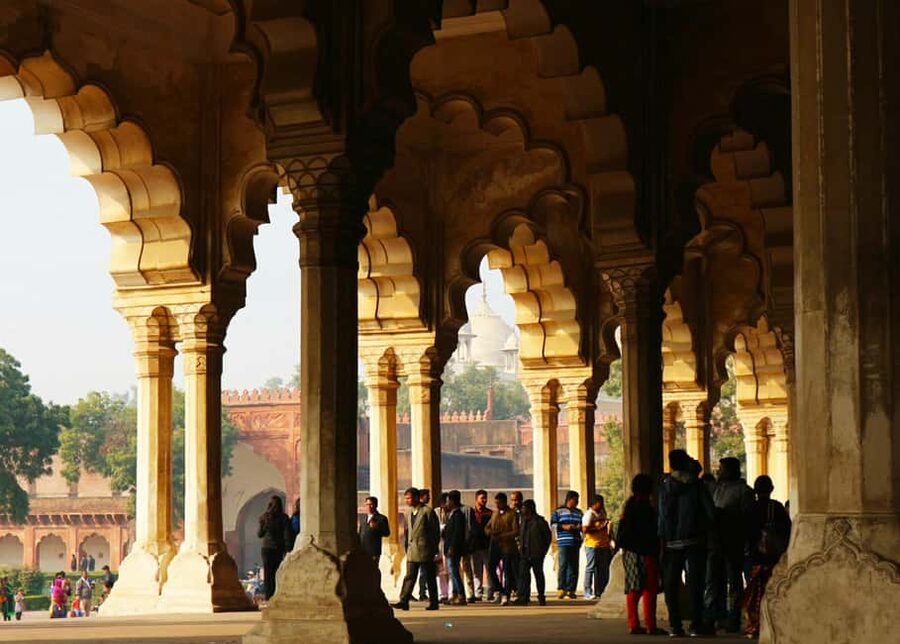
- You’ll pass key Mughal elements such as jharokhas, Mughal arches, and marble carvings
- If it’s accessible, you may get time for the mirrored palace and the Anguri Bagh geometric gardens
- A strong guide can help with safety and photo positioning near busy entrances
Agra Fort in 60 Minutes: What This Tour Really Covers

Agra Fort is not a “stand in one place and admire it” site. It’s a working palace-fort complex with corridors, ramps, chambers, and courtyards that change your perspective as you move. That’s why this guided format works so well for most visitors.
In about an hour, you’re not trying to conquer the entire fortress. Instead, you’re guided through the major anchor points that make the fort make sense: where rulers received people, where they lived, where power shifted, and where you can still feel the Mughal focus on symmetry and spectacle.
The tour’s structure is practical. You start at the entry gate, get a “map in your head” from the guide, and then you follow a logical path through the most meaningful rooms and outdoor sections. That matters because without context, Agra Fort can feel like you’re wandering among impressive stones with no clear thread.
You can also read our reviews of more tours and experiences in Agra.


Entering Through Amar Singh Gate and Getting Your Bearings Fast
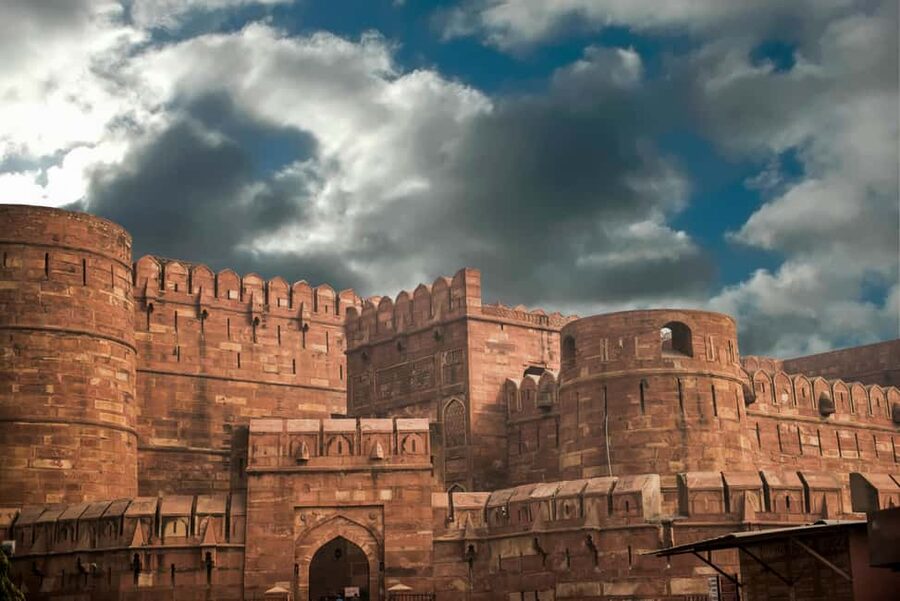
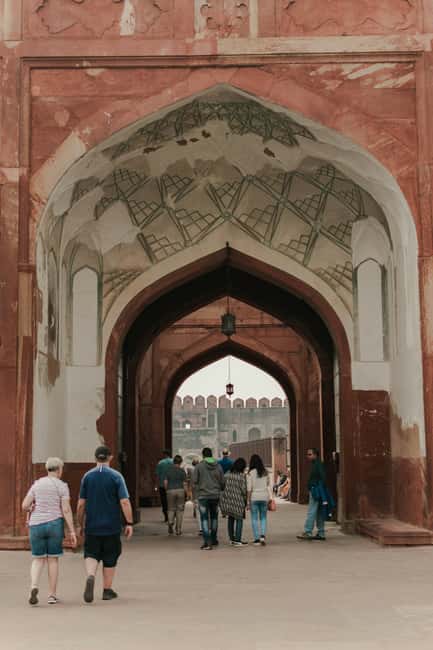
Your tour begins at Amar Singh Gate, identified as the sole entry for visitors. That’s useful information because it means you’ll be funneled to the same starting point everyone uses, and your guide can orient you immediately on how the fort is laid out.
From there, you’ll learn one of the big keys to Agra Fort: it wasn’t only built for display. It functioned as a stronghold and a royal residence at the same time. The guide helps you understand how design choices supported both control and comfort—think of thick fortifications and defensible positions, but also the refined palace touches that signal status.
If you want photos (and you probably do), an orientation helps you get into the right mindset early: you start looking for arches, carvings, and window-style details instead of only chasing the loudest viewpoints.
One more practical point: expect bag checks at the entrance. Large bags and prohibited items aren’t allowed, so plan light. Comfortable shoes matter here too, because the fort has uneven surfaces and you’ll be walking steadily.
Court and Ceremony: Diwan-i-Am and Diwan-i-Khas
The heart of Mughal power is court life, and this tour gives you the rooms where that feeling is closest to the surface.
Diwan-i-Am
Diwan-i-Am is where emperors met the public and held court. Standing in that kind of space changes how you understand the Mughal Empire. You’re not just looking at architecture. You’re imagining the rhythm of public authority—message delivery, petitions, announcements, and the visual message that power sits inside a carefully designed setting.
Even if you don’t know Persian terms or Mughal titles, the guide’s job is to translate the space into everyday meaning: where people stood, where attention focused, and why the building feels both formal and theatrical.
Diwan-i-Khas
Then comes Diwan-i-Khas, the more private, selective chamber. This is where the Mughal idea of access becomes physical. The contrast between public and private audience spaces is one of the fastest ways to grasp how rulers controlled information and proximity.
Your guide will connect these rooms back to the broader story of rulers like Akbar and Jahangir, and how later leaders built on the empire’s established palace culture. The result is that you leave with a clearer timeline rather than a pile of impressive buildings.
Jahangiri Mahal: A Palace That Blends Styles
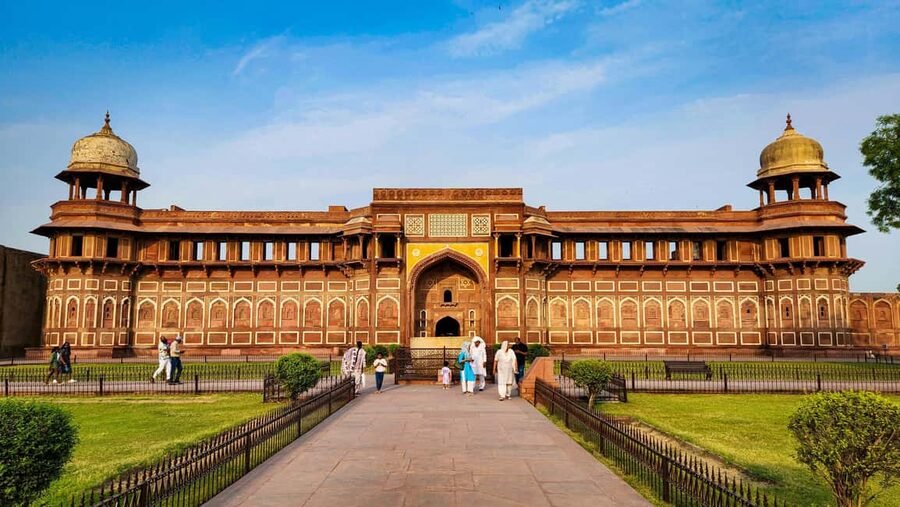
Jahangiri Mahal is one of those places where you can feel the Mughal taste for mixing influences. The tour frames it as an example of how Agra Fort wasn’t stuck in one design language.
You’ll also learn that some areas blend Rajput, Persian, and Islamic styles. That matters because it explains why the fort looks like it belongs to the region and the empire at the same time. If you’ve ever wondered why Indian historical architecture can look both local and cosmopolitan, this is the kind of stop that gives you an answer you can see with your own eyes.
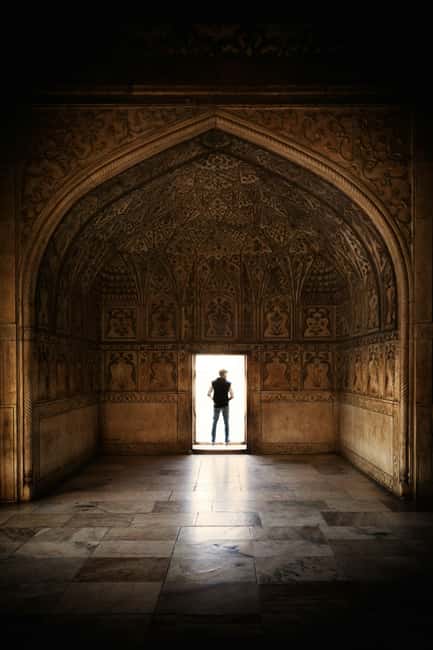
This is also where your eyes will start “reading” the building. You’ll notice things like Mughal arches, ornamented jharokhas, and detailed marble work. Even in a short tour, these details are powerful because they show you the fort isn’t just about walls and defenses—it’s about aesthetics as a tool of authority.
Shah Jahan, Aurangzeb, and Musamman Burj
This fort doesn’t only do grandeur. It does drama too.
The tour includes the spot associated with Shah Jahan being imprisoned by his son Aurangzeb. That single historical thread changes the emotional tone of your walk. It’s one thing to see royal buildings as symbols of success. It’s another to connect parts of the complex to confinement and political collapse.
Then there’s Musamman Burj, the place associated with Shah Jahan spending his final days while gazing toward the Taj Mahal. The tour frames that view as bittersweet: beautiful distance, heavy reality in the foreground. If you’ve already visited the Taj Mahal, this stop adds context you might miss when you only experience that monument as a standalone masterpiece.
Practically, this also helps you photograph with purpose. Instead of taking random pictures, you’re capturing a relationship between spaces—the fort, the memory of captivity, and the idea of what could be seen beyond.
Mirrored Palace and Anguri Bagh: Symmetry You Can Feel
Two of the highlights most visitors look forward to are the mirrored elements and the garden geometry. This tour gives you time to chase both, but with one smart caveat: the guide will only take you into the mirrored palace if it’s accessible.
Mirrored palace
The mirrored palace is about light and reflection—how a room turns movement into spectacle. Even if you don’t get a long look, the fact that it’s included tells you the fort isn’t only serious and ceremonial. It also has playfulness, a courtly fascination with surfaces and shimmer.
Anguri Bagh geometric gardens
Then comes Anguri Bagh, known for its geometric garden design. The tour notes these gardens were enjoyed by Mughal queens, which is an important nuance. You’re not only picturing emperors. You’re seeing how power and taste worked for royal women in the domestic leisure spaces.
The geometric layout is what makes this section easy to photograph and easy to understand. Straight lines and planned sight angles make it feel intentional. In a fort full of chambers and corridors, the garden gives your eyes a reset—and gives you a final visual payoff.
Photo Safety and Photo Timing: Why the Guide Matters
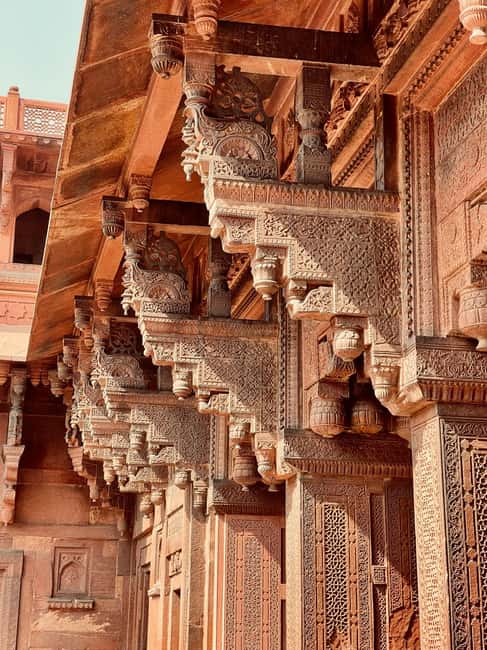
Agra Fort entrances and nearby lanes are busy, and photo culture can attract pressure. One of the most praised things about this tour is that the guide pays attention to safety and keeps you from getting pulled into chaotic, scammy photo interactions around the fort entrance.
Some guides—like Gagan—are described as very clear about where to meet and when, and helpful with taking photos. Others—like Shahid Khan—are praised for enthusiasm, strong historical explanations, and helping avoid the worst of weekend rush and navigating queues where required.
You should assume your guide’s style can vary. But the overall intent is consistent: you’re there to see the fort, not get distracted by vendors or hustlers. A guide who watches the perimeter and helps you time photos is a real value add, especially in a place where crowds can turn every landmark into a traffic jam.
If you want your best shots, wear comfortable shoes and keep your camera ready. But remember the rules: photography is allowed, while drones and tripods are usually prohibited unless you have special permission.
Price and Logistics: Is $6 Good Value?
At $6 per person for a guided tour lasting 1 hour, this is priced for maximum access. You’re paying for translation, context, and on-the-ground direction—things that often cost much more elsewhere.
What makes the value feel even stronger is that the experience isn’t just about “walking with someone.” It’s about getting meaning. You’ll hear about the fort’s design as a military and royal space, understand key buildings like Diwan-i-Am and Jahangiri Mahal, and get the emotional and political thread around Shah Jahan and Aurangzeb. That’s hard to replicate if you’re only using a phone map and guesswork.
The main logistics point to know: transfers are not included. That isn’t a problem if you already planned how to get to Agra Fort. But if you’re still figuring out transport from your hotel, include that cost and time in your day plan.
A final logistics bonus: the Taj Mahal is about 2.5 km away, so it’s realistic to combine both in the same day. A fort tour that lasts only one hour makes sequencing easier and reduces the chance you’ll feel rushed at the Taj Mahal.
Who This Private Tour Fits Best
This private group format is ideal if you want a guide’s focus without the distraction of a large crowd tour. You’re also better suited for this if you like structured sightseeing—getting the key stops in the right order with clear explanations.
This tour also makes sense for:
- First-time visitors to Agra Fort who want the main story points
- Travelers who plan to pair Agra Fort with the Taj Mahal on the same day
- People who want better photo positioning and smoother movement through busy areas
- Anyone who prefers guided context over self-guided guessing
If you’re the kind of traveler who wants to wander slowly and read every inscription for hours, the one-hour format may feel tight. But if your goal is to see what matters and leave with understanding, it’s a smart use of time.
Should You Book This Agra Fort Walking Tour?
Yes—if you want the fort’s highlights with context, and you value a guide who can keep things smooth and safe around busy entry areas. For $6 and a tight 1-hour window, you get a focused route through the most meaningful Mughal spaces: Diwan-i-Am, Diwan-i-Khas, Jahangiri Mahal, the Shah Jahan/Aurangzeb story thread, Musamman Burj, plus mirrored palace access if possible and Anguri Bagh gardens.
I’d hold off only if you strongly prefer long, unstructured exploration or you’re not ready for uneven ground and a steady walking pace.
If you’re doing Agra Fort in one day, especially alongside the Taj Mahal, this is a strong way to make that day feel organized instead of chaotic.
FAQ
How long is the Agra Fort guided walking tour?
It lasts 1 hour.
Where does the tour start and how do I find the guide?
You’ll receive the guide’s contact details from the local service provider via WhatsApp (or email if you don’t use WhatsApp) one day before your tour. The provider’s WhatsApp number is also listed on your booking voucher.
What’s included in the price?
The tour includes a guided tour of Agra Fort.
Are transfers included?
No. Transfers are not included.
What language is the live guide?
The live tour guide speaks English and Hindi.
Is photography allowed?
Yes, photography is allowed. Drones and tripods are usually prohibited without special permission.
What should I bring?
Bring comfortable shoes and a camera.