REVIEW · SINGAPORE
Chinatown Heritage Centre Tour Experience
Book on Viator →Operated by Chinatown Heritage Centre · Bookable on Viator
Singapore’s Chinatown has stories you can hear.
At the Chinatown Heritage Centre, the best part is how the tour uses real-world voices to explain everyday life, from a tough “coolie” to the steady presence of the samsui woman. Guides such as Ah Choo (aka TC) and Swee Lin are especially good at making the exhibits feel personal, not like a textbook.
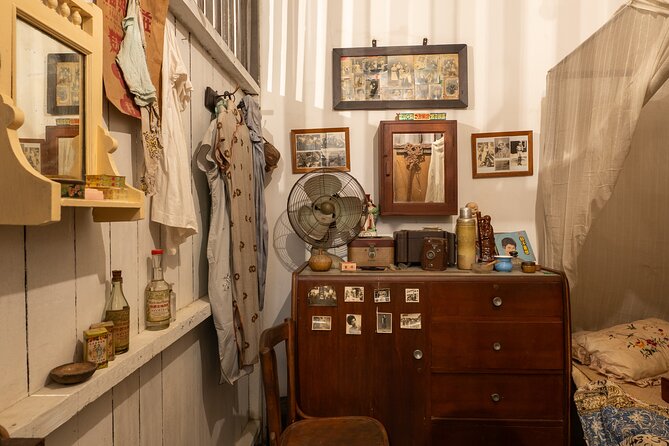
I also really like the hands-on feel of the space: you move through recreated living rooms and preserved shophouses tied to 1950s Chinatown, with original household items that help you picture daily routines. It’s not just set dressing. It’s built to show what work, housing, and community life looked like, piece by piece.
One drawback to plan for: the visit runs about 1 hour 30 minutes, and there’s no re-entry once you step out. Add the no-flash, no-food/drinks rules, and you’ll want to go in ready to focus for the full session.
In This Review
- Key Points at a Glance
- Chinatown Heritage Centre Tour: What You’re Really Getting
- The 5:30pm Start: Why Timing Matters Here
- Inside the Centre: How the Tour Flows Through Chinatown Spaces
- Under One Roof: The Power of the Story Characters
- Recreated Living Spaces and Authentic Objects
- Guides Are the Secret Sauce: Ah Choo (TC), Swee Lin, Mah Jie (Karen)
- What You Learn (Without Feeling Like School)
- Price and Value: Is $36.40 Worth It?
- Practical Tips So You Don’t Lose Time
- Who This Tour Fits Best
- Should You Book This Chinatown Heritage Centre Tour?
- FAQ
- What time does the Chinatown Heritage Centre tour start?
- How long is the tour?
- Is the tour in English?
- What’s included in the ticket price?
- Is a mobile ticket used for entry?
- Are flash photos allowed inside the centre?
- Can I bring food or drinks into Chinatown Heritage Centre?
- Can I leave and come back later during the same visit?
- Is the tour refundable?
Key Points at a Glance
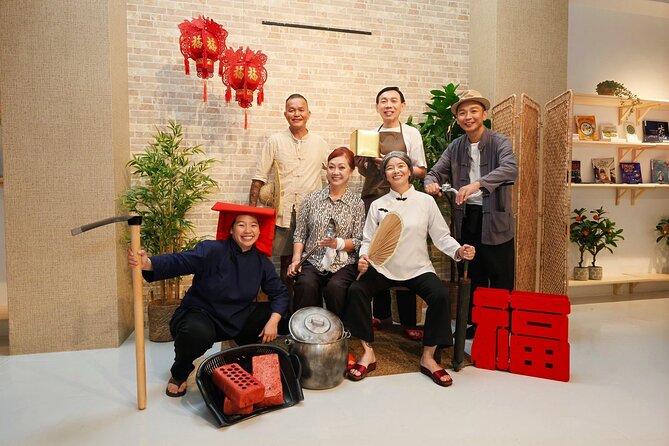
- Three storylines, one shared home: learn how coolies, samsui women, and hawkers’ paths connected “under one roof.”
- Recreated 1950s spaces: preserved shophouses plus period household items help you make sense of daily life.
- Guides with standout storytelling: you may hear from guides like Ah Choo (TC), Swee Lin, or Mah Jie (Karen).
- Admission plus a guided programme: your ticket covers both the exhibition galleries and the English tour.
- Rules that shape your visit: no flash photography, no food or drinks, and no re-entry.
Chinatown Heritage Centre Tour: What You’re Really Getting
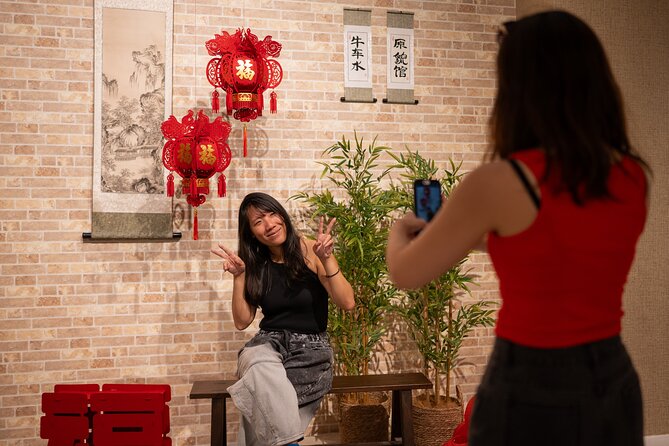
This tour is for people who like history with faces, not dates. The Chinatown Heritage Centre is set up so you don’t just look at objects—you get guided context that connects what you see to real human struggles and community bonds.
The experience is built around first-person-style storytelling: you’ll hear how different roles lived, worked, and supported one another. The coolie, the samsui woman, and the hawker may sound like separate chapters, but the guiding theme is how their lives intersected in Chinatown.
At $36.40 per person, it’s priced like an “activity” day item, not a budget museum pass. The value comes from the guided storytelling plus the authentic-looking spaces you’ll walk through while you listen.
You can also read our reviews of more tours and experiences in Singapore.

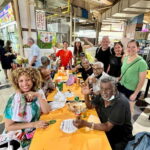
The 5:30pm Start: Why Timing Matters Here
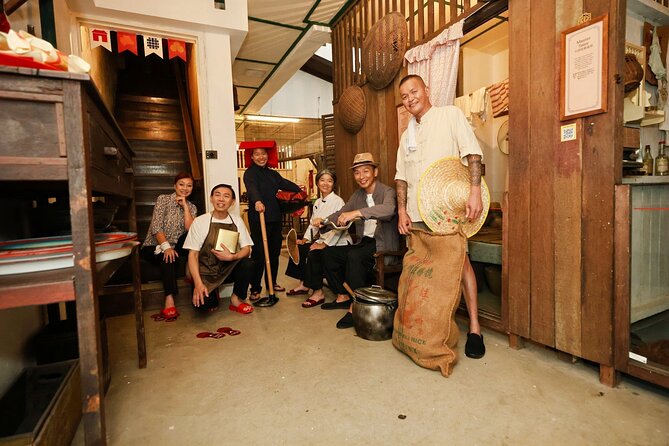
Your tour time starts at 5:30 pm, and you’ll be asked to arrive about 15 minutes early. That matters because the centre runs on a set schedule and late arrivals won’t be accommodated, so you don’t want to sprint across Chinatown at the last second.
A 5:30 start is also a smart fit for many Singapore itineraries. You get a late-afternoon slot that can work well if you’re already wandering nearby shophouses or markets earlier in the day.
Also, since re-entry isn’t allowed, you’ll want to settle in, use the basics before you go in, and keep the tour as a focused block on your schedule rather than a quick stop.
Inside the Centre: How the Tour Flows Through Chinatown Spaces
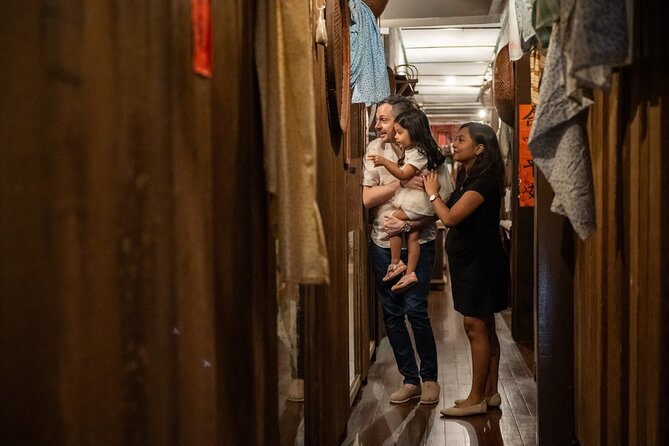
Once you’re inside Chinatown Heritage Centre, the visit is structured to move you through recreated and preserved areas rather than stopping only at one display wall.
You’ll spend time walking through preserved shophouses and viewing original household items. That layout helps you understand why home life and work life were so close in old Chinatown—this wasn’t “living in one building and commuting somewhere else.”
The guided programme is in English, and it’s designed to turn what you see into a sequence of stories. Instead of a list of facts, it’s more like you’re being guided room-to-room, with each space tied to a particular slice of life.
What you should know: because it’s a guided programme and not a self-paced audio guide, the pacing is set for the group. If you prefer stopping whenever you want to read every label slowly, plan to use your attention wisely during the tour and leave time for any extra looking afterward—if time allows.
Under One Roof: The Power of the Story Characters
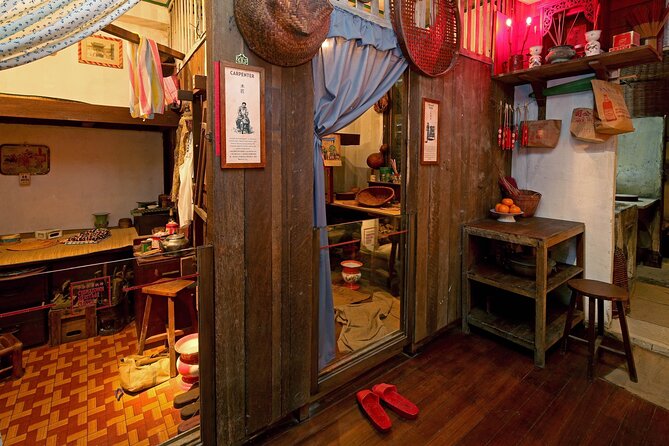
The centre’s big idea is simple: show how different people’s lives in Chinatown connected. The tour highlights three recurring voices: the coolie, the samsui woman, and the hawker.
Why that approach works for you: it prevents the visit from becoming one-note history. You’re not only seeing the goods and the buildings—you’re seeing how different people contributed to the neighbourhood and how hardship shaped their day-to-day decisions.
As the tour goes on, the stories aren’t just separate biographies. You’ll be guided toward the theme that their paths came together—“under one roof,” meaning community life formed a shared reality even when their roles were different.
Recreated Living Spaces and Authentic Objects
This tour earns its value with the way it uses space. You’re not just viewing glass cases; you’re walking through recreated living areas and preserved rooms that represent how 1950s Chinatown households may have lived.
This is where you’ll learn most quickly, because your brain can connect scale and layout. A small kitchen or household corner helps you understand what chores meant and why every square metre counted.
The original household items matter too. Even without knowing every term or function, you’ll get the sense that these objects were chosen to represent real routines—storage, daily tasks, and the physical texture of home life.
The best part for many people: it’s easy to follow. You don’t need background knowledge to grasp what the guide is building toward.


Guides Are the Secret Sauce: Ah Choo (TC), Swee Lin, Mah Jie (Karen)
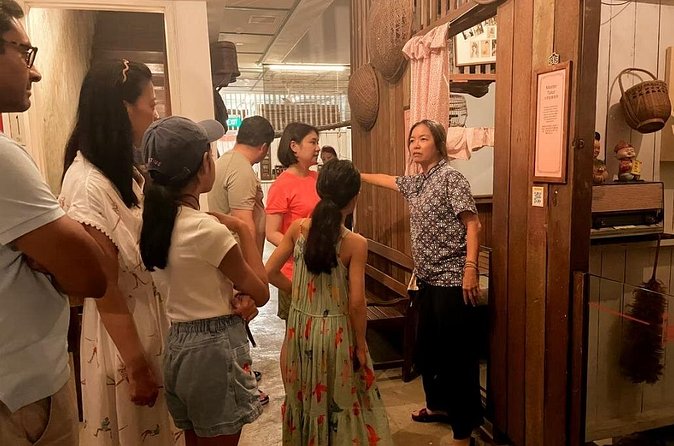
A strong tour guide can make even a museum feel alive. Here, that impact comes up again and again through named guides like Ah Choo (TC), Swee Lin, and Mah Jie (Karen).
Ah Choo (TC) is described as entertaining, with narration that brings old Chinatown into focus. That kind of performance matters because the content deals with hardship, work, and survival. If the guide keeps the energy human and the pacing clear, you don’t feel stuck in heavy material.
Swee Lin’s storytelling is highlighted as engaging and informative. That’s the balance you want: explanation that helps you understand, without turning the tour into a lecture.
Mah Jie (Karen) is noted as carrying the tour with memorable delivery. Even if your guide isn’t the one mentioned in these names, the key takeaway is this: the tour is designed for voice-driven storytelling, so you’re likely to feel the difference between a reading of facts and a guided narrative that connects everything.
What You Learn (Without Feeling Like School)
You’ll leave with a stronger sense of how Chinatown worked as a community, not just as a tourist area. The tour’s structure nudges you to think about roles—who did which jobs, who lived where, and how support networks formed when life was hard.
You’ll also learn how the visitor experience itself is part of the goal: the centre is meant to help you see the past as lived experience. When the guide ties an exhibit to a person’s daily struggle, it sticks in your mind longer than a plain description would.
If you’re the type who likes Singapore beyond skyline photos, this is a solid match. It’s a neighbourhood-focused story, told through people rather than only politics.
Price and Value: Is $36.40 Worth It?
Let’s talk value in real terms.
At $36.40 per person, you’re paying for three things:
- entry to the exhibition galleries
- an English guided programme
- access to the recreated/preserved spaces that support the stories
If you’re comparing this to a self-guided museum visit, the price looks higher. But if you value interpretation—someone explaining what you’re seeing and why it matters—the guided element is the payoff.
Also, the tour is about 1 hour 30 minutes. That’s a comfortable length for many people: long enough to feel like you got somewhere, not so long that you’re exhausted by the time you step back onto the street.
For families, it’s often worth it because the storytelling approach works across ages. Just remember every person—including children—needs a paid ticket, and children under 12 must be accompanied by an adult.
Practical Tips So You Don’t Lose Time
Here are the simple things that help you enjoy the tour more.
- Arrive early. Aim to be there about 15 minutes before 5:30 pm so you can settle without rushing.
- Plan for a single entry. Since re-entry isn’t allowed, handle any quick needs before you go in.
- Respect photo rules. Flash photography isn’t allowed, and there’s no food or drinks inside the centre. Bring what you need before you enter (water outside, snacks outside, then back to sightseeing).
- Give yourself focus time. The tour is structured, so try not to split attention between reading everything and listening to the guide.
One more small detail: photos or videos taken on-site may be used for promotional purposes, so keep that in mind if you’re sensitive about being photographed.
Who This Tour Fits Best
This is a good choice if you:
- want Singapore neighbourhood history with human stories
- like tours where the guide narrates and connects objects to daily life
- prefer experiences that don’t require prior background knowledge
It can also work well for families because it’s described as suitable for all ages, with the main rule being that children under 12 must be accompanied by an adult.
If you only want quick, shallow highlights and you don’t want to sit through a guided narrative, you might find it too story-heavy. But if you enjoy learning how real people lived, you’ll probably get a lot from the pacing and character-driven theme.
Should You Book This Chinatown Heritage Centre Tour?
Book it if you want a Chinatown experience that’s more than streets and signage. I think it’s a strong value when you enjoy guided storytelling and when you like connecting rooms and objects to the way people actually lived.
Skip it only if you’re looking for a self-paced museum walk, or if you hate tours with strict rules about photos and food. The lack of re-entry also means you shouldn’t treat it like a casual drop-in.
If you’re planning an evening in Chinatown around that 5:30 pm slot, this is one of the easiest “make it meaningful” stops you can add to your day. You’ll leave with a clearer picture of how Chinatown formed community—one role, one room, and one story at a time.
FAQ
What time does the Chinatown Heritage Centre tour start?
The start time listed is 5:30 pm.
How long is the tour?
The duration is about 1 hour 30 minutes.
Is the tour in English?
Yes. The guided programme is in English.
What’s included in the ticket price?
Your ticket includes admission to the exhibition area and the guided programme.
Is a mobile ticket used for entry?
Yes, the experience uses a mobile ticket.
Are flash photos allowed inside the centre?
No. Flash photography is not allowed inside the Centre.
Can I bring food or drinks into Chinatown Heritage Centre?
No. Food and drinks are not allowed inside the Centre.
Can I leave and come back later during the same visit?
No. Re-entry is not allowed.
Is the tour refundable?
No. Tickets are non-refundable, non-transferable, and cannot be changed.