REVIEW · CAIRO
9 Days Private Historical Tour in Egypt
Book on Viator →Operated by Egypt Tours Gate · Bookable on Viator
Pyramids by day, sea by night. This private 9-day journey is built for people who want the big-name Egypt moments plus downtime on the Red Sea, with meet-and-assist support and an Egyptologist guide doing the explaining. You’ll also have a 5-star base (breakfast included) set near the Giza Pyramids, so your first views don’t feel like a drive-by.
I love how much of the schedule is handled for you: airport help, air-conditioned transport, and even internal flights linking Cairo, Luxor, and Sharm. You also get real options at key sites (like time at the pyramids for things such as camel riding or the extra-cost chamber entry). The main drawback to plan for is cost creep: some major tickets are not included (like pyramid chambers and the Tutankhamun tomb), and optional extras can add up fast.
In This Review
- Key Highlights Worth Your Time
- What You Get for $4,500: Private Guide, 5-Star Base, and Flights
- Arriving in Cairo and Sleeping at Giza’s Doorstep
- Giza Pyramids and Sphinx: Chambers, Camel Time, and a Guide Who Talks Meaning
- Saqqara’s Step Pyramid and Mit Rahina Museum: Older Than the Buzzwords
- Egyptian Museum Highlights and Coptic Cairo’s Churches and Ben Ezra
- Karnak and Luxor Temple: Huge Scale With a Human Explanation
- Valley of the Kings to Deir el Bahari: The West Bank Sequence That Makes Sense
- Sharm El Sheikh: A Built-In Red Sea Reset
- Dahab and Blue Hole Day: Change of Scenery, Same Red Sea Vibe
- Transfer Back to Cairo and a Nile Evening Option
- Who This Tour Fits Best (and Who Should Reconsider)
- Should You Book This Private Cairo–Luxor–Sharm Tour?
- FAQ
- Is this tour private, or do I share it with other people?
- How long is the trip?
- What’s included in the guide and transportation?
- Are domestic flights included?
- Do you include hotels and meals?
- Do I need an Egypt visa?
- Are entrance fees to the pyramids and King Tut included?
- Is the Sound and Light show included?
- Is the Dinner Nile cruise included?
- What if the weather is bad?
Key Highlights Worth Your Time
- Meet-and-assist and internal flights keep transfers from eating your day.
- Giza time with real choices (including the option to add chambers or camel time).
- Saqqara + Memphis gives you more than just pyramids-with-a-photo moment.
- Coptic Cairo in the same trip adds a different Egypt after the pharaoh stuff.
- Sharm El Sheikh break means you’re not living in museums 24/7.
- Attention to timing with guides such as Ibrahim and Atef, praised for keeping the day on track.
What You Get for $4,500: Private Guide, 5-Star Base, and Flights
At $4,500 per person, this isn’t a budget grab-and-go. You’re paying for the parts that usually go wrong when you DIY Egypt: confusing logistics, slow lines, and the stress of switching between cities.
Here’s what’s clearly baked in: a qualified Egyptologist guide, air-conditioned vehicle, bottled water during day trips, and meet-and-assist help on arrival and departure. You also get internal flights connecting Cairo → Luxor → Sharm El Sheikh → Cairo, plus 5-star hotels on a bed-and-breakfast basis for the full stretch. Lunch is included on four days, which matters because you won’t always want to hunt for food between monuments.
The value angle is simple: you’re buying time and mental energy. Egypt’s highlights are intense. Having someone coordinate the day so you can focus on the sites is what makes this work.
You can also read our reviews of more tours and experiences in Cairo.



Arriving in Cairo and Sleeping at Giza’s Doorstep
Your first day starts with airport support. A representative meets you at Cairo International Airport and helps you through the main steps—passport control, luggage, and customs—so you can go from “arrival chaos” to “hotel bed” with less friction.
Then you’re taken to a Cairo hotel located at the foot of the Giza Pyramids. That’s a big deal. Even if you don’t do much on Day 1, the location sets the tone. Early next morning is easier when you’re already close to Giza.
If your schedule works, you may also be able to tap into optional tours on that first afternoon/evening. It’s a nice perk when you’re landing early.
That night you have the chance to see the Sound & Light show at the Great Pyramids area and the Sphinx. It’s a popular way to get the drama of the monuments without adding another museum day—just know the ticket isn’t included.
Practical tip: plan to be out of the heat when possible on arrival day. Egypt can hit you fast once you step outside.
Giza Pyramids and Sphinx: Chambers, Camel Time, and a Guide Who Talks Meaning
Giza is where people either fall in love with Egypt or decide they only care about photos. This experience helps you do the first one.
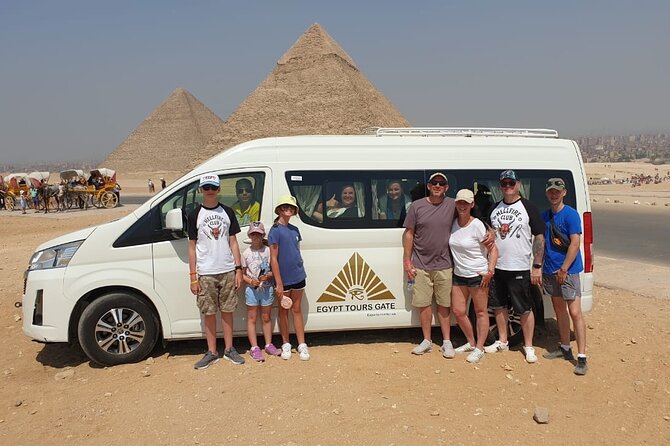
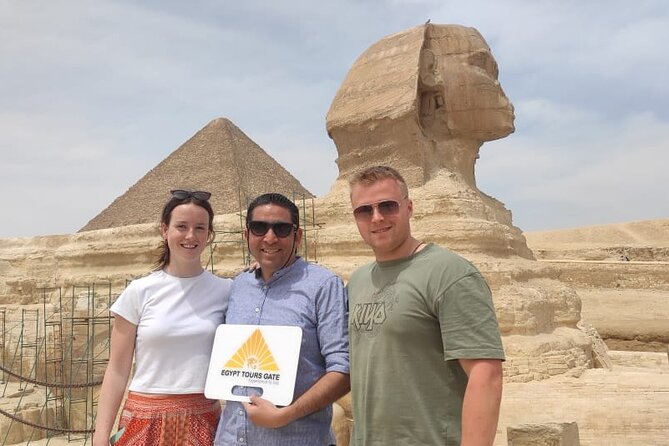
You get guided time at the Pyramids of Giza, with your Egyptologist explaining pharaohs, gods, goddesses, and the beliefs around mummification. That context matters because the site can look like “giant stone blocks” until someone connects it to how the ancient Egyptians thought.
The stop is about 4 hours and includes entry for the core pyramid area. You’ll have time to add experiences that are common at Giza, such as:
- entry into the pyramid chambers (this has an extra fee)
- camel riding (commonly offered on-site; any added costs are not spelled out)
After that, you visit the Sphinx and the Valley Temple.
What I like about this setup is the balance of structure and freedom. You’re not herded like luggage. You’ll also want a moment to just stand there and look at the scale. Giza does that to you.
Possible consideration: the “extra cost” items at Giza are exactly where many budgets start to slip. The chamber entry fee is listed separately, so decide in advance if you want to pay for it—or save that money for something later.
Saqqara’s Step Pyramid and Mit Rahina Museum: Older Than the Buzzwords
If Giza is the headline, Saqqara is where the story gets deeper.
You’ll head to the Saqqara (Sakkara) Pyramids, including the valley temple area. The big star is the Step Pyramid, described as about 4,800 years old. Your guide also accompanies you inside one of the tombs dedicated to nobles, which adds that “you’re not just looking” feeling.
This segment is about 2 hours, and it moves at a pace that doesn’t feel rushed but doesn’t waste your time in empty waiting.
Then you go to Mit Rahina Museum, an open-air setting tied to the ancient city of Memphis. Here’s what’s especially worth your attention:
- a second-largest Sphinx displayed at the site
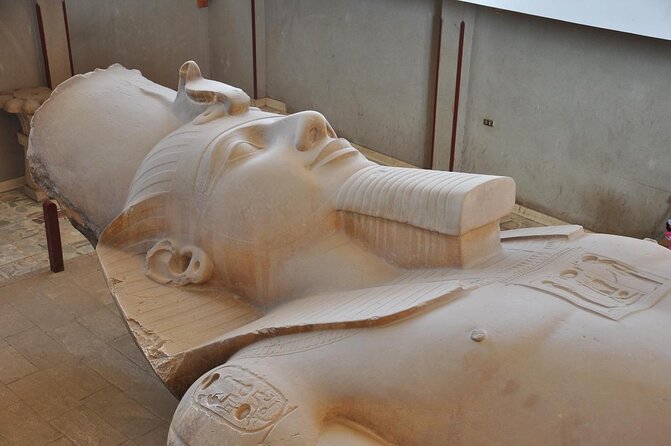
- a massive colossus of Ramses II (the description notes around 1200 B.C.)
A guide explanation is a big help here. Without context, open-air ruins can blur together. With context, you start noticing how sculpture style and location choices reflected power and belief.
If you get heat-sensitive, bring shade logic: move early, drink water, and keep breaks short but real.
Egyptian Museum Highlights and Coptic Cairo’s Churches and Ben Ezra
Back in Cairo, the focus shifts from monuments outside to treasures inside.
At the Museum of Egyptian Antiquities, you have about 3 hours with a private living guide. The museum’s “musts” include King Tutankhamun’s treasures from his tomb, which are described as the top attractions here. You’ll also get private free time after the guided highlights—use it. The museum is big and can overload you if you try to see everything.
Then you head to Coptic Cairo, which is one of my favorite ways to avoid Egypt becoming a single-genre trip. This is about faith layers across centuries, and you see them in a compact area.
The stops include:
- the Hanging Church, about 1,500 years old, built on top of a tower from the fortress of Babylon
- the Cavern Church, described as being tied to the cave where baby Jesus and Mary were hiding while escaping King Herod—your guide even points out what you can see downstairs
- the Ben Ezra Synagogue, described as the oldest synagogue in Egypt and dating to the 9th century
- lunch is served during this day tour
This is about more than stopping for pictures. The rhythm of the churches and the underground space makes the history feel close.
A small consideration: church visits can involve stairs and uneven ground. If you have mobility issues, mention it early so the guide can plan your path better.




Karnak and Luxor Temple: Huge Scale With a Human Explanation
Luxor days can either feel overwhelming or wildly satisfying. This one aims for satisfying.
You start with Temple of Karnak, described as a complex of temples rather than a single monument. With your private guide, you learn about the walls, columns, pylons, and murals tied to the cult of Ra. Time on-site is about 2 hours—enough to get the “this is massive” feeling without burning the whole day.
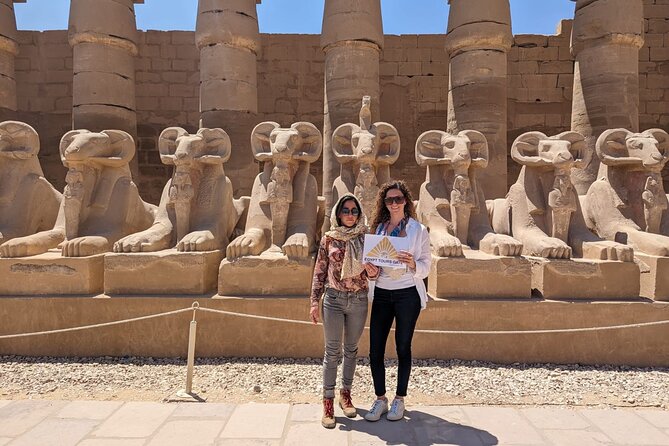
Next is Luxor Temple, about 2 hours, with a note that it once connected to Karnak through the Ram-headed sphinxes avenue. You’ll see layers described as pharaonic, Greek, Roman, Coptic, and Islamic periods. That mixed timeline is part of Luxor’s identity.
Lunch happens at a local restaurant here, so you can reset your energy before the next stop.
Then you finish with Luxor Market for about 1.5 hours. This is where you can bargain and slow down. You’ll also have a chance to enjoy mint tea, which is one of those small experiences that turns into a real memory later.
Tip: if you love shopping, set a spending limit before you arrive. Market bargaining is fun, but it’s also easy to keep going once you’re in the groove.
Valley of the Kings to Deir el Bahari: The West Bank Sequence That Makes Sense
The West Bank of Luxor has a reason people plan entire vacations around it. The trick is not just seeing it—it’s understanding the sequence.
You start at the Valley of the Kings (about 2 hours) and your guide recommends which tombs to visit. You’ll get stories tied to the site, which helps a lot because entrances can feel random if you’re not sure what each one represents.
Then you go to the Temple of Hatshepsut at Deir el Bahari (about 1 hour). This is the mortuary temple of Queen Hatshpsut, and the guide explains the temple’s history before you get free time to explore and take photos. Lunch is included at a local restaurant.
Finally, you stop at the Colossi of Memnon for about 30 minutes—two seated statues connected to Amenhotep III, described as sandstone. Your guide also explains why the name “Memnon” is used for these statues.
The best part of this day is that each stop changes the mood:
- kings’ tombs and royal legends
- a queen’s legacy in stone
- then two statues that leave a strong visual impression
Possible consideration: this is not a “sit on a bench” type of day. You’ll walk, move in and out of areas, and plan your pacing. Moderate fitness is noted for a reason.
Sharm El Sheikh: A Built-In Red Sea Reset
After all that archaeology, you get a day in Sharm El Sheikh, and it’s a welcome change.
This part of the trip is about relaxation and water time: golden sand, swimming, and Red Sea snorkeling/diving experiences are listed as activities, plus watching dolphins and sea creatures under crystal water. There’s also mention of night activities in this resort area.
The day lasts about 6 hours, and the core idea is simple: give your body a break from constant walking and heat on stone sites.
You also have optional activities mentioned, including a desert safari and motor quad. These are optional, so if you want them, you’ll likely be making decisions on the spot. If you don’t, you still get plenty to do without spending extra.
This is also where you can recover from “museum face.” If you book this tour, don’t underestimate how much mental reset a beach day provides.
Dahab and Blue Hole Day: Change of Scenery, Same Red Sea Vibe
On the next Sharm day, you swap straight resort time for a trip out to Dahab and the Blue Hole.
Dahab is described as a shopping city, and the Blue Hole is a major Red Sea draw. The focus here is that the water scene stays central, but you trade a resort bubble for a more “real place” feel.
The day is listed at about 6 hours. Admission tickets for the listed activities are shown as free in the itinerary text, but costs for specific services (especially if you want guided snorkeling/diving options) aren’t spelled out. So budget for the fact that water adventures can have optional add-ons.
If you’re prone to sunburn, bring sunscreen you trust. Egypt sun is not shy.
Transfer Back to Cairo and a Nile Evening Option
After your Red Sea time, you fly back to Cairo. Day 8 is a transfer to Sharm El Sheikh Airport, then a flight to Cairo, followed by an overnight stay.
That evening includes the option of a Dinner Nile cruise (listed as optional). So if you want one last “Egypt movie scene” moment, this is your window.
I like having this built in because it turns the trip’s final days into something more relaxed than another museum marathon.
Your last morning is simple: breakfast, then a transfer to Cairo Airport for departure.
Who This Tour Fits Best (and Who Should Reconsider)
This tour fits you if:
- you want Cairo + Luxor big sites without building logistics yourself
- you care about history explanations, not just standing in front of monuments
- you want a Red Sea break built into the schedule
- you appreciate a private guide and prefer getting your questions answered in real time
- you’re comfortable with moderate walking and a busy plan
You might reconsider if:
- you’re trying to keep all costs tightly controlled, because major tickets (like pyramid chambers and King Tut tomb fees) are listed separately, and optional tours exist
- you dislike internal flights and prefer one slow base town instead
- you want total freedom to rearrange days on the fly (a private tour helps, but the schedule still has structure)
Should You Book This Private Cairo–Luxor–Sharm Tour?
If your idea of a great Egypt trip includes pharaoh-era landmarks, Coptic Cairo, and then an actual beach cooldown, this is an easy yes.
The biggest reasons to book:
- the plan includes flights and transfers that usually add stress when you plan on your own
- the pacing mixes heavy history days with real downtime
- private guidance is built into the day, including at Giza and the key Luxor temples/tombs
The biggest reasons to pause:
- some of the top add-ons are not included, and optional extras can grow your total
- you’ll have more structure than a DIY trip, so you should like a plan
If that sounds like your travel style, this is a strong way to see Egypt in one trip without turning your holiday into a full-time logistics project.
FAQ
Is this tour private, or do I share it with other people?
It’s a private tour/activity, and only your group participates.
How long is the trip?
The duration is about 9 days.
What’s included in the guide and transportation?
You get a qualified Egyptologist guide, plus an air-conditioned vehicle for day trips. Bottled water is included during the day trips, and airport meet-and-assist is included for arrival and departure.
Are domestic flights included?
Yes. Internal flights are included, listed as Cairo – Luxor – Sharm – Cairo.
Do you include hotels and meals?
All accommodations are 5-star hotels on a bed-and-breakfast (B.B) basis. Breakfast (7) and lunch (4) are included.
Do I need an Egypt visa?
No, the visa is not included. The tour lists an Egypt entry visa cost of $25 USD.
Are entrance fees to the pyramids and King Tut included?
Some are included and some are not. The tour specifically lists entrance fees not included for the pyramids chambers and Tut Ankh Amun tomb.
Is the Sound and Light show included?
No. The Sound & Light show at the Great Pyramids area and Sphinx is listed as not included.
Is the Dinner Nile cruise included?
It’s listed as an optional tour, so it’s not guaranteed as part of what you pay for in the base package.
What if the weather is bad?
This experience requires good weather. If it’s canceled due to poor weather, you’ll be offered a different date or a full refund.