REVIEW · ATHENS
“A Day in Ancient Olympia:The Cradle of the Olympics Games”
Book on Viator →Operated by Greece Athens Taxi GAT · Bookable on Viator
Olympia in one long day is a real test. You get A/C Mercedes transfers with Wi‑Fi and chargers plus a plan built to hit two major stops without wasting hours on public transport, which is exactly why this day trip feels efficient. I also like the driver’s history-focused English, and the one drawback to keep in mind is that the driver is not a licensed museum/site guide once you arrive, so you’ll rely on signage (and any guide option by request).
What makes this itinerary so satisfying is the storyline. You start at the Isthmus of Corinth and the Corinth Canal area, then you land in ancient Olympia—where the stadium, the Temple of Zeus, and even the altar for the Olympic flame connect you to the games that ran every four years in classical times. The day moves fast, and that’s great if you like structure, but it can feel like a lot if you want slow, wander-all-day pacing.
The museum time is the other big reason this works. You don’t just walk ruins; you also get museum context at the Olympia Archaeological Museum and the Museum of the Olympic Games, so the statues and finds make more sense while you’re still on site. Budget a bit extra too: Olympia site entry and both museum visits are not included, so the final total depends on the season ticket prices.
In This Review
- Key points to know
- Why this Athens-to-Olympia day trip feels efficient (and worth your time)
- The Corinth Canal area: a 15-minute stop with real ancient strategy
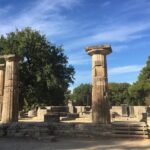
- Arriving at Olympia: where the stadium and temples do the talking
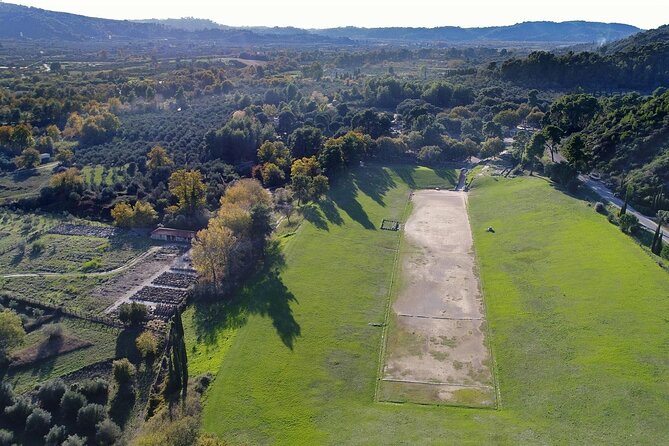
- The stadium: over 200 meters of ancient racing energy
- Temple of Zeus: massive limestone and marble, plus the legend
- Hera’s altar and the Olympic flame connection
- Other Altis buildings: Philippieion and the palaestra
- Admission timing and why skip-the-line help matters here
- Olympia Archaeological Museum: turning statues and finds into a story
- Museum of the Olympic Games: the 45-minute bridge between then and now
- Transportation from Athens or Port Piraeus: the comfort factor you’ll feel on a long day
- Lunch isn’t included: plan snacks, shade, and shoes
- Price and value check: what you’re really paying for
- Who should book this Olympia day trip?
- Should you book this One-Day Olympia experience?
- FAQ
- Is round-trip pick-up included from Athens and Port Piraeus?
- How long does the tour last?
- What are the main stops during the day?
- Are tickets and admission fees included?
- Does the driver give guided commentary inside the museums and sites?
- Is lunch included?
Key points to know
- Private Athens or Port Piraeus pick-up means less hassle and more time on the ground.
- Isthmus of Corinth stop is quick and free, which is smart for timing.
- Olympia ruins + stadium + temples are the core payoff, with entry handled through skip-the-line assistance.
- Two museums with strong exhibits help connect what you see to what it meant.
- No on-site licensed guide inside museums means you should come with a little curiosity (or request a licensed guide if available).
Why this Athens-to-Olympia day trip feels efficient (and worth your time)
At $327.43 per person for an 8 to 10 hour day, you’re paying for the big things that usually cost time: transportation, comfort, and guided logistics. This is a private tour/activity, so you’re not squeezed into a large coach crowd. That matters on a day like this, because Olympia isn’t a quick stop—it’s a serious site with serious footpaths.
The heart of the value is the time-saving private car plan. You’re covering the Athens area down into the Peloponnese, with a first stop that breaks up the journey (Isthmus of Corinth), and then you spend concentrated time at Olympia and its museums. In practice, that means you’re more likely to see both key ruins and museum context in one day rather than picking only one.
Comfort isn’t just a nice-to-have here. The vehicle is a Mercedes-Benz with air-conditioning, Wi‑Fi, bottled water, and mobile chargers. You can also expect child seats if needed. For a long day, that’s not luxury—it’s just easier on your legs and head.
One more note about service style: the tour lists an English-speaking driver with knowledge of history, but the driver is not licensed to accompany you inside sites and museums. So think of this as a high-support day with a knowledgeable driver, not a full historian walking through each room and ruin with you.
You can also read our reviews of more tours and experiences in Athens.
The Corinth Canal area: a 15-minute stop with real ancient strategy
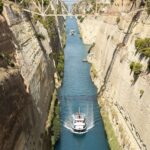
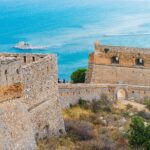
The day starts with a drive from Athens through the Peloponnese peninsula, and the first highlight is the Isthmus of Corinth. This is a narrow strip of land that joins Central Greece to the Peloponnese, and it’s where the Corinth Canal (opened later, 1880–1893) connects the Saronic Gulf with the Gulf of Corinth.
What I like about this quick stop is that it gives you something concrete to picture. The canal may be modern, but the strategic logic is ancient. A wall was built in ancient times (end of the 5th century BC) and preserved into Byzantine times as the Hexamilion. Even with only about 15 minutes on the schedule—and admission is free—you’re not just pulling over for photos. You’re getting a tiny historical anchor for the whole journey.
Drawback? It’s short. If you’re the kind of traveler who likes to linger at viewpoints and read every sign, you might wish this were longer. Still, as a pacing tool before Olympia, it works.
Practical tip: keep your camera ready. The stop is brief, so you’ll want to capture the canal area fast and then move on without stress.
Arriving at Olympia: where the stadium and temples do the talking
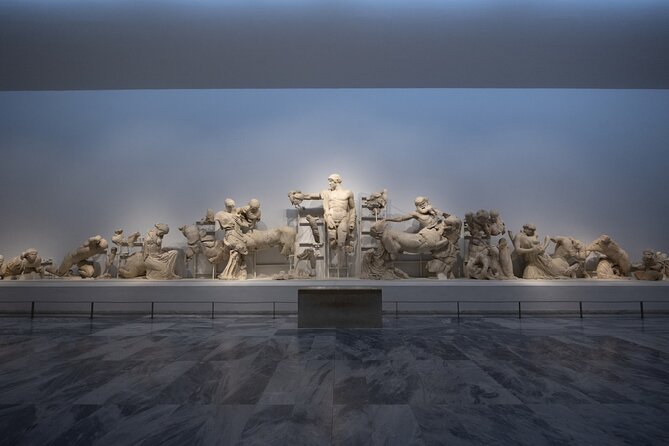
Olympia is a small town, but the nearby archaeological sanctuary is the big reason you’re here. This was a major Panhellenic religious center in ancient Greece, and it’s where the Olympic Games were held every four years through classical antiquity, from the 8th century BC to the 4th century AD. The games were restored globally in 1894, tied to the ideal of peaceful international competition for excellence.
Even before you start naming buildings, the setting helps. Olympia sits in a lush, green valley near the Alpheios River, at the confluence with the Kladeos River. It’s not hard to imagine why people considered this place special for worship and athletic competition.
The stadium: over 200 meters of ancient racing energy
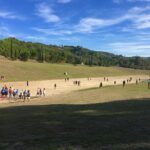
The stadium is one of the standout experiences. The racetrack is over 200 meters long and roughly 30 to 34 meters wide. This is the kind of place where scale matters: you can feel how the athletes would have moved through the space and how the crowd would have seen everything from a fixed arena.
If you like sports history, this is your must-time stop. Give yourself a moment to stand where the action would have been and look across. It helps you understand why the games mattered so much.
Temple of Zeus: massive limestone and marble, plus the legend
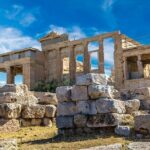
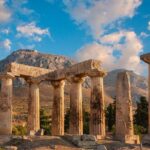
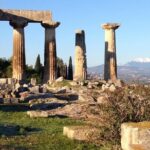
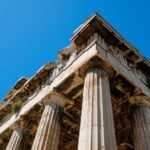
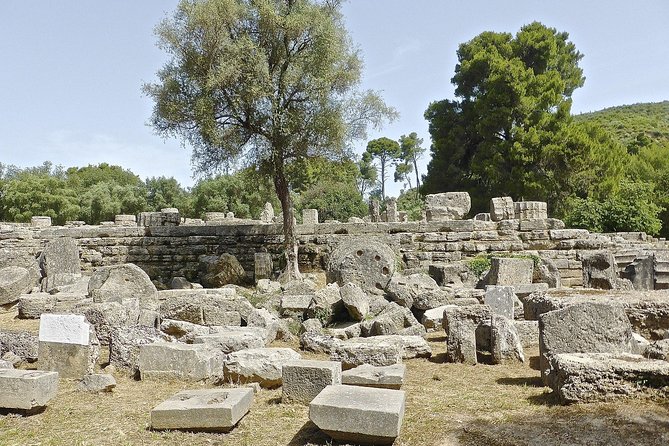
Close to the stadium is the Temple of Zeus, built in the 5th century BC. It was constructed by a local architect using limestone and marble. Historical records mention a giant golden statue of Zeus inside the temple—an image that shows you how serious the sanctuary was, not just as a site but as a symbol.

Hera’s altar and the Olympic flame connection
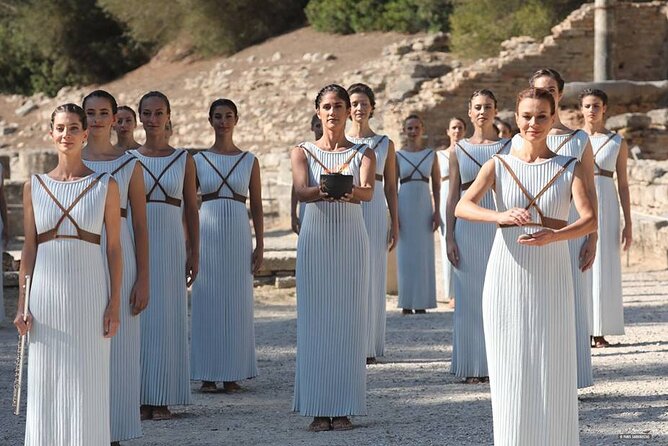
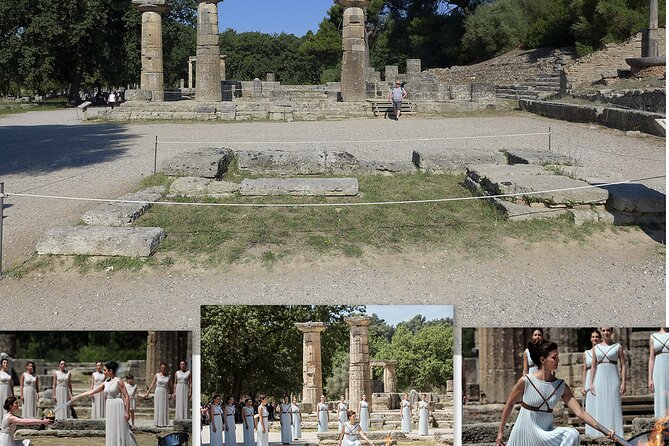
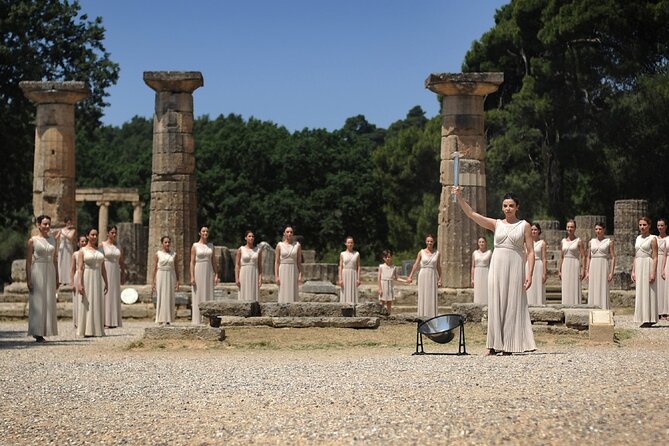
One of the more emotionally satisfying details is the Temple of Hera, built in the 7th century BC in the Dorian style. Today, this is the altar where the Olympic flame is lit before the games.
That’s a powerful link between ancient ritual and modern ceremony. If you’re traveling with kids or anyone who thinks of the Olympics as just a TV event, this connection often clicks instantly.
Other Altis buildings: Philippieion and the palaestra
Olympia’s story isn’t only temples and stadium. A couple of structures help round out the picture:
- The Philippieion: a circular building inside the Altis, described as one of the finest examples of ancient Greek architecture. It was dedicated to Zeus by Philip II of Macedon.
- The palaestra: part of the gymnasium complex, built in the 3rd century BC. It was used for training and practices like boxing, wrestling, and jumping.
If you’re short on time, prioritize the stadium, Zeus, and Hera altar first. If you have the legs for it, these extras make the site feel more complete.
Admission timing and why skip-the-line help matters here
The Olympia archaeological site entry costs €20.00 per person, and it’s not included in the tour price. Museum admissions also aren’t included. That’s the biggest “surprise” category for first-timers, so I’d plan for extra spend before you go.
The tour does include assistance with purchasing skip-the-line tickets. That’s a real benefit at sites with queues, because it reduces the chance your day gets eaten by waiting around instead of seeing things.
There’s also seasonal variation in archaeological site ticket prices (winter vs. summer). So if your trip timing is flexible, check the season and adjust your budget accordingly.
Bring patience for how this works day-of: skip-the-line help still means you’ll spend time inside and around ticket purchase windows. But it usually keeps the day on track.
Olympia Archaeological Museum: turning statues and finds into a story
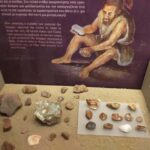
After the ruins, you head to the Olympia Archaeological Museum for about 1 hour. This museum is considered among the best in Greece, and the big value is that it gathers finds from the ancient site and the wider area.
The exhibits are well labeled, with many rooms. I like this format because it helps you avoid the common ruins problem: staring at stones and wondering what you’re supposed to feel. Seeing the objects after walking the sanctuary turns vague impressions into something more personal.
Two named highlights matter here:
- The statue of Hermes by Praxiteles
- The statue of Nike Paionios
Even if you don’t study art history, those names often give you a quick mental hook. You can look at the statues, connect them back to the sanctuary context, and leave with a sharper sense of what mattered to people at Olympia.
Reality check: one hour is not enough to absorb everything slowly. But it’s long enough to find the pieces that make the whole visit feel coherent.
Museum of the Olympic Games: the 45-minute bridge between then and now
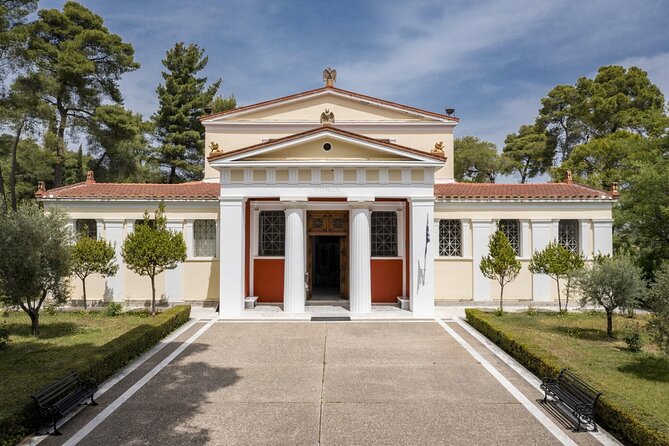
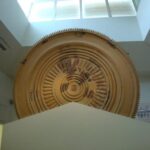
Next is the Museum of the Olympic Games for about 45 minutes. It’s housed in the old archaeological museum in Ancient Olympia and focuses on findings related to the games.
I see this museum as the bridge between the outdoor ruins and the modern Olympics idea. You’re already standing where the games happened, and now you’re given context for how they were organized, practiced, and celebrated through time.
Because the stop is shorter, keep your attention on what connects to ceremonies, competition, and how the Olympic identity traveled from antiquity into the modern revival.
Transportation from Athens or Port Piraeus: the comfort factor you’ll feel on a long day
This tour includes round-trip transfers from your Athens accommodation or Port Piraeus, without extra charge. Pick-up is available at hotels (waiting at reception), Airbnbs (you provide the exact address), and even right outside your cruise ship at Port Piraeus with a sign showing your name. You can also use a metro or bus station meeting point.
For timing, you’ll want to take the flexible pick-up times seriously. You can customize pick-up so the day fits your schedule, which is helpful if you’re coordinating with ferry arrivals or hotel check-in.
The vehicle setup helps: Wi‑Fi, chargers, bottled water, and air-conditioning. For many day trips to Olympia, the travel is the part that drains you. Here, it’s designed to drain less.
One real-world quality signal from past experiences: there’s a case where an electronics issue came up with the car, and the driver handled it exceptionally well without affecting the trip. That kind of calm problem-solving is what you want for a schedule-heavy day.
Lunch isn’t included: plan snacks, shade, and shoes
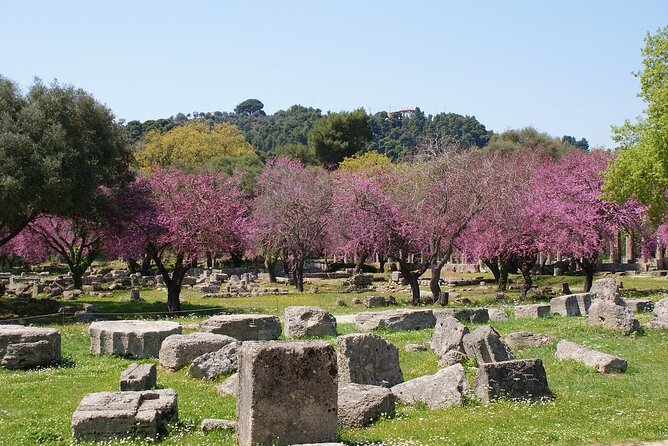
Lunch isn’t included, so you’re in charge of keeping your energy up. The tour provides bottled water, but it’s still smart to bring or buy a simple snack before you settle into the Olympia ruins time.
You’ll also be walking. The site includes stadium areas and multiple temple/building zones, plus museum visits. Comfortable shoes aren’t optional if you want to enjoy it instead of counting blisters.
If you’re going in warmer months, bring sun protection. There’s a lot of outdoor space and long lines of sight where you’ll feel the sun.
Price and value check: what you’re really paying for
Let’s break down the economics in plain terms.
You pay $327.43 per person for a private day, including:
- round-trip transfers from Athens or Port Piraeus
- an English-speaking driver with historical knowledge
- air-conditioned Mercedes-Benz with Wi‑Fi, water, and chargers
- skip-the-line ticket assistance
- mobile chargers
- mobile ticket
You do not pay inside the tour price for:
- lunch
- the Olympia archaeological site admission (€20 per person)
- museum admissions (Olympia Archaeological Museum and Museum of the Olympic Games)
- licensed tour guide inside sites (driver isn’t licensed for that role)
So the “value” is strongest if you:
1) want private transport rather than buses and trains,
2) care about maximizing a single day, and
3) are comfortable absorbing site info through signage and museum exhibits, not only through a licensed guide.
If you want a dedicated licensed guide to walk you through every stop with authority, you’ll need to see whether a guide is available on request. Otherwise, treat it like a structured route with history support from the driver and strong museum interpretation.
Who should book this Olympia day trip?
This is a great fit for:
- first-timers to Olympia who want both ruins and museums in one day
- travelers who dislike logistical stress and want pick-up handled end-to-end
- small groups who prefer privacy over large-coach tours
- families who value the comfort of A/C and the practicality of chargers and water
It may be less ideal if:
- you expect a fully licensed site guide inside museums and at every ruin
- you want a super slow, unstructured wander day
- you’re trying to keep the day trip strictly within the base price, since Olympia and museum entries add cost
Should you book this One-Day Olympia experience?
Yes, if your goal is a high-efficiency day that connects ancient athletics to modern Olympics meaning. The combination of stops that explain the setting (Corinth Canal area) and stops that explain the games (Olympia ruins plus two Olympic-focused museums) is exactly what makes this work.
Book it if you appreciate comfort on the road and you’re fine covering museum/site interpretation with signage and exhibits. If you strongly prefer a licensed guide accompanying you inside every venue, plan to ask about a licensed tour guide option in advance.
Overall: for a one-day Olympia hit from Athens or Port Piraeus, this is a well-timed plan with comfort and skip-the-line help, and the payoff is big—especially once you pair the stadium and temples with the museum statues and game-focused exhibits.
FAQ
Is round-trip pick-up included from Athens and Port Piraeus?
Yes. The tour includes hotel/Airbnb/Port Piraeus pick up and drop off with no extra charge. The driver can meet you at your chosen location, including right outside your cruise ship in Port Piraeus with a sign.
How long does the tour last?
It runs about 8 to 10 hours.
What are the main stops during the day?
You’ll visit the Isthmus of Corinth, the Archaeological Site of Olympia, the Olympia Archaeological Museum, and the Museum of the Olympic Games.
Are tickets and admission fees included?
Olympia Archaeological Site admission is not included (it’s €20.00 per person). Museum admissions are also not included. The Isthmus of Corinth stop is listed as free.
Does the driver give guided commentary inside the museums and sites?
The driver is English speaking and has knowledge of history, but they are not licensed to accompany you inside sites or museums. A licensed tour guide is available upon request depending on availability.
Is lunch included?
No. Lunch is not included, so you’ll need to plan food separately.