REVIEW · KHIVA
Daytrip from Khiva to Five Ancient Fortresses
Book on GetYourGuide →Operated by Amu Transport · Bookable on GetYourGuide
Five fortresses, one day, wide-open land. This private Khiva to Karakalpakstan outing is all about actual fortress ruins and getting close enough to see details up close. I also like that it’s self-guided on site after quick stops, so you can set your own pace—though the possible drawback is that the level of explanation can be limited if your driver has English gaps.
The route keeps moving, with photo stops and time for short walks, and it’s timed in a way that often feels naturally good for the light. You’ll travel in an A/C vehicle with pickup from Khiva or Urgench, then circle through five different forts in about 7 hours—great if you want variety without committing to an overnight.
In This Review
- Key things that make this day trip work
- How the day trip flows from Khiva (and Urgench)
- Guldursun-Kala: the rectangular stronghold with loopholes
- Ayaz-Kala: the most showy ruins, but it’s really a hill complex
- Kavat-Kala: a long fortress stretch and a populated oasis center
- Toprak-Kala: governors’ residence and the excavation finds
- Kyzyl-Kala: smoke signals, double walls, and water pipes
- Price and value: $115 per group up to 3
- The driver and your expectations for explanations
- Lunch, entry tickets, and how to avoid a bad-mood day
- Entry tickets
- Lunch choices
- Self-guided tips for seeing more in less time
- Who this day trip is for
- Should you book this Khiva-to-five-fortresses trip?
- FAQ
- How long is the day trip from Khiva to the five ancient fortresses?
- Where does pickup happen?
- Where do you get dropped off?
- Is an entry ticket included for the fortresses?
- Do I get a guide on the trip?
- How much does it cost for a small group?
- Is there English support from the driver?
- Are there separate entrances to reduce waiting?
Key things that make this day trip work
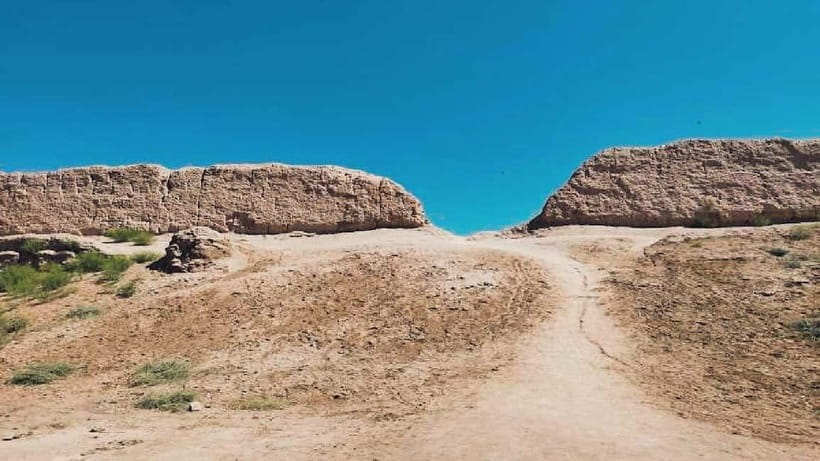
- A five-fortress circuit in Khorezm: one packed day covering Guldursun-Kala, Ayaz-Kala, Kavat-Kala, Toprak-Kala, and Kyzyl-Kala.
- Meaningful archaeology at Guldursun-Kala: adobe fortifications, loopholes, and occupation that stretches across centuries.
- Ayaz-Kala as a complex, not one fort: you’re walking among grouped fortresses around a hill.
- Kavat-Kala’s scale: it stretches for 15 km, with a 12th–13th century population vibe.
- Toprak-Kala’s excavations: coins, Zoroastrian canopic-jar fragments, textiles, glass beads, amber, and more.
- Kyzyl-Kala’s defensive design: double walls, corner watchtowers, water pipes, and the idea of smoke-signal warning.
How the day trip flows from Khiva (and Urgench)
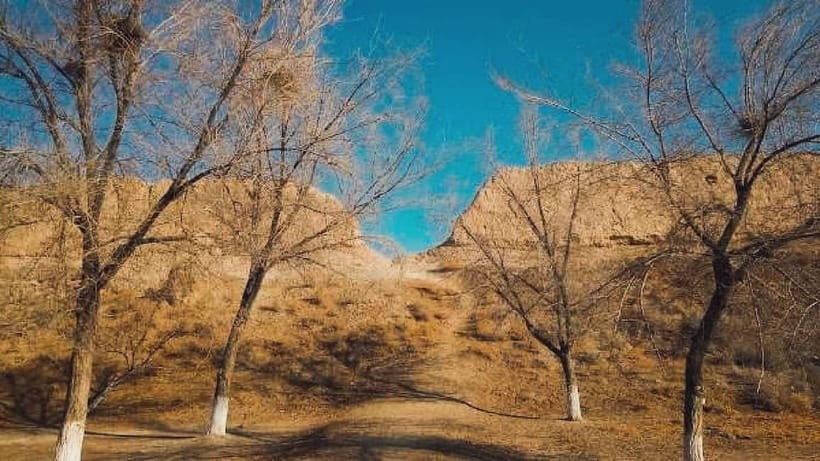
This is set up as a private group day trip with pickup from your hotel in Khiva or from Urgench (including the airport/train station option). You ride out in a round-trip A/C vehicle, and the trip is built around flexible timing but still lands at a very doable total length of about 7 hours.
The format is practical: you get a rhythm of photo stop → brief visit/walk → another stop, with time carved out for self-guided exploring. That matters because fortress sites can be confusing if you’re expecting a full guided “tour talk” at each one. Here, you’re mostly there to look, walk the edges, spot the shape of the defenses, and connect what you see to the historical descriptions.
You’ll also notice a theme: these places aren’t manicured landmarks. They’re remnants in open terrain. That’s part of the appeal—and it’s also why your expectations should be “ruins and structure” rather than “museum displays.”
And quick heads-up on site access: you may use a separate entrance to reduce waiting time, but the tour’s included items don’t cover entry tickets.
You can also read our reviews of more tours and experiences in Khiva.


Guldursun-Kala: the rectangular stronghold with loopholes
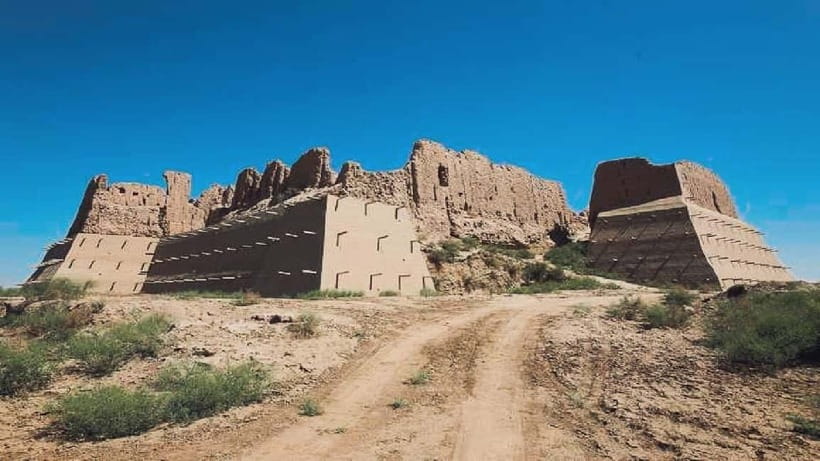
Guldursun-Kala is where the day starts feeling “serious” in a good way. This fortress is dated to the II–I centuries BC and sits in Karakalpakstan. What stands out is the fortification layout: a rectangular basis with a huge fortified area—around 35 hectares—and adobe walls reinforced in a defensive style, lined with two rows and built-in loopholes.
This is also the kind of site where your eyes learn the defensive logic fast. Look for the wall lines and think in layers: if you can spot loopholes, you’re basically looking at a system designed for close defense. Even if you can’t see everything clearly in the field, the idea is straightforward.
There’s more timeline drama too. The fortress fell into ruins in the V century BC for reasons that aren’t pinned down here, and then archaeological evidence suggests it was last occupied around 1220, tied to the time of Shah Ala ad-Din Muhammad—right around the period of the Mongol invasions affecting the Khwarezmian Empire.
Ayaz-Kala: the most showy ruins, but it’s really a hill complex
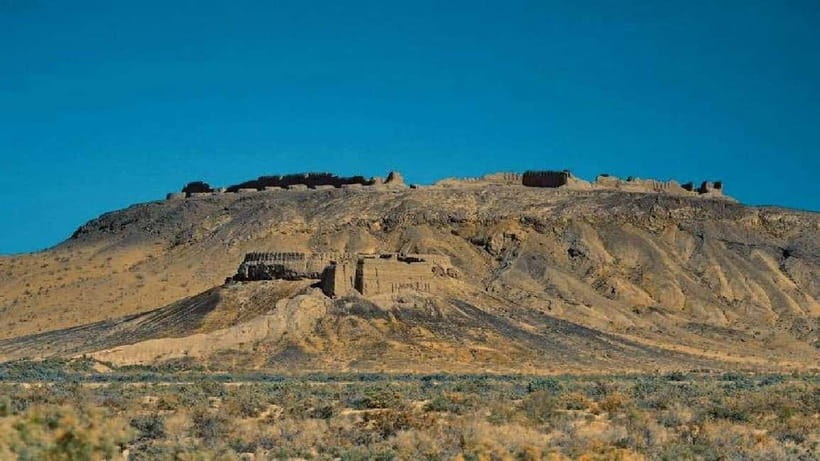
Ayaz-Kala is often described as the most showy of the ancient Khoresm fortresses, and in practice that shows up in the way it sits in the landscape—more visually commanding than the others. The name itself connects to the Turkic word meaning frosty/cold, which feels right if you’re visiting in cooler conditions and the air holds a sharper edge.
Here’s the important detail: it’s not just one fortress. You’re actually visiting a complex of three fortresses grouped around a hill in the eastern part of the Sultan Uizdak ridge. That’s why your walk can feel a little like moving between separate “chunks” of fortification rather than doing one loop and being done.
If you like ruins that you can “read” visually—wall shapes, the way positions relate to terrain—Ayaz-Kala tends to deliver. If you want lots of signboards and explanations, you’ll need to be comfortable with self-guided interpretation.
Kavat-Kala: a long fortress stretch and a populated oasis center
Kavat-Kala is the stop that rewards patience. Instead of a single compact citadel, this one stretches out: about 15 km long, with width around 2–3 km, following the Gavhore Channel. That scale changes how you experience it. You’re not just looking at one point—you’re absorbing a bigger defensive and settlement landscape.
Historically, the central area was very populated from the 12th to 13th centuries, with references here to up to 90 estates at one time. That makes Kavat-Kala feel less like a purely military fort and more like an organized hub for people living and working on the oasis margins.
Until recently, ruins included traces of residential and clay buildings, so you might find places where the ground tells you “this wasn’t only walls.” The site is also described as a complex of monuments located in the town of Ellikkala Bustan, with Kavat-Kala fortress acting as the central monument of the oasis.
In other words: if you like to imagine everyday life—work, housing, managing water—this is the fortress where your brain can play along.
Toprak-Kala: governors’ residence and the excavation finds
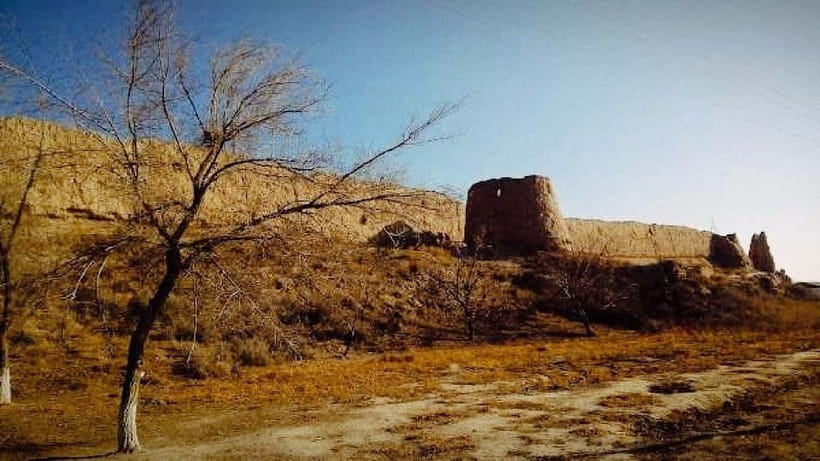
Toprak-Kala is dated to the 3rd century and served as the residence of the khorezmshakhs—governors of the region—up to about 305 A.D. That timeframe matters because it frames the site as political power, not only local defense.
The big story is decline after “aggressive wars” forced the governors to leave. With the ruling layer gone, the city gradually fell into decay. On the ground, you may not see that entire chain of events, but you can often sense it: how the site doesn’t feel like it was rebuilt again and again, more like it ran out of steam.
Toprak-Kala is also unusually rich in what excavations turned up: coins, fragments of ossuaries with Zoroastrian canopic jars, plus art and daily-life materials like thin manufactured ceramics, wool and silk fabrics, gold ornaments, and even a necklace of about 300 glass beads, with amber, corals, and bowls mentioned among finds.
This is a fortress stop I’d recommend you treat like a “what did life look like here?” moment. Even if the ruins are quiet, the finds give you a mental picture of wealth and craft.
Kyzyl-Kala: smoke signals, double walls, and water pipes
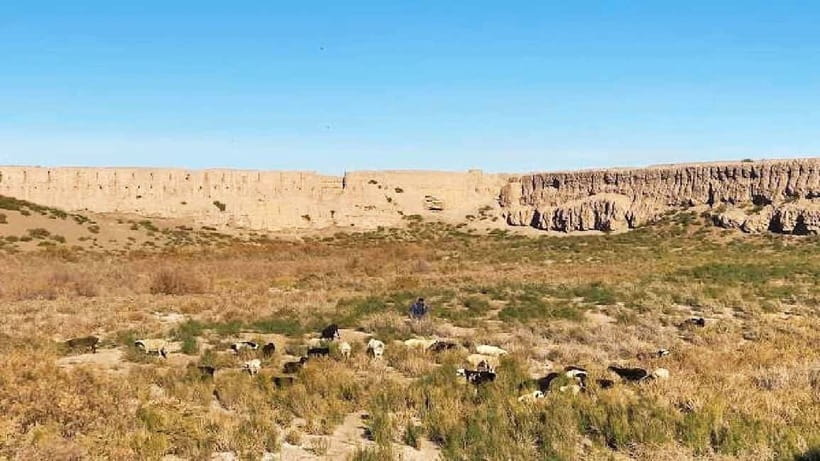
Kyzyl-Kala is described as a refuge during nomadic raids, and the defense concept here is clear: smoke signals would warn of approaching enemy armies, giving locals time to get inside the citadel and prepare for battle.
That detail is surprisingly helpful when you’re standing in ruins. It turns the site from “old walls” into “an emergency system.” You’re not just looking at architecture; you’re looking at a plan for quick response.
The fortress is surrounded by a double wall, with watchtowers fortified at the corners. And the site includes practical engineering too: ceramic pipes were installed to funnel a continual water supply into the fort. When a place has both defensive walls and water logistics, it’s built for a siege-style reality, not just a quick stand.
If you like sites where you can connect infrastructure to survival, Kyzyl-Kala often becomes the most satisfying stop of the five.
Price and value: $115 per group up to 3
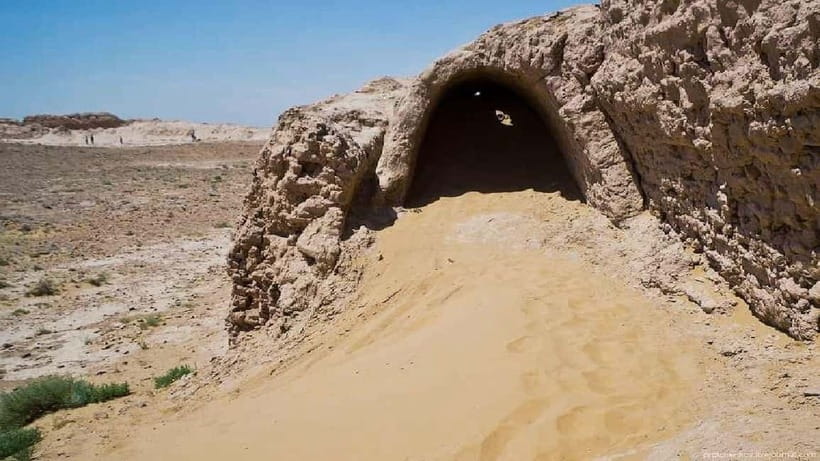
At $115 per group (up to 3 people), this trip can be a good value if you’re traveling as a small unit and you want to get outside Khiva without hiring a private car for the whole day yourself.
Here’s the value math that matters: you’re paying for (1) round-trip private transport in an A/C vehicle, (2) pickup and drop-off from either Khiva or Urgench, and (3) parking fees. The major “variable cost” you should budget for is entry tickets, plus you’ll likely want your own lunch option since lunch isn’t included.
Is it always worth it? For the right person, yes. But there’s one caution that shows up in the reality of fortress touring: not every stop will feel equally “recognizable” as a dramatic monument. Some fortresses can look like low walls and scattered remains. If you go in expecting big, clear sights at all five, you might be disappointed at one or two. If you go expecting a mix of architecture and archaeological atmosphere, you’ll probably feel more satisfied.
The driver and your expectations for explanations
This day trip is private, which is a plus. But the information flow can vary based on your driver’s English. The tour notes that some drivers may have limited English proficiency. In practical terms, plan to treat the day as mostly self-guided at the fortresses, with any extra context coming from the driver only when it’s available.
This is exactly where your mindset helps. If you want a heavy guided lecture, you may end up wishing you had more narration at each site. If you enjoy reading shapes, thinking historically, and asking a few questions when possible, you’ll likely enjoy it more.
Also, one more real-world factor from people’s experiences: driving style can vary. Some folks had smooth, calm experiences; others described faster driving on rough roads as a concern. If you’re sensitive to that, tell your driver early that you prefer a slower pace and safer road handling, and pick a comfortable seat with good visibility.
Lunch, entry tickets, and how to avoid a bad-mood day
Two practical issues can change how you feel about the day:
Entry tickets
Entry tickets aren’t included, and the tour may involve paying at multiple sites. That’s normal for fortress circuits, but you should carry enough cash or be ready to pay whatever is required on the day. If you’re trying to budget tightly, I suggest asking your driver ahead of time which stops typically have entry costs.
Lunch choices
Lunch isn’t included, so you’ll need to make a decision on the fly. If your driver recommends a specific restaurant, you can still choose to go elsewhere—your choice matters. I’d keep your lunch plan flexible: bring a snack just in case, and trust your own instincts about menus and transparency of pricing.
Fortress days move fast. The best lunch moment is the one that doesn’t add stress.
Self-guided tips for seeing more in less time
Because this is structured around walking and sightseeing without a guaranteed guide at each stop, the best approach is to “look for patterns,” not try to memorize everything.
Try this on every fortress:
- Scan the wall lines first, then notice where towers or corners would strengthen defense.
- Look for water or supply clues (pipes, channels, channel-adjacent terrain).
- Compare the forts by purpose: some feel more like governance/household centers, others like raids/refuge systems.
- Take a few photos of the same view from different angles, then decide what you want to explore on foot.
If you’re the type who likes history facts, you’ll have plenty to work with once you read the descriptions for each site: loopholes at Guldursun-Kala, the three-fort complex at Ayaz-Kala, Kavat-Kala’s long stretch and estate history, Toprak-Kala’s governor residence and excavation finds, and Kyzyl-Kala’s smoke-signal defense and water setup.
Who this day trip is for
This works best for you if you:
- Want a small-group private day from Khiva with varied sites.
- Enjoy archaeological ruins and don’t need every stop to be “Instagram impressive.”
- Can handle a mix of short walks and photo stops.
- Prefer control over your pace, since time is built for self-guided exploring.
It may not be ideal if you:
- Want an English-speaking expert guide narrating each fortress in depth.
- Need clear, maintained visitor infrastructure at every stop.
- Are easily frustrated by ruins that are partly subtle or hard to “decode” on first glance.
Should you book this Khiva-to-five-fortresses trip?
If you’re traveling as a couple or friends (so you can use the up-to-3 group pricing), and you want a single day that takes you beyond Khiva into Karakalpakstan’s fortress landscape, I think this is a smart booking.
Book it if you’re comfortable with self-guided ruin touring and you’re the type who enjoys piecing history together from shapes, walls, and terrain. Just go prepared: budget for entry tickets, bring water, plan for lunch flexibility, and set expectations that explanations may be light if your driver’s English is limited. If you do that, you’ll end the day with that satisfying feeling of having seen a part of the region most people only skim past.
FAQ
How long is the day trip from Khiva to the five ancient fortresses?
The total duration is listed as 7 hours.
Where does pickup happen?
Pickup is included from any hotel in Khiva or from Urgench hotel, as well as Urgench airport/train station options.
Where do you get dropped off?
Drop-off is included in both Khiva and Urgench.
Is an entry ticket included for the fortresses?
No. Entry tickets are not included.
Do I get a guide on the trip?
A guide is not included.
How much does it cost for a small group?
It’s $115 per group, for up to 3 people.
Is there English support from the driver?
Some drivers may have limited English proficiency, so the explanation level can vary. The tour notes that drivers are trained and knowledgeable about the program.
Are there separate entrances to reduce waiting?
The tour mentions skip-the-line via a separate entrance.