REVIEW · KHIVA
Private Daytrip to 7 Ancient Fortresses of Khorezm
Book on Viator →Operated by Oxus Travel · Bookable on Viator
Seven Khorezm forts in one focused day. This private route through ancient Kalas is made for adventure if you like seeing how people lived centuries ago, with Karakalpak traditions and Akchakul Lake’s local fish as a real food payoff. The big thing to watch is that admission isn’t included for every fortress, so Toprak Kala and Kizil Kala may cost extra on the day.
I like that the trip runs about 9 hours with hotel pickup and drop-off, so you spend less time figuring out transport and more time actually looking. You’ll also get audio-guide materials plus a mobile ticket, which helps you move through the ruins with context instead of guessing. One more plus: it’s private (up to 3 people), so your pace is yours.
In This Review
- Key things to know before you go
- Why the 7 Kalas of Khorezm feel different from a standard Khiva day
- Price and logistics: what $199 per group really buys you
- The daytrip route: Toprak Kala to Aqchako‘l (what each stop is really about)
- Stop 1: Toprak Kala (Kushan period royal residence)
- Stop 2: Guldursun Kala (a fortified town with buried finds)
- Stop 3: Janbas Kala (archaic fortification system)
- Stop 4: Ayaz-Kala (three fortresses on one hill)
- Stop 5: Qizil Qala / Kyzyl Kala (late antique, rebuilt before Mongol invasions)
- Stop 6: Duman Kala (three adjacent sections)
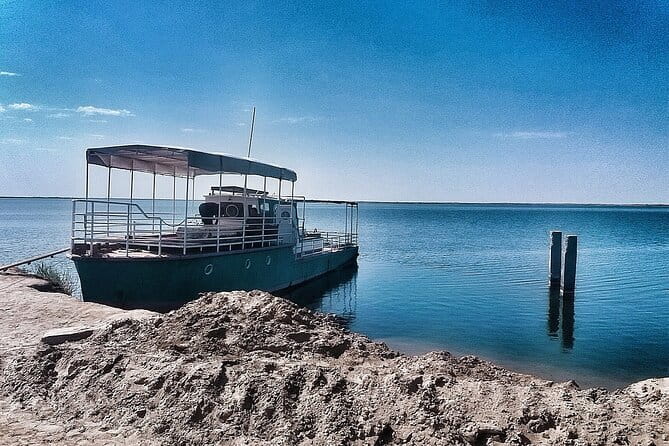
- Stop 7: Akchakul Lake / Aqchako‘l (the river story and the fish moment)
- What the guide and audio materials mean for your experience
- Timing, walking, and how to avoid feeling rushed
- Food and lunch: how to plan around what’s not included
- Who this daytrip is best for
- Final verdict: should you book the Private Daytrip to 7 Ancient Fortresses of Khorezm?
- FAQ
- What time does the daytrip start?
- How long is the tour?
- Where can the tour start from?
- Is hotel pickup and drop-off included?
- How much does it cost?
- Is lunch included?
- Are admission tickets included for every fortress?
- What if the weather is bad or I need to cancel?
Key things to know before you go
- A true “Kalas circuit”: seven fortress sites in one day across different periods of the region
- Audio support on-site: audio-guide materials help you read the shapes and dates faster
- Stop timing is tight: most forts get about 30 minutes, with one longer stop (Ayaz-Kala)
- Some admissions are extra: Toprak Kala and Qizil Kala (Kyzyl Kala) list admission not included
- Akchakul Lake is the food moment: local fish at the Akchakul Lake complex is highlighted
- You can start from Khiva or Urgench: useful if you’re basing in either city
Why the 7 Kalas of Khorezm feel different from a standard Khiva day
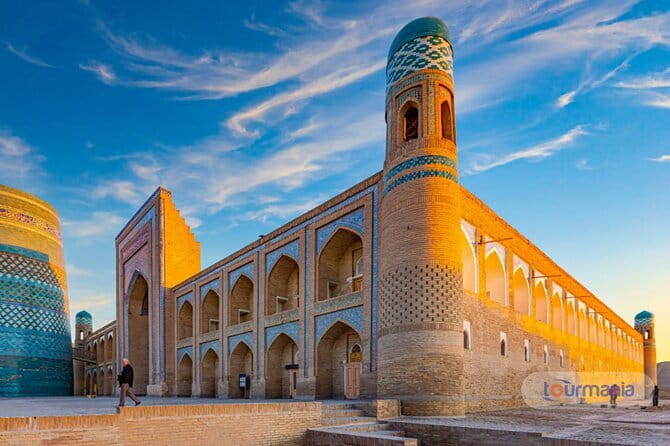
Khiva is great for old-city lanes, mosaics, and minarets. This daytrip is different. You trade the finished, polished look for open ruins and fortress walls where the story comes from what’s still standing. You’re looking at the Khorezm khanate region from the outside—old defenses, royal living zones, and settlement walls that show how people organized safety and power.
What I like most is that the experience is framed as more than sightseeing. It’s set up for the early centuries feel—BC-era lifestyle themes, plus local tradition contact (the route specifically mentions Karakalpak traditions). If you’re the type who likes connecting architecture to daily life—where food came from, how communities defended themselves—this fits.
The other standout is food. The Akchakul Lake stop is explicitly linked to local fish tastes, so you’re not just looking at a lake; you’re timing part of the day to something you can actually eat.
You can also read our reviews of more tours and experiences in Khiva.


Price and logistics: what $199 per group really buys you

This costs $199 per group (up to 3 people), which is a key value point. In Uzbekistan, the math often comes down to this: private transport for multiple forts can become expensive per person if you’re splitting taxis. Here, the price is per group, so if you travel as a duo or small family, you spread the cost and get the advantage of a door-to-door sedan.
You should also factor in what’s not included:
- Lunch isn’t included
- Admission tickets aren’t included for Toprak Kala and Kizil Qala (Kyzyl Kala)
Because the tour is private, it’s also easier to manage your day—bathroom timing, water breaks, and photo stops. Your day starts at 9:00 am and runs about 9 hours total, so you’ll have a structured route but not a rushed feel like some multi-day transfers.
One caution: since the itinerary is compact, any delay can compress the on-site time. For this kind of route, your schedule is the product.
The daytrip route: Toprak Kala to Aqchako‘l (what each stop is really about)
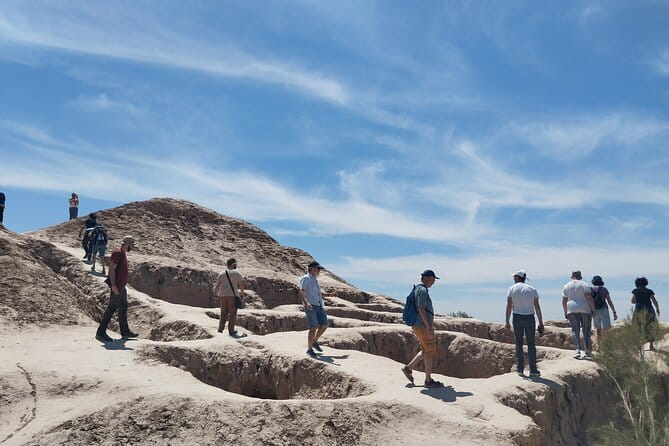
Most stops are around 30 minutes, except Ayaz-Kala (about 1 hour). That means you’ll get a meaningful look, but you won’t linger long. Go in ready to scan walls, towers, and layout rather than trying to read every stone.
Stop 1: Toprak Kala (Kushan period royal residence)
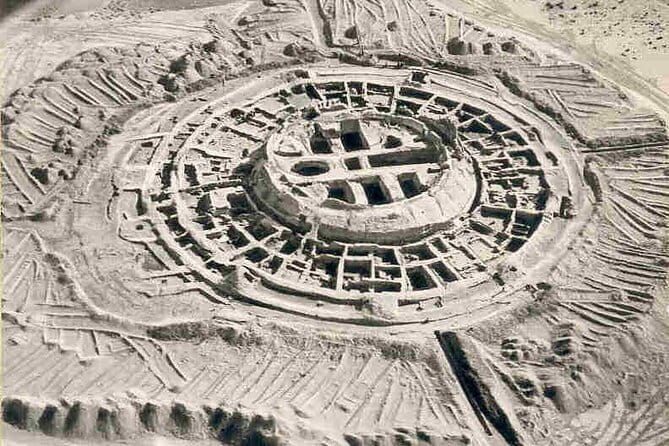
Toprak Kala dates to the Kushan period, around the 2nd and 3rd centuries CE. It served as a royal sanctuary and was tied to the kings of Khorezm. Even with a short visit, you can usually tell why it mattered: it’s a fortress-space that reads like status—strong points, internal organization, and a sense of controlled access.
What to do with your time: focus on how the site’s layout supports control and residence, not just defensive walls. Also note that admission isn’t included, so keep a little budget ready if you want to enter fully.
Stop 2: Guldursun Kala (a fortified town with buried finds)
Guldursun Kala is described as a fortified town, with exterior walls and towers dating to the 12th century CE. Archaeology inside the site has turned up ancient and medieval pottery plus bronze items and coins. That last part matters: it hints this wasn’t only a military point. People lived and traded here, and objects got left behind.
Drawback to keep in mind: with only about 30 minutes, you’ll rely on your guide/audio for what to look for in the layout and what the finds mean.
Stop 3: Janbas Kala (archaic fortification system)
Janbas Kala (listed as Jonbos qala on the schedule) is noted for one of the most archaic fortification systems from the Early Antique period. The key detail: it has four flanking walls in relatively good condition, and in places they reach up to 20 meters.
This is one of those stops where the time limit can actually help. When walls are tall enough to see proportions clearly, 30 minutes is often enough to grasp the scale. Look for how the walls work as a system—how the flanking design protects edges and movement corridors.
Stop 4: Ayaz-Kala (three fortresses on one hill)
Ayaz Kala is highlighted as the most spectacular in the area, mainly because it’s not one fortress but three clustered fortresses on and around a prominent hill at the eastern end of the Sultan-Uiz-dahg range.
You get about 1 hour here, and that’s for a reason. Three sites means you need extra time to avoid feeling like you’re only glimpsing one piece of the puzzle. Walk for position: get a viewpoint angle that lets you see how the groupings relate instead of just seeing fragments.
Stop 5: Qizil Qala / Kyzyl Kala (late antique, rebuilt before Mongol invasions)
Kyzyl Kala’s timeline is layered. It’s originally constructed in the Late Antique period (the 1st to 4th centuries CE), abandoned, and then rebuilt in the 12th–13th centuries, on the eve of the Mongol invasions. There’s also some mention of debate in dating, so you’ll probably find that different sources can talk slightly differently about its exact story.
Admission here is not included. With a 30-minute stop, your best move is to focus on what you can see and what the timeline implies—what parts likely reflect earlier construction versus later rebuilding.
Stop 6: Duman Kala (three adjacent sections)
Duman Kala is described as having three adjacent sections:
- a square western enclosure with corner towers
- a smaller square-shaped citadel
- an irregular four-sided northern enclosure
This stop is a good one for anyone who likes reading architecture like a plan. You’re not only looking at walls; you’re looking at how the fortress is organized into zones.
Time is again about 30 minutes, so use that time to mentally map the three-part layout. If your audio guide is working well, this is where it helps most.
Stop 7: Akchakul Lake / Aqchako‘l (the river story and the fish moment)
Aqchako‘l is where the tour shifts from fortress math to geography and food. The information given connects BC river behavior: the Amudarya (Ox) flowed in two directions—first the Akcha River, second the Suvyorgan River. The name Akcha is linked to the Akchakhan Fortress.
This is also the stop tied to the “local fish at Akchakul lake complex” idea. Since lunch isn’t included, this is where you can turn the stop into a meal plan if you want. Even if you don’t eat there, it helps your day make sense: why a fortress would exist near a water system and why a community would lean on local fish.
What the guide and audio materials mean for your experience
This is a private tour, so you’re not stuck with random group pacing. Still, your understanding depends on how the interpretation lands on the day.
One solo female traveler wrote that they felt safe with the guide Sarvar, and they also got audio files about the forts before going. That same account noted Sarvar was still learning English, so conversation was limited and he didn’t know a great deal about the sites visited. Translation: you should plan on using the audio materials and your own observation, and be ready for a more basic explanation than a graduate-level lecture.
That doesn’t make the trip bad. It just changes expectations. If you want deep storytelling at every step, bring your curiosity and rely on the audio support. If you’re happy with a practical, “look here, date is roughly here, notice this wall” kind of experience, this can work very well.
Timing, walking, and how to avoid feeling rushed
The itinerary is built around short visits: about 30 minutes for six of the seven stops, and 1 hour for Ayaz-Kala. That schedule is efficient, but it means your comfort matters more than usual.
The tour asks for moderate physical fitness. In practice, that usually translates to some walking across uneven ground and getting close enough to see wall lines and features without tripping over your own enthusiasm. Bring water, wear shoes you trust, and don’t count on long resting breaks.
If you’re sensitive to tight schedules, your best strategy is simple: decide what matters most to you before you go. Pick your “must-not-miss” stop (for many people, it’s Janbas Kala’s walls or Ayaz-Kala’s three-fort layout) and treat the others as focused snapshots.
Food and lunch: how to plan around what’s not included
Lunch isn’t included on the tour. That’s not a deal-breaker, but it does mean you’ll want a plan.
Because Akchakul Lake is explicitly tied to local fish, you may want to time your appetite for that stop. If you’re traveling with anyone who gets picky about timing, agree early: do you want a meal at Akchakul Lake, or do you prefer to pick something off-route and keep the stop for photos and a quick taste?
Also remember: Toprak Kala and Kyzil Qala have admission tickets not included. If you decide to pay admissions, it can affect your spending buffer for food. Keep a bit of cash set aside just in case.
Who this daytrip is best for
This tour fits best if you:
- love architecture and want to understand it as a map of power and daily life
- enjoy archaeology-style context (dates, wall systems, what was found)
- want a private small-group day without micromanaging transport
- are happy with shorter, high-frequency site visits rather than slow museum-style time
It may be less ideal if you:
- want one-on-one long explanations at each fortress
- need plenty of downtime between stops
- strongly prefer tours where all admissions are included
Final verdict: should you book the Private Daytrip to 7 Ancient Fortresses of Khorezm?
I’d book this if you want a private, structured day that’s built around the Kalas of Khorezm rather than just city highlights. The value is strong for up to 3 people at $199 per group, and the Akchakul Lake fish angle gives you a real reason to time your day around the itinerary.
I’d pause if you don’t want to think about extra admission fees at Toprak Kala and Kyzyl Kala, or if tight scheduling will stress you out. Also, if you’re hoping for very deep site history in English through the guide alone, don’t assume that part is guaranteed—audio support is likely the safety net.
If you like “see, map, understand” touring, this is a good fit for a day from Khiva or Urgench.
FAQ
What time does the daytrip start?
The tour start time is 9:00 am.
How long is the tour?
The duration is about 9 hours.
Where can the tour start from?
The trip can start from Khiva or Urgench.
Is hotel pickup and drop-off included?
Yes. Hotel pick up and drop off are included.
How much does it cost?
It is $199 per group, up to 3 people.
Is lunch included?
No, lunch isn’t included.
Are admission tickets included for every fortress?
Admission ticket inclusion varies. Toprak Kala and Qizil Qala (Kyzyl Kala) list admission as not included, while Guldursun Kala, Janbas Kala, Ayaz Kala, Duman Kala, and Akchakul Lake list admission as free.
What if the weather is bad or I need to cancel?
The experience requires good weather. If it’s canceled due to poor weather, you’ll be offered a different date or a full refund. You can cancel for free up to 24 hours in advance for a full refund.