REVIEW · VALENCIA
Essential Valencia and World Heritage Sites (English)
Book on Viator →Operated by Turiart · Bookable on Viator
Valencia rewards curiosity fast, especially in a tight time window. This guided historic-center walk is built around three UNESCO World Heritage sights, so you’re not just sightseeing—you’re getting the why behind the monuments. Expect a smart route through grand plazas and everyday places that shaped the city.
I especially like two things: the tour has clear storytelling (you’ll hear how Valencia moved from merchants to traditions to modern life), and it’s organized for first-timers and time-crunch visitors because it hits major landmarks in about 2 hours. You’ll also get a pro guide, and the format is designed to keep things moving without feeling rushed.
The one drawback to consider is that 2 hours is short. Even with a strong guide, you won’t have long, slow stretches inside every stop—so treat this as your highlights and orientation, then plan follow-up time on your own if you want to linger.
In This Review
- Key things that make this tour worth your time
- Valencia’s UNESCO story, packed into a 2-hour walk
- From Estació del Nord to the historic center: fast orientation in the right places
- Lonja de la Seda: the Silk Exchange and why merchants mattered
- Valencia’s plazas and market life: Town Hall and the Central Market feel connected
- The Water Court (Tribunal de las Aguas): a tradition with real teeth
- Fallas: when ephemeral art becomes a UNESCO story
- How guides shape the experience: names you might hear (and why it matters)
- Price and value: what $121.91 buys you (and what it won’t)
- Practicalities that affect your comfort on a historic walk
- Who should book this Valencia UNESCO walking tour
- Should you book Essential Valencia and World Heritage Sites?
- FAQ
- How long is the tour?
- What’s included in the price?
- Where do I meet and where does it end?
- Is this a private tour?
- What UNESCO World Heritage sites does the tour focus on?
- Can I cancel for a full refund?
- What happens if the weather is bad?
Key things that make this tour worth your time
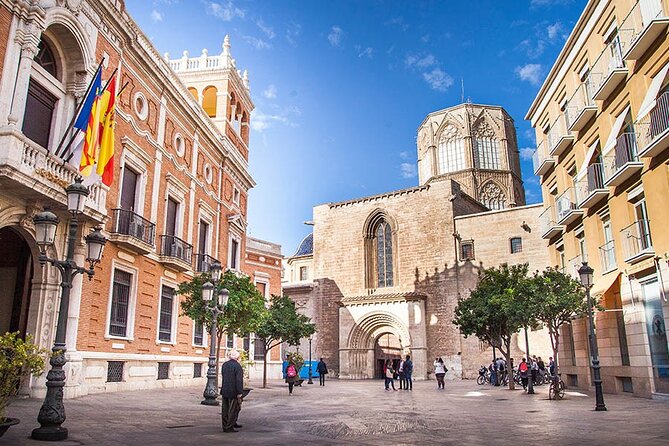
- Three UNESCO sites in one walk: Lonja de la Seda, Tribunal de las Aguas, and Fallas
- Pro guide-led pacing that’s ideal for a first Valencia day
- Historic-center “orientation” route through plazas and landmarks you’ll want later
- Photos and visual aids used by guides like Sara to clarify details
- Private-group feel so your questions don’t get swallowed by a crowd
- Mobile ticket for a smoother start to your walk
Valencia’s UNESCO story, packed into a 2-hour walk
Valencia can feel big the first day you arrive. This tour helps you fix that problem quickly. You start at Estació del Nord area, then work through the historic core where the city’s layers are visible: money and trade (merchant power), civic tradition (how people governed everyday life), and festival culture (how Valencia turns art into spectacle).
The 2-hour duration is the deal here. It’s long enough to connect dots—why a building looks the way it does, why a tradition matters, and how the city tells its story in public spaces. It’s also short enough that you don’t lose half a day to “just getting oriented.”
The practical angle matters too. Since the only included item is the professional guide, you can treat this as a focused walking lesson. You handle your own transit to and from the meeting/end points, then let the guide do the heavy lifting on interpretation.
You can also read our reviews of more tours and experiences in Valencia.



From Estació del Nord to the historic center: fast orientation in the right places
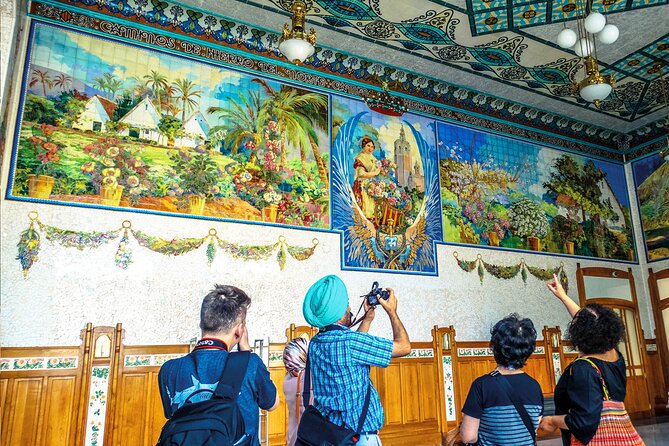
The tour kicks off at Bailén – Estació del Nord Extramurs (46007). That location is useful because it puts you near a classic gateway into the city’s older streets. Even if you’re not catching a train that day, starting near the station zone means you’re positioned to walk into the heart of Valencia without a complicated setup.
From there, the route moves through the historic center with stops that make it easier to “read” the city as you go. You’ll pass big civic and cultural anchors such as the Town Hall area, plus the Central Market zone. Those aren’t just pretty dots on a map. They help explain how Valencia functioned: public decisions happened in central squares, trade and food culture gathered in market spaces, and major monuments reflected the city’s status and identity.
One small piece of advice: wear shoes you can walk in for real. Valencia’s old streets are walkable, but they aren’t flat and forgiving. This is a walking-first experience, and the time window means you’ll want your legs to feel good.
Lonja de la Seda: the Silk Exchange and why merchants mattered
If you only take one monument from this tour, make it Lonja de la Seda (Silk Exchange). This is where Valencia’s commercial history becomes architecture you can actually stand inside (or right up close to) and feel.
Why it’s so memorable: the Silk Exchange wasn’t built just to be impressive. It was a statement about order, wealth, and the confidence of merchant networks. In practical terms, this stop gives you a “decoder ring” for Valencia. Once you’ve seen the Silk Exchange, the city’s pride in institutions and public life makes more sense as you keep walking.
Guides on this route tend to bring in context with visuals. For example, Sara has been praised for using photos on a tablet to support explanations. That kind of aid can help when you’re trying to connect details you see on the façade or inside the building to the story behind it.
A consideration: this tour focuses on highlights, so don’t expect a slow, museum-style visit where you have time to read every panel. Think of this as the moment that gives you the big picture—and then you can return later if you want more.
Valencia’s plazas and market life: Town Hall and the Central Market feel connected
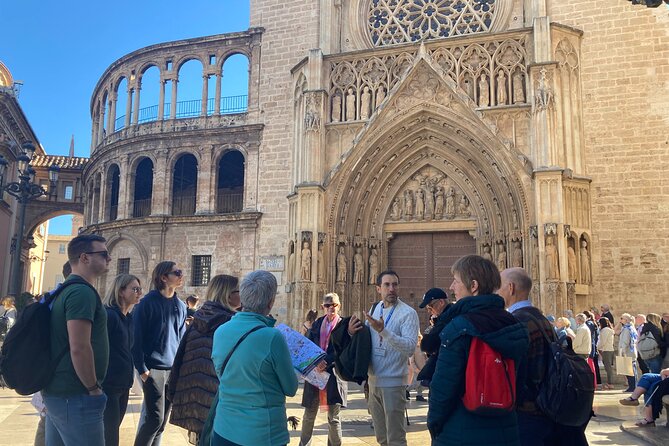
After (or alongside) the UNESCO core sites, you’ll walk through classic squares and lively central zones. The itinerary mentions the Town Hall, the Central Market, Plaza de la Reina, and Plaza de la Virgen—and that matters because Valencia’s identity isn’t only in monuments. It’s also in the public rooms where locals gather, trade, argue, celebrate, and eat.
The Town Hall area anchors the city’s civic side: Valencia’s sense of order and governance shows up in the way central buildings face the public. The Central Market area is different. Even if you don’t plan a full shopping trip, seeing it through the lens of trade helps you understand why the city developed such strong commercial power. It also sets up your next move, because after a guide points out the significance, you’ll know where to go later for food and browsing.
If you like travel that connects culture to daily life, this portion does the job. You’re not just moving from landmark to landmark—you’re building a mental map of how Valencia works.
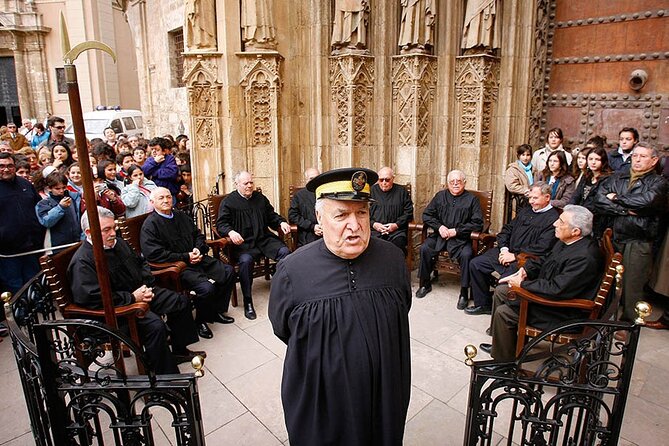
The Water Court (Tribunal de las Aguas): a tradition with real teeth
One of the most fascinating UNESCO stops here is the Tribunal de las Aguas—the Water Court. It’s the kind of site that sounds abstract until a guide explains the “why” and the social function.
Valencia is a city tied to water systems, agriculture, and the long-running question of fairness. The Water Court’s power is that it’s not only historical; it’s framed as a living tradition. You’re not just looking at a symbol—you’re learning how communities handled disputes and responsibilities around water, something that shaped everyday survival and prosperity.
This stop also gives you a contrast with the Silk Exchange. Merchants ran trade and commerce. The Water Court represents local governance tied to essential resources. Together, they show two major ways the city organized life: economic networks and community-based justice.
Practical tip: don’t speed through this stop just to “check the box.” If your guide has time for questions, ask one simple thing: how the tradition works in practice. Even short answers help you carry the site with you later when you’re exploring on your own.

Fallas: when ephemeral art becomes a UNESCO story
The third UNESCO focus is Fallas, Valencia’s annual festival of ephemeral art, fire, and fireworks. This is where the tour shifts from stone and institutions to culture you feel in your chest.
Fallas can seem like pure spectacle on first glance. The tour approach helps you understand it as a social phenomenon, not only a show. You learn how Valencia’s traditions create a collective rhythm—how creativity gets built, displayed, judged, and celebrated, even though it’s intentionally temporary.
This stop is also a timing-sensitive moment. If you happen to visit during the lead-up to the festival, you may notice how the city buzzes in the background. One guide (Sara, specifically) has been praised for helping visitors understand what’s going on during preparations for Fallas, which can make the whole festival feel less random once you’re back on the streets.
If your travel style is “explain it to me,” this is the best match. You’ll get a clearer sense of what you’re seeing instead of just watching fireworks happen with zero context.
How guides shape the experience: names you might hear (and why it matters)

This tour is built around a professional guide, and the impact is obvious in the way people describe their guides. Three names come up repeatedly: Sara, Gabor, and María Eugenia.
- Sara stands out for structure and visual support, including using photos on a tablet to explain details.
- Gabor is praised for strong English and giving helpful context that helps you find your way around the city fast, plus extra tips like where to eat.
- María Eugenia is noted for personality and a clear passion for local traditions, which can matter a lot when you’re learning about festivals and living customs.
Here’s the travel value of that: a good guide doesn’t just recite facts. They help you ask better questions while you’re walking. If your group includes curious travelers, you’ll likely feel the difference.
Also, because this is presented as a private tour/activity with only your group participating, it’s easier to get answers that fit your interests—history, architecture, food, or festival culture.
Price and value: what $121.91 buys you (and what it won’t)
The price is $121.91 per person, and it’s typically booked about 92 days in advance. I wouldn’t treat the “92 days” detail as magic, but it does signal steady demand for a short, guided highlights format.
Is it good value? For me, value here means time and mental payoff:
- You’re investing in a 2-hour experience that targets major UNESCO themes: merchant power, living civic tradition, and festival culture.
- You’re paying for a guide who can connect what you see to what it means, which is often the difference between a photo stop and a “now I get it” stop.
What you should not expect: since the tour includes only the professional guide, you’ll want to handle anything not listed—especially your own local logistics like getting to the meeting point and getting back after. Also, with a short walking window, you won’t get a slow, deeply technical tour of every corner.
Bottom line: if you’re the kind of traveler who likes a strong intro day, this price makes sense. If you’re already an architecture specialist and want hours of reading and quiet, you may prefer a self-guided plan plus a longer museum visit.
Practicalities that affect your comfort on a historic walk
A few details are worth planning around because they shape the experience:
- Bring comfortable walking shoes. The tour is designed around streets and plazas, not a drive-by bus route.
- Ask questions early. The guides are known for being responsive, and you’ll get the most value if you steer the focus toward what you care about.
- Expect a highlights pace. The route covers a lot in 2 hours, so it’s not the time to expect long lingering stops.
- Weather matters. The experience requires good weather, and if it’s canceled for poor conditions, you’ll be offered another date or a full refund.
- Service animals are allowed, and children must be accompanied by an adult. Most people can participate, but it’s still a walking experience.
If you’re traveling with family, or you’ve got mobility limits, you’ll want to judge whether a 2-hour walking plan fits your day. The upside is that being private (only your group) can make pace adjustments easier.
Who should book this Valencia UNESCO walking tour
This one fits best if you:
- are visiting Valencia for a short time and want a fast, high-impact orientation
- care about history and culture, not just photos
- want three UNESCO experiences in one guided walk: Lonja de la Seda, Tribunal de las Aguas, and Fallas
- like the idea of a guide pointing out meaning behind landmarks, including festival context
It’s also a great “first day” tour. When you get your bearings early, the rest of your time gets easier: you’ll know what streets matter, what plazas to revisit at different times of day, and what to prioritize later.
Should you book Essential Valencia and World Heritage Sites?
I’d book it if you want a tight plan that turns Valencia into a story you can actually follow. The main strength is focus: three UNESCO themes delivered in about two hours with a pro guide, plus a route that helps you understand the city’s civic and daily-life context.
I wouldn’t book it as your only Valencia activity if you love long museum-style time, because this is a highlights walk. If you want more depth, use this as the setup, then build your own follow-up around what your guide sparks.
If your ideal trip is simple: walk, learn, and come away with a clearer sense of how Valencia works—this tour is a strong match.
FAQ
How long is the tour?
It’s about 2 hours.
What’s included in the price?
The tour includes a professional guide. Transportation to and from the meeting or ending point is not included.
Where do I meet and where does it end?
The tour starts at Bailén – Estació del Nord Extramurs, Valencia, and ends at Carrer del Micalet 7, in Ciutat Vella.
Is this a private tour?
Yes. Only your group participates.
What UNESCO World Heritage sites does the tour focus on?
It highlights three World Heritage properties: Lonja de la Seda (Silk Exchange), Tribunal de las Aguas (Water Court), and Fallas.
Can I cancel for a full refund?
Yes, you can cancel for free up to 24 hours in advance for a full refund.
What happens if the weather is bad?
The experience requires good weather. If it’s canceled due to poor weather, you’ll be offered a different date or a full refund.