REVIEW · VALENCIA
Essential Valencia and its World Heritage sites
Book on Viator →Operated by Turiart · Bookable on Viator
World Heritage shows up fast in Valencia. In just about 2 hours, this guided walk strings together the city’s key monuments, with extra attention to UNESCO World Heritage themes like the Silk Exchange and the cultural rituals that shape daily life. It’s a simple format: clear stops, smart stories, and enough time to keep exploring after you finish.
I especially like the pacing and comfort of a compact Old Town route. You get inside access to La Lonja de la Seda (Silk Exchange) with the included entry, not just a quick look from the street. And the guides—often praised for being friendly, funny, and responsive—make it easier to ask questions and understand what you’re actually seeing.
The main consideration is that this is a walking tour and it depends on good weather. Also, La Catedral is a look from the outside only (Holy Grail is kept there, but entry isn’t included), and the Ajuntament de València building stop is only on weekdays.
In This Review
- Key Highlights You’ll Care About
- Why This 2-Hour Old Town Walk Works for First-Timers
- Start at Estació del Nord: Art Nouveau with Real Floors to Stand On
- Plaça de l’Ajuntament and the Fallas Connection You’ll Actually Remember
- Ajuntament de València (Weekdays Only): Seeing How Civic Pride Lands
- Mercat Central de València: Why the Market Matters Beyond Shopping
- Enter La Lonja de la Seda: The Silk Exchange You Can’t Fake
- Valencia Cathedral Area: A Quick Holy Grail Stop from the Outside
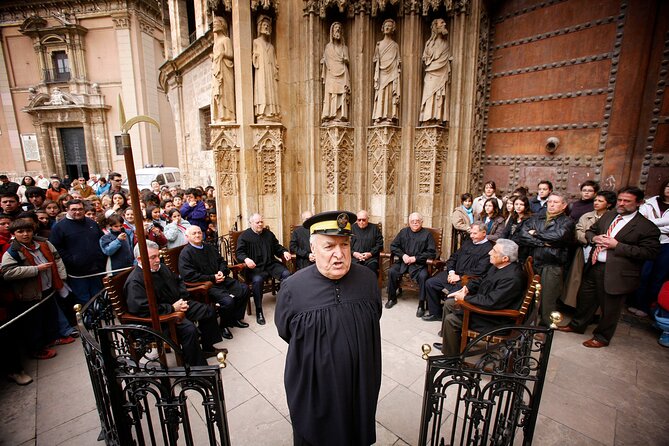
- Plaza de la Virgen and the Water Tribunal: When Ritual Meets Architecture
- Price and Value: What $21.36 Actually Buys You
- Mobile Ticket and Scheduling Details That Affect Your Day
- Who Should Book This and Who Might Skip It
- Should You Book? My Straight Advice
- FAQ
- How long is the tour and when does it start?
- Is the Silk Exchange (La Lonja de la Seda) entry included?
- Which sites are included with tickets versus free admission?
- Are there any days when part of the tour changes?
- What happens if La Lonja / Silk Exchange is closed during the tour?
- Does the tour run in bad weather?
- Can I change the tour language?
Key Highlights You’ll Care About
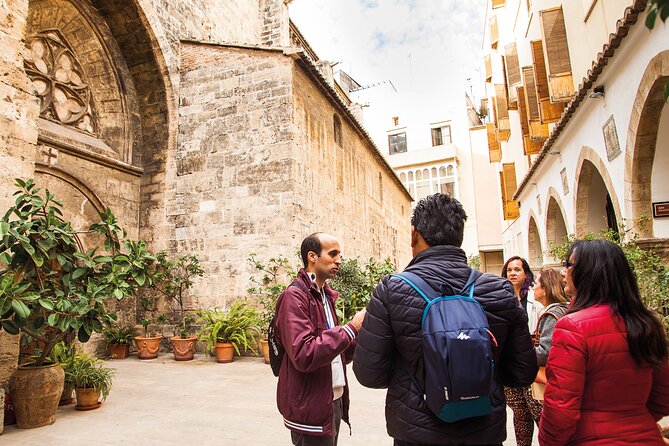
- La Lonja de la Seda entry included: Go into the civil Gothic masterpiece and see the Sala de Contratación.
- Las Fallas explained in context: You’ll connect the city’s festival identity to what you see around Plaça de l’Ajuntament.
- Intangible heritage at Plaza de la Virgen: The Water Tribunal happens every Thursday at midday in the Door of the Apostles.
- Art Nouveau sights early on: Start at Estació del Nord, with both exterior and interior time.
- Small groups help: It’s capped at 25, and many departures feel more personal.
Why This 2-Hour Old Town Walk Works for First-Timers
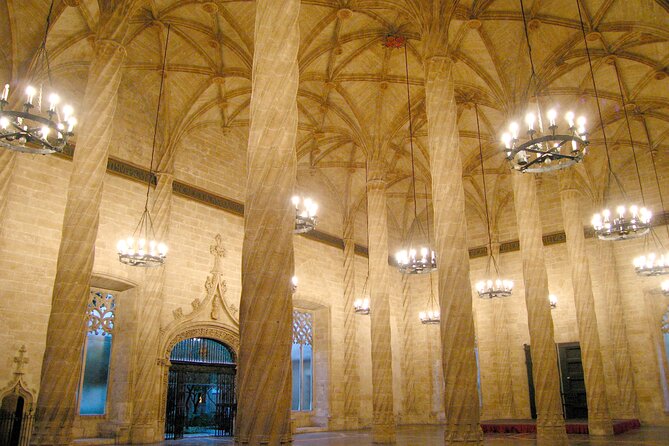
Valencia can feel big if it’s your first day. This tour gives you a focused spine through the Old Town, so you’re not guessing where everything is once you’re out on your own. You’ll move between monuments quickly enough to cover the highlights, but not so fast that you miss the why behind the what.
The World Heritage angle matters here because it’s not only about buildings. You’ll also learn the intangible traditions that UNESCO recognizes in Valencia—especially the festival culture around Las Fallas and the Water Tribunal ritual. That mix is what makes the walk more than a checklist.
And at a price like $21.36 per person, the value comes from the combination: a professional guide plus included entry for one of the major UNESCO sites. Most other stops are free to view, so you’re paying mainly for interpretation and timing.
You can also read our reviews of more tours and experiences in Valencia.



Start at Estació del Nord: Art Nouveau with Real Floors to Stand On
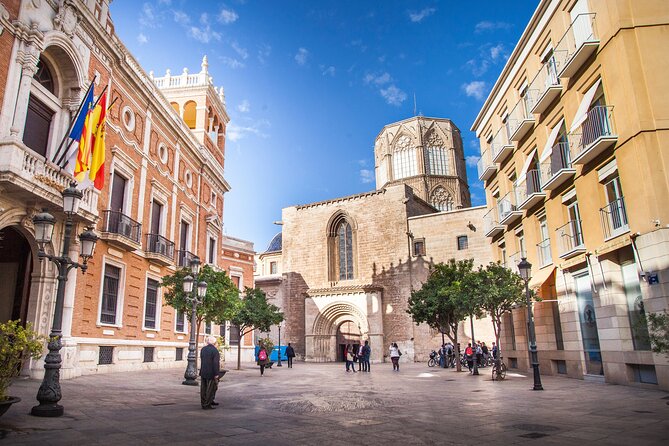
You begin at Estació del Nord, right at the start of your orientation walk. You’ll get both an exterior look and time inside, which helps because you see how the station’s design shapes movement through the space.
This is one of those spots where design tells a story. The station’s Art Nouveau look isn’t just decoration—it reflects Valencia’s modernizing ambitions in the era when rail hubs became symbols of progress. Even if you don’t care about trains, you’ll appreciate the architecture once you see it from both angles.
Practical tip: stations can be warm or airy depending on the time of day. If it’s sunny, plan to bring water and expect the guide to adjust the flow with comfort in mind.
Plaça de l’Ajuntament and the Fallas Connection You’ll Actually Remember
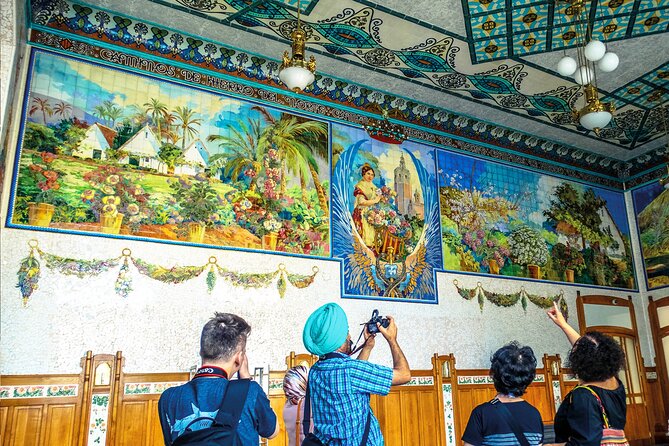
From the station, you head to Plaça de l’Ajuntament and the heart of civic Valencia. Here you’ll get the explanation for Las Fallas, a tradition added to UNESCO’s list in 2016.
What I like about this stop is that it’s not treated as trivia. You’re taught how the festival turns the city into an open-air museum of temporary monuments—built for a short window, then gone. The whole thing runs between 15 and 19 March, and you’ll connect the sights around you to the smell, sound, and costume culture that make it so memorable.
Even if you aren’t visiting in March, this framing helps. Once you understand what the festival celebrates, you start noticing Valencia’s civic pride in the architecture and public spaces.
Ajuntament de València (Weekdays Only): Seeing How Civic Pride Lands
Next comes Ajuntament de València, but there’s an important detail: it’s only part of the experience on weekdays. If your dates fall on a weekend, don’t expect the same building-focused moment.
When the stop is included, it helps you put faces to the ideas behind Las Fallas. This is one of those places where the city’s identity feels official—like the festival isn’t just streets doing their own thing, but a tradition recognized by the civic center itself.
If you’re the type who loves context, you’ll enjoy the pacing here. The guide has room to explain how intangible heritage becomes real in public squares and ceremonies.
Mercat Central de València: Why the Market Matters Beyond Shopping
At Mercat Central de València, you’ll do an exterior visit of the Central Market. It’s shorter than some of the other stops, but that’s not a downside—it’s a smart setup for what comes next and it keeps the walk moving.
This market stop is tied to another UNESCO-listed intangible theme: the Mediterranean Diet. Instead of treating food as background, the explanation connects the market’s role to how communities share, preserve, and practice everyday eating traditions.
Practical note: even from outside, you can often sense the scale and energy of the place. If you want to turn this into a deeper food morning later, you’ll be well-positioned at the end of the tour area to do it.

Enter La Lonja de la Seda: The Silk Exchange You Can’t Fake
Now for the stop that justifies the booking for many people: La Lonja de la Seda, the Silk Exchange. You enter with the included ticket, and you’ll spend about 30 minutes inside.
This is declared a World Heritage Site (1996), and it shows. The guided focus is on civil Gothic architecture, especially the Sala de Contratación—the room with columns, vaults, and ribs. You’ll see how the building was designed for trade and agreement at the height of Valencia’s prosperous golden age.
What makes this better than a generic exterior photo stop is the scale and rhythm of the architecture. Once you’re inside, the space reads like a system: structure supports commerce, and commerce explains why the building looks the way it does.
If you’re traveling with limited time, this is the moment you don’t want to miss. It’s also where the guide’s storytelling tends to click fastest, because the architecture gives you something physical to connect to the history.
Valencia Cathedral Area: A Quick Holy Grail Stop from the Outside
La Catedral is next, with an external visit of the Valencia Cathedral. The Holy Grail is kept there, but ticketed entry isn’t included on this tour.
This works well if you treat it like a perspective stop. You see the cathedral in the context of the square and nearby religious architecture, then move on without burning time in a separate line. If cathedral interior access is a must for you, plan an add-on time later.
The tour keeps this part brief—about 10 minutes—so you stay on pace for the final intangible heritage moment.
Plaza de la Virgen and the Water Tribunal: When Ritual Meets Architecture

Your last major stop is Plaza de la Virgen. This is where the tour leans into UNESCO intangible heritage in a very direct way.
The Water Tribunal happens every Thursday at midday, and it takes place at the Door of the Apostles of the Cathedral. That detail matters: you’re not just learning a story; you’re learning where the ritual is anchored in the city’s architecture and routine.
Even if you’re not there on a Thursday, the explanation helps you understand why the location is so important. Valencia’s water culture isn’t abstract here—it’s tied to a real governance tradition that the city repeats over time.
Price and Value: What $21.36 Actually Buys You
At $21.36 per person, the headline value is not the number—it’s what’s bundled.
- You get a professional guide, which is the real difference between seeing buildings and understanding them.
- You get included entry to La Lonja de la Seda, one of the main World Heritage sites linked to Valencia’s trading past.
- Most other locations are free to view, which means your “paid time” goes into interpretation, not ticket logistics.
Also, the group size cap of 25 helps keep the tour manageable for questions and pacing. And because the tour is around two hours, you’re not committing your whole day to a single theme—you’re building context for the rest of your stay.
If you’re trying to keep costs low, this is one of those tours where the price feels fair because the ticket you’re paying for is tied to a real interior experience.
Mobile Ticket and Scheduling Details That Affect Your Day
This tour uses a mobile ticket, which is handy when you’re already navigating trains, buses, and phone-based maps. Starting at 10:00 am, it also fits well on your first morning in Valencia because it gives you orientation while the streets are still fresh.
Your walk starts at Tourism Hub on C/ de Xàtiva (Extramurs) and ends at Plaça de la Mare de Déu in Ciutat Vella. That end point is great if you want to keep exploring without backtracking.
One timing detail you must note: Ajuntament de València is only visited on weekdays. If your schedule is tight, it’s worth aligning your tour day so you get the full sequence.
Finally, the experience requires good weather. If the day is too rainy, you’ll be offered a different date or a full refund, so you’re not stuck with a ruined plan.
Who Should Book This and Who Might Skip It
I think you should book this if:
- you have limited time and want a guided route through Valencia’s top UNESCO-linked highlights
- you like the combination of monuments plus traditions (Las Fallas and the Water Tribunal)
- you care about architecture but also want it explained in plain language
- you want at least one major interior experience, not only street-level viewing
You might skip it if:
- you want cathedral interior access (this one is external)
- you hate walking in heat and you’re traveling without flexibility if weather changes
- you’re visiting on a weekend and expect the Ajuntament de València building portion
Should You Book? My Straight Advice
Yes, I’d book it—especially if it’s your first time in Valencia. You’re getting a strong mix: a standout UNESCO interior (La Lonja), plus the intangible heritage themes that make Valencia feel like Valencia, not just another pretty city.
If you can, schedule it early in your trip. After the tour, you’ll know where the major sights cluster, and you’ll have better instincts for what to prioritize next—food stops, additional churches, or even a longer look at the market area.
FAQ
How long is the tour and when does it start?
The tour lasts about 2 hours and starts at 10:00 am.
Is the Silk Exchange (La Lonja de la Seda) entry included?
Yes. The Silk Exchange visit is included, and the ticket for La Lonja de la Seda is provided as part of the tour.
Which sites are included with tickets versus free admission?
Estació del Nord is free to enter (ticket free), Plaça de l’Ajuntament is free, Ajuntament de València is free (on weekdays only), Mercat Central is free for the external visit, and Plaza de la Virgen is free. La Lonja de la Seda is the only stop marked as ticket included. La Catedral is an external visit and is not included.
Are there any days when part of the tour changes?
Yes. The Ajuntament de Valencia stop is only on weekdays.
What happens if La Lonja / Silk Exchange is closed during the tour?
If the Silk Exchange is closed for any event during the visit, you’ll be offered the option to send tickets so you can enter in the afternoon, or the operator will try to exchange them for a ticket of the same amount for another museum or monument.
Does the tour run in bad weather?
The tour requires good weather. If it’s canceled due to poor weather, you’ll be offered a different date or a full refund.
Can I change the tour language?
Yes, language change is possible subject to availability for an additional €5 per person (request to the agency).