REVIEW · ATHENS
Ancient Agora and Acropolis Private Tour with Licensed Expert
Book on Viator →Operated by WARMPENGUIN · Bookable on Viator
Athens hits you fast. The trick is seeing the big sights without wasting your energy, and this private Acropolis + Ancient Agora tour is built for that. In about 3 hours, you get a guided pass through the hilltop monuments (including the Parthenon area) plus a second block of time at the Ancient Agora, where Athens felt like a working city, not a museum set. I especially like the licensed, on-the-ground guidance (with real Q&A) and the fact that the pacing is designed to keep you moving while still letting you look closely.
Two things I love: you spend time on the Acropolis highlights that people usually rush past, and you also get grounded in the Agora so the whole story of the city makes more sense. One drawback to plan around: this is not ideal for reduced mobility because there’s some walking between the Acropolis area and the Ancient Agora.
In This Review
- Key Things I’d Focus On Before You Book
- A Private Way to Tackle the Acropolis Without the Chaos
- Meeting at Acropoli Metro: Where You Start Changes How Much You Enjoy
- The Hilltop Plan: Acropolis Temples, Theaters, and the Parthenon Area
- New Acropolis Museum: Why It’s the Smart Follow-Up to the Hill
- Ancient Agora in 80 Minutes: From Temples to Real City Life
- Crowds, Heat, and Pace: What Private Really Means Here
- What You Get vs. What You Pay For (Admission Tickets)
- How the Tour Fits Different Types of Visits
- Who This Tour Is Best For
- Should You Book This Acropolis and Ancient Agora Private Tour?
- FAQ
- How long is the private tour?
- What two major sites are included?
- Where do we meet the guide?
- Is the tour fully private?
- Are admission tickets included in the price?
- Can you help with skip-the-line tickets?
- What language is the tour offered in?
- Is there a mobile ticket?
- Is the tour suitable for people with reduced mobility?
- Do they allow service animals?
Key Things I’d Focus On Before You Book
- Private pacing: you’re not stuck with a rigid group flow.
- Licensed expert guidance: guides like Mandio, Manto, Shorty, and Vicky are specifically praised for clarity and keeping it interactive.
- Two UNESCO sites in one: Acropolis monuments and the Ancient Agora in a tight, efficient visit.
- Meeting point that’s easy to reach: Acropoli Metro Station at street level near the Acropolis Museum.
- Skip-the-line help available (extra cost): admission tickets aren’t included, but you can arrange assistance after booking.
- Time built for real viewing: you’ll have room for photos and questions instead of just walking behind someone.
A Private Way to Tackle the Acropolis Without the Chaos

The Acropolis is famous for a reason, but that fame creates a problem: crowds, heat, and a layout that can make your brain feel like it’s doing crosswords while you walk uphill. This tour solves a lot of that by keeping the experience private and expert-led, so you’re not trying to decode a cliffside history lesson on your own.
You’re also getting a smarter balance. Many tours treat the Acropolis as the main event and the rest as filler. Here, you get time on the hill for the temples and views, then you shift down to the Ancient Agora for everyday Athens—commerce, workshops, and public life at the base of the hill. That pairing makes the monuments feel less random and more connected to real city living.
You can also read our reviews of more tours and experiences in Athens.



Meeting at Acropoli Metro: Where You Start Changes How Much You Enjoy
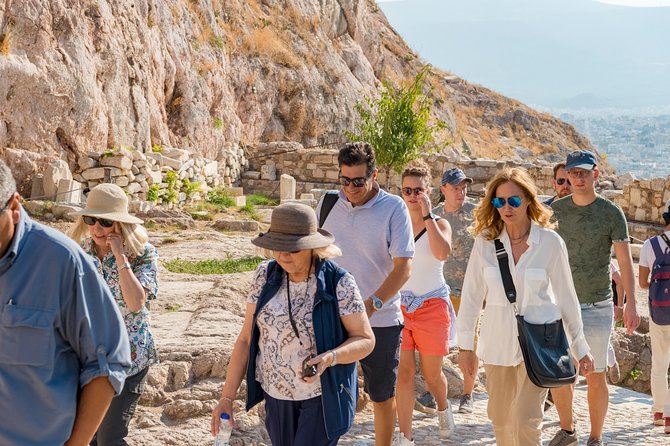
Your guide meets you at Acropoli Metro Station at street level, on Makrygianni Street (7 Makrygianni Street, 117 42), close to the Acropolis Museum. This is genuinely helpful. You’re not hunting for a vague landmark in a maze of streets; you’re starting at a transit anchor that most people can navigate.
I like this approach because it also means you get your bearings fast. From that start point, you’re in the right area to understand the wall and the setting of the Acropolis—how it sits, why it matters, and how you’ll move through the spaces without feeling lost.
The Hilltop Plan: Acropolis Temples, Theaters, and the Parthenon Area
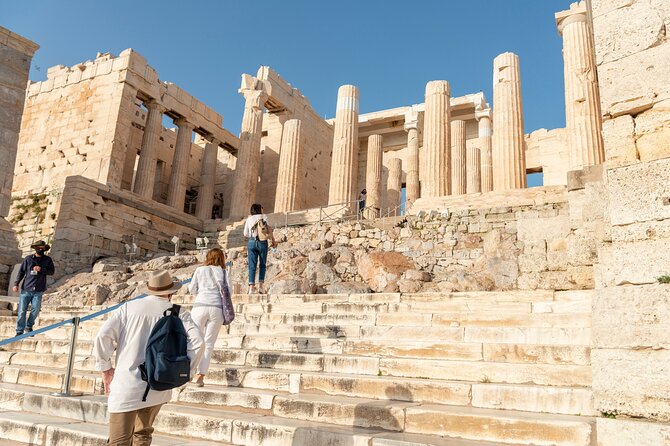
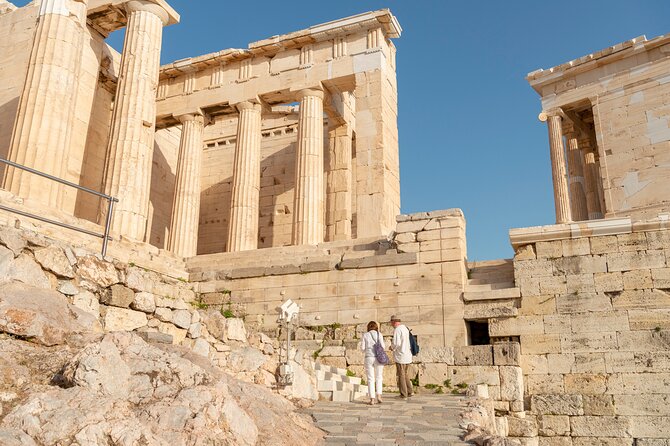
The Acropolis segment is roughly 80 minutes, with the visit organized around the major monuments and the story lines you actually want. You’ll see the big names and the key architecture cues, including the monumental gateway (Propylaea) and major structures such as the Odeon of Herodes Atticus, the Temple of Athena Nike, the Erechtheum, and the Parthenon zone.
The tour also slows down at several spots so the place becomes easier to read:
- Theater of Dionysus is an early highlight. Built in the 4th and 5th century BC in a natural amphitheater setting, it’s often called the world’s oldest theater. The scale idea hits hard: around 25,000 seats. You also get the cool perspective that major plays had premieres here.
- As you move upward, you’ll talk about what incoming travelers and ships would have experienced. One legend shared here is about a bronze statue of Athena—specifically the spear tip catching sunlight enough to be seen from sea.
- You’ll pass through the Propylaea gateway area, then keep working through the temples. The Temple of Athena Nike is described as one of the earliest classical Ionic temples on the Acropolis, dedicated to Athena and positioned for strong city views.
- The Parthenon gets its own time. You’ll get an overview of how it was constructed, and why it mattered culturally during Athens’ Golden Age.
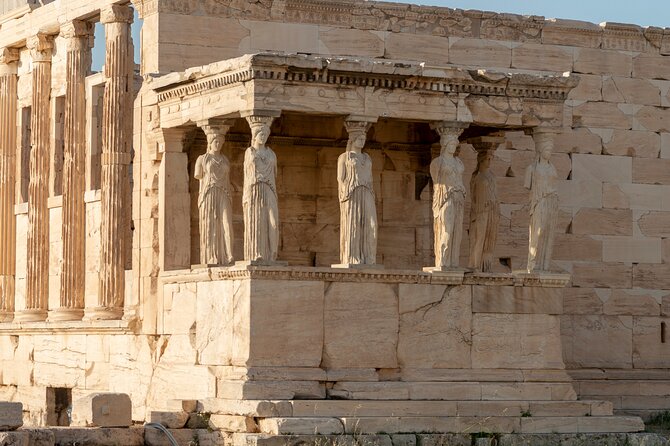
- You’ll also see the Erechtheion, dedicated to Zeus and the goddess Athens in the way the site is presented. The guide points out the mythology and key features, including references you’ll later see explained further in the museum context.
- Finally, the Odeon of Herodes Atticus shows up as a working theater idea—built in AD 161 in memory of Herodes Atticus’ wife—so it connects ancient design with modern performance.
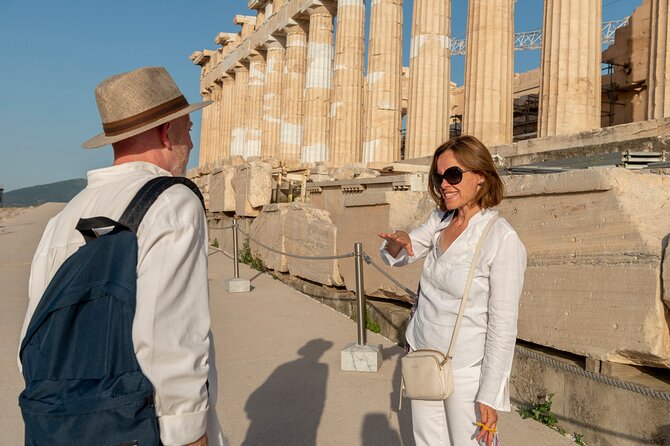
Is it a lot? Yes, but it’s not a stampede. The point of the private format is that the guide can keep you on track while still giving you time for questions and photos. That pacing is exactly what multiple guests highlighted—especially the sense that you can go at your pace while still moving through the right stops.
New Acropolis Museum: Why It’s the Smart Follow-Up to the Hill
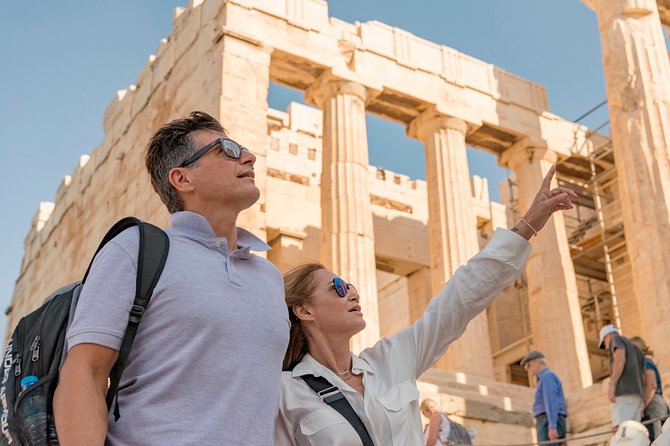
A big reason the Acropolis sticks in your mind is that the hilltop monuments are only half the story. The other half is what survived, what’s been recovered, and what the carvings and artifacts actually look like without sun glare and distance.
This tour includes time at the New Acropolis Museum after the hilltop section. Expect to see original masterpieces plus tools for understanding—models, videos, and interactive-style installations. A guide will focus on the most significant pieces and connect them back to the temples and myths you just saw.
Practical note: don’t treat this museum time like a bonus add-on you can skip. Even if you’re not a museum person, the explanations help you notice details you would otherwise miss. The Parthenon and its companion sites can feel visually similar if you’re trying to read stone at 100 meters. The museum helps you translate what you saw on the hill into something you can actually grasp.
Ancient Agora in 80 Minutes: From Temples to Real City Life
Then you shift gears. The Ancient Agora stop is also roughly 80 minutes, and that time matters because the Agora is not just ruins—it’s the stage for daily life in ancient Athens.
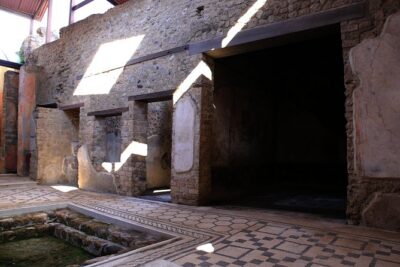
You’ll learn that the area functioned as a marketplace and center of public activity at the base of the Acropolis, with workshops, temples, and important monuments. The tour includes a recreation of an ancient commerce center—so you can picture how traders would work, rather than just staring at a few stones.
One of the clearest highlights here is that the site includes an onsite museum with artifacts uncovered from the area. That’s where the Agora stops being abstract. Instead of thinking only about politics and philosophy, you get pulled toward the practical rhythm of the city: trading, building, meeting, and using shared public spaces.
The tour also points out the most complete remaining temple of Greek antiquity on the site. Even without getting lost in dates, it’s the kind of monument that gives you a reliable visual anchor. It’s also a nice counterpoint to the Acropolis: same culture, but a different mood—less ceremonial hilltop, more working city.






Crowds, Heat, and Pace: What Private Really Means Here
You’re paying for more than a route on a map. You’re paying for decision-making power: you can ask questions, pause for photos, and keep your focus where it belongs.
The guide-led experience shines in a few ways:
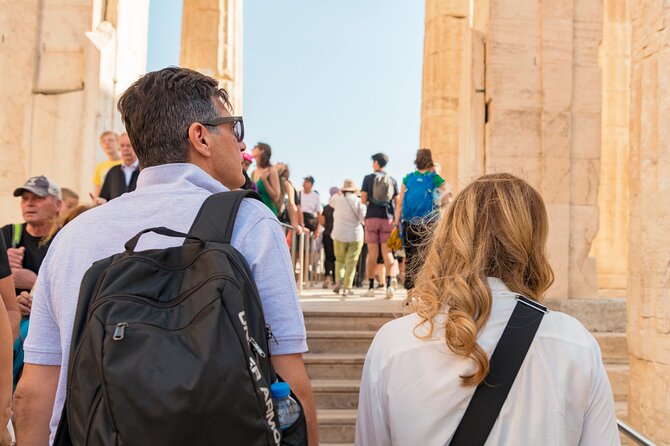
- Wayfinding through crowds: you’re guided through the right flow so you spend less time doing accidental backtracking.
- Real interaction: multiple guide names show up in the feedback—Mandio, Manto, Shorty, and Vicky—each described as witty, entertaining, and quick to answer questions. That matters on the Acropolis because the details are everywhere, and without guidance you tend to remember only the obvious views.
- A pace that supports adults and kids: one review specifically mentioned that children stayed engaged because the guide kept things interactive. That’s a sign the narration isn’t just lecturing—it’s paced.
If you want the best experience, aim for an earlier start time when possible. One review noted the value of getting there before the Acropolis got too hot and crowded. If your schedule allows it, choose the earlier window.
What You Get vs. What You Pay For (Admission Tickets)
One major point before you book: admission tickets are not included. The tour price is for the private licensed guide and the tour experience, while the entrance fees are separate.
The good news is that the operator indicates hassle-free ticket help is available after booking, and you can request skip-the-line tickets at an extra cost. The key is timing: tickets may sell out and must match specific date/time slots. The tour notes that they will message you after booking to ask whether you need help purchasing tickets, and if you don’t reply they assume you’ve bought the appropriate time-slot tickets yourself.
If you’re the kind of traveler who likes to lock details in advance, this is manageable. Just don’t treat tickets as something you’ll handle day-of. On the Acropolis, day-of can turn into stress.
How the Tour Fits Different Types of Visits
This tour works especially well if you:
- Want a high-value morning that covers two major UNESCO sites without losing an entire day.
- Prefer a guide who can explain what you’re seeing in real time, not only provide directions.
- Like asking questions, including the curious ones—especially if you have kids or teens in your group.
It may be less ideal if:
- You have mobility limits that make uphill walking or between-site walking difficult. The tour specifically says there’s walking between Acropolis and Agora, so it’s not suitable for reduced mobility.
Who This Tour Is Best For
I’d point you toward this private setup if you want the “great hits” with context and you don’t want to feel rushed. It’s also a strong match for couples and small groups who want a real narrative thread—Acropolis symbolism up top, civic and marketplace life down below.
If you’re traveling solo and want maximum personalization, private can still be a good fit. You’ll get more back-and-forth than a fixed group rhythm. If you’re traveling with friends and want everyone’s interests included, a private guide can adjust how much time you spend on theater details versus temple architecture versus museum artifacts.
Should You Book This Acropolis and Ancient Agora Private Tour?
Yes—if you want a focused, guide-led way to see the Acropolis and Ancient Agora without turning it into a scavenger hunt. This is the kind of tour that pays off because the guide can connect the dots: theater to worship, gateways to ceremony, myths to objects you can actually view in the museum.
Book it when:
- You want a tight 3-hour plan that still feels complete.
- You care about getting explanations for specific monuments and not just getting your photos.
- You’d rather ask questions than rely on signage and guesswork.
Skip it or consider an alternative if:
- You know you’ll need more mobility support than the route allows.
- You prefer a totally self-guided visit where you control every minute without a guide.
If you’re ready to see Athens with context—temples and real city life together—this one is a smart use of time.
FAQ
How long is the private tour?
It’s about 3 hours total.
What two major sites are included?
You’ll visit the Acropolis (with associated temples, theaters, and buildings) and the Ancient Agora of Athens.
Where do we meet the guide?
Meet at Acropoli Metro Station at street level, 7 Makrygianni Street, Athina 117 42, Greece, near the Acropolis Museum.
Is the tour fully private?
Yes. It’s a private tour/activity, and only your group participates.
Are admission tickets included in the price?
No. Admission tickets and their cost are not included.
Can you help with skip-the-line tickets?
Yes, hassle-free tickets can be organized on request after booking for an extra cost. The operator will message you to ask if you need help, and tickets may need to be booked for specific date and time slots.
What language is the tour offered in?
The tour is offered in English.
Is there a mobile ticket?
Yes, a mobile ticket is included.
Is the tour suitable for people with reduced mobility?
The tour notes that there is some walking distance between the Acropolis and Agora, so it is not suitable for persons of reduced mobility.
Do they allow service animals?
Yes, service animals are allowed.