REVIEW · BEIJING
2-Hour “Ancient & Modern” Beijing Sidecar Tour (Day /Night)
Book on Viator →Operated by Beijing Sidecar Tours · Bookable on Viator
Sidecar speed meets old Beijing. I like the way this ride links hutongs with Beijing’s modern CBD in just two hours, so you feel the city’s contrasts without spending all day in transit. I also love the built-in photo stops at big-name sights, where you can pause, switch viewpoints, and take your time.
Because it’s a sidecar, weather and comfort matter and it can feel windy or cool, even with raincoats included. If rain hits, the tour may be changed or refunded, so bring flexible timing and plan for at least one backup option.
In This Review
- Key things you’ll notice right away
- Why a sidecar tour is one of the easiest ways to read Beijing
- Price and value: what $89 buys you in real terms
- Getting oriented from National Art Museum of China
- Hutongs first: feel Beijing’s everyday street life
- Bell and Drum Towers: classic skyline framing and an easy photo moment
- Shichahai and Houhai lakes: drinks, views, and a calmer pace
- North gate of the Forbidden City area: moat and watching tower views
- Workers’ Stadium and the Beijing football landmark
- CCTV New Mansion: modern Beijing’s skyline punch
- Site of Ming City Wall Park: where the old defense still shows
- Snacks, drinks, and comfort extras that make the ride work
- Day vs night: choosing the vibe for your first Beijing day
- Who should book this sidecar tour (and who might want a different plan)
- Should you book this 2-hour “Ancient & Modern” Beijing sidecar tour?
- FAQ
- How long is the 2-Hour “Ancient & Modern” Beijing Sidecar Tour?
- Where does the tour start and end?
- Is pickup available?
- What’s included in the price?
- How do the two passengers work on the sidecar?
- Are admissions required for the stops?
- What stops are part of the route?
- What should I bring for comfort?
- What happens if the weather is bad?
Key things you’ll notice right away
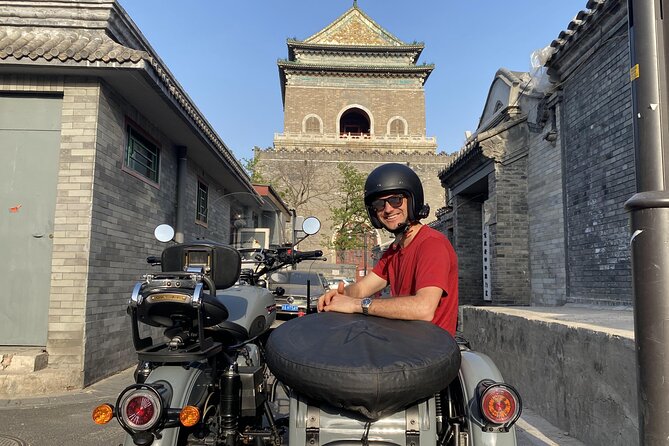
- Ancient-to-modern route, tightly timed: hutong alley life, Forbidden City-area views, then CBD icons.
- Two-passenger setup on one sidecar: one rider sits in the sidecar, the other rides behind the driver, with a switch possible halfway.
- Photo stops built into the pace: short, purposeful stops at major checkpoints for skyline shots and street-level angles.
- Hutongs plus Shichahai lake views: a ride that slows down around Houhai for scenery and a drink break.
- Comfort extras are part of the deal: helmets, bottled water, raincoat, and a phone charge cable.
- Guide quality can make a difference: in one reported experience, John was praised for punctual hotel pickup and flexible drop-off choices.
Why a sidecar tour is one of the easiest ways to read Beijing
Beijing is a city of layers: old lanes, grand historic gates, and then the fast jump into glass-and-steel modern China. A sidecar tour is a smart way to see that shift in a short window, because you’re not stuck in slow traffic with a long walking plan. You’re moving, stopping, and framing photos at the moments that matter.
The biggest payoff for me is the texture of the city. Hutongs aren’t just something you look at from a distance; you’re riding along tight alleyways where daily life is visible. And then, almost like someone flips a switch, you’re out toward the central business district for the kind of buildings that look like they belong in a different century.
There’s also a human rhythm here. The stops aren’t rushed sightseeing marathons. You get multiple chances to pause, take pictures, and reset—especially around lakes and classic landmark areas.
You can also read our reviews of more tours and experiences in Beijing.


Price and value: what $89 buys you in real terms
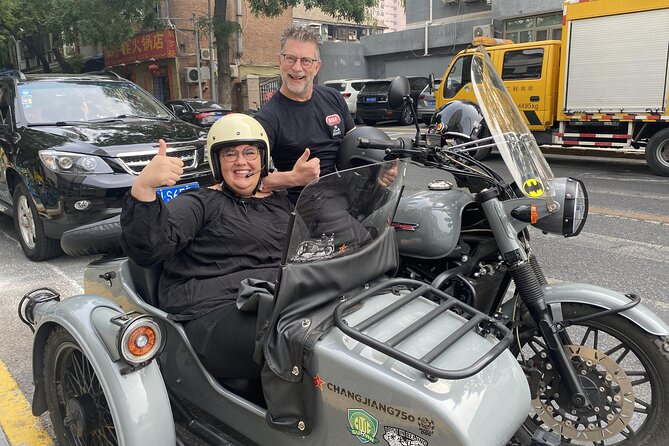
At $89 per person for about two hours, you’re paying for more than transportation. You’re also getting safety gear, guide time, and “keep you comfortable” extras bundled into the experience.
Here’s what’s included that usually costs extra when you do things on your own:
- Helmets, bottled water, and a raincoat
- A professional driver/guide
- Beijing special snacks
- Hot coffee/tea in winter and cold soda/beer in summer
- A phone charge cable
- A sidecar ride that works for two passengers (with a halfway swap option)
On top of that, many of the stops listed are free admissions (Bell and Drum Towers, Shichahai Scenic Resort, Workers’ Stadium, CCTV New Mansion, and Site of Ming City Wall Park). That matters because it keeps the whole plan straightforward and lowers the “ticket hassle tax” you often feel on short tours.
And there’s one more practical value: you get a guided route that connects central old Beijing sights with modern Beijing without you having to plan the order and fight for the best angles yourself.
Getting oriented from National Art Museum of China
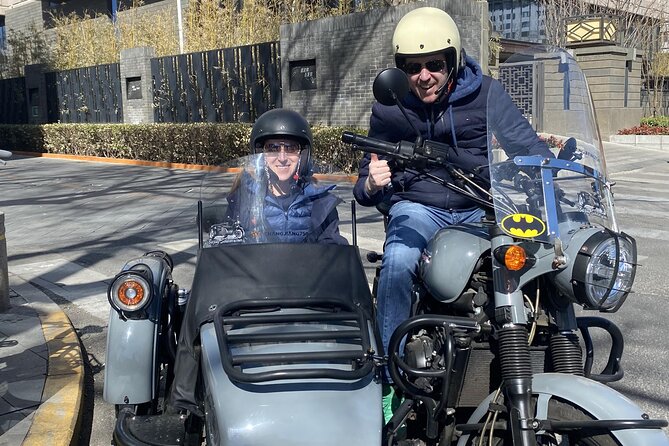
The meeting point is the National Art Museum of China, at 1 Wu Si Da Jie, Dong Cheng Qu, Beijing. It’s the kind of central location that helps you start your trip without a long scramble across town.
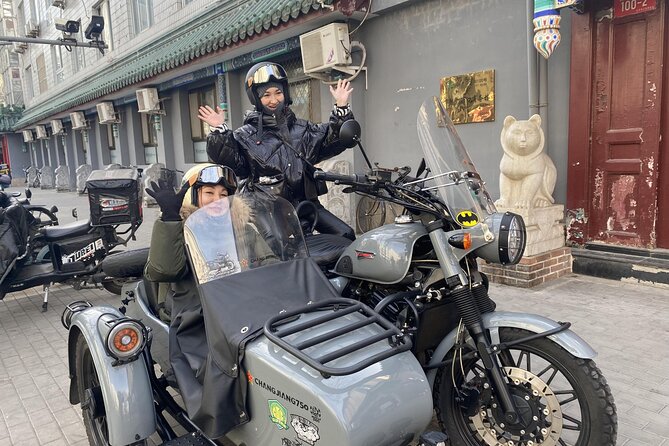
Pickup is offered, which is helpful if you’re staying somewhere hard to reach by public transport. The tour also runs as a private experience for your group, which usually makes timing feel calmer—you’re not sharing the sidecar route with a huge crowd.
Because the tour ends back at the meeting point, you should expect a loop that returns you to where you started, rather than a one-way drop into a different part of the city.
Hutongs first: feel Beijing’s everyday street life
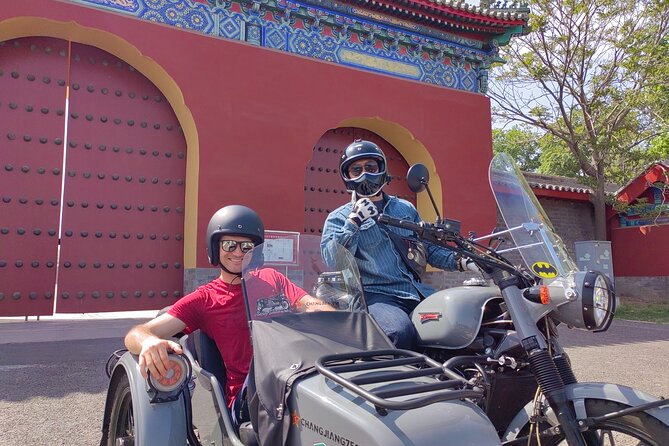
The experience is designed to take you into hutongs, Beijing’s traditional small alleys. This is where the city feels most personal. You’ll see the close-up scale of neighborhood life—narrow space, quick turns, and street-level perspectives you simply can’t recreate from a bus window.
The benefit of doing hutongs early is simple: it sets your mental map. Before you hit the big postcard landmarks, you understand the human-scale Beijing you’re passing through. Later, when you ride toward larger monuments and modern architecture, the contrast will feel sharper.
A sidecar also changes how you experience tight spaces. You’re lower to the street than most vehicles, and the turns feel closer. That’s part of the fun, but it’s also why you want to wear the provided helmet and stay alert—this isn’t a slow stroll.
Bell and Drum Towers: classic skyline framing and an easy photo moment
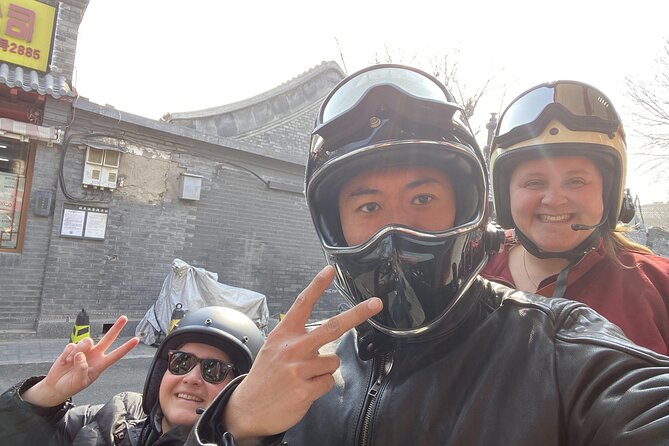
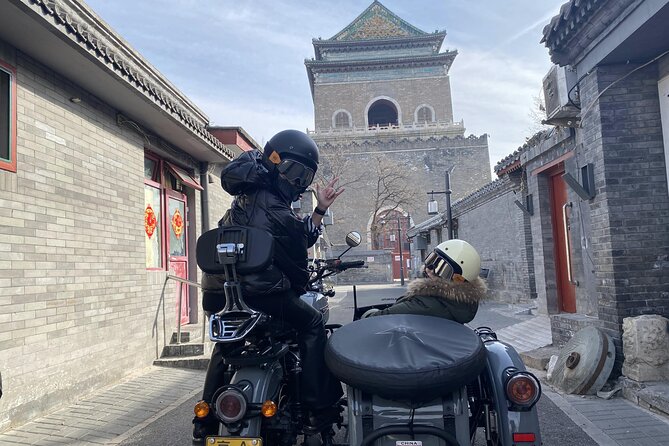
Stop 1 is the Bell and Drum Towers, two important landmark buildings on Beijing’s central axis. One of the best things here is the stop length: it’s a short window (about 5 minutes), which makes it ideal for quick photos without burning your tour time.
These towers are also described as a popular check-in place on the internet, so you’ll understand why people like getting a fast shot here. And since admission is listed as free, you can focus on photos and viewpoint choices rather than budget or ticket logistics.
What I like about this stop is that it acts like an anchor. You’re about to move into lakes, city gates, stadiums, and modern headquarters—this gives you a historic reference point for the whole route.



Shichahai and Houhai lakes: drinks, views, and a calmer pace
Next comes Shichahai Scenic Resort, with riding along the Houhai lakes. This is one of the stops that feels like a breather. The tour time here is longer than most photo stops (about 15 minutes), and you’re also set up for a drink break.
You’ll have drinks as part of the ride, and the lakes views do the job that photography sometimes can’t: they make the city feel open. After hutong lanes, the water adds space and lets you see reflections, skyline lines, and the kind of layers Beijing is known for.
One practical note: bring your phone with a bit of caution. The tour includes a phone charge cable, which is great, but sidecar rides involve movement. Secure it the way you normally would in a moving vehicle.
North gate of the Forbidden City area: moat and watching tower views
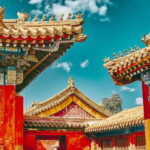
Later, the route takes you to the north gate of the Forbidden City area, including a ride through the moat and the watching tower views. Even without turning this into a full museum day, this stop gives you a sense of the scale and planning behind the old imperial city.
For many people, the Forbidden City can feel like a whole trip by itself—long lines, lots of walking, and lots of time spent indoors. This sidecar approach offers something different: a viewpoint-driven experience that focuses on the exterior feel and the surrounding water/fortification layout.
The key takeaway: treat this stop like a photo-and-context moment. It’s a fast way to connect the historical environment to what you’ll see in later modern stops.
Workers’ Stadium and the Beijing football landmark
Then you head toward Beijing Workers’ Stadium, described as a famous city landmark and the newer home of the Beijing football team. The stop is short (about 5 minutes), so it’s more about a quick architectural and street-level look than a long visit.
The value here is variety. After historic gates and classic towers, seeing a modern sports landmark keeps the tour from feeling like a theme park. It also shows another side of modern Beijing—where people gather for everyday city events, not just for sightseeing.
If you’re a sports fan, you’ll likely appreciate the “this is a real working venue” feeling. If you’re not, it still works as a contrast stop that keeps the route moving.
CCTV New Mansion: modern Beijing’s skyline punch
Stop 4 is CCTV New Mansion, located in the Central Business District. It’s described as the world-famous CCTV building and also the tallest building in Beijing.
This is one of the most visually intense transitions on the route. You go from traditional alley scale to a major corporate skyline, and the sidecar ride makes it feel like you’re watching the city update itself in real time.
The stop is brief (around 5 minutes), so the focus is on viewpoints and photos. When you do short stops like this, I suggest you decide ahead of time what you want: wide skyline shots, closer architecture angles, or a “street in front of the tower” framing.
Site of Ming City Wall Park: where the old defense still shows
The final sightseeing stop is the Site of Ming City Wall Park, described as the only existing section of the original Beijing inter city. It’s also where you can feel the blend of ancient and modern time—because the surrounding city doesn’t vanish just because you’ve returned to something old.
You get about 15 minutes here, which helps. Short stops are great for landmark checkboxes, but this one benefits from a slower look. Even if you don’t know every detail, seeing remaining wall sections gives you a stronger understanding of how Beijing was shaped for protection and movement in earlier centuries.
I like ending with this kind of physical reminder. It sticks in your mind after the high-energy modern stops, because it’s something you can “see and think” about without needing to read a lot.
Snacks, drinks, and comfort extras that make the ride work
A sidecar tour sounds fun on paper. What makes it practical is what’s included.
You’ll have:
- Beijing special snacks
- Bottled water
- A seasonal drink choice: hot coffee/tea in winter or cold soda/beer in summer
- Helmets and raincoats
- A phone charge cable
That mix matters. The drinks and snacks keep your energy steady during short stops, so you’re not hunting for a cafe mid-tour. The water is basic but essential on a city day, and the raincoat is the difference between a good plan and a miserable one.
The phone charge cable is an underrated inclusion for photos. Two hours can chew through battery life fast with photos and video, especially in daylight to low-light transitions.
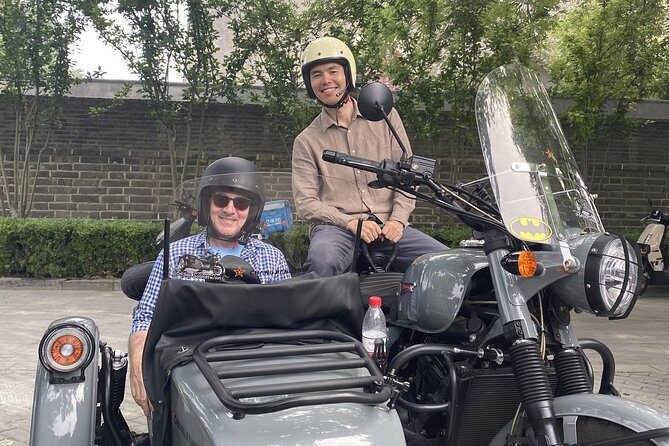
Also, pay attention to the sidecar seating plan: two passengers share one sidecar, with one rider in the sidecar and one behind the driver, and there’s a switch half way possible. That’s a nice fairness factor. It also helps if one side gives better photo angles at different points.
Day vs night: choosing the vibe for your first Beijing day
The tour is offered day/night, and that’s not a small detail. Daytime gives you clarity for architecture shots, alley textures, and lake scenery. Nighttime can shift the feeling toward the modern skyline and the lighting effects around city landmarks.
Because your total time is only about two hours, you’ll want to match your choice to your priorities. If your goal is “set my bearings and learn the city layout quickly,” daytime is often the easiest. If your goal is “feel the modern Beijing mood,” night might be more fun.
Either way, bring a light layer if you’re sensitive to cool air. A sidecar has more wind exposure than a car, and the tour is weather-dependent.
Who should book this sidecar tour (and who might want a different plan)
This tour is a strong fit if you want:
- A short first-day orientation across ancient and modern Beijing
- A guided route that saves planning effort
- More street-level views than you’d get from a bus or standard walking loop
- A fun photo plan with breaks and included drinks/snacks
It may be less ideal if you need a long, museum-style pace, since the stops are brief by design. Also, because good weather is required, people who can’t be flexible should think carefully before committing during unpredictable conditions.
If you’re traveling with someone who doesn’t love heavy walking, a sidecar tour can be a clever way to see a lot with less foot fatigue. It’s also private for your group, which helps if you want the conversation to stay focused on your interests.
Should you book this 2-hour “Ancient & Modern” Beijing sidecar tour?
Yes—if you want a fast, guided way to understand Beijing’s contrast without spending a full day in transit. The value is strongest when you count the extras (helmets, raincoat, water, snacks, seasonal drinks, phone charging) and the fact that many major stops are free.
I’d especially book it if:
- You’re visiting for a short time and want a “get oriented” day
- You care about photos but also want a guided route that doesn’t feel like work
- You like the idea of seeing hutongs up close and then quickly switching to CCTV and CBD scale
Skip it or wait if:
- Your schedule is strict and you can’t handle weather changes
- You’re looking for deep, hours-long indoor sightseeing rather than viewpoint stops
Overall, this is the kind of tour that helps you start Beijing with momentum. You’ll leave with photos, context, and a clearer sense of where the old city and modern city meet.
FAQ
How long is the 2-Hour “Ancient & Modern” Beijing Sidecar Tour?
It runs for about 2 hours.
Where does the tour start and end?
It starts at the National Art Museum of China (1 Wu Si Da Jie, Dong Cheng Qu, Beijing) and ends back at the meeting point.
Is pickup available?
Pickup is offered, in addition to meeting at the listed start point.
What’s included in the price?
The tour includes helmets, bottled water, raincoat, phone charge cable, a professional driver/guide, Beijing special snacks, and seasonal drinks (hot coffee/tea in winter and cold soda/beer in summer). You also ride with 2 passengers in one sidecar.
How do the two passengers work on the sidecar?
One passenger rides in the sidecar and one rides behind the driver, and there is a possibility to switch half way.
Are admissions required for the stops?
Admissions are listed as free for several stops, including Bell and Drum Towers, Shichahai Scenic Resort, Beijing Workers’ Stadium, CCTV New Mansion, and Site of Ming City Wall Park. The listing doesn’t clearly state admission for every viewing area.
What stops are part of the route?
You’ll see Bell and Drum Towers, Shichahai/Houhai lakes, the north gate of the Forbidden City area (including moat and watching tower views), Beijing Workers’ Stadium, CCTV New Mansion, and Site of Ming City Wall Park, plus time in hutongs.
What should I bring for comfort?
Wear weather-appropriate clothing and plan for wind exposure since it’s a sidecar ride. The tour provides a raincoat, plus water and snacks.
What happens if the weather is bad?
The experience requires good weather. If it’s canceled due to poor weather, you’ll be offered a different date or a full refund.