REVIEW · BEIJING
Beijing Culture: Tea Ceremony, Heritage Instrument & Calligraphy
Book on Viator →Operated by Culture Heritage Tour China · Bookable on Viator
A quiet reset in Beijing. This is what you get when hands-on culture beats the usual sightseeing grind, plus a real Guqin melody lesson. The only catch: transport isn’t included, so you’ll need to get to the meeting point yourself.
I like that this is designed for meaning, not performance. You’re guided in English by a bilingual instructor with an M.A. in History & Sociology, and you learn directly from national-level tea and heritage artists in a private venue that’s closed to the public.
There’s a simple trade-off to consider: it’s 2 hours 30 minutes of focused practice, not a wandering tour of famous streets. If you only want photos and quick stories, this won’t feel like that kind of trip.
In This Review
- Key highlights at a glance
- Entering a private Beijing heritage space (not a public show)
- Tea ceremony with a national-level tea master: slow down and pay attention
- Guqin lesson: learning a full melody, not just hearing notes
- Chinese calligraphy workshop: writing real characters with meaning
- Traditional outfit rental: why it’s more than a costume moment
- What “not a show” really means for your time
- Price and value: $78.60 for instruction, materials, and expertise
- Logistics that matter on a busy Beijing day
- Who this is perfect for (and who might want to skip)
- Should you book this Beijing tea, Guqin, and calligraphy workshop?
- FAQ
- How long is the Beijing tea, Guqin, and calligraphy experience?
- Is this a show or a hands-on workshop?
- What’s included in the price?
- What should I expect to bring or pay for?
- Where does the tour start?
- How big is the group?
- Do I need to know Chinese to participate?
- What happens if the weather is poor?
- How does cancellation work?
Key highlights at a glance
- Tea ceremony with a certified tea master, plus guided tasting so you’re not just drinking warm water
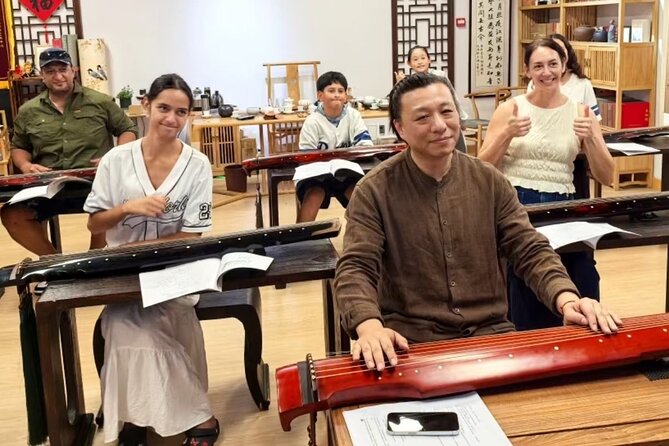
- Hands-on Guqin learning, including playing a full melody with a national-level heritage artist
- Calligraphy workshop for real characters, with expert feedback as you write
- Traditional outfit rental for the ritual feel and better photos (and yes, it adds fun to the day)
- Small group size (max 8) in a calm air-conditioned heritage space
Entering a private Beijing heritage space (not a public show)
You start at 813 Creative Park in Chaoyang District. The address listed is 813 Creative Park, VGP3+CCX, Chaoyang, China, 100124, and the activity ends back at the same place. It’s a convenient setup because you’re not stuck with a long return plan.
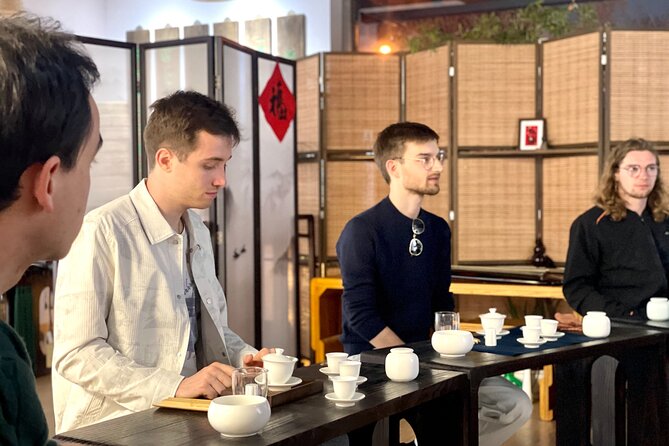
The format matters here. This runs in a quiet, air-conditioned cultural venue that’s closed to the public. That means you get fewer distractions and more attention from the instructors. With a maximum of 8 participants, it also feels more like a lesson than a theater event.
You’ll also get a mobile ticket, and confirmation comes within 48 hours of booking (as long as space is available). Service animals are allowed, and the tour notes that most travelers can participate.
You can also read our reviews of more tours and experiences in Beijing.


Tea ceremony with a national-level tea master: slow down and pay attention
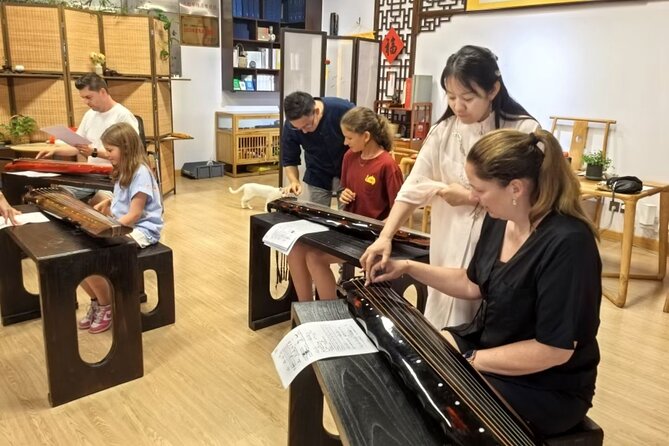
The tea portion isn’t just a welcome ritual. It’s a traditional tea ceremony and tasting led by a certified tea master, and the whole point is that you learn how to do it, not only watch someone do it.
In practice, this changes your relationship to tea. Instead of rushing through a cup, you follow the steps and then taste with guidance. It’s one of those experiences where you notice small details—temperature, aroma, and how the tea’s character comes through when you treat it like a process rather than a beverage.
From the reviews, the tea part also sets the tone emotionally. People describe it as calm and even moving, especially because you’re drinking something you prepared with your own hands. You can treat this as a chance to reset from Beijing’s noise and crowds before you get into the more physically focused parts like writing and playing.
What to watch for: tea ceremonies require patience. If you’re the type who likes to sprint from stop to stop, this section might feel slower than a typical sightseeing moment. The flip side is that it becomes one of the rare activities where you’re not multitasking.
Guqin lesson: learning a full melody, not just hearing notes
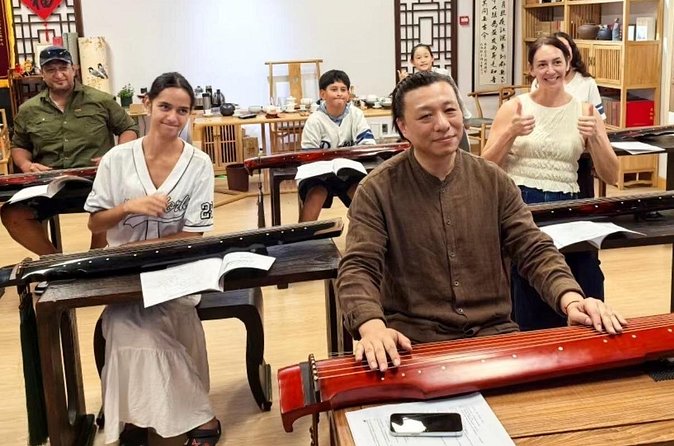
After tea, you shift gears to music. There’s a live Guqin performance by a national-level heritage artist, followed by a hands-on learning session. The standout detail is that you’re not only listening—you’re guided while learning to play a full melody.
If you’ve never heard the Guqin up close, think of it as controlled, expressive music rather than volume. With an instrument as subtle as this, watching is one thing. Actually trying to press and position your fingers is another. And that’s where you start understanding why people treat it as a major expression of traditional Chinese culture.
The small-group size helps a lot. You can ask questions, and the guidance is more personal than in a big show. Also, the performance and lesson are happening in the same cultural space, so it doesn’t feel like two disconnected activities.
A practical consideration: Guqin playing takes fine motor control. Even if you don’t sound perfect (you probably won’t at first), the point is learning the structure of a melody and how the master shapes it. If you expect to master it instantly, you’ll be disappointed. If you’re okay with learning, you’ll likely find it surprisingly satisfying.
Chinese calligraphy workshop: writing real characters with meaning
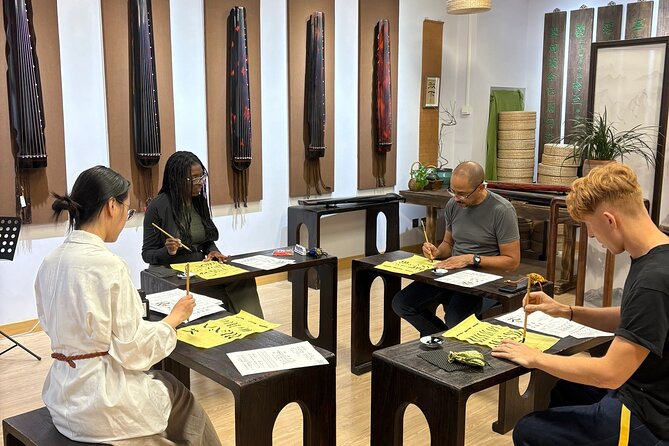
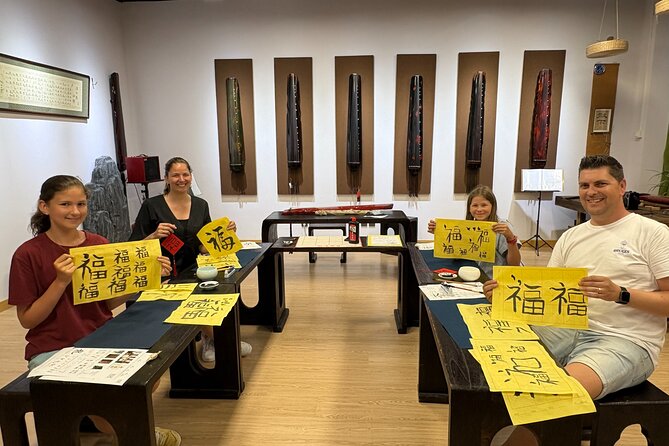
Next comes calligraphy. You’ll do a hands-on Chinese calligraphy workshop with expert guidance. The workshop focuses on writing meaningful Chinese characters and understanding ancient roots—so you’re not just making decorative strokes.
This is one of the most practical parts of the day because it gives you a physical artifact. In reviews, people mention writing their Chinese name with the calligraphy teacher and taking the paper home. If that’s offered in your session, it’s a great souvenir because it’s personalized and you’ll have a story for it that’s more than I bought this somewhere.
One thing I like about calligraphy here is that the tone is explained, not glossed over. You’re guided in English, and the instructor is trained in Chinese philosophy and history. That matters because calligraphy has rules, rhythm, and cultural meaning beyond the look of the strokes.
Possible drawback: calligraphy can feel challenging at the start. Your hand may cramp or your strokes might look uneven. That doesn’t mean you’re bad—it means you’re learning something that takes practice. The best mindset is to treat it as a skill-building workshop, not a test.
Traditional outfit rental: why it’s more than a costume moment
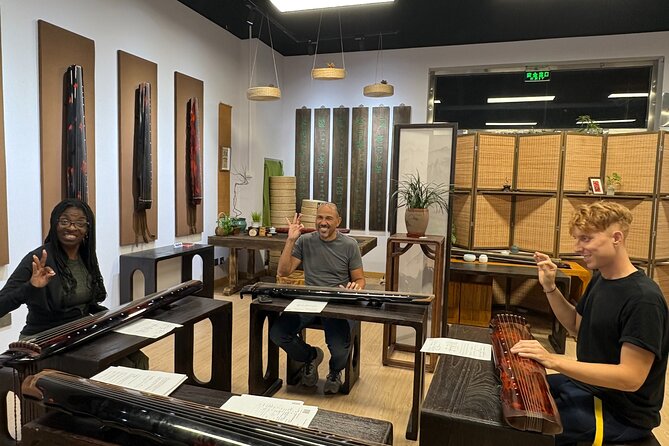
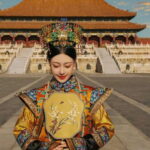
You’ll have traditional outfit attire rental included. This usually gets you better photos, sure, but the value is more about stepping into the ritual atmosphere. When you dress the part, tea and calligraphy feel less like activities you booked and more like experiences with a historical tone.
Since the venue is calm and the group is small, the outfit rental also helps you get pictures without the chaos that can happen at busy attractions. It’s one of those inclusions that’s easy to overlook when you’re comparing tours, but it often becomes one of the highlights because it makes the day feel complete.

What “not a show” really means for your time
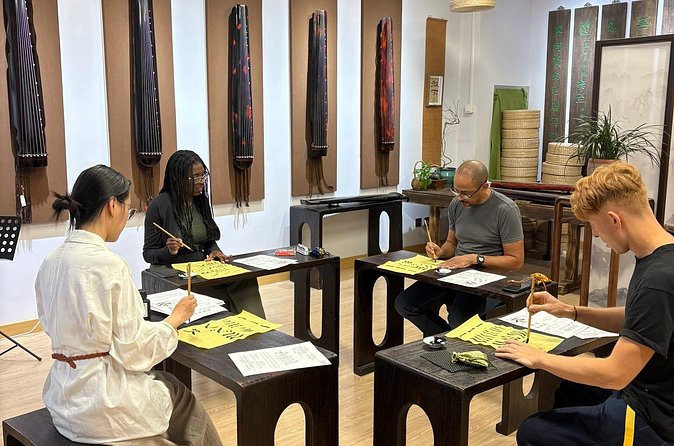
This experience is explicitly designed not as a tourist performance. Instead of sitting through scripted bits, you’re doing three core practices: tea, Guqin, and calligraphy. That hands-on structure is why the experience tends to stick with people.
There’s a rhythm to it:
- tea helps you settle your body and attention
- Guqin shifts you into listening and hands-on coordination
- calligraphy gives you a close, personal way to connect with culture using your own pen or brushwork
You also get a guided explanation of the meaning behind the rituals. That’s the difference between collecting facts and understanding why the steps matter.
Price and value: $78.60 for instruction, materials, and expertise
At $78.60 per person for about 2 hours 30 minutes, this is not a budget snack of an activity. But the value calculation looks different once you list what’s included.
You’re getting:
- a traditional tea ceremony with tea tasting led by a certified tea master
- a live Guqin performance plus a hands-on learning session
- a Chinese calligraphy workshop with expert guidance
- traditional outfit rental for ritual and photos
- English guidance from a bilingual instructor with an M.A. in History & Sociology
A lot of cultural activities in big cities sell the feeling of tradition while doing the minimum instruction. Here, you’re paying for practice time and for teachers who are described as national-level cultural masters. Even if you’re only a beginner, you’re not just watching the culture—you’re handling parts of it.
So for value, ask yourself this question: do you want a traditional-performance vibe, or do you want a learn-something day? If you want the second one, the price starts to make sense quickly.
Logistics that matter on a busy Beijing day
This tour starts at 813 Creative Park. That matters because Beijing can be time-consuming for transfers, and transportation isn’t included. If you’re staying far away, plan extra travel time so you don’t show up rushed.
On timing: the duration is about 2 hours 30 minutes. That’s enough time to learn and try without turning it into a half-day commitment. It’s also long enough that you’ll feel the day shift from sightseeing mode into practice mode.
The venue is air-conditioned, which is a big plus if you’re traveling in hotter weather. It’s also described as a calm cultural haven, so you get a breather from traffic noise and street crowds.
Who this is perfect for (and who might want to skip)
This is best for you if you:
- want something more meaningful than museum-only browsing
- like hands-on learning, even if you’re a beginner
- care about culture as practice (tea, music, writing), not just as a performance
- want a small group experience with personal guidance
It may not be the best fit if you:
- hate slowing down (the tea ceremony and calligraphy take time)
- want a big list of famous landmarks in one outing
- are unwilling to handle your own transport to 813 Creative Park
If you’re the kind of traveler who gets bored by staged shows, this fits your taste. If you’re the kind who loves calm, structured learning sessions, you’ll likely feel at home here.
Should you book this Beijing tea, Guqin, and calligraphy workshop?
Yes, if you want one of the more authentic-feeling cultural experiences in Beijing and you’re happy to learn with your hands. The combination of tea ceremony, Guqin melody practice, and calligraphy writing is unusual in one package, and the small group size makes the instruction feel personal.
I’d book it sooner rather than later. It’s typically booked about 51 days in advance on average, and the group size is capped at 8. If you like calm cultural breaks that actually teach you something, this is a strong pick for your schedule.
One last tip: build your day around it. Eat beforehand if you want to avoid relying on the provided tea snacks, and give yourself time to get to 813 Creative Park without stress.
FAQ
How long is the Beijing tea, Guqin, and calligraphy experience?
It runs for about 2 hours 30 minutes.
Is this a show or a hands-on workshop?
It’s hands-on. You’ll participate in a tea ceremony and tasting, learn Guqin with guidance, and do a calligraphy workshop.
What’s included in the price?
Included are the traditional tea ceremony and tasting, a live Guqin performance plus a hands-on learning session, a Chinese calligraphy workshop, traditional outfit attire rental, and a bilingual guide with an M.A. in History & Sociology.
What should I expect to bring or pay for?
Transportation to and from the venue is not included, and meals outside of the provided tea snacks are not included. Personal expenses and optional tips are also not included.
Where does the tour start?
The meeting point is 813 Creative Park, VGP3+CCX, Chaoyang, China, 100124. The tour ends back at the meeting point.
How big is the group?
The maximum group size is 8 travelers.
Do I need to know Chinese to participate?
The experience notes that most travelers can participate. The guide is available in English.
What happens if the weather is poor?
The experience requires good weather. If it’s canceled due to poor weather, you’ll be offered a different date or a full refund.
How does cancellation work?
You can cancel for a full refund up to 24 hours in advance. If you cancel less than 24 hours before the start time, the amount paid is not refunded.