REVIEW · HAMBURG
Guided tour of Hamburg’s UNESCO World Heritage Site – Warehouses & Cathedrals of Commerce
Book on GetYourGuide →Operated by Marius Gebhardt Fotografie & Stadtführungen · Bookable on GetYourGuide
Hamburg has a way of turning trade into drama, and this walk delivers it. You start at Hammaburg-Platz, hear how the city got its name, and then follow the money-story through office architecture and port life. I especially liked how Marius Gebhardt keeps things clear, calm, and lightly humorous, even when the group has lots of kids.
I also love the way the tour switches between buildings and people. At Speicherstadt, you get the famous red-brick warehouse maze described like a place you can actually picture, with the job roles explained (including Schuten- and Ewerführer) and the odd references to coffee barons and Persians made understandable. One small drawback: the tour is German only, and it’s not listed as suitable for hearing-impaired guests, plus it’s not built for low-fitness levels.
If you want a very short, very self-guided sightseeing day, this guided format might feel a bit structured. But if you enjoy learning the backstory while you walk, you’ll probably find the pacing just right for a 2-hour outing without dragging.
In This Review
- Key points to know before you go
- A 2-hour walk through Hamburg’s UNESCO commerce landmarks
- Hammaburg-Platz: the birthplace story and the city-name clue
- Kontorhausviertel: brick offices, trade power, and a bit of playful critique
- Chilehaus photo stop: spotting what makes it a commerce cathedral
- Wasserschloss in Speicherstadt: dockworkers, not just warehouses
- Speicherstadt red-brick canyons: jobs, roles, and the people behind the trade
- How the tour ends at St. Annenufer, near HafenCity
- The coffee-and-cake finish: a simple, satisfying way to end
- Price and value: why this tour feels like a bargain
- Who this tour suits best (and who should choose something else)
- Should you book this Hamburg UNESCO commerce walk?
- FAQ
- FAQ
- How long is the guided tour?
- What does the tour cost?
- Where do I meet the guide?
- What’s included in the price?
- What language is the tour in?
- Is it wheelchair accessible?
- Are pets allowed?
Key points to know before you go
- Hammaburg-Platz origin story: you’ll learn how Hamburg’s name and early identity connect to this spot
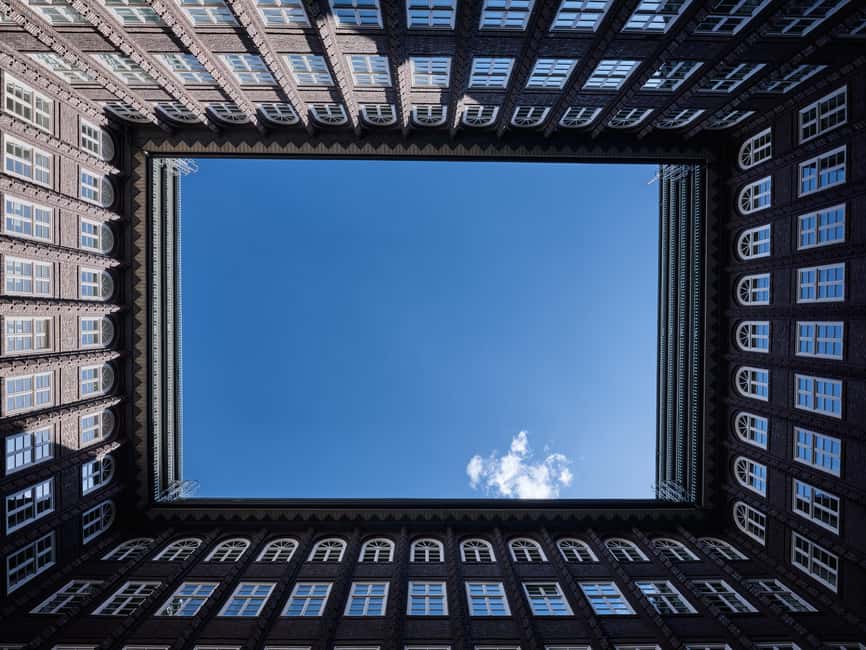
- Kontorhausviertel office buildings: brick towers with details you can actually spot when someone points them out
- Chilehaus photo stop: a quick stop that teaches what you’re looking at, not just where to stand
- Wasserschloss Speicherstadt: a “dockworkers’ palace” angle that reframes what warehouses were for
- Speicherstadt as red-brick canyon: time is spent on stories, not just photos
- Optional coffee/cake ending: you can wrap the walk with a drink in a former coffee warehouse
A 2-hour walk through Hamburg’s UNESCO commerce landmarks
This is the kind of tour that makes you look twice at the city. Hamburg’s UNESCO site, Warehouses & Cathedrals of Commerce, can sound like a museum label. On this walk, it feels more like a guided walk through how commerce shaped everyday life—where people worked, lived, argued, and ate.
You’ll cover key spots in a compact route, so you don’t waste time getting between “pretty buildings.” The focus stays on meaning: why certain areas grew the way they did, what the architecture was built to do, and how the port system created both order and contradictions.
And the price is honestly hard to ignore: $2.36 per person for a guided, 2-hour tour with entrance to all sights. That’s the kind of rate that makes you assume you’re getting less than you are. You’re not. You’re paying for a guide’s ability to connect dots—especially the human dots.
You can also read our reviews of more tours and experiences in Hamburg.


Hammaburg-Platz: the birthplace story and the city-name clue
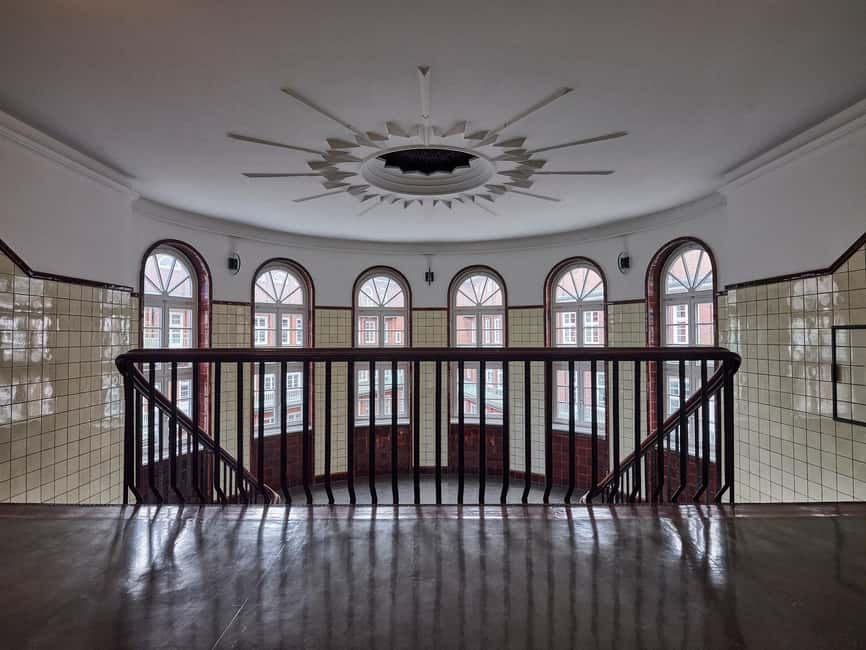
Your tour starts at Hammaburg-Platz, at the pink/grey column next to the pedestrian crossing (the Archaeoscope). It’s an easy meeting point, and you’ll recognize the guide by the orange umbrellas.
This opening stop matters because it sets the frame. You don’t begin with warehouses; you begin with Hamburg’s “nursery” idea—Hammaburg as the early birthplace and a starting point for how Hamburg formed. You’ll also learn how the city got its name, and that early identity helps you understand why later trade buildings feel like more than decoration.
What I like about starting here: it prevents the usual “cool buildings, no context” problem. After Hammaburg-Platz, you’re not just walking through history—you’re tracking a line of development.
Kontorhausviertel: brick offices, trade power, and a bit of playful critique
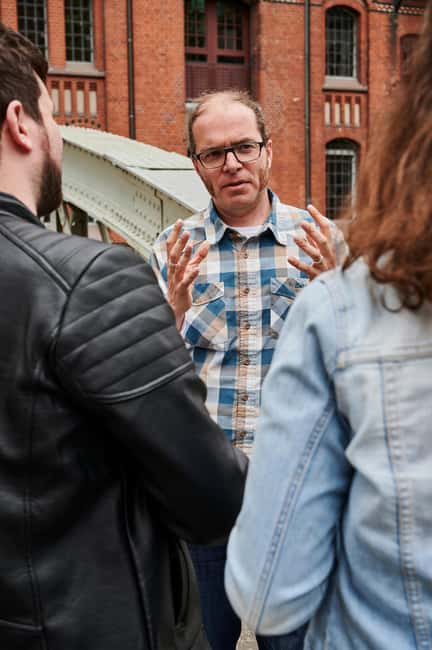
From there, you walk into Kontorhausviertel, the former merchant center of Hamburg. This area is built around office life—brick, detail, and the idea that commerce needs its own kind of architecture.
You’ll spend time with the brick office buildings, and the guide’s style makes a difference here. Marius explains with a calm, relaxed delivery and a lightly hanseatic sense of humor. It’s not the kind of talk that bulldozes over questions. In fact, the guide engages the group well, including families—useful if you’re traveling with kids or if you just like interaction.
One of the most memorable moments is when you learn to notice architectural symbolism. The tour includes a moment that points you to a “ballerina” detail on the office buildings—so you look up instead of staring straight ahead. Then comes a more analytical beat: you’ll take a critical look at the founding charter of the port and hear about contradictions in how the system was set up versus how it worked in reality.
That combination—spot details, then question assumptions—keeps the tour from becoming a slideshow.
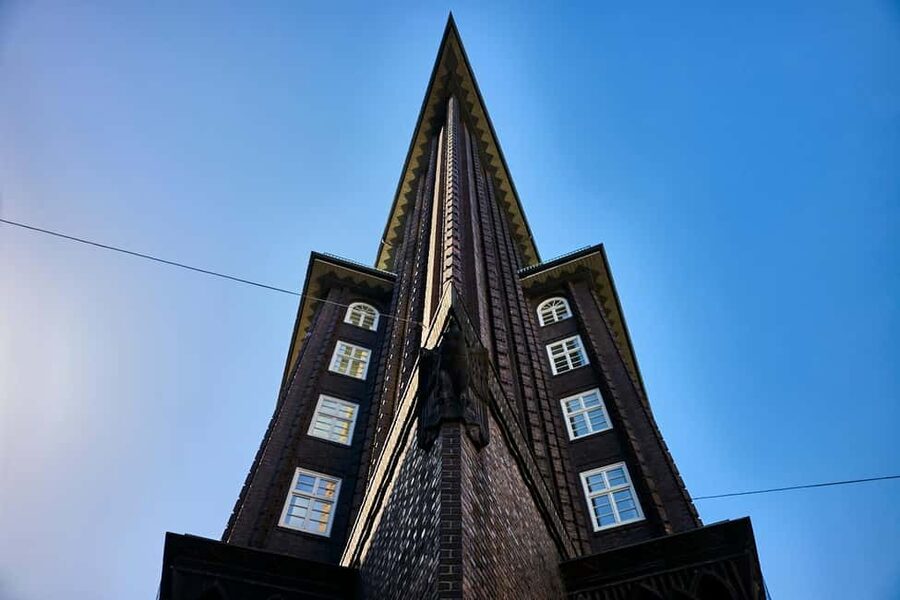
Chilehaus photo stop: spotting what makes it a commerce cathedral
Next comes the Chilehaus, with a photo stop built in. You’ll want to bring your best “I can’t believe I’m standing here for a reason” energy, because the stop is short on time but long on meaning.
This building is often photographed, but the value of a guided stop is that you learn what’s worth looking for. You don’t just get a good angle; you get a sense of why it became an icon for trade and merchant ambition. If you enjoy architecture, this is one of those stops where you’ll come away feeling like you saw more than the typical snapshot.
Tip for you: pause and actually compare the shapes and details while you’re there. The guide’s pointers make it much easier to register what you’re seeing.
Wasserschloss in Speicherstadt: dockworkers, not just warehouses
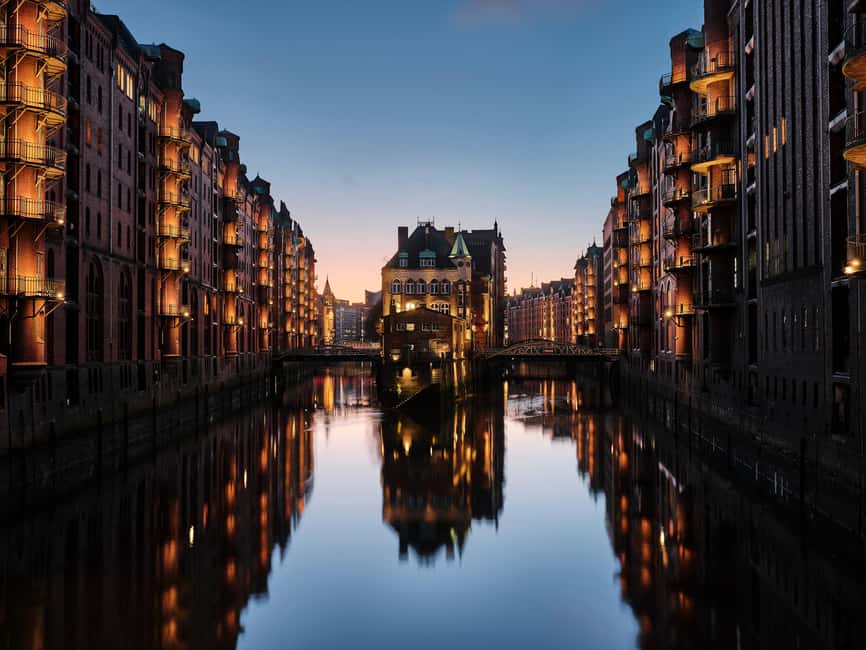
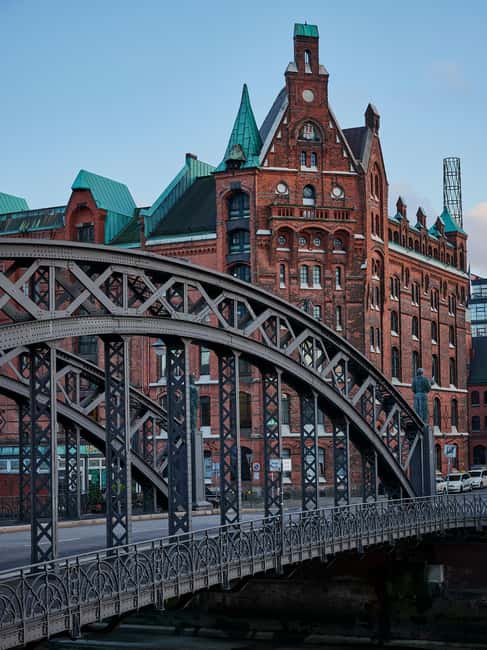
After Chilehaus, you’ll head toward Wasserschloss Speicherstadt Teekontor, again with a photo stop. This is where the tour shifts gear. The name alone—Wasserschloss, a water castle—sounds like scenery. The tour uses it to explain the workforce reality behind the architecture.
You’ll learn about a palace for Hamburg’s dockworkers, and you’ll hear how workers lived in a castle-like arrangement connected to the port economy. That’s a powerful reframing: the warehouses and “commerce cathedrals” weren’t only for paperwork and big deals. They were tied to the daily lives of people moving goods and keeping the system running.
The guide also connects Hamburg’s story to Westphalia, which might feel unrelated at first. On the walk, it becomes part of the explanation for how people and structures linked up—so the city doesn’t feel isolated. Hamburg becomes part of a bigger network.
Speicherstadt red-brick canyons: jobs, roles, and the people behind the trade
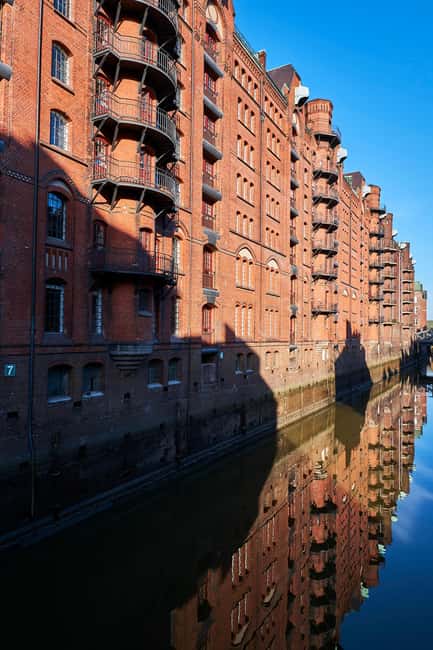
Now you spend the real chunk of time in Speicherstadt—the red-brick zone that people sometimes describe like canyon walls. You’re walking through those warehouse streets with stories attached, and the guide is careful about connecting the bricks to the jobs.
Here are a few of the kinds of details you’ll come away with:
- What Schuten- and Ewerführer actually did—so the port work isn’t just a generic “ship stuff” label
- Why the city has references that sound odd at first, like coffee barons and Persians, and what those terms connect to
- How the warehouse system created both routine and contradiction—because trade is never purely orderly
This is also where that “look up” skill pays off. Instead of treating Speicherstadt like a backdrop for photos, you learn how the buildings relate to movement of goods and the organization of commerce.
Practical note: the route includes walking time and focus points, so wear comfortable shoes. This isn’t about endurance hiking, but it’s also not a sit-and-watch style tour.
How the tour ends at St. Annenufer, near HafenCity
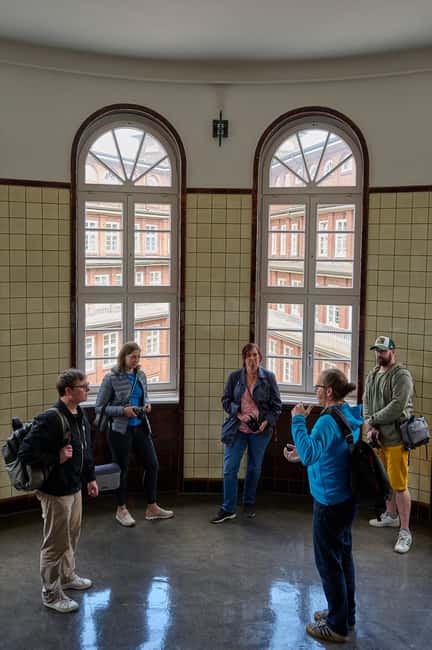
The walk finishes at St. Annenufer (20457 Hamburg). That means you end with a clear sense of where Speicherstadt sits relative to the newer HafenCity area.
In other words, you don’t end in the middle of nowhere. You end where it’s easy to keep going on your own—grab food nearby, walk a bit more, or just decompress after a very story-heavy 2 hours.
The coffee-and-cake finish: a simple, satisfying way to end
One of the nicest touches is what happens at the end. You’ll have the opportunity to enjoy coffee and/or a cake in a former coffee warehouse. That’s a logical finale: you learn about port trade and coffee references during the walk, then you get a chance to experience the theme in real life rather than only in explanation.
From a value standpoint, this is great because it doesn’t inflate the tour price. You only add costs if you want them. And it turns your last stop into a relaxed moment instead of an abrupt stop-and-go.
If you’re traveling with picky eaters, it’s also an easy win—coffee and cake are simple choices, and the setting feels on-theme without demanding a formal meal.
Price and value: why this tour feels like a bargain
At $2.36 per person for a guided tour that lasts 2 hours and includes entrance to all sights, this is priced like a deal. The reason it works isn’t just the cost. It’s the guide’s ability to make the architecture and port system understandable quickly.
In practice, you’re paying for:
- someone to explain what you’re seeing (instead of guessing)
- entrance coverage for the sights along the way
- enough time in Speicherstadt to absorb it, not just pass through
If you only have a short window in Hamburg and you want your walking day to mean something, this is a strong match. If you already know a lot about port history, you might still enjoy it, but you may skim some portions. For most people, the balance is right.
Who this tour suits best (and who should choose something else)
This works best if you like:
- architecture with explanations (not just look-but-don’t-touch sightseeing)
- short, guided context that helps you understand UNESCO sites
- a guide who handles questions and keeps the tone relaxed
The tour is guided in German, and it’s described as wheelchair accessible. On the other hand, it’s not listed as suitable for hearing-impaired guests, and it’s noted as not suitable for people with low level of fitness. Also, you’ll want to travel light because luggage or large bags aren’t allowed.
If you’re the kind of traveler who enjoys small factual details—like job titles and the logic behind odd historical references—you’ll probably get a lot out of it.
Should you book this Hamburg UNESCO commerce walk?
Yes—if you want a compact 2-hour experience that turns Hamburg’s UNESCO commerce landmarks into stories you can remember. I’d book it if you’re curious about why Speicherstadt looks the way it does, how merchant power shaped city design, and what the port machinery meant for real workers.
Skip it if you need a non-German tour format, have hearing needs that can’t be supported in a German-speaking setting, or you prefer long, slow sightseeing without walking-focused stops.
If your plan is simply to see the photos, this won’t be enough. If your plan is to understand the city while you walk through it, this one is a solid choice.
FAQ
FAQ
How long is the guided tour?
It lasts 2 hours.
What does the tour cost?
The price is $2.36 per person.
Where do I meet the guide?
Meet at Hammaburg-Platz at the pink/grey column (Archaeoscope) next to the pedestrian crossing. The guide is recognized by orange umbrellas.
What’s included in the price?
Entrance to all sights and a guided tour with the tour guide are included.
What language is the tour in?
The live tour guide language is German.
Is it wheelchair accessible?
Yes, it is listed as wheelchair accessible.
Are pets allowed?
Pets aren’t allowed, but assistance dogs are allowed.