REVIEW · GYEONGJU
Gyeongju UNESCO World Heritage Sites and History Full-Day Tour with Lunch
Book on Viator →Operated by Busan Tourism Center · Bookable on Viator
Gyeongju in one day can feel like time travel. This full-day tour strings together the big UNESCO hits—Bulguksa and Seokguram—plus palace ponds, Silla tombs, and a hanok village, all with a real plan and transport handled. Guides like Steve and Sue are repeatedly praised for making the stops click fast, especially if you only have a short window in Korea.
I love that lunch and entrance fees are included, so you can budget without doing extra ticket math. I also like the practical comfort of an air-conditioned minivan and pickup, which matters once you start stacking stone temples and mountain scenery back-to-back.
One possible drawback: the schedule is packed, and some sites can feel small or crowded on busy days, so you’ll want comfy shoes and realistic expectations about how long you’ll stay at each stop.
In This Review
- Key takeaways before you go
- Getting Your Bearings: pickup, comfort, and an 8-hour Silla plan
- Cheomseongdae Observatory: Silla’s old star clock
- Donggung Palace & Wolji Pond: palace ponds and quiet scenery
- Gyeongju Gyochon Traditional Village: hanok life of the Choi clan
- Daereungwon Tomb Complex: royal mounds in the Silla kingdom
- Seokguram Grotto: UNESCO stone temple on Tohamsan Mountain
- Bulguksa Temple: UNESCO’s centerpiece with stone artistry
- Lunch in Gyeongju: what’s included and how it works
- Guide style and minivan comfort: what small-group days feel like
- Price and value versus DIY taxi days
- Who should book this tour (and who might not love it)
- Should you book the Gyeongju UNESCO Full-Day Tour with Lunch?
- FAQ
- How long is the tour?
- Do I get pickup and drop-off?
- What UNESCO-listed sites are included?
- Is lunch included, and can they handle dietary needs?
- Are entrance fees included?
- Do I need to buy tickets at each stop?
- How much walking should I expect?
- How big is the group?
- Can I upgrade to a private tour?
- Can I cancel for a full refund?
Key takeaways before you go
- Hotel pickup plus drop-off helps you avoid the taxi-juggling
- UNESCO anchors: Bulguksa Temple and Seokguram Grotto with included entry
- Smart pacing for a long 8-hour day without feeling totally rushed
- Included lunch can work for dietary needs if you ask ahead (vegetarian is available)
- Small-group feel with a maximum of 40 travelers
Getting Your Bearings: pickup, comfort, and an 8-hour Silla plan
This is the kind of day tour you book when you want one clean route through Gyeongju’s highlights. It runs about 8 hours, starting at 8:00 am, and it’s built to move you efficiently between clusters of sites that are annoying to connect by yourself.
You’ll ride in an air-conditioned minivan, and you’ll get pickup and drop-off. That sounds simple, but it changes the day. Instead of spending energy figuring out transport, you spend it looking up at stonework, reading the shapes of tomb mounds, and asking the guide to explain what you’re seeing.
You’ll also get a mobile ticket, which helps on days when you just want the logistics to be boring. Bring sunscreen, wear shoes you can walk in all day, and plan for warm weather. One review described the day as brutally hot, and the tour still kept moving.
You can also read our reviews of more tours and experiences in Gyeongju.
Cheomseongdae Observatory: Silla’s old star clock
Your first stop is Cheomseongdae Observatory, famous for being one of Asia’s oldest surviving astronomical observatories. Expect around 30 minutes here, plus that satisfying feeling of seeing something ancient that still looks solid and intentional.
The key idea is that Cheomseongdae wasn’t a tourist toy. It was used for observing the sky, with the goal of helping forecast weather, based on the stars. Even if you don’t memorize the technical astronomy terms, you’ll get the big picture: the Silla kingdom watched nature closely, then built a structure to support that work.
The only thing to watch is crowds. One person said they had to skip Cheomseongdae because it was super busy on a holiday weekend. So if you’re traveling during peak season, arrive ready to move quickly and make peace with shorter photo windows.
Donggung Palace & Wolji Pond: palace ponds and quiet scenery
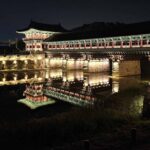
Next up is Donggung Palace & Wolji Pond, usually the spot that reminds you Gyeongju wasn’t only temples and kings. This part focuses on the palace landscape around the pond. You’ll spend about 1 hour here, and entry is included.
Wolji Pond was built during the reign of King Munmu (661–681 AD), according to historical records. You’ll see how the pond and palace elements fit together, with small mountains and garden-like features inside the palace grounds. The appeal is visual: water, stone, and the way the space channels your eye.
If you’re more interested in architecture than interpretive signage, plan to slow down. Don’t just snap pictures. Look for how the pond shape relates to where you’re standing, because that’s where the “palace” concept becomes easier to understand.
Gyeongju Gyochon Traditional Village: hanok life of the Choi clan
The tour then shifts into everyday history with Gyeongju Gyochon Traditional Village, about 45 minutes. This isn’t a huge museum complex. It’s a hanok village connected to the Choi clan, where you can see how a notable family lived.
The value here is perspective. You go from grand Silla power down to domestic scale. You also get a break from stone temples and tomb mounds, even if the stop itself is relatively compact.
Some of this stop may feel more like walking through a lived-in style of architecture than reading a long story. If you want one or two houses and a quick feel for the design, that’s perfect. If you’re expecting a full, treasure-filled museum, this part may not fully scratch that itch.
Daereungwon Tomb Complex: royal mounds in the Silla kingdom
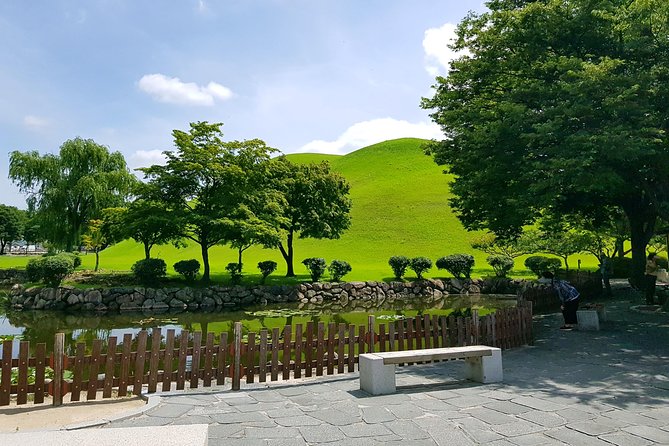
After the village, you head to Daereungwon Tomb Complex, also known as the Cheonmachong Tomb area. This is about 1 hour, and entry is included.
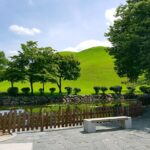
The highlight is scale. You’ll see large ancient tombs of Silla kings and nobles around Gyeongju, including a site with twenty-three large tombs in the complex. It’s not just one dramatic monument. It’s an entire royal landscape.
What I like about this stop is that it helps explain how Silla power was literally built into the land. Standing near the mounds makes the story less abstract. The shapes and spacing give you a sense of hierarchy, even without deep archaeology jargon.
If you’re short on time elsewhere in Korea, this stop helps fill that gap. A lot of East Asian history tours focus on temples, but tomb sites teach a different kind of lesson about belief, authority, and permanence.
Seokguram Grotto: UNESCO stone temple on Tohamsan Mountain
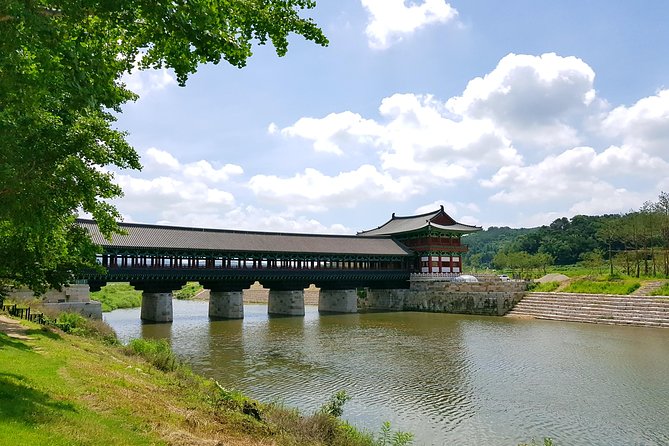
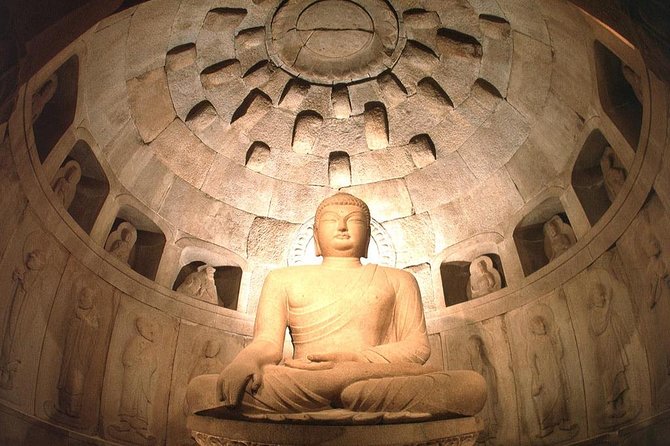
Then comes the star attraction for many people: Seokguram. You’ll spend about 1 hour here, with entry included.
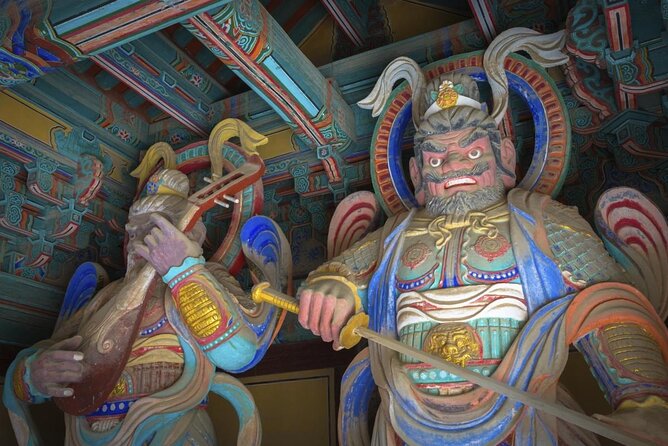
Seokguram is a representative stone temple of Korea, and it sits on Tohamsan Mountain. It’s a UNESCO-listed site, and it’s known for stone artistry and the spiritual feeling of being in a built rock space.
One practical note from experience: photo rules can apply. A negative review specifically mentioned that you cannot take photos at the grotto. So even if your camera is ready, assume the rules could be strict at certain moments and keep your expectations flexible.
Also, don’t rush. The experience is about appreciating the workmanship and the way the structure controls your movement. Even when you’re not getting a long time in the grotto itself, you can still get a lot out of the approach and the framing around it.
Bulguksa Temple: UNESCO’s centerpiece with stone artistry
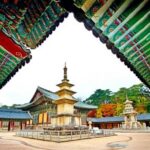
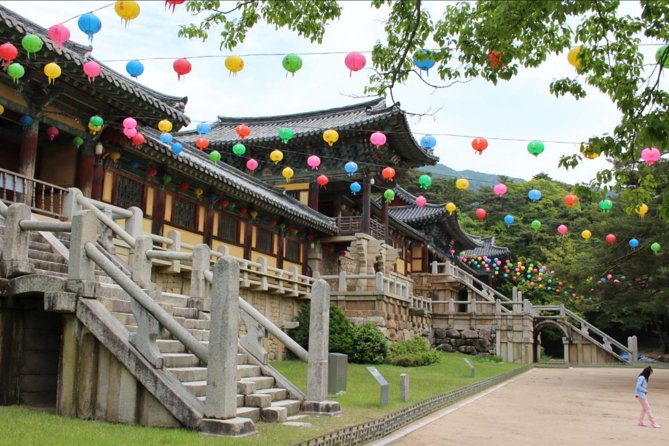
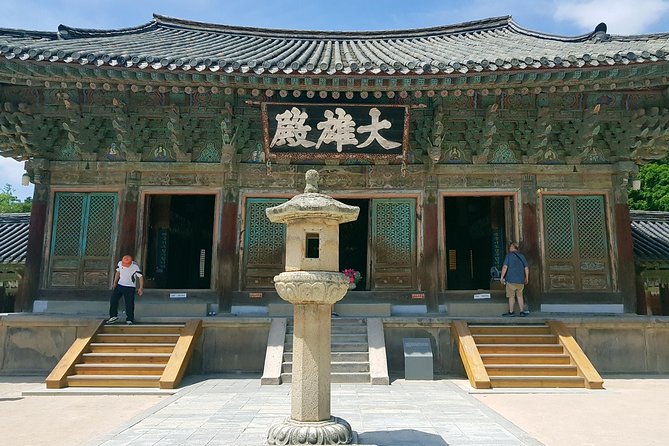
Finally, you reach Bulguksa Temple, another UNESCO World Cultural Asset designated in 1995. You’ll spend about 1 hour, with entry included.
Bulguksa is often the emotional anchor of a Gyeongju day because it combines spiritual atmosphere and masterful stone relics. The temple’s reputation isn’t just marketing. The stonework is the point, and it rewards slow attention.
If you’re the type who likes to understand what you’re seeing, you’ll get a strong payoff here. Guides often connect the temple’s art to the Silla mindset—how rulers used religion and craft to project meaning. In past tours with guides like Steve, Sue, Chris, and Jina, the explanations tended to focus on context, not just facts.
Here’s a simple strategy: take 2 minutes to look at one stone feature closely, then step back and take in the whole composition. You’ll get more out of the hour that way, especially if you’re traveling solo and want to make the most of every stop.
Lunch in Gyeongju: what’s included and how it works
Lunch is included, and that’s a big part of the tour’s value. One review said the lunch was surprisingly good, and another mentioned gluten-free accommodation. Vegetarian option is explicitly available if you advise when booking.
Why this matters: in a day packed with UNESCO sites, finding food that fits your schedule can turn into a stressful scavenger hunt. Having lunch planned means you can stay focused on sightseeing instead of timing buses, ordering, and hoping your meal arrives before your next entry window.
If you have dietary needs, don’t assume every guide will guess correctly. Send the request ahead. The best experiences in the feedback came from people who communicated food needs early, and the tour team handled it.
Guide style and minivan comfort: what small-group days feel like
This tour caps at 40 travelers, which keeps it from turning into a marching band. Many people loved the small-group feel, and a few mentioned even smaller totals. When the group is smaller, the guide can adjust the rhythm without falling behind schedule.
You’ll ride with an English-speaking guide, and names that show up in feedback include Steve, Sue, Chris, and Jina. What stands out is clear explanation at the sites and smooth coordination with the driver.
The driver detail matters more than you’d think. Some people said the driver helps by dropping you off closer to gates and picking you up in front of areas, cutting down unnecessary walking. That can be the difference between a fun day and a foot-in-shoe misery test.
One review called the day well-paced and praised the tour for timing around crowd levels. Another person mentioned they skipped Cheomseongdae due to extreme crowding, which suggests timing decisions can happen on the fly.
Price and value versus DIY taxi days
At $189.99 per person, this isn’t the cheapest way to see Gyeongju. The value comes from what’s bundled: pickup and drop-off, air-conditioned transport, entrance fees, and lunch.
If you’re starting from Busan, that bundle makes more sense. You avoid the stress of figuring out intercity transport and then coordinating tickets and local taxis once you arrive. The cost feels more justified when you compare it to paying separately for long-distance transit, multiple admissions, and a driver-style day.
If you’re already in Gyeongju, the calculus changes. One critical review argued the tour made less sense when staying locally because several stops are close enough to handle with taxis on your own. That’s a fair consideration. If you’re based in Gyeongju and can move independently, you might be able to build a similar day for less money.
So I’d frame it like this: the tour shines when you want a full-day structure without logistical work. If you enjoy planning and bargain-hunting with taxis, the tour may feel overpriced.
Who should book this tour (and who might not love it)
I think this tour fits best if you want:
- A single day covering Bulguksa and Seokguram without piecing everything together yourself
- A plan that includes lunch and admissions, so you don’t waste time on ticket lines and decisions
- A guide-led day, especially if you like context about Silla life and power
It might be less ideal if:
- You hate scheduled days and want total freedom
- You prefer long museum-style stops over shorter site visits
- You’re expecting a bigger, treasure-focused museum experience in every stop (some parts are more architectural or atmospheric than collection-heavy)
There’s also one style note to keep in mind. One person felt the drive between stops didn’t come with as much commentary as expected. If you love a running talk, you can ask your guide directly to explain along the route. Otherwise, expect most storytelling to happen at the sites.
Should you book the Gyeongju UNESCO Full-Day Tour with Lunch?
If you’re short on time and you’re coming from Busan, I’d book this. The combination of transport + admissions + lunch is the whole point, and the schedule focuses on the sites that most people run out of time to see on their own.
If you’re already in Gyeongju, I’d think twice and compare costs to taxi options. In that case, you might be able to assemble a similar highlight route with more flexibility, and you could spend the saved money on a museum or extra meals.
My final rule of thumb: book it if you want a clean day with low planning and strong anchor stops. If you want to stretch a week exploring slowly, you’ll probably want a different style trip.
FAQ
How long is the tour?
The tour runs about 8 hours.
Do I get pickup and drop-off?
Yes. Pickup and drop-off are included, and you meet at the scheduled start time of 8:00 am.
What UNESCO-listed sites are included?
The tour includes UNESCO-protected Bulguksa Temple and Seokguram Grotto.
Is lunch included, and can they handle dietary needs?
Lunch is included. A vegetarian option is available if you advise at booking, and dietary needs like gluten-free have been accommodated in past experiences.
Are entrance fees included?
Yes. Entrance fees are included as part of the tour.
Do I need to buy tickets at each stop?
No. You’ll receive a mobile ticket for the tour.
How much walking should I expect?
You should wear comfortable shoes. The day includes walking between sites, and one review mentioned about 11,000 steps.
How big is the group?
The tour has a maximum of 40 travelers.
Can I upgrade to a private tour?
Yes. There is an option to upgrade to a private tour.
Can I cancel for a full refund?
Yes. You can cancel up to 24 hours in advance for a full refund.