REVIEW · ROME
Private Tour of the Colosseum Forums Palatine Hill & Ancient Rome
Book on Viator →Operated by Private Tours of Rome · Bookable on Viator
Three Roman icons in one tight half-day. This private tour strings together the Colosseum, Roman Forum, and Palatine Hill with timed entry so you spend more time looking and less time waiting. I love the private pacing that helps you avoid the worst crowd crush, and I love that you get a professional art historian style of storytelling. One thing to plan for: the entry rules are strict, so your passport or ID name has to match the booking list, plus you need to bring a mask.
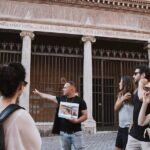
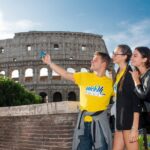
The payoff is how quickly the pieces start clicking. You begin inside the Flavian Amphitheater, move through the political and religious core of Ancient Rome, then end on the hill with big skyline views. In past groups, guides like Claudia and Tomaso have been praised for their energy and for answering questions in a way that makes the sites feel less like ruins and more like places where real decisions happened.
It runs about 3 hours total, usually about an hour at each major stop, and it ends right back at the meeting point. If you’re visiting Rome for a first taste, or you’re short on time but still want the big monuments, this format is hard to beat.
In This Review
- Key things that make this tour worth your time
- A tight half-day plan for big Roman payoffs
- Meeting at Piazza del Colosseo: what you should prep first
- Colosseum entry: the Flavian Amphitheater in plain sight
- A practical note for your expectations
- Roman Forum: temples, the Senate House, and the center of power
- Where the Forum can feel tricky
- Palatine Hill and the Capitol viewpoint: power looks different from above
- A heads-up on the walking rhythm
- How the historian approach helps you see what you missed
- Price and value: what you’re really paying for
- Who should book this tour, and who might skip it
- Should you book this Colosseum–Forum–Palatine private tour?
- FAQ
- How long is the private tour?
- What sites are included in the tour?
- Is the Colosseum ticket included?
- Where do I meet the guide?
- Do I need to bring a mask and ID?
- Is this tour private?
- Can I get a refund or change my booking if plans change?
Key things that make this tour worth your time
- Private tour pacing that helps you beat the worst crowd moments
- Colosseum + Roman Forum + Palatine Hill in one smooth half-day plan
- A Blue Badge guide plus a professional art historian approach to the storytelling
- Stops designed around what you can actually see: temples, arches, and viewpoint spots
- Timed entry structure with a Colosseum reservation fee included
- Mobile ticket convenience, but you still must bring ID and a mask
A tight half-day plan for big Roman payoffs
This tour is built for the way most people experience Rome: you want the top sights, but you don’t want to burn your morning locked in ticket lines and crowd funnels. The solution here is simple. Three major UNESCO World Heritage areas are packaged together into one private circuit, with you moving forward while the rest of the city is still trying to catch up.
You’ll also notice that the structure matters. When the tour is only three hours long, the guide can focus on what you’re actually looking at right now. That beats spending your day jumping from one monument to another while trying to piece together what each one meant. Here, you get the meaning as you go.
And yes, it’s private. That usually means you can ask questions without feeling like you’re interrupting a class. It also means the guide can keep the pace tuned to your group, rather than herding everyone on a fixed script.
You can also read our reviews of more tours and experiences in Rome.
Meeting at Piazza del Colosseo: what you should prep first
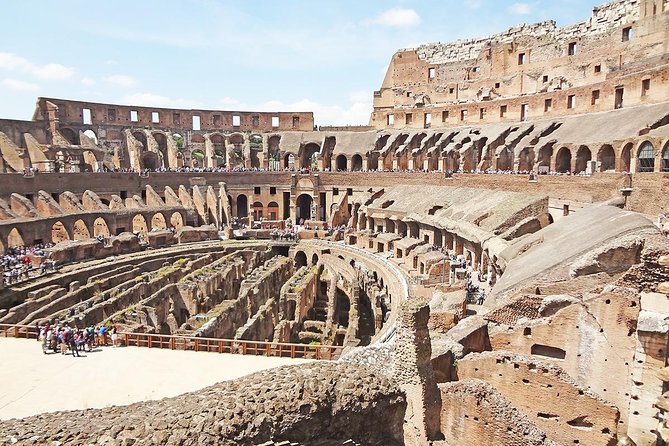
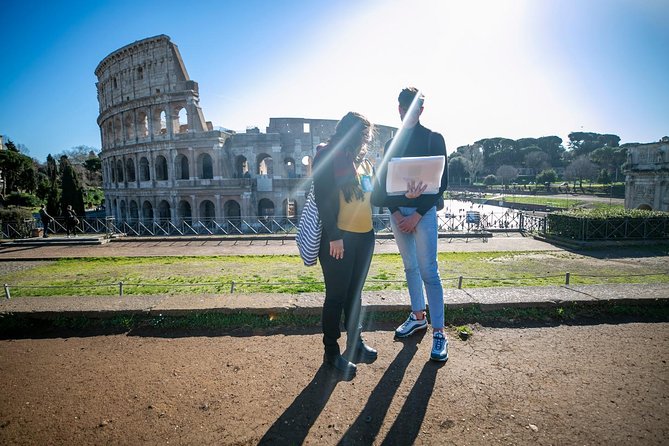
You meet at Piazza del Colosseo, 23, 00184 Roma RM, and the tour ends back at the same meeting spot. Since this is in the busiest historic core, arriving with a little buffer helps you stay calm. You’re also dealing with entrance rules, not just good manners.
Before you go, make sure you have:
- Full names for every person as provided at booking, since voucher details must match the names shown to staff before entry.
- A valid passport or ID document that matches the booking name.
- A mask you bring yourself, since you’ll be required to have one.
- Smart casual dress, since you’ll be walking and moving through multiple historic outdoor zones.
One more detail that matters: the tour notes that social distancing has to be maintained. Even if you’ve traveled in less strict setups, it’s smart to plan for extra space around you, especially near ticketed entrances.
Colosseum entry: the Flavian Amphitheater in plain sight
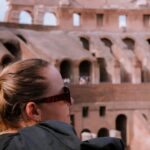
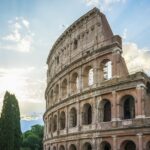
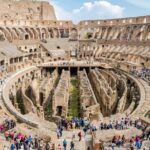
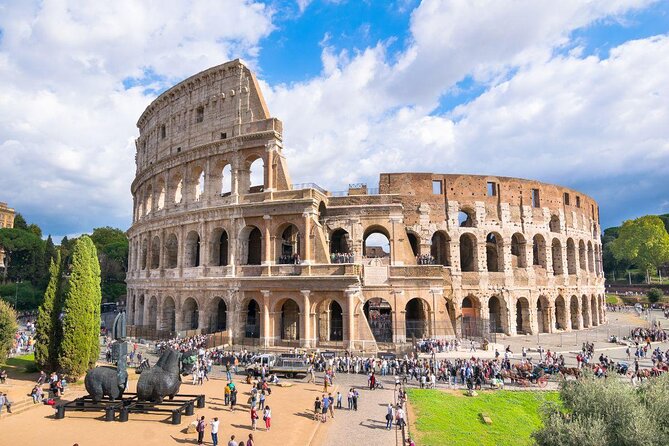
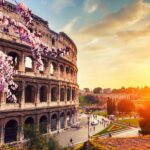
The tour starts at the Colosseum entrance. This is the largest amphitheater in the Roman Empire, originally known as the Flavian Amphitheater, with 80 entrances and capacity for more than 50,000 spectators. Those facts can sound like trivia until someone points out how the building was meant to function, how people would flow in and out, and why the design is tied to spectacle.
The visit here is built to use your eyes. The guide walks you through the parts you can actually connect to the story, rather than treating the Colosseum like a photo stop. You’ll also have the advantage of having entry handled in advance, including admission and a Colosseum reservation fee, so the day doesn’t hinge on finding the right line or hoping the timing works out.
What I like about this setup is that the Colosseum becomes a starting point, not the whole goal. You’re not spending the entire morning just staring at stone. You’re learning how this amphitheater fit into Roman culture, then moving to the sites that show the power behind it.
A practical note for your expectations
You should expect a historic site with crowds. The tour’s pitch is that it helps you beat the worst moments, but it’s still the Colosseum. Wear comfortable shoes and keep water handy if you need it, even though the tour is only about three hours.
Roman Forum: temples, the Senate House, and the center of power
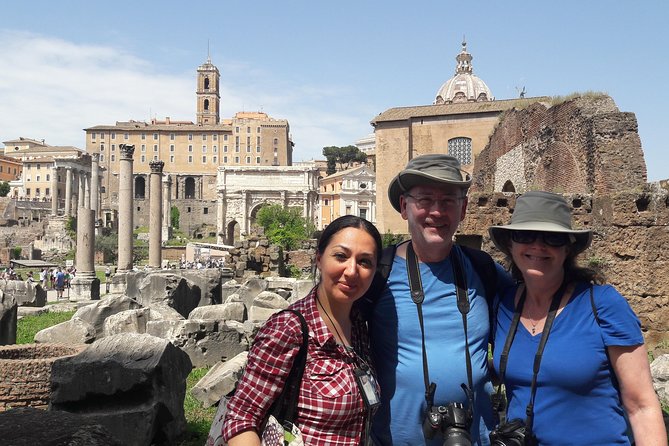
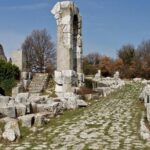
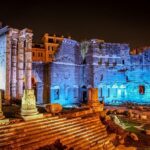
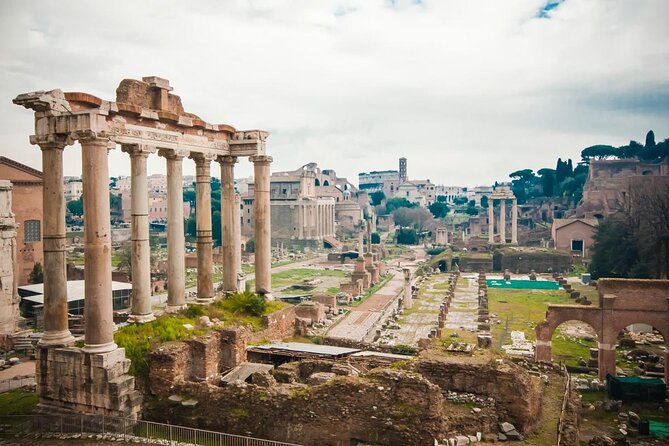
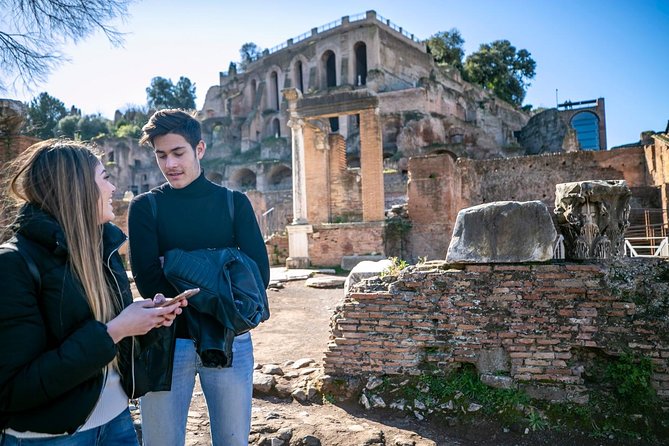
After the Colosseum, you head to the Roman Forum, the main square of Ancient Rome. This stop is where the tour shifts from spectacle to governance, religion, and everyday political theater.
You’ll see a sequence of major monuments and structures, including:
- The Senate House
- The Temple of Vesta
- The Temple of Saturn
- The Altar of the Divine Julius Caesar
- The Temple of Gemini
- The Basilica Emilia
- The Arch of Septimius Severus
- And more points along the route
What makes this stop valuable is the way the guide links the buildings together. A temple is not just a temple. In Roman terms, it sits inside a web of authority. The Senate House connects to politics and law. The altars and religious sites connect to legitimacy and memory. The arches connect to propaganda—who wanted to be seen, where, and how.
The tour also uses graphic reconstructions and strong visual tools. That matters because a lot of the Forum is fragmentary. You’re looking at bits of stone, but you need a guide to help your brain rebuild the bigger picture without guessing wrong.
Where the Forum can feel tricky
If you’re expecting perfectly restored buildings, you might find the Forum a bit challenging. It’s ruin territory. The win is that you’re not left alone to guess what everything once looked like. With the guide’s visual tools and focused route, you’ll do less walking in circles and more learning per step.
Palatine Hill and the Capitol viewpoint: power looks different from above
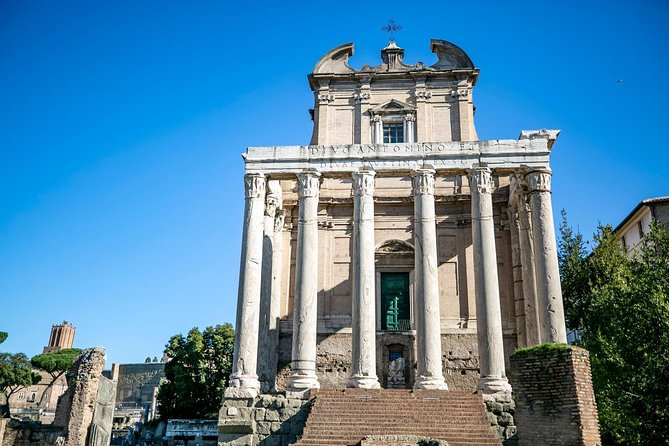
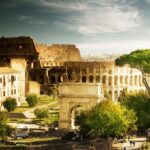
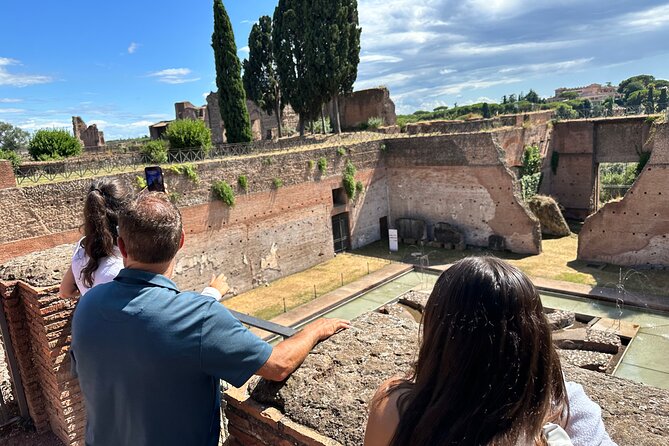
The tour ends on the Palatine Hill area, finishing with a sense of how Roman leaders wanted the city to look from the top. This part is especially good if you like your sightseeing to have both story and view.
Along the way, you’ll connect the hill to the most important Roman gods’ temples and then move toward the beautiful square designed by Michelangelo and the Statue of Marcus Aurelius. Even if you’ve seen photos of these spots, being there in person helps. You understand the scale, the angles, and how the city stretches out around what once felt like Rome’s center.
What you gain here is a change of pace. After the Forum’s tight, complex architecture, Palatine Hill gives you space to breathe and a perspective shift. The stones stop being just structures and start becoming landmarks that define the geography of old Rome.
A heads-up on the walking rhythm
This is still a guided walk across multiple historic zones. Plan for uneven surfaces and some uphill or sloped areas around the hills. If your mobility is limited, it’s worth thinking through whether a three-hour monument route with stairs and uneven ground matches your comfort level. The tour states most travelers can participate, but the sites themselves are not flat-city sightseeing.
How the historian approach helps you see what you missed
The biggest value in this kind of tour is not just the itinerary. It’s what the guide does with your time.
Here, you’re getting a Blue Badge guide plus a professional art historian guide approach. In practice, that usually means you get more than facts. You get context that turns details into meaning. When the guide points to a temple or arch, you’re not just collecting names. You’re learning why that specific thing was built, how it was used, and what it signaled to people in Roman society.
The guide support is also designed to reduce confusion. Many first-time visitors to Rome can feel like they’re staring at the remnants of a movie set. This tour’s visual reconstructions and storytelling tools aim to help you build the missing pieces in your mind in the right order.
And if you love asking questions, this format tends to reward it. With a private group, your pace is your pace, and your guide can respond in a way that keeps you engaged rather than pushing the whole group forward.
Price and value: what you’re really paying for
The price is $342.77 per person for a private, three-hour experience. That can sound steep until you separate what’s covered by ticketing from what’s covered by the service.
From the included details:
- Colosseum admission ticket is valued at €18 per person
- The Colosseum reservation fee is valued at €2 per person
- Local taxes are included
- You’re paying for private guiding services: professional art historian guide, a Blue Badge guide, and a local guide
- The format is private, meaning your group is the only group involved
After you account for the entry components, the rest of the cost is the human expertise and the private structure. And that’s the part you feel during the tour. If you’ve ever done these sites on your own, you know how much time gets lost when you don’t know what to look for. Here, the guide helps you avoid the most common Rome problem: seeing a lot, but understanding little.
Also consider timing. The average booking is about 14 days in advance. If you’re going at a peak season time window, locking in earlier can help you get the tour at a schedule that fits your day.
Who should book this tour, and who might skip it
This is a strong fit if:
- You want the Colosseum, Roman Forum, and Palatine Hill without spending a full day bouncing between tickets and navigation.
- You care about history and architecture and want the story tied directly to what you’re looking at.
- You prefer a private experience where you can ask questions and move at a pace that makes sense.
- You’d rather rely on a guide to provide visual reconstructions than piece everything together from signs.
It might be less ideal if:
- You’re the type who wants to wander freely for hours with minimal structure.
- You’re uncomfortable with strict entry requirements like matching names on your voucher and bringing the correct ID.
- You expect fully restored sites. The Forum is mostly ruins, and the understanding comes through interpretation, not restoration.
There’s also the reality check: the experience is non-refundable and cannot be changed. If your dates are uncertain, factor that into your decision before you pay.
Should you book this Colosseum–Forum–Palatine private tour?
I’d book it if you want maximum Rome value in a short time and you care about context, not just photos. The private pacing is the main practical win, and the historian-style guidance is the main learning win. You get a clean arc: spectacle at the Colosseum, power and belief at the Forum, then elevated viewpoints at Palatine Hill and the nearby Capitol area with Michelangelo’s square and the Marcus Aurelius statue.
If you’re nervous about logistics, don’t ignore that entry list and ID matching rule. Double-check your booking names and make sure each traveler has a valid passport or ID that matches what was provided. If you do that, this tour is one of the most efficient ways to experience three of Rome’s anchors in one go.
FAQ
How long is the private tour?
The tour is about 3 hours total.
What sites are included in the tour?
You visit the Colosseum, the Roman Forum (Foro Romano), and Palatine Hill.
Is the Colosseum ticket included?
Yes. The Colosseum entrance ticket and the Colosseum reservation fee are included.
Where do I meet the guide?
The meeting point is Piazza del Colosseo, 23, 00184 Roma RM, Italy, and the tour ends back at the meeting point.
Do I need to bring a mask and ID?
Yes. The tour requires you to bring your own mask, and each traveler must present a valid passport or ID document that matches the name provided at booking.
Is this tour private?
Yes. It is a private tour/activity, and only your group participates.
Can I get a refund or change my booking if plans change?
No. The experience is non-refundable and cannot be changed for any reason.