REVIEW · DUNEDIN AND THE OTAGO PENINSULA
Heritage Highlights Walk
Book on Viator →Operated by City Walks · Bookable on Viator
A one-hour walk that gets Dunedin clicking. I like how this private tour gives you focused attention, and I love that it packs the city’s key landmarks—Octagon, St. Paul’s Cathedral, and the Railway Station—into a tight route. One thing to plan for: entry to St. Paul’s Cathedral is not always guaranteed.
You’ll meet at the Dunedin i-site by the Octagon and finish at the Railway Station, which is handy when you’re on a tight schedule. And if you’re worried about Dunedin’s hills, the pace is managed—my favorite part is how the guide helps you enjoy the climb instead of fighting it.
In This Review
- Key Highlights You’ll Actually Feel in This Walk
- Why this One-Hour Heritage Walk Makes Sense for Dunedin
- Meeting at The Octagon: Your Quick Course in City Planning
- St. Paul’s Cathedral: Learning Without Assuming You’ll Go Inside
- Dunedin Railway Station (Opened 1906): The Stop That Feels Like a Finale
- Private Guide Time: The Real Value Is the Human Touch
- Price and Time: Does $31.03 Give You Good Value?
- Timing It Right With a 2:00 pm Start
- Who Should Book (and Who Might Skip This)
- Should You Book the Heritage Highlights Walk?
- FAQ
- What’s included in the Heritage Highlights Walk?
- How long is the tour?
- Is this tour private?
- Where does the tour start and end?
- What time does the tour begin?
- Is entry to St. Paul’s Cathedral guaranteed?
- Do I need to buy tickets for the stops?
- Is the tour suitable for most travelers?
- Does it use a mobile ticket?
- Can I cancel and get a full refund?
Key Highlights You’ll Actually Feel in This Walk

- Private, one-group tour so your questions don’t get lost in a crowd
- Octagon orientation that explains how the city center evolved over time
- St. Paul’s Cathedral context for why a Presbyterian town placed its church so prominently
- Inside Dunedin Railway Station plus what makes the building special (opened in 1906)
- A guided pace for hills in Dunedin’s terrain, without making it a workout
Why this One-Hour Heritage Walk Makes Sense for Dunedin
Dunedin’s center is compact, but it’s not flat. So rather than trying to “wing it” with a map and vague guesswork, this tour gives you a clear route and a simple goal: understand what you’re looking at and why it matters.
The sweet spot here is time. You get about an hour, with short stops that don’t drag. That matters if you’re doing other things on the Otago Peninsula, arriving from elsewhere, or squeezing in Dunedin between bigger plans.
It’s also a smart value move for first-timers. For around $31.03 per person, you’re not just buying sightseeing—you’re buying interpretation. The guide ties together architecture, city planning, and the religious/political tone of the era, so the buildings stop being random facades and start being a story you can follow.
Private tours cost more than group ones, but this is one where the price feels justified. You get the guide’s full attention, and the stops are designed to be photo-friendly and information-heavy without exhausting you.
You can also read our reviews of more tours and experiences in Dunedin and The Otago Peninsula.



Meeting at The Octagon: Your Quick Course in City Planning
Your walk begins at the Octagon, Dunedin’s long-time heart. This isn’t just a pretty square; it’s where the city’s “why” becomes visible. The guide walks you through how the space developed and how Dunedin grew around it—basically, how a city organizes itself and then changes its mind over time.
This stop is about orientation. In my mind, that’s the real job of an early landmark: if you understand the center, the rest of the city becomes easier to read. Even if you only spend a few hours in Dunedin, you’ll leave the Octagon seeing connections—streets, sightlines, and the feel of the urban plan.
You’ll also get a sense of why people keep returning here. The Octagon is the kind of place where history isn’t hidden. It’s built into the everyday layout. That makes it great for quick photo ops, and even better if you want to wander afterward with purpose instead of wandering aimlessly.
St. Paul’s Cathedral: Learning Without Assuming You’ll Go Inside
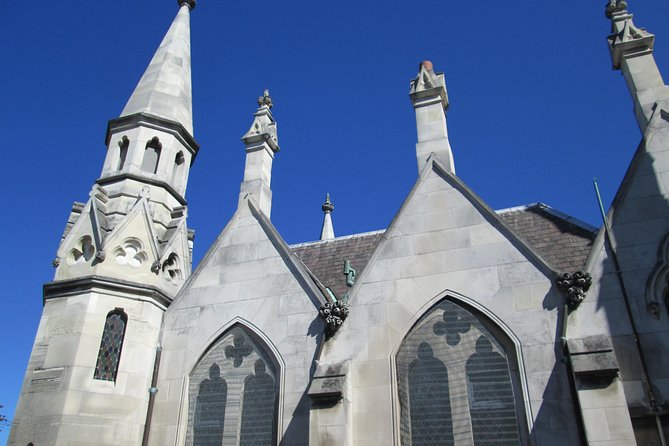
St. Paul’s Cathedral is a major stop, even if your plan is simple sightseeing. The guide focuses on the building and the site, and explains why it occupies such a prominent place in what was strongly Presbyterian.
Here’s the practical twist: entry to the cathedral is no longer guaranteed. That means you should treat the stop as “study the cathedral” rather than “definitely tour the interior.” If you do get inside, great. If you don’t, you still get the key ideas and the big-picture context.
This is the kind of cultural context that makes architecture click. You start noticing things like how religious power and civic life used to overlap, and how communities expressed identity through major buildings in the most visible locations.
Also, this stop helps you understand Dunedin beyond the tourist brochure version. It’s not only about Victorian styles; it’s about what those styles were trying to say, and who they were meant to serve.
Dunedin Railway Station (Opened 1906): The Stop That Feels Like a Finale

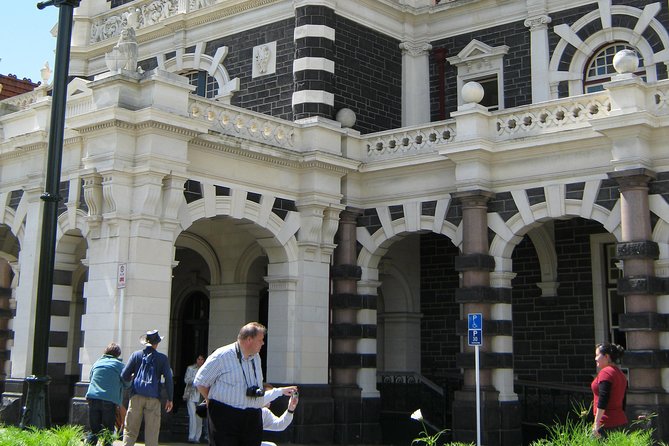
The walk finishes at the Dunedin Railway Station, and that’s a good call. The station isn’t just a functional building—it’s celebrated for its design. It opened in 1906, and the tour puts it in context first, then moves into the building so you can see what makes it special.
What I like about this stop is the pacing. You don’t just arrive and stare at details. You get the background, then you step inside and the architecture starts making more sense. The tour includes time to marvel at the decor, which is exactly what you want from a rail-station visit: not a quick glance, but a chance to actually look.
Even if trains aren’t your thing, this stop works because the station is a cultural marker. It reflects the era’s confidence and the importance of rail links. In a city like Dunedin, that kind of building helps you understand how people moved, traded, and imagined the future.
If you want a memorable photo moment, this is it. Finishing here also gives you an easy end-point for your own onward plans—whether you’re heading back to your hotel, catching transport, or simply continuing on foot.
Private Guide Time: The Real Value Is the Human Touch

The standout theme is attention. This is a private experience, meaning only your group participates. You’re not stuck listening to other people’s questions, and the guide can adjust pacing to how you’re doing that day.
One review favorite was how the guide handled Dunedin’s hills. The message is simple: you should expect some elevation, but the tour isn’t designed to turn your afternoon into a leg day. A good guide keeps the effort reasonable, with breaks in the right places and the right rhythm.
You’ll likely meet the guide at the Dunedin i-site near the Octagon (50 The Octagon). The route is short enough that the tour feels focused, but the stops are meaningful enough that you’ll come away with more than random facts.
The guide names you might hear—like Athol Parks—matter because they signal a real operator who cares about the story of Dunedin. The tour isn’t trying to sound fancy. It’s trying to make you understand what you’re seeing right now.
Price and Time: Does $31.03 Give You Good Value?
Let’s talk straight value. At $31.03 per person, you’re not paying for a long excursion or a bus ride. You’re paying for a guided walk that keeps you in the city center for about 1 hour.
For that price, you get:
- a tight route that hits the main “heritage” points,
- stops with free admission ticket-free noted for each location, and
- interpretation that helps you see the links between city layout, religious influence, and major civic architecture.
Is it worth it compared to walking on your own? If you enjoy architecture and history but don’t want to spend time researching, yes. You’ll save energy and mental effort. If you’re the type who loves planning and reading signage at your own speed, you could do this independently. But for most people, a paid guide turns an hour into something richer than a self-guided stroll.
Also, private tours mean no waiting around for a big group. That can matter a lot in a small city center where every minute feels like it counts.
Timing It Right With a 2:00 pm Start
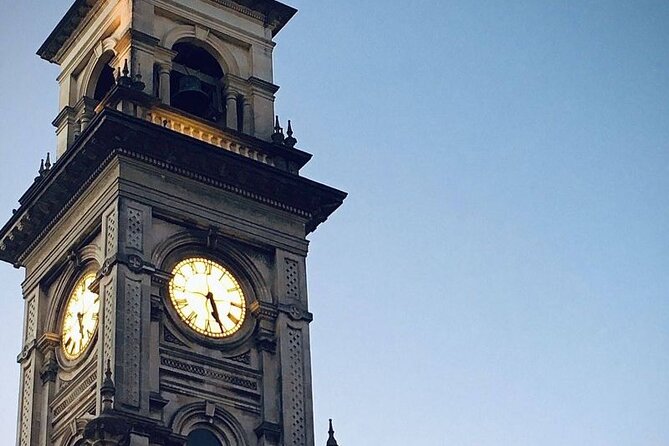
The tour starts at 2:00 pm and ends at the Railway Station. That’s helpful because you can plan your other activities around a fixed ending point.
If you’re arriving midday and want a fast introduction before you wander, this timing works well. If you’re on a schedule like a cruise day, the later start has a practical advantage: you have more time to manage other tasks before you meet the guide, and you have a clear place to finish.
Just remember: you’ll be walking. It’s an easy walking-style tour for most people, but Dunedin’s terrain includes hills. The guide manages pace, so you won’t be left behind—but it still isn’t a “sit and look” experience.
A smart move is to treat the tour as your first pass. Afterward, you’ll know where to roam. You’ll also know what to photograph without guessing.
Who Should Book (and Who Might Skip This)
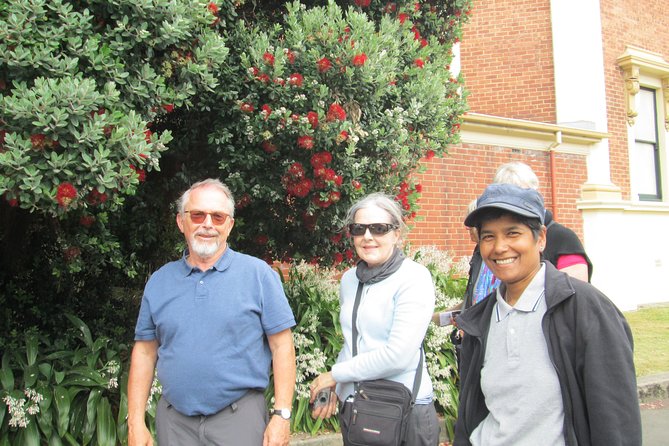
This is a great match if you:
- want a first-time Dunedin overview without spending half a day,
- care about architecture and urban history (especially Victorian-era planning),
- like having a guide manage the flow and pacing,
- prefer walking rather than bus tours.
You might choose a different activity if you:
- expect guaranteed interior access to St. Paul’s Cathedral. Entry isn’t guaranteed, and the focus may be more about observing and context than a full interior visit.
- need a strictly low-elevation route. The tour is designed to be manageable, but it is still a walk in a hilly city.
Should You Book the Heritage Highlights Walk?
If your goal is to get your bearings fast and leave with a clearer story of Dunedin’s key landmarks, I’d book this. It’s short, private, and built around three of the strongest “read the city” stops: the Octagon, St. Paul’s Cathedral (even with variable access), and the Railway Station.
The price feels fair for the time and the guidance you receive, especially if you want your questions answered and your photos timed to the best moments. And the walking pace is designed to keep things comfortable, even with Dunedin’s ups and downs.
Bottom line: this is a smart way to spend an hour in Dunedin’s center when you want real context, not just a checklist of places.
FAQ
What’s included in the Heritage Highlights Walk?
The walk focuses on the Octagon, St. Paul’s Cathedral, and the Dunedin Railway Station, with time to learn about each stop.
How long is the tour?
It runs for about 1 hour.
Is this tour private?
Yes. It’s private, and only your group will participate.
Where does the tour start and end?
You start at the Dunedin i-site Visitor Information Centre at 50 The Octagon, Central Dunedin, and the walk ends at the Dunedin Railway Station.
What time does the tour begin?
The start time listed is 2:00 pm.
Is entry to St. Paul’s Cathedral guaranteed?
No. Entry is no longer guaranteed, but the tour still studies the cathedral and discusses why it is prominent.
Do I need to buy tickets for the stops?
Admission is listed as free for each stop.
Is the tour suitable for most travelers?
Most travelers can participate, and it’s a walking tour.
Does it use a mobile ticket?
Yes, the tour uses a mobile ticket.
Can I cancel and get a full refund?
Yes. You can cancel up to 24 hours in advance for a full refund.