REVIEW · ACCRA
Naming Ceremony and Heritage Homecoming Experience for Diasporas
Book on Viator →Operated by Kwame Tours · Bookable on Viator
A name can feel like a homecoming. A Ghana ceremony turns your birth date into a Soul Name and pairs it with a local name and meaning, all led by a respected elder with traditional drumming and dancing.
I especially like two parts: the personal ritual of discovering your names, and the way the community welcomes you as a living part of their story. One possible drawback: if you expect a quiet, strictly formal event, this can feel more like an active communal ceremony with a strong performance element, and it may happen in a village setting rather than an indoor, city-style setup.
In This Review
- Key things I think you’ll care about
- Why a Ghana Naming Ceremony Resonates With Diaspora Roots
- Getting Your Soul Name and Local Name: The Real Heart of the Ritual
- The Village-Style Ceremony Experience in Accra’s World
- Morning Timing, Pickup, and the 5–8 Hour Reality
- Drumming, Dancing, and the Elder-Led Meaning
- Gifts, Kente Cloth, and Your Recognition Certificate
- Price and Value: Is $265 Worth It?
- Who Should Book This Heritage Homecoming?
- Should You Book Kwame Tours for Your Naming Ceremony?
- FAQ
- Where does the tour start?
- What time does the ceremony start?
- How long does the experience take?
- Is this a private experience?
- Is pickup included?
- What happens during the naming ceremony?
- What gifts might I receive?
- What is the cancellation policy?
Key things I think you’ll care about

- Your birth date drives your Soul Name and a second local name with meaning
- Drumming and dancing are part of the ceremony, not background entertainment
- A respected elder leads the naming, giving the event a clear moral and cultural grounding
- You’ll receive a gift such as beads or a Ghana Kente stole, plus a recognition certificate
- Private group experience means your group is the only one participating
Why a Ghana Naming Ceremony Resonates With Diaspora Roots
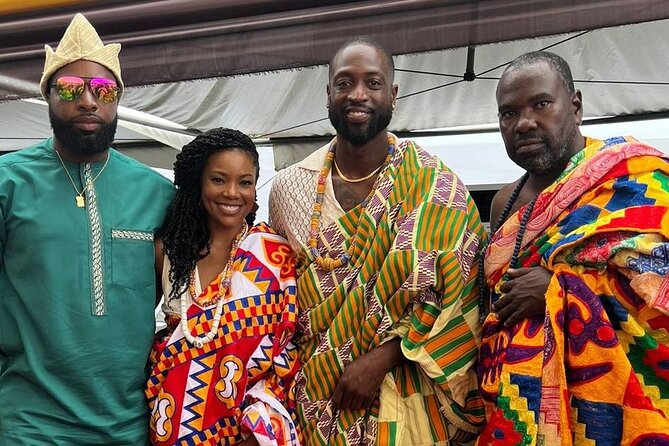
If you’re from the African American or Caribbean diaspora, this kind of ceremony isn’t just a cultural stop. It’s about identity, lineage, and being seen in relation to your ancestors. Ghana is often framed as a destination for heritage travel, but naming adds something deeper than photos and landmarks.
What makes it practical is that your participation is personal from the first steps. You’re not just watching a tradition; you’re giving key information (your birth date) that the elder and community use to create a Soul Name tied to your birth day, plus a local name that carries meaning. That turns the experience into something you can carry afterward, not just a day you remember.
And Ghanaian cloth and recognition elements matter here. This is not only about symbolism in the moment; you leave with tangible reminders—like a certificate and a tailored cloth item—so your return home isn’t just emotional, it’s visible.
The best-fit mindset? Come ready to take the ceremony seriously while also allowing yourself to enjoy the music, the movement, and the communal warmth.
You can also read our reviews of more tours and experiences in Accra.


Getting Your Soul Name and Local Name: The Real Heart of the Ritual
Here’s the core flow: you provide your date of birth so the ceremony can generate your Soul Name (based on your birth day) and then assign you a local name from the community. That local name comes with a meaning, so it doesn’t feel random or purely decorative.
This matters for a lot of diaspora visitors. Many heritage trips focus on history and place. Naming focuses on a living answer to a question you might not hear clearly back home: who are you, in your roots, in community language.
You can also think of this as a two-part naming:
- Soul Name: tied to your birth day, reflecting identity in a spiritual framework
- Local name with meaning: rooted in the community’s naming tradition, reflecting your place in their story
During the ceremony, you’ll also be part of the recognition portion, which includes a certificate. There’s no suggestion this is a casual photo op. The process is structured, and the elder’s role is central.
One practical tip: if names and meanings feel important to you, slow down and make mental space to listen during the explanation. Even if you’re not fluent in the local language, the intention is to connect your birth information to a lived cultural understanding, not just to collect a souvenir.
The Village-Style Ceremony Experience in Accra’s World
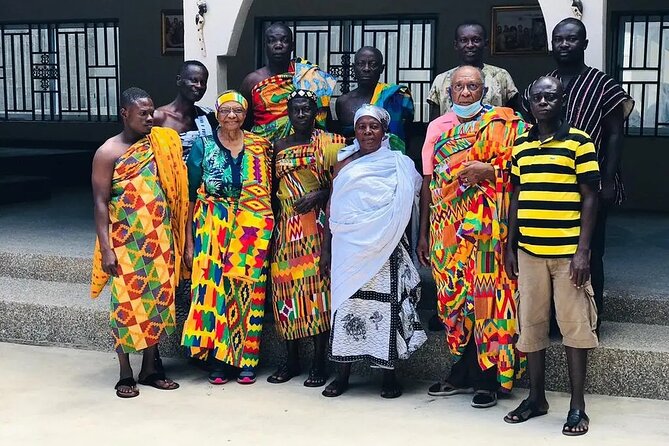
This experience is built around traditional Ghanaian life, not a simplified script. The format is described as happening in a rural Ghanaian village or a community setting in/around Accra, and the tone is intentionally welcoming.
That matters because one of the most common expectation traps is thinking a naming ceremony will look like a quiet indoor event. It’s more likely to feel communal—people gathered, drumming going, dancing happening, and the elder guiding you through the ritual in a way that involves the group.
In fact, the lower ratings in the mix aren’t about safety or logistics. They’re mostly about expectation mismatch. Some people were hoping for a different kind of ceremony setup. The lesson: confirm what kind of setting you’re getting. Ask your operator whether your ceremony will be village-based or closer to Accra. The experience is designed to be authentic, and that usually means a community setting rather than a formal hall.
Also, expect to meet community members in a real way. The ceremony is conducted by a respected elder known for strong moral standing, and you’re likely to interact with older women and other community figures, not just a single presenter. That personal contact is one of the biggest reasons this feels like reconnection instead of observation.
Morning Timing, Pickup, and the 5–8 Hour Reality
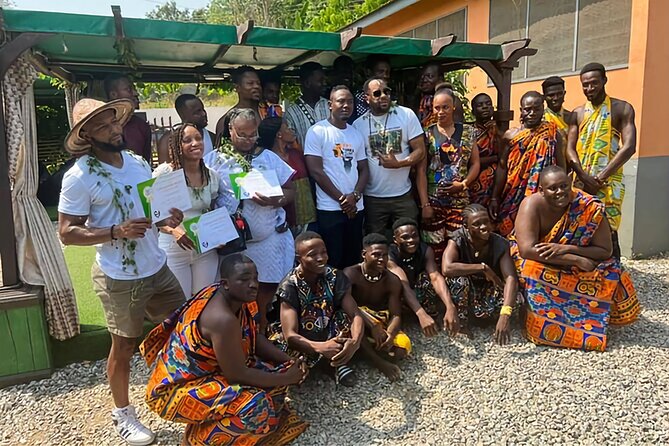
Your day starts early. Meeting point is Kotoka Airport in Accra, with a start time listed at 7:00 am. The ceremony portion is described as about 3 hours, but the overall experience runs 5 to 8 hours, because there’s time for pickup, travel, ceremony flow, and returning to the meeting point.
Why that timing matters: naming ceremonies aren’t something you can rush. The ritual has steps, and the community needs time to make the ceremony feel right. If you’re the type who wants everything to be perfectly timed like a city tour, you’ll need a slightly slower rhythm. The payoff is that the event is treated as a serious cultural moment.
Good news on logistics: pickup is offered, and you’ll end back at the same meeting point. The tour is private, so it’s only your group participating. That reduces the awkwardness of trying to follow instructions while sharing the space with strangers.
It’s also near public transportation, and service animals are allowed. Most travelers can participate, which suggests the ceremony isn’t limited to a narrow physical profile.
Finally, you’ll receive a mobile ticket. For a morning start, having that ready on your phone helps you avoid last-minute scrambling.
Drumming, Dancing, and the Elder-Led Meaning
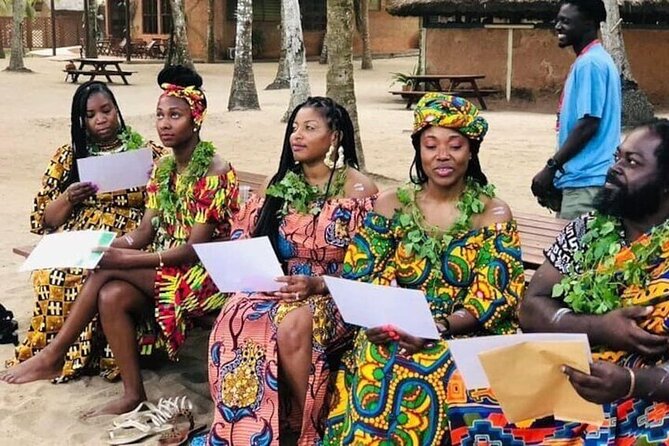
The ceremony is accompanied by traditional drumming and dancing. This isn’t optional entertainment layered on top. It’s part of the ritual atmosphere and how the community expresses celebration and recognition.
You can expect the elder to guide the proceedings. The information notes the elder is respected, with strong moral standing within the community. That matters because the naming isn’t framed as a random service. It’s presented as community-led recognition with authority and cultural responsibility.
If you’re sensitive to cultural boundaries, this is actually a good sign. Elder leadership usually means there are clear norms for how participants should behave, when you give your birth information, and how you receive your names and recognition. It’s less about you performing, more about you being welcomed into a structured tradition.
One more detail that helps set expectations: the ceremony includes cloth adornment that’s tailored for you, and that often comes with a moment of being recognized as part of the community. So even though it’s an event you attend, it’s also an experience where you become visible within the ritual setting.

Gifts, Kente Cloth, and Your Recognition Certificate
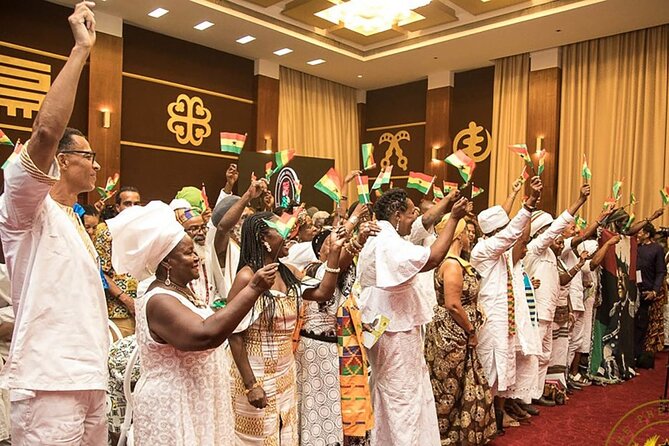
A big part of why this feels like a keepsake is the gift element. You may receive items such as:
- beads, or
- a Ghana Kente stole with Welcome to Ghana written and designed on it
There’s also a recognition certificate. Put simply, these are the kinds of items that help you remember not just the day, but the meaning you received.
The tailored cloth aspect is especially important for diaspora visitors. Cloth is personal in Ghanaian culture, and a tailored adornment tied to your participation signals that the community is treating you as more than a visitor. It’s also a practical souvenir you can actually use, not something that sits in a drawer.
If you’re the type who likes to keep records of your travel identity, the certificate is the type of document you might save alongside passports and old boarding passes. It’s proof of a lived cultural moment, not just a receipt.
Price and Value: Is $265 Worth It?
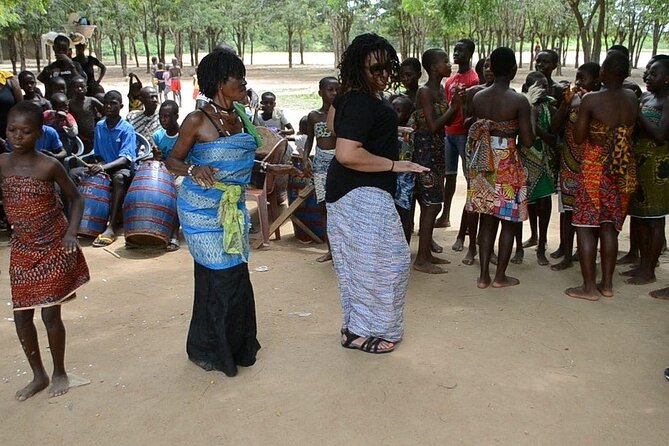
At $265 per person, this isn’t a low-cost add-on. But it’s also not priced like a generic walking tour either. You’re paying for a guided, elder-led ceremony with:
- a structured naming process based on your birth date,
- drumming and dancing in a communal setting,
- a gift component (beads or kente stole),
- and a recognition certificate,
plus pickup and a private group format.
That’s why value depends on your goal. If you want a cultural experience that’s more personal than standard sightseeing, this can feel worth it. The names and meanings are not something you get on your own in a museum, and the gifts are connected to the ceremony itself.
If your main goal is city views, restaurants, and beaches, this might feel like a detour because you’re starting at 7:00 am and spending a chunk of the day in ceremony mode. You also need to be okay with the possibility that the ceremony setting is community-based rather than an indoor staged show for tourists.
One more value note: group discounts exist, and because it’s private (only your group participates), you’re not sharing the event with random additional participants in the way some group tours do.
Who Should Book This Heritage Homecoming?
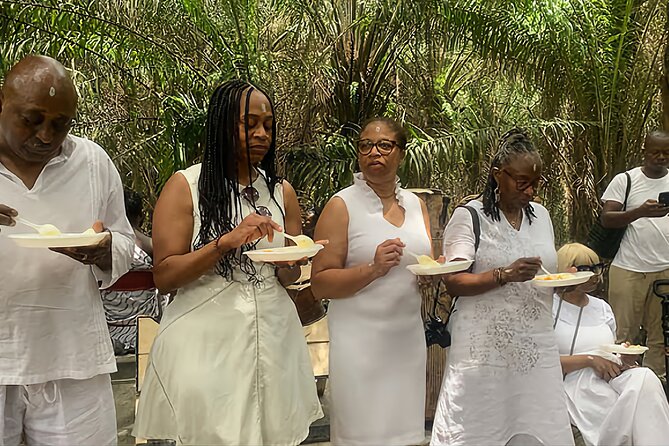
This experience is a strong fit if you:
- are African American or Caribbean diaspora and want a direct, personal connection to heritage,
- value traditions that come with names, meanings, and recognition, not just storytelling,
- like experiences led by elders and structured cultural steps,
- want a meaningful day you can carry back home through a certificate and cloth/gift items.
It’s less ideal if you’re expecting a short, passive activity like a quick blessing indoors. This is active and communal. The drumming and dancing are part of the ceremony, and the setting may be village-based.
Also think about your comfort level with early mornings. The 7:00 am start is real, and the total day is built around that early start.
Should You Book Kwame Tours for Your Naming Ceremony?
I’d book this if you want something that feels personal and rooted, with a clear ritual structure and real cultural authority behind it. The strongest reasons to choose it are the Soul Name process, the elder-led ceremony, and the tangible keepsakes like the certificate and kente stole or beads.
I wouldn’t book it if you only want a casual cultural photo stop or you’re very set on an indoor, controlled setting. If that’s your preference, confirm your ceremony location format first and decide based on that.
If you’re on the fence, my best advice is simple: treat it like a ceremony, not a show you’re watching. When you do, the welcome, drumming, and names tend to land the way they’re meant to.
FAQ
Where does the tour start?
The experience starts at Kotoka Airport in Accra, Ghana.
What time does the ceremony start?
The start time is listed as 7:00 am.
How long does the experience take?
The duration is about 5 to 8 hours overall, with the ceremony portion listed as 3 hours.
Is this a private experience?
Yes. It’s described as private, meaning only your group will participate.
Is pickup included?
Pickup is offered, and the tour ends back at the meeting point.
What happens during the naming ceremony?
You participate in a traditional naming ceremony where you provide your date of birth to receive your Soul Name and a local name with meaning, along with drumming and dancing. You also receive a gift and a recognition certificate.
What gifts might I receive?
The gift may include beads or a Ghana Kente stole that includes Welcome to Ghana, plus a certificate of recognition.
What is the cancellation policy?
Free cancellation is available up to 24 hours in advance for a full refund. If you cancel less than 24 hours before the start time, the amount you paid is not refunded.