REVIEW · KOLKATA
Heritage Walking Tour of Kolkata
Book on Viator →Operated by Calcutta Caravan · Bookable on Viator
One of Kolkata’s prettiest walks starts at a grand hotel. This 2 to 2.5 hour heritage route takes you past British-era landmarks, with an expert guide explaining how the colonial capital took shape. You’ll also get a ferry ride over the Hooghly River for those classic bridge views.
I especially love how much you cover on foot without feeling rushed. Two standouts for me are the chance to see places tied to the East India Company (like the Writer’s Building) and the photo-friendly pause on the ferry when the skyline opens up.
One drawback to consider: if your guide doesn’t show or communication breaks down, the whole morning can stall fast. In a few real cases, people had trouble reaching the operator at the meeting point, so build in a little buffer and keep your confirmation handy.
In This Review
- Key Highlights to Know Before You Go
- Entering Colonial Kolkata: The Walk’s Real Value
- Starting at The LaLiT Great Eastern: Dalhousie Square as Your Baseline
- Writer’s Building and Raj Bhavan: Offices, Power, and the Empire’s Everyday Face
- Telegraph Office and the Dead Letter Office: A Postal History Detour
- St Andrew’s Kirk and the Scottish Connection
- Currency Building: From Financial Power to Modern Memory
- How the Ferry Makes the City Click: Hooghly Crossings and Bridge Photos
- Howrah Station from Outside: The City’s Rail Pulse
- St John’s Church Finish: Job Charnock and the Black Hole Monument
- Price and Value: What $60 Really Buys You
- Logistics That Matter in the Real World
- Who This Tour Is Best For (and Who Should Skip)
- Should You Book This Heritage Walking Tour of Kolkata?
- FAQ
- How long is the Heritage Walking Tour of Kolkata?
- Where does the tour start and end?
- What is included in the price?
- Is a ferry ride across the Hooghly guaranteed?
- What colonial-era sites will I pass by?
- What do I see during the river crossing?
- Is food included?
- Is hotel pickup available?
- What’s the cancellation window?
Key Highlights to Know Before You Go
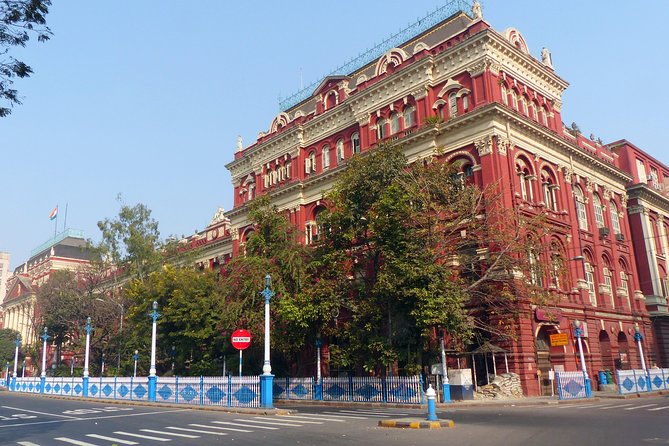
- Dalhousie Square start: the walk begins at The LaLiT Great Eastern Kolkata, right by the action
- Raj-era landmarks on foot: Writer’s Building, Raj Bhavan (Viceroy’s House), St Andrew’s Kirk, and more
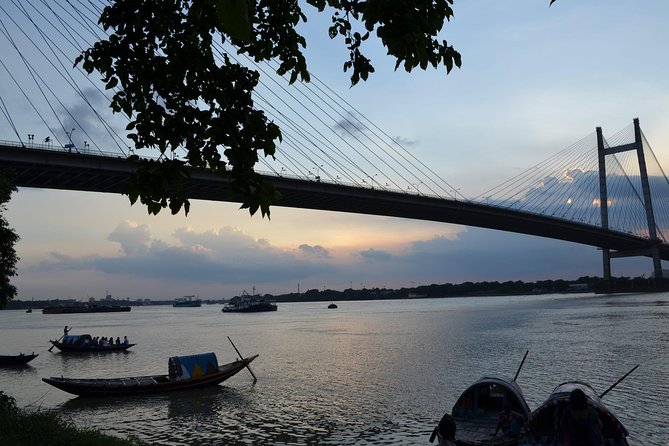
- Ferry ride over the Hooghly: views of Howrah Bridge and Vidyasagar Setu (when tides allow)
- Built-in comfort: packaged bottled water is included
- A strong historical finish: St John’s Church, linked to Job Charnock and the Black Hole Monument
- Private-by-your-group format: only your group joins, even though it can still feel like a shared local stroll
Entering Colonial Kolkata: The Walk’s Real Value
This tour is built for one thing: helping you understand colonial Kolkata while you’re actually standing in the middle of it. You’re not just looking at pretty facades. You’re linking names, offices, churches, and finance buildings to the way British Calcutta ran day to day.
The timing matters. In roughly 2 hours to 2.5 hours, you get enough time to learn, walk, and still end with a set-piece finish at St John’s Church. That makes it a good add-on on a half day when you want history without needing a full museum day.
For me, the best value is the pairing: ground-level street viewing plus water-level views. The ferry cross the Hooghly is where the story of the city becomes visual. You see bridges and rail connections in the same sweep, which is hard to recreate from land.
You can also read our reviews of more tours and experiences in Kolkata.


Starting at The LaLiT Great Eastern: Dalhousie Square as Your Baseline
The walk kicks off outside The LaLiT Great Eastern Kolkata at Dalhousie Square. This area gives you an immediate orientation. You’re in the civic-and-colonial zone of old Calcutta, where a lot of the power structures were built close together.
Why this start is smart: you’re not traveling across town before the tour even begins. And since it’s near public transportation, you can usually plug it into your day without complicated logistics.
Also, the start point works well for photos. Hotels and squarefronts help you get a sense of scale before you move into narrower streets and landmark corridors.
Writer’s Building and Raj Bhavan: Offices, Power, and the Empire’s Everyday Face
A big portion of your walk is passing colonial-era buildings tied to how the Raj organized administration.
One of the clearest highlights is The Writer’s Building. You’ll learn it originally served as offices for clerks of the East India Company. That detail matters because it shifts your focus from kings and battles to paper power: contracts, records, decisions, and bureaucracy. It’s the kind of back-office history that makes colonial rule feel real.
Next, you’ll come across Raj Bhavan, also described as the Governor’s House, which served as the official residence of the Viceroys of India during the Raj. Even if you don’t go inside, seeing the building in context helps you picture where formal authority lived.
On a practical level, these are also good “pause points” for your guide’s explanations. The buildings are distinctive enough that you can follow along without craning your neck every minute.
Telegraph Office and the Dead Letter Office: A Postal History Detour
You’ll also pass The Telegraph Office / The Dead Letter Office. This is where the tour gets pleasantly specific. Communication systems were the nervous system of an empire, and Kolkata played a major role in moving messages, goods, and control.
Even if you’ve seen old European post offices before, this stop has its own flavor because it connects technology (telegraph) to everyday consequences (letters that never reached their destination). If you like history that’s tied to real human routines—mail, delays, lost messages—this is the kind of stop that sticks with you.
St Andrew’s Kirk and the Scottish Connection
Not every colonial landmark in Kolkata is an office building. You’ll also see St Andrew’s Kirk, described as a beautiful Scottish Kirk.
This stop gives you a different angle on colonial life: religious community and identity. It’s a reminder that British Calcutta wasn’t just government staff and warehouses. It also had churches, rituals, and local communities of Europeans living within the city.
If you’re the type of traveler who enjoys architecture, this is one of those “notice the details” moments—another chance to slow down and look carefully instead of simply listening.

Currency Building: From Financial Power to Modern Memory
Another important pass-by is Currency Building, which served as the Reserve Bank of India until 1937.
That single fact is a doorway into how Kolkata functioned as a financial engine. If you’ve ever wondered how money moved and decisions were made, this stop connects architecture to economics—built structures that supported banking authority.
And because this is a walking route, you experience it like a city resident would: you see the building, you keep moving, and you learn how it fits into the surrounding streets. That’s the difference between reading about a place and actually walking it.
How the Ferry Makes the City Click: Hooghly Crossings and Bridge Photos
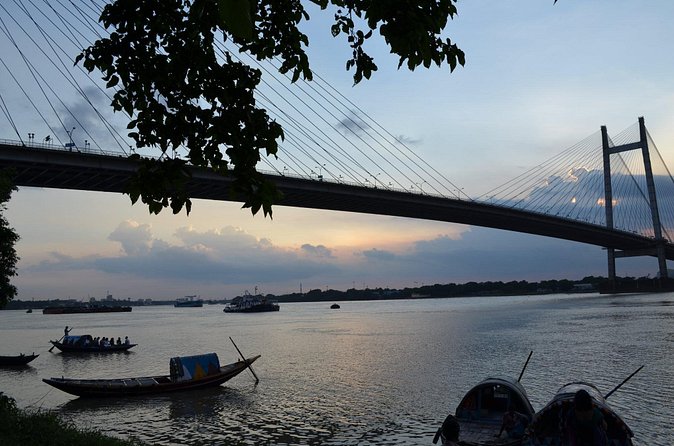
Then comes the star visual moment: a ferry ride across the Hooghly River (Ganges). This isn’t just a scenic add-on. It’s where you get the big-picture geometry of Kolkata.
From the water, you’ll get a picturesque view of both Howrah Bridge and Vidyasagar Setu. You’ll also see a breeze and a wider panorama of the city, which is a nice change of pace after walking.
One practical consideration: the ferry ride depends on the tide. On some days, it may not happen, and the tour may switch to a ghat tour instead. That’s not a small detail. It changes what you see and how long you spend near the river, so don’t build your day around the assumption that you’ll definitely get the exact ferry crossing.
A small photo tip: if you want clear shots of the bridges, aim to keep your camera ready once you’re out in open view. On ferries, things can shift fast—people move, angles change, and the best moment passes quickly.
Howrah Station from Outside: The City’s Rail Pulse
While crossing, you’ll also get a view of Howrah Station from outside—described as the busiest railway station in India. Even without stepping inside, that outside view is useful because it links Kolkata’s colonial-era planning to its modern transportation reality.
This stop is a reminder that cities evolve, but the underlying corridors—river access, rail power, administrative hubs—often stay central.
If you’re rail-minded, you’ll likely appreciate how this connects to the bridge views. You’re seeing both the physical crossing points and the movement engine behind them.
St John’s Church Finish: Job Charnock and the Black Hole Monument
You’ll conclude the tour at St John’s Church at Council House Street, near Dewars Garage (Lal Dighi, B.B.D. Bagh area). This finish is historically weighty.
St John’s Church is said to house the grave of Job Charnock, described as the founder of British Calcutta, and it’s also linked to the Black Hole Monument. If you want your tour to end with a clear thread back to British beginnings in Bengal, this is a strong landing.
Even if you don’t read every plaque, the point is there. You’re walking past institutions, and then you’re ending at a site that anchors the origin story and its darker reputation.
Price and Value: What $60 Really Buys You
At $60, you’re paying for an expert guide, packaged drinking water, and a route that strings together multiple major landmarks plus a river crossing (when tides allow).
Is it a bargain? It can be, if you care about context. A walking tour at this price works best when you’re using the guide for interpretation—what each building means, why it matters, and how it connects to how Calcutta operated under the Raj. Without that, you’d just be paying for the privilege of walking past buildings you might find on your own.
You should also factor in what’s not included. Food is not included, so plan a meal nearby. Hotel pickup and drop-off aren’t included, though it’s available on request. And tipping is optional, so you can decide based on service.
The tour’s “private by your group” setup is another value point. You don’t need to share your attention with strangers if you’re booking as a group.
Logistics That Matter in the Real World
This tour is designed to be doable. It’s near public transportation, uses a mobile ticket, and you should receive confirmation at booking time unless you’re booking within a day of travel.
But here’s the honest “street-level” note. In some real situations, people reported trouble at the meeting point—like a guide not being present and a phone contact that didn’t work. That’s not something you can fix on your side, but you can reduce your risk.
Do this before you go:
- screenshot your booking/confirmation details
- save the start address for The LaLiT Great Eastern Kolkata
- arrive a bit early, not fashionably late
- keep a fallback plan for the ferry timing shift (since tide can change it)
If you’re touring with a tight schedule, build in slack for a 10 to 20 minute start delay.
Who This Tour Is Best For (and Who Should Skip)
This fits you if:
- you like walking tours that explain what you’re seeing
- you enjoy colonial architecture and admin-history details
- you want one active half day with a strong photo moment on the river
- you’d rather learn from a guide than “guess” the backstory yourself
It might be less ideal if:
- you expect lots of time inside buildings (this is mainly a pass-by and street-view experience)
- you’re traveling on a strict timetable that can’t absorb changes (the itinerary may adjust for weather, safety, traffic, and road conditions)
- you strongly need a guaranteed ferry ride every single time (tides can swap it for a ghat tour)
Also, the tour says most travelers can participate, which suggests it isn’t designed as a hardcore route. Still, you’ll be walking, so wear comfortable shoes.
Should You Book This Heritage Walking Tour of Kolkata?
If you want a smart, structured way to see colonial Kolkata and end with a real landmark anchored in Job Charnock’s story, I think it’s a good bet—especially for first-timers who want orientation fast.
I’d book it if you can be flexible about timing and you’re prepared for tide-dependent river changes. The $60 price is reasonable for the guide-led interpretation plus the ferry experience when it happens.
My main caution is reliability at the meeting point. If you’re a solo traveler with no backup plan, or you’re working under intense time pressure, consider booking only if you can travel with extra buffer and keep confirmation info accessible. When everything runs as expected, this tour gives you exactly what a great city walk should: context on the pavement and a view that makes the city feel three-dimensional.
FAQ
How long is the Heritage Walking Tour of Kolkata?
It lasts about 2 hours to 2 hours 30 minutes.
Where does the tour start and end?
It starts outside The LaLiT Great Eastern Kolkata at Dalhousie Square 1, 2, 3, Old Court House St, Chowringhee North. It ends at St. John’s Church on Council House St, opp. Dewars Garage, Lal Dighi, B.B.D. Bagh.
What is included in the price?
The tour includes a tour expert and packaged drinking water.
Is a ferry ride across the Hooghly guaranteed?
Not always. The ferry ride depends on the tide. If it can’t run on some days, the tour may do a ghat tour instead.
What colonial-era sites will I pass by?
You’ll pass several landmarks, including The Writer’s Building, The Telegraph Office / The Dead Letter Office, Raj Bhavan / The Governor’s House, St Andrew’s Kirk, and Currency Building (Reserve Bank of India until 1937), among others.
What do I see during the river crossing?
You’ll get views of the bridges Howrah Bridge and Vidyasagar Setu, plus a view of Howrah Station from outside.
Is food included?
No. Food is not included.
Is hotel pickup available?
Hotel pick-up and drop-off are available on request, but they are not included by default.
What’s the cancellation window?
You can cancel for a full refund up to 24 hours before the experience’s start time. Free cancellation is offered, but changes within 24 hours of start aren’t accepted.