REVIEW · TEL AVIV
Jerusalem World Heritage Private Tour
Book on Viator →Operated by Zelkind Bible Land Tours · Bookable on Viator
Old City Jerusalem can swallow your time. A private guide turns the maze into a doable plan, while you visit the Jewish, Muslim, Christian, and Armenian areas at your pace.
I especially like how this tour packs the key landmarks into one day without making you rush—so you can actually look, read, and ask questions.
I also love the practical side: hotel pickup and drop-off plus a private vehicle means you spend less energy on logistics and more on the streets. With a guide who can explain what you’re seeing (and what to watch for), you’ll get meaning fast, not just photos.
One consideration: Temple Mount is not possible Fri and Sat, so your schedule shifts around that. Also, this is a full day on your feet, so plan for walking in uneven stone streets.
In This Review
- Key Things That Make This Tour Work
- Why a Private Old City Tour Makes Sense
- The Day’s Backbone: Jaffa Gate to King David’s Tomb
- Stop-by-Stop: What You’ll See and Why It Matters
- Jaffa Gate: Your Main Entrance Into the Old City
- Jewish Quarter: Layers From Earlier Jerusalem
- Western Wall: A Place With Global Gravity
- Temple Mount (El Haram Al Sharif): Dome of the Rock and Al-Aqsa Views
- Muslim Quarter: Markets, Small Shops, and Local Food Stops
- Christian Quarter (Muristan): A Mix of Styles and Streets
- Via Dolorosa (The Way of the Cross)
- Church of the Holy Sepulchre: Inside the Main Event
- Mount Zion: Views and Meaning Beyond the Old City Core
- King David’s Tomb: A Short, Focused Finish
- Value and Pricing: What $1,049 Buys Your Group
- Practical Tips I’d Use Before You Go
- Who This Tour Is Best For
- Should You Book This Jerusalem Old City Private Tour?
- FAQ
- How long is the Jerusalem World Heritage Private Tour?
- What does it cost, and how many people can join?
- Is pickup and drop-off included?
- What sites are included in the itinerary?
- Is Temple Mount visit possible on all days?
- Is food included in the tour price?
- Can I cancel for free?
Key Things That Make This Tour Work
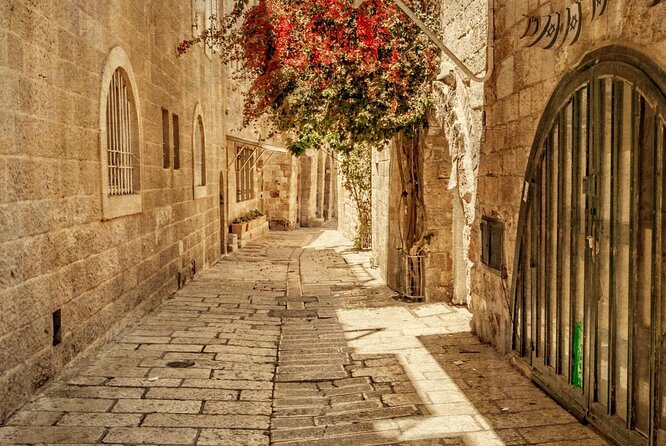
- All four quarters in one day: you see the Old City as one connected place, not four separate “maybe I’ll try” trips
- Private guide, not a group sprint: you choose what to linger over, and you’re not swallowed by a tour crowd
- Door-to-door convenience: pickup and drop-off at your Jerusalem hotel keeps the morning from feeling like a commute
- Temple Mount highlights, with dates in mind: you’ll view the Dome of the Rock and Al-Aqsa when access is available
- A careful route design: it starts and finishes at Jaffa Gate and stitches the sites together logically
- Admission is listed as free on the stops: the itinerary is built around accessible entry points
Why a Private Old City Tour Makes Sense
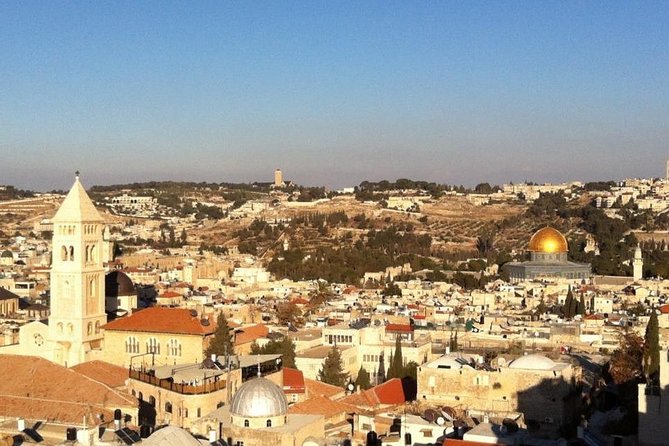
Jerusalem’s Old City isn’t laid out for easy sightseeing. The streets twist, the signs can feel confusing, and holy sites overlap in the same tight space. The result is that self-guided days often become a blur of wandering: you find something amazing, then lose time trying to backtrack.
A private tour helps because you’re solving a problem before it starts: navigation. Instead of asking your phone to rescue you every five minutes, you’re moving with a guide who knows how the areas connect and how to sequence the day. That matters even more because you’re covering serious sites—religious, historical, and cultural—across the Old City’s four main quarters.
I like the pacing structure here. It’s not a “you have 10 minutes at each place” treadmill. The plan gives you blocks of time, and the guide can redirect you toward what matters most to your group. Past guests have praised the way guides bring the streets to life with humor and clear explanations—exactly what you want when you’re standing in an area that people have visited for centuries.
You can also read our reviews of more tours and experiences in Tel Aviv.


The Day’s Backbone: Jaffa Gate to King David’s Tomb
This tour starts at 9:00 am and is designed as a loop you can actually finish. The biggest win is the route: it links the entrance (Jaffa Gate) to the central walls (Western Wall), up to the Temple Mount area when permitted, then through the Old City’s Christian and Muslim streets, and finally out toward Mount Zion and King David’s Tomb.
It’s also practical that each stop is listed with a time estimate, and most entries are shown as admission ticket free. That doesn’t mean everything is always effortless (security lines can exist anywhere you go), but it helps the day stay predictable.
Expect a full-day feel—think more “structured walking day” than “museum tour.” The tour also notes moderate physical fitness is recommended. If you tend to get sore on cobblestones or stairs, wear shoes you trust.
Stop-by-Stop: What You’ll See and Why It Matters

Jaffa Gate: Your Main Entrance Into the Old City
You’ll begin at Jaffa Gate, one of the main entrances into the Old City. The tour highlights it as a standout example of early Ottoman architecture. Starting here is smart because it gives you a reference point. When you walk into the Old City from Jaffa Gate, you’re not just drifting—you’re entering with a sense of direction.
This gate is also a natural place to finish your day. The design matters: it reduces the “how do we get out?” stress that can hit at the end of a long Old City walk.
Jewish Quarter: Layers From Earlier Jerusalem
Next up is the Jewish Quarter. The tour explains how the area was destroyed in 1948 and then reconstructed beginning in 1967. That context matters because you’re not only seeing religious sites—you’re seeing a neighborhood shaped by modern history, while also containing remnants connected to earlier periods, including finds linked to First Temple and earlier Byzantine times.
Why this stop is worth your attention: it helps you understand Jerusalem as a living city, not a postcard. In this quarter, the past isn’t abstract. It’s built into stone, layout, and the way the streets feel.
Western Wall: A Place With Global Gravity
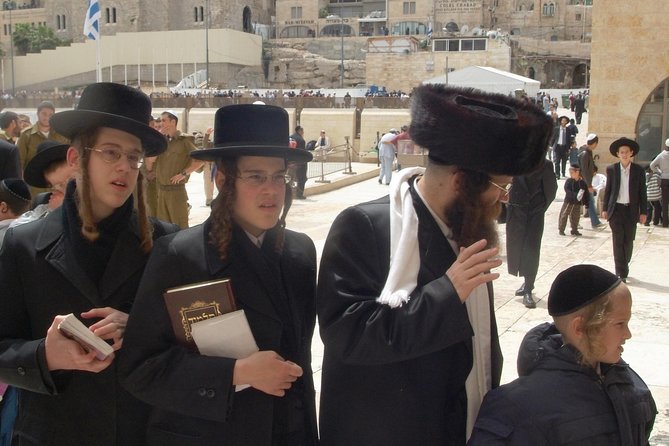
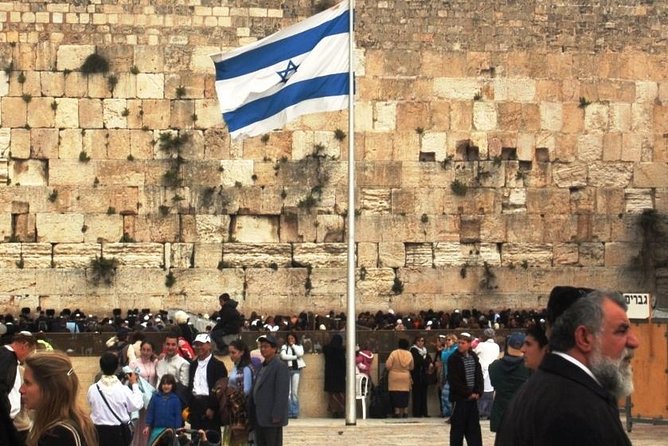
Then you reach the Western Wall, described as the last remnant of the Jerusalem Temple. It’s positioned as one of the most important places for Jewish people around the world, and it’s also important for Christians.
Plan for a moment of stillness here. Even if you don’t share the same faith, the Western Wall creates a powerful atmosphere. What makes the guided approach valuable is interpretation: you’re not just looking at a wall, you’re learning what the wall means and why people come here with such emotion.
Temple Mount (El Haram Al Sharif): Dome of the Rock and Al-Aqsa Views
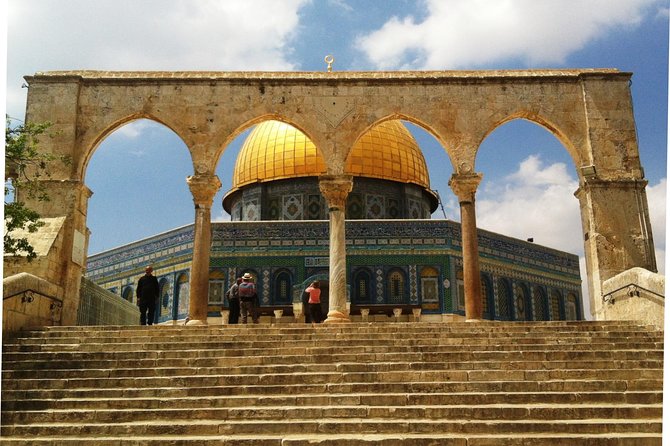
The route includes Temple Mount, also known in the Islamic tradition as El Haram Al Sharif. The tour frames it as a site tied to the former Jewish Temple and also connected to the Islamic tradition of the Prophet Muhammad’s ascent.
The tour specifically notes you’ll view two major mosques: the Dome of the Rock and Al-Aqsa. The word “view” is important. Temple Mount experiences can be controlled by access rules, and the tour explicitly warns that visiting Temple Mount is not possible on Fri and Sat.
So if your trip lands on a Friday or Saturday, you should treat Temple Mount as the flexible piece of the itinerary. The rest of the Old City still delivers, but your day’s rhythm will change.
Muslim Quarter: Markets, Small Shops, and Local Food Stops
In the Muslim Quarter, the tour focuses on the suks (markets), small shops, and local restaurants. This is where the Old City becomes more than monuments. Even if you don’t shop, the market layout tells you how daily life blends into sacred space.
You’ll spend about an hour here. Use that time to slow down. Look at the street patterns, notice how the shops cluster, and take in the everyday feel that makes this part of Jerusalem so human.
Christian Quarter (Muristan): A Mix of Styles and Streets
The Christian Quarter, also called Muristan, is described as the heart of the Old City, with a colorful mix of architectural styles, cultures, and people.
This is a great stop for understanding how layered Jerusalem is. You’re in a place where faith, community, and architecture overlap—and where the streets feel busier and more textured than at some of the more “site-focused” stops.
Via Dolorosa (The Way of the Cross)
Next is Via Dolorosa, the Way of the Cross, located in the Muslim neighborhood area. The tour emphasizes the unique blend of cultures created by the way the route travels through mixed streets and communities.
This isn’t just a walking path; it’s a lived route with meaning. A guide helps here because you learn what you’re seeing and why people attach importance to these steps, even when the street scene around it changes from block to block.
Church of the Holy Sepulchre: Inside the Main Event
The tour includes a visit to the Church of the Holy Sepulchre, with about an hour for exploring. This church is one of the most central Christian sites in Jerusalem, and the guided approach matters because you’re trying to make sense of a complex building.
Don’t expect a quick photo stop. Plan for some time to look around, understand what different areas represent, and navigate the interior without wasting energy.
Mount Zion: Views and Meaning Beyond the Old City Core
After the denser Old City streets, you’ll move to Mount Zion, described as one of the more exciting places in Jerusalem. This stop gives your eyes a change of pace. It also helps you connect the story of the city beyond the walled area.
You’ll have about an hour here, which is a good window for both viewpoints and explanation.
King David’s Tomb: A Short, Focused Finish
The day ends with a visit to King David’s Tomb, associated with the burial site of King David, with about 15 minutes allocated.
Fifteen minutes isn’t long, but it’s enough for a meaningful stop if the guide is managing the flow of the day. Think of it as a strong closing note rather than a second main event.
Value and Pricing: What $1,049 Buys Your Group
The price is $1,049 per group, up to 4 people. That’s how this kind of private Old City tour makes financial sense: you’re not paying per person, you’re paying for a dedicated guide and private transport for your group.
For two people, it’s still a splurge compared to a shared tour. But if you’re traveling as a family or small group of friends, the per-person cost drops quickly—and the value improves fast because private pacing matters most when you’re trying to cover a complicated area like the Old City.
Also, the itinerary lists admission ticket free at each stop. That’s not the same thing as free everything (time, access rules, and security can still shape your day), but it reduces surprise costs and keeps the focus on the experience itself.
One more value point: the private vehicle and hotel pickup and drop-off save you time and stress. When you’re spending 7 to 8 hours in Jerusalem with walking in between sites, reducing friction at the start and end pays off.
Practical Tips I’d Use Before You Go
- Wear shoes for uneven stone: the Old City isn’t smooth pavement. Comfortable soles are a must.
- Don’t plan to eat on the fly: food and drinks are not included, so decide how you’ll handle meals during the day.
- Have a plan for Friday/Saturday: if your visit is Fri/Sat, plan around the fact that Temple Mount visits are not possible.
- Keep your pace honest: you’re covering a lot of ground, so set expectations for a full walking day, not a slow stroll.
- Bring curiosity, not just a checklist: the tour is strongest when you ask questions—about what you’re seeing and why people care.
Who This Tour Is Best For
This tour is a great fit if you want three things at once: reliable navigation, meaningful context, and time to see multiple quarters without feeling trapped by group schedules.
It’s also a good choice if your group includes:
- first-time visitors who want to understand what they’re seeing quickly
- couples and small families who want a private pace
- anyone who knows the Old City can be tricky and prefers a guide rather than guessing routes
If you’re the type who loves long, self-directed wandering with zero structure, a private tour might feel too planned. But if you want structure that still leaves space to linger, this day is built for you.
Should You Book This Jerusalem Old City Private Tour?
I’d book it if your top priority is getting through the Old City without wasting hours lost in side streets. The combination of private guiding, a loop route starting at Jaffa Gate, and a plan that hits major landmarks in all four quarters is a smart way to compress a complex day into something manageable.
Skip it (or at least reconsider the dates) if Temple Mount access is essential to your ideal itinerary. The tour notes no Temple Mount visit on Fri and Sat, so plan your day around that reality.
Overall, this is the kind of tour where the value is more than the sights. It’s the way a good guide helps you connect the dots—so Jerusalem’s sacred places start to make sense, not just look impressive.
FAQ
How long is the Jerusalem World Heritage Private Tour?
The tour is listed as 7 to 8 hours (approx.).
What does it cost, and how many people can join?
It costs $1,049.00 per group, for up to 4 people.
Is pickup and drop-off included?
Yes. The tour offers pickup and drop-off at your Jerusalem hotel, and it uses a private vehicle.
What sites are included in the itinerary?
The itinerary includes Jaffa Gate, the Jewish Quarter, the Western Wall, Temple Mount, the Muslim Quarter, the Christian Quarter, Via Dolorosa, the Church of the Holy Sepulchre, Mount Zion, and King David’s Tomb.
Is Temple Mount visit possible on all days?
No. Visit of the Temple Mount is not possible on Friday and Saturday.
Is food included in the tour price?
No. Food and drinks are not included.
Can I cancel for free?
Yes. There is free cancellation up to 24 hours in advance for a full refund.