REVIEW · JODHPUR
Jodhpur Heritage Walk
Book on Viator →Operated by Jodhpur Heritage Walk · Bookable on Viator
Jodhpur’s blue lanes come with stories. This heritage walk gives you a guided look at Old Jodhpur’s architecture and planning, and I especially like how the guide links it to everyday life like rainwater harvesting. You also get time to work through busy market areas for shopping and snack stops, with an optional chance to learn a spiced masala chia at a local home.
The one thing to plan around is that this is still a walking tour, usually around 3–4 hours, on streets that can feel tight and uneven. If weather is bad, the experience can be adjusted or refunded, so you’ll want to time it when conditions are comfortable.
In This Review
- Key highlights you should care about
- Entering Old Jodhpur from Ghanta Ghar and Sardar Market
- What the heritage guide actually teaches (architecture, planning, rainwater)
- Blue-painted houses and narrow lanes: where the city feels real
- The monument stops: why “architecture variety” is the main point
- Market time for shopping and snack stops that match the route
- Optional masala chia at a local home: worth considering
- Timing, duration, and meeting logistics you can plan around
- Private guide energy: what you gain with your own group
- What I’d bring (and how to make the walk feel easy)
- Who should book this heritage walk, and who might skip it
- Should you book Jodhpur Heritage Walk?
- FAQ
- How long is the Jodhpur Heritage Walk?
- How much does the tour cost?
- Where do I meet the guide?
- Is this a private tour?
- What kind of ticket do I get?
- When will I receive confirmation?
- Is the tour dependent on weather?
- What’s the cancellation rule for a full refund?
Key highlights you should care about
- Private tour means only your group, with room for questions and pacing that fits you
- Architecture + city planning focus, not just quick photos of monuments
- Rainwater harvesting shows how the city’s design supported daily life
- Market time for shopping and trying local snacks in the flow of the neighborhood
- Optional masala chia cooking experience at a local home if you’re interested
- Strong guide reputation tied to clear English explanations and thoughtful city context
Entering Old Jodhpur from Ghanta Ghar and Sardar Market
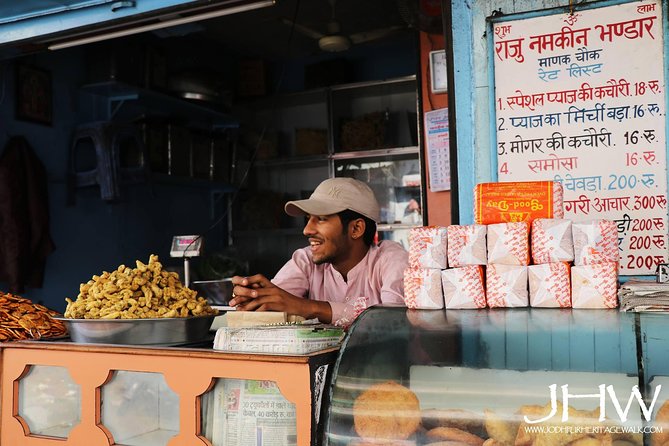
Most mornings start near Ghanta Ghar (Clock Tower) in the Sardar Market area. That’s a good choice for two reasons: you begin in a place that’s easy to find, and you’re already near the kind of neighborhood energy the walk is built around. You’ll see the city’s rhythm right away—people moving in and out of lanes, small storefronts, and the kind of “this is where life happens” setting that bigger monuments alone can’t give you.
Because the tour uses a mobile ticket, you don’t need to scramble for paper or paperwork. If you’re arriving from within town, the meeting point being near public transportation is also a plus, since Jodhpur’s best walking areas don’t always sit right next to the main transit stops.
You can also read our reviews of more tours and experiences in Jodhpur.

What the heritage guide actually teaches (architecture, planning, rainwater)
This is a city-explainer walk. The core focus is architectural styles and the story behind how Jodhpur was planned and established, along with the monuments and features you pass. Instead of treating sights as isolated stops, your guide helps you understand why the Old City looks the way it does.
One of the most practical learning threads is rainwater harvesting—how people traditionally captured and managed rain so daily life could keep going. In a place where summer can be intense and rain isn’t guaranteed, that kind of knowledge makes the city feel functional, not just pretty. It also changes how you look at details you might otherwise ignore, like structure layouts and how buildings relate to water management.
Guides with names like Prabhat (including Prabhat Singh), Pranhat, Rishi Jodha, and Sabiya show up in past experiences tied to strong English and clear explanations. What stands out is not only facts, but the way the guide connects history to the present: temples and lanes aren’t just landmarks; they’re part of social life and neighborhood structure.
Blue-painted houses and narrow lanes: where the city feels real
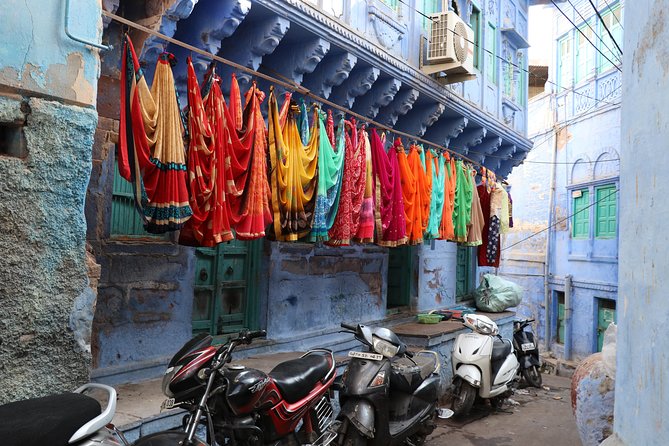
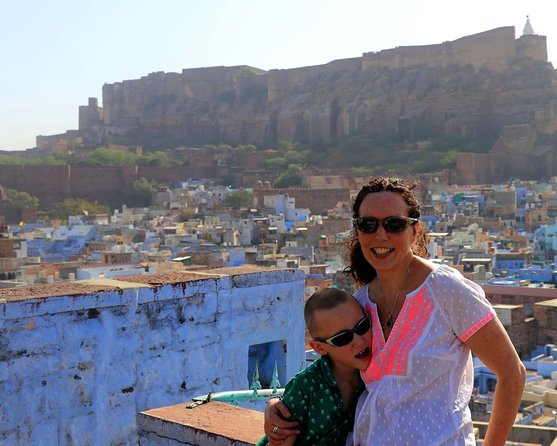
Jodhpur is often sold as the Blue City, but what you’ll remember here is the walking version of it. You move through narrow lanes and see how blue-painted houses sit next to temples and older havelis, with everyday activity woven into the backdrop. It’s the contrast between quiet architectural detail and active street life that makes the walk click.
This is also where the guide’s route matters. A good guide points out the small things: a detail on a façade, a sightline you wouldn’t notice on your own, or why a certain lane feels like it leads you somewhere important. One experience described time spent around temples and daily-life lanes, and that matches the overall style: you’re not just touring monuments, you’re orienting yourself in the neighborhood.
If you’re the type who likes photos, you’ll likely appreciate that the route is built for angles and scenes, not just speed. The upside is you can slow down at the right moments; the tradeoff is you’ll need patience with tight sidewalks and turning corners.
The monument stops: why “architecture variety” is the main point
The tour includes visits and informative displays tied to a wide range of architectural styles, plus the history behind the city’s vivid, colorful look and its monuments. You’ll get context as you go, so the walk doesn’t become a checklist. Instead, you start building a mental map: which features signal different periods, what design choices reflect local needs, and how monuments fit into the broader Old City pattern.
One helpful aspect is that the tour is positioned as an introduction—meaning you’ll likely leave with better instincts for what to see next. If you plan to visit bigger sites later (like forts and major palaces), this kind of architectural grounding makes everything feel less random and more connected.
Market time for shopping and snack stops that match the route
A big part of this experience is spending time in the busy market areas, the kind you’d otherwise skim through. You’re given a guided reason to go there: the walk uses markets as a cultural layer, not a detour. That’s valuable because it helps you experience how people actually buy, eat, and move through the neighborhood.
You also get a chance for shopping and to try local snacks along the way. Even if you don’t plan to shop much, snack time can be one of the best ways to keep your energy up during a few hours of walking. The smart move is to go with an open mind: treat it as sampling the city’s everyday food culture rather than chasing a specific “famous” item.
For many people, the market portion is the “real Jodhpur” section—the one that makes the heritage lessons feel grounded instead of academic.





Optional masala chia at a local home: worth considering
If you’re interested, there’s an option to learn how to make India’s spiced masala chia in a local home. This is the type of add-on that can either make your trip feel personal or simply take more time than you want, depending on your style.
Here’s how I’d think about it before booking:
- If you enjoy hands-on food experiences and want to bring something home besides photos, this sounds like a strong match.
- If you prefer to keep the walk purely outdoors, or you’re on a tight schedule, you might treat it as an optional extra and focus on the city route.
The tour structure supports both kinds of travelers by presenting the home cooking as something you can choose if you want it.
Timing, duration, and meeting logistics you can plan around
The walk runs about 3–4 hours. In the itinerary notes, it’s described as roughly 3 hours, so I’d plan for most of a morning or a block in the afternoon where you won’t need to jump to another major activity immediately afterward.
Start time is listed at 10, and the tour ends back at the meeting point. That matters because you don’t have to “figure out” your way out at the end; you’ll likely be back near the Ghanta Ghar/clock tower zone where you can continue exploring on your own.
Since the experience is marked as near public transportation and most travelers can participate, it’s generally accessible for people who can handle city walking. The only real caution is comfort: expect tight lanes and stairs or uneven pavement at times, because this is Old Jodhpur street structure.
Private guide energy: what you gain with your own group
This is labeled as a private tour/activity, meaning only your group participates. In practice, that often changes the whole feel of a walking tour. You can ask follow-up questions without worrying that the guide has to stick to a rigid group tempo. You can also pause when something catches your attention—like a façade detail or a shop you want to inspect more closely.
One of the strongest signals from past experiences is that guides are described as engaging and able to explain not only facts, but the social and political context behind the city’s development. If you like understanding why a place developed the way it did—not just what you’re looking at—this private format helps you get more out of the time.
What I’d bring (and how to make the walk feel easy)
The tour is built for walking and outdoor street scenes, so you’ll want practical basics:
- Comfortable shoes that handle uneven stone or worn pavement
- A light layer, since weather can shift in Rajasthan
- Water, especially if you’re doing this at the warmer part of the day
- Small cash/card for snacks or shopping, since the market portion may tempt you
Also, pay attention to the weather. The experience specifically notes it requires good weather—if poor weather cancels it, you’re offered a different date or a full refund.
Who should book this heritage walk, and who might skip it
I think this tour fits best if you want:
- A guided introduction to Old Jodhpur’s architecture and city planning
- A walk that blends monuments with neighborhoods, markets, and everyday habits
- Time for snacks and optional local cooking interest
You might consider something else if you:
- Strongly dislike walking for half a day in tight streets
- Only want the biggest “single-site” attractions and nothing neighborhood-based
- Prefer a very structured museum-style route over city wandering
For most people doing Jodhpur for the first time, this works as the kind of activity that sets up the rest of your day.
Should you book Jodhpur Heritage Walk?
If you want a Jodhpur experience that feels like a local’s explanation rather than a rushed sight tour, I’d book it. The best value isn’t just the low per-person price—it’s the mix of heritage learning (architecture, planning, rainwater harvesting) plus real neighborhood time in markets where you can shop and snack. The private setup also makes the guide’s storytelling easier to follow and more personal.
My advice is simple: book if you’re comfortable walking 3–4 hours and you can go when weather is decent. Pass if you need a mostly seated, low-movement day. If you’re in the sweet spot, this is one of those tours that helps you stop seeing Jodhpur as a set of photos and start understanding it as a living city.
FAQ
How long is the Jodhpur Heritage Walk?
It’s approximately 3 to 4 hours.
How much does the tour cost?
The price is $26.67 per person.
Where do I meet the guide?
Meet near Ghanta Ghar (Clock Tower) in the Sardar Market/Ghantaghar Market area, Jodhpur.
Is this a private tour?
Yes. Only your group will participate.
What kind of ticket do I get?
You’ll receive a mobile ticket.
When will I receive confirmation?
Confirmation is received at the time of booking.
Is the tour dependent on weather?
Yes. The experience requires good weather. If it’s canceled due to poor weather, you’ll be offered a different date or a full refund.
What’s the cancellation rule for a full refund?
You can cancel up to 24 hours in advance for a full refund. If you cancel less than 24 hours before the start time, the amount paid won’t be refunded.