REVIEW · JODHPUR
Jodhpur: Heritage Walking Tour
Book on GetYourGuide →Operated by Jodhpur Heritage Walk · Bookable on GetYourGuide
Jodhpur’s lanes feel like a time machine. This walking tour links blue houses, old waterworks, and market life into one easy loop, starting under the clock tower. It’s a smart way to get oriented fast, then slow down for the details.
I love the stop at Toor ji ka Zhaalra, because it shows how Jodhpur’s medieval water know-how shaped daily life. I also love the photo-friendly angles in the Navchokiya blue-house lanes, where the city looks like a living postcard.
Do note one practical drawback: this is real walking through narrow lanes. It’s not suitable for wheelchair users or people with mobility impairments, and insects (yes, flies) can show up when you least want to swat.
In This Review
- Key highlights worth your attention
- Entering Jodhpur’s Old Center at the Clock Tower
- Price and Value: What $18 Really Buys You
- Narrow Lanes, Real Corners: The Best Part Is the Street Life
- Toor ji ka Zhaalra: Stepwell Water Wisdom in Plain Sight
- Water Bodies: Raniser, Padmaser, and Jeta Bera
- Pachetiya Hill: Changing the View, Changing the Mind
- Navchokiya Blue Houses: Photography with a Purpose
- Temples and Morning Rituals: Culture You Can Read
- Juni Dhan Mandi: The Old Grain Market Feeling
- Guide Power: Prabhat’s Local Connections and Care
- What to Pack (and What to Leave Behind)
- Who Should Book This Jodhpur Heritage Walking Tour?
- Should You Book the Jodhpur Heritage Walk?
- FAQ
- Where do we meet for the Jodhpur Heritage Walking Tour?
- How much does the tour cost?
- What’s included in the tour?
- What languages are available?
- What should I bring?
- What footwear or luggage is not allowed?
- Is the tour suitable for wheelchair users or mobility impairments?
- What is the cancellation policy?
Key highlights worth your attention
- Clock tower meetup: easy starting point right under the landmark, with the walk ending back where it began.
- Toor ji ka Zhaalra stepwell: one of the most meaningful water-harvesting stops in the old city.
- Water bodies you can see: Raniser, Padmaser, and Jeta Bera add context for how locals coped with dry seasons.
- Pachetiya hill: a change of angle that helps you understand how Jodhpur sits in its landscape.
- Navchokiya blue houses: the iconic color, plus the narrow streets and door-level details that make photos pop.
Entering Jodhpur’s Old Center at the Clock Tower
Meeting under the clock tower is a small thing that matters. You don’t spend energy guessing where to start; you just look up, find your guide, and begin walking. From there, the route is designed to keep you inside the old-city flow instead of hopping randomly by car.
The experience feels more like following a local than ticking boxes. The guide takes you through streets where homes and shops sit side by side, and you start to notice patterns: where people gather, where water engineering landmarks fit into daily routines, and how doorways and corners tell stories.
You can also read our reviews of more tours and experiences in Jodhpur.


Price and Value: What $18 Really Buys You
At $18 per person, you’re paying for more than a walk. You’re getting a licensed guide plus planned visits that would be harder to stitch together on your own—clock tower, Toor ji ka Zhaalra stepwell, Pachetiya hill, Navchokiya blue houses, a temple visit, and stops that cover the old grain market and the area’s water reservoirs.
Meals are not included (local eateries are on your own direct payment), so your cost stays predictable. That also means you can choose what fits your taste and budget instead of being pulled into a set menu.
If you like experiences where your guide does the legwork—explains what you’re seeing, points out details, and keeps the pace comfortable—this price can feel like a bargain.
Narrow Lanes, Real Corners: The Best Part Is the Street Life
The core of the tour is walking through the old city’s narrow lanes. That means you’ll move slowly enough to actually look at things: painted facades, carved door steps, and the everyday mix of homes, small shops, and temple-adjacent streets.
This is where the tour earns its authenticity. Jodhpur isn’t just monuments—it’s people continuing traditions with the same kind of routines they’ve had for generations. You also get time to interact with locals and ask questions, which turns the walk from sightseeing into understanding.
Two practical notes. Wear comfortable shoes because the surfaces can be uneven. And don’t bring oversize luggage—this route is the kind of place where big bags quickly become a burden for you and everyone around you.
Toor ji ka Zhaalra: Stepwell Water Wisdom in Plain Sight
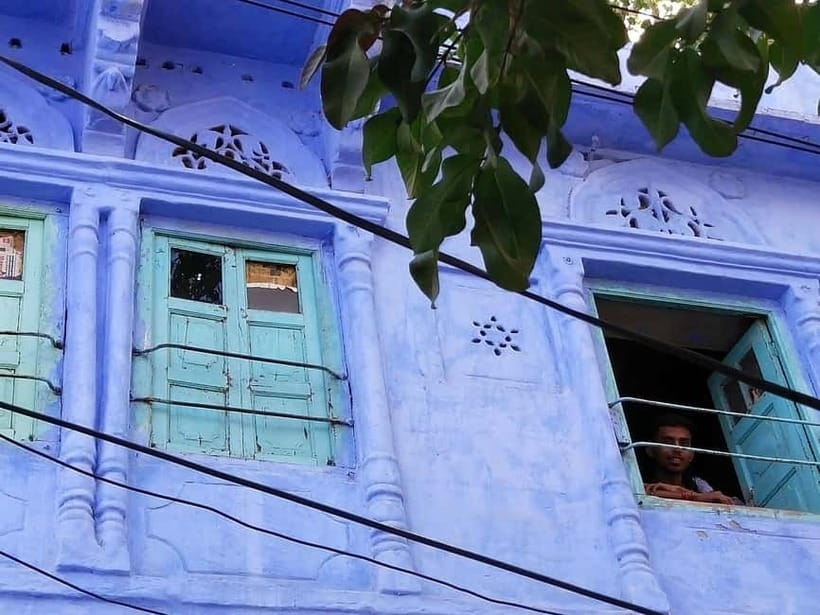
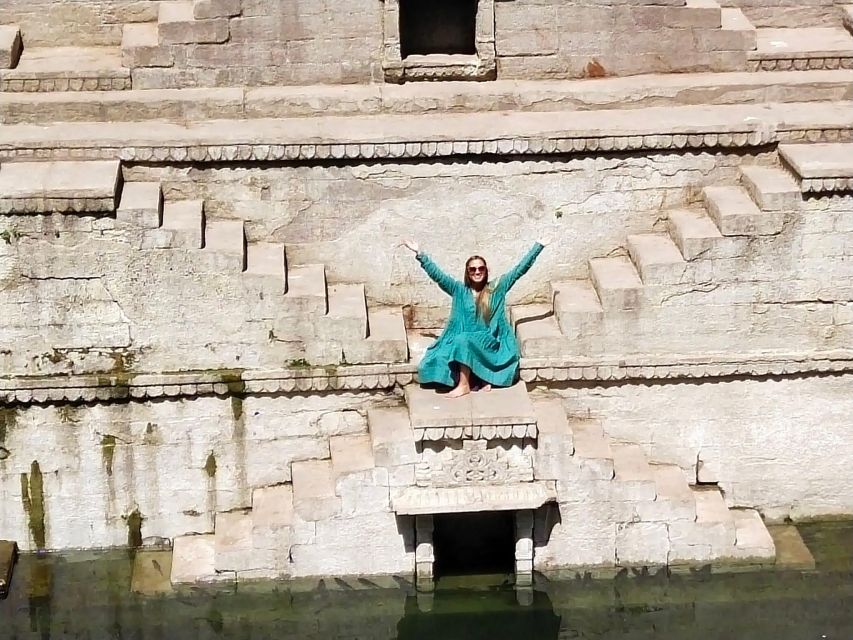
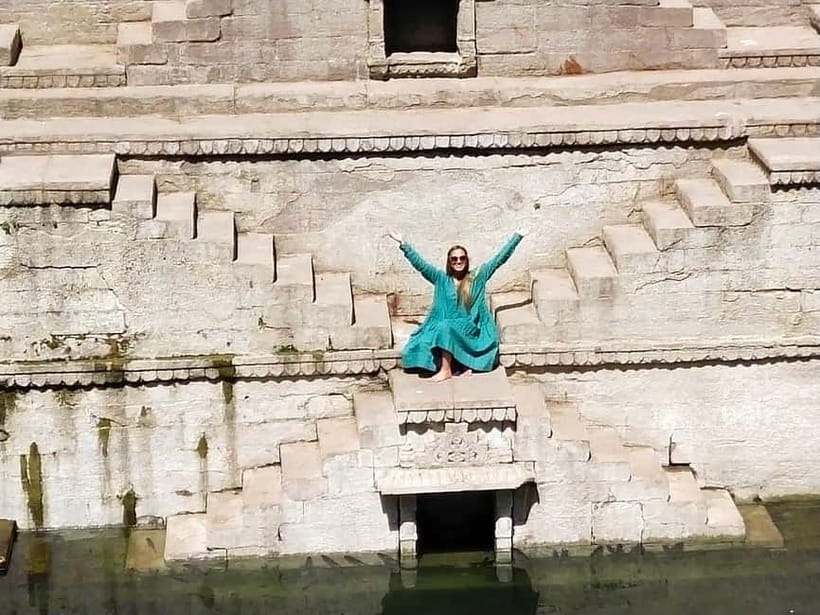
The highlight stop for many people is Toor ji ka Zhaalra. A stepwell isn’t just an interesting structure; it’s proof of how communities planned for scarcity. You’ll get context for why this kind of water-harvesting system mattered and how it connects to daily needs.
What I like about this kind of stop is that it changes how you look at the city. Instead of only seeing blue walls and temples, you start seeing the infrastructure beneath the aesthetics. Water management becomes a theme that runs through the rest of the tour.
Also, because you’re walking and stopping on narrow street edges, a stepwell visit tends to feel close-up rather than rushed. You can pause, look around, and take photos without feeling like you’re being herded through a single frame.
Water Bodies: Raniser, Padmaser, and Jeta Bera
Beyond the stepwell, you’ll also visit water bodies tied to historic water use—Raniser, Padmaser, and Jeta Bera. Even if you’re not an architecture nerd, these stops help you understand the city as a system, not a set of separate attractions.
In Rajasthan, water is never a background detail. It affects where people built, how neighborhoods grew, and what kinds of public spaces made sense. Seeing these sites gives you a practical mental model for the region.
You’ll also appreciate the guide’s storytelling more here, because the “why” behind each location becomes clearer. That’s usually when the tour starts to feel like it’s teaching you something you can actually use when you’re out exploring on your own later.



Pachetiya Hill: Changing the View, Changing the Mind
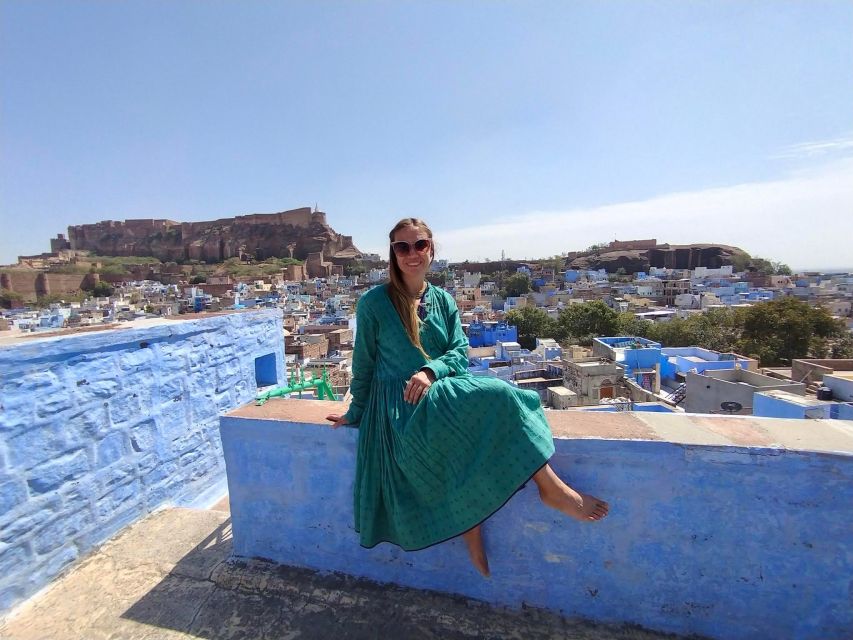
The tour includes a stop at Pachetiya hill, and it plays an important role even if you’re not chasing panoramic photos. Hill stops typically change your perspective, which helps you understand how the old city fits into the wider geography.
Think of it as a reset for your senses. After lanes and door-level details, you get a moment where the city layout and sense of place click into focus.
If you’re sensitive to walking or prefer to keep stops frequent, this is also a good place to slow down and catch your breath. The tour is paced to feel manageable, not like a forced march.
Navchokiya Blue Houses: Photography with a Purpose
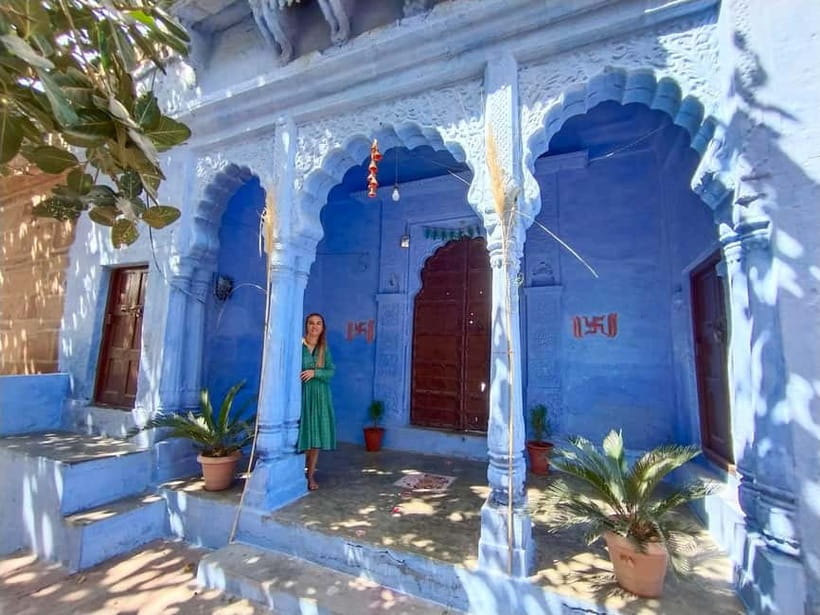
Jodhpur’s famous blue houses are best seen on foot, at street level, not from a distance. The tour takes you through Navchokiya, where the color looks almost theatrical—until you realize it’s part of a real residential neighborhood and not a staged attraction.
What makes this stop valuable is that you’ll learn how to look. It’s not only about snapping a pretty facade; it’s about noticing where the color sits on the architecture, how doorways and window frames catch light, and how the tight street angles make certain views dramatically different from just a few steps away.
Bring your camera habits with you. If you prefer portraits, focus on people and everyday scenes near the homes. If you prefer architecture, lean into textures: paint layers, carved details, and the contrast between blue surfaces and the surrounding stone and street wear.
One more practical tip: plan to take photos and still be respectful. This is a neighborhood, not a theme park, so keep your movement careful and your questions polite.
Temples and Morning Rituals: Culture You Can Read
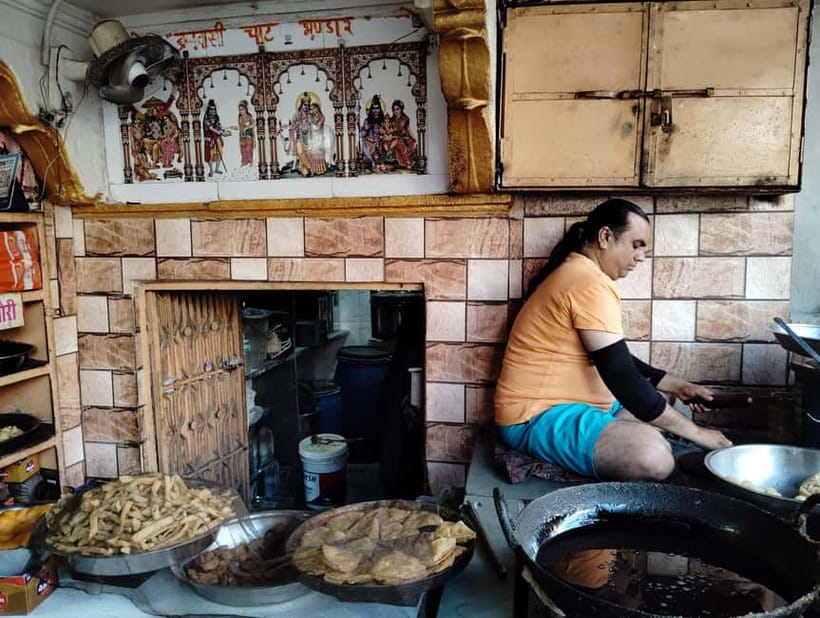
The tour includes a temple visit, and it also helps you understand early-day worship routines. Even when you’re not watching a full ritual sequence, you can pick up what temples mean to local life—how they’re tied to time, devotion, and community rhythms.
I like this part because it softens the “photo tour” vibe. When the guide explains what you’re seeing—simple rules, shared spaces, and why certain areas matter—you stop treating religious sites like backdrops and start treating them like living centers.
Dress matters here. You’ll want comfortable, respectful clothing for a place of worship, and the tour’s general clothing rules help keep things appropriate.
Juni Dhan Mandi: The Old Grain Market Feeling
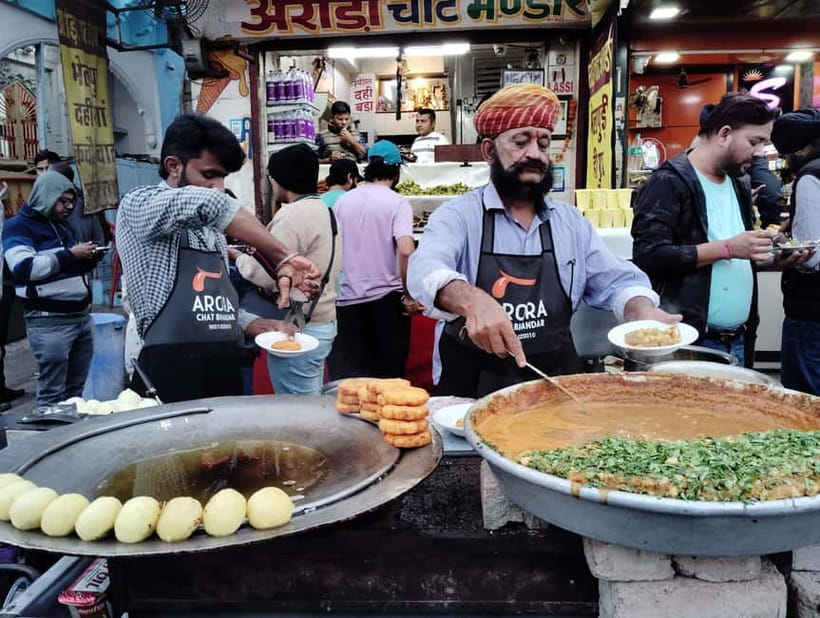
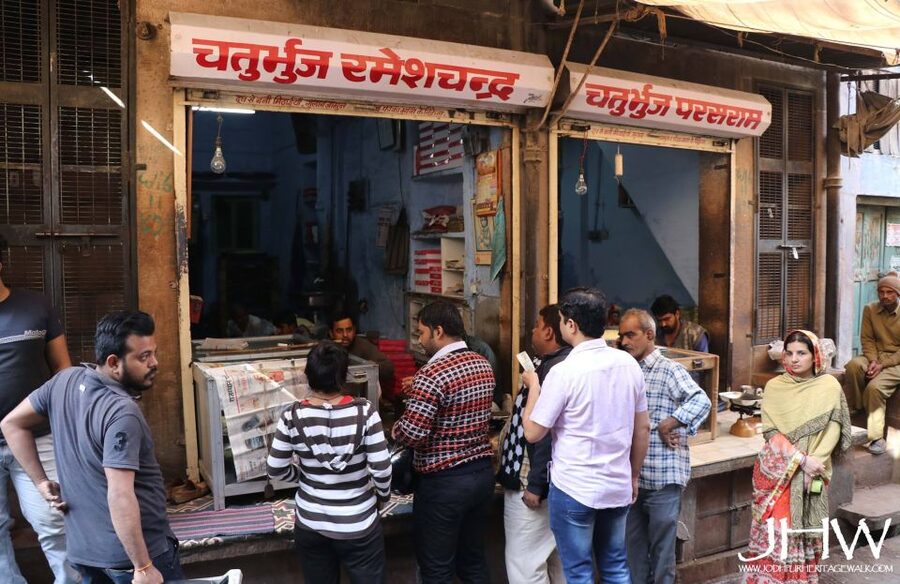
You’ll also visit Juni Dhan mandi, an old grain market. Markets like this are where history shows up in commerce, not just in buildings. The idea is to see how the economy of everyday needs worked—and still works—in the old city.
Even if your stomach is thinking about snacks, your brain will appreciate the market stop. It gives context for why narrow lanes are full of motion and why certain corners become gathering points. You’ll understand how people travel with goods, how vendors organize space, and what makes these streets so functional.
And yes, snacks are part of the fun. Local eateries are included only as a chance to try them on your own (direct payment). That’s a good setup: you control what you eat, so you’re not stuck with something you don’t like.
Guide Power: Prabhat’s Local Connections and Care
A tour rises or falls on the guide, and this one has strong guide energy. In the real-world experience of past participants, Prabhat stood out for being patient and attentive—especially when schedules slip. One solo traveler appreciated how he handled safety with practical actions like arranging a ride and checking in afterward.
That kind of care isn’t fluff. Walking through old city lanes can be confusing fast. A good guide helps you keep your bearings, explains what you’re seeing, and gives you a sense of where you are and what comes next.
Language support is also a plus. The tour runs in English and Hindi, and at least one guest experienced a guide with strong French as well. If you like asking questions, you’ll likely get answers that go beyond a one-line description.
If you’re hoping for a tour that feels tailored—slowing down when you’re curious or steering you toward what interests you—this is a strong fit.
What to Pack (and What to Leave Behind)
This walk is straightforward, but it helps to prep like you’re spending real time in neighborhoods.
Bring:
- Comfortable shoes
- Water
- Comfortable clothes for walking and temple areas
- Hand sanitizer or tissues
Leave behind:
- High-heeled shoes
- Oversize luggage and large bags
- Baby strollers and baby carriages
- Alcohol and drugs
- Nudity or see-through clothing
One small warning from real experience: expect flies at some points. That doesn’t ruin the tour, but it does mean you should be ready with calm reactions and quick swats instead of getting frustrated.
Also, the walk ends back at the meeting point, so you don’t need to reorganize your evening logistics mid-route.
Who Should Book This Jodhpur Heritage Walking Tour?
Book it if you want:
- A guided walking tour that focuses on the old city’s structure—blue houses, waterworks, temples, and market life.
- A more personal way to explore than wandering alone through confusing lanes.
- Strong storytelling and a guide who can adjust to what you want to see.
Skip it if:
- You need wheelchair-friendly access or have mobility limitations that make uneven, narrow streets hard to manage.
- You’re looking for a bus-style highlights loop with minimal walking.
This is also a good pick for solo travelers who want extra safety and direction. The best moments tend to come when you can ask questions, talk to people, and feel like you’re moving through daily life rather than past it.
Should You Book the Jodhpur Heritage Walk?
Yes, if you’re excited by everyday heritage—water engineering, old markets, temples, and the blue-house lanes where the city reveals itself at street level. The $18 price feels fair because it includes a licensed guide and multiple meaningful stops, not just a vague walk.
Think twice if walking through narrow lanes is an issue for you. Also, bring insect tolerance. This isn’t the kind of tour where you hide in air-conditioning; it’s the real city, and the city can come with its own small annoyances.
If your goal is to understand Jodhpur beyond postcard images, this tour is a smart way to get that understanding fast.
FAQ
Where do we meet for the Jodhpur Heritage Walking Tour?
You start just under the Clock Tower. The walk also ends back at the meeting point.
How much does the tour cost?
The price is $18 per person.
What’s included in the tour?
It includes a licensed tour guide and visits to the Clock Tower, Toor ji ka Zhaalra (step-well), Pachetiya hill, Navchokiya (Blue Houses), a temple, water bodies (Raniser/Padmaser/Jeta Bera), and Juni Dhan mandi (old grain market). Local eateries are available but paid directly by you.
What languages are available?
The tour is offered in English and Hindi.
What should I bring?
Bring comfortable shoes, water, comfortable clothes, and hand sanitizer or tissues.
What footwear or luggage is not allowed?
You can’t wear high-heeled shoes, and you should not bring oversize luggage or large bags. Baby strollers and baby carriages are also not allowed.
Is the tour suitable for wheelchair users or mobility impairments?
No. It is not suitable for people with mobility impairments and not suitable for wheelchair users.
What is the cancellation policy?
Cancellation is allowed up to 24 hours in advance for a full refund.