REVIEW · JAIPUR
Jaipur Heritage Evening Walk – The Twilight Magic of Pink City
Book on Viator →Operated by LE TOUR DE INDIA · Bookable on Viator
Jaipur at dusk has a special kind of magic. This evening heritage walk strings together the Pink City sights you’d miss in daylight—lit gates, glowing lanes, and a route that keeps you moving in the right direction.
It runs as a small-group stroll timed for the shift from late afternoon into night, so you get photos and atmosphere without the stress of navigating alone.
What I like most is the food-and-drink focus built into the pacing. You’ll get snacks plus bottled water and hot drinks/tea, and the walk naturally lands you in areas made for eating, shopping, and watching daily life happen after dark.
I also like how the “guide talk” isn’t just facts on a screen—your local explorer shares religious history, mythology, and lifestyle in a way that makes the monuments feel personal, not distant.
One consideration: this is a night walking tour, and it can be a bit long on feet. A review noted it works better for grown-ups than for kids around age 10, so if you’re traveling with younger kids, plan carefully, and always consider how they handle evening crowds and walking.
In This Review
- Key highlights to expect on this Jaipur night walk
- A 4:00 PM start that turns landmarks into evening scenes
- Ajmeri Gate to the Pink City lanes: artisans at work, not just photos
- Kishanpole Road at dusk: where temples and streets glow
- Tripolia Gate and local markets: shopping where people actually shop
- Hawa Mahal rooftop tea: palace views with a calmer pace
- Johri Bazaar food exploration: eating in the narrow lanes
- Albert Hall Museum finish: the night lights linger
- What the guide adds: stories, mythology, and real-life context
- Price and value: what $35 buys you in the old city
- Who this Jaipur night walk is best for
- Should you book the Jaipur Heritage Evening Walk?
- FAQ
- How long is the Jaipur Heritage Evening Walk?
- What time does the tour start?
- Where do I meet, and where does the tour end?
- What does the tour cost?
- What’s included in the ticket price?
- What’s not included?
- Is the rickshaw ride included?
- How many people are in the group?
- Is the tour suitable for children?
- What if the weather is bad?
Key highlights to expect on this Jaipur night walk
- Ajmeri Gate kickoff at golden hour: Start right as the light changes, so the old city feels different within minutes.
- Artisan’s Lanes in the Pink City: See crafts made for centuries and watch makers at work in narrow lanes.
- Kishanpole Road lighting at dusk: Temples and historic entrances take on a warm glow as evening settles in.
- Tripolia Gate market time: Spend a real block of time looking at clothing and wedding-leaning accessories in the local shopping flow.
- Hawa Mahal rooftop tea break: Pause for a drink with palace views that look better after dark.
- Johri Bazaar food exploration + battery rickshaw: End with an eating-focused lane walk, then enjoy city lights with a slower battery rickshaw ride.
A 4:00 PM start that turns landmarks into evening scenes
The tour begins at 4:00 PM, when Jaipur is shifting from daytime heat to night energy. That timing matters. Too early and you miss the lights; too late and shops thin out and the route can feel more hectic than scenic.
You’ll start at Le Tour De India (14-B, near Mirza Ismail Road, Panch Batti, Jayanti Market). The end point is Albert Hall Museum at Ram Niwas Garden. The route is designed as a guided loop through the old city, with you not having to figure out streets on your own.
It’s also capped at up to 10 travelers, which makes a real difference. In a larger group, night tours turn into a slow-moving line. With a smaller size, you can actually pause for photos and listen without constantly playing catch-up.
You can also read our reviews of more tours and experiences in Jaipur.



Ajmeri Gate to the Pink City lanes: artisans at work, not just photos
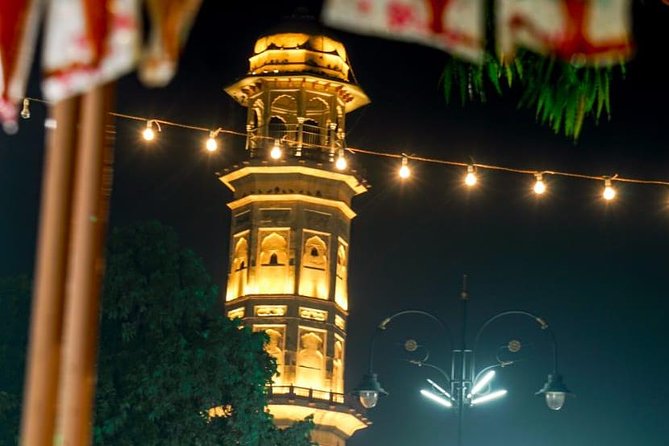
You begin at Ajmeri Gate, where the evening adventure starts with a quick orientation. That helps you get oriented fast—especially in a city where lanes can turn into tiny alleys without much warning.
Then you head into the old city toward Pink City artisan lanes. This is one of the best parts because it’s not only sight-seeing. You’re meant to notice how skilled crafts show up in everyday life—hands at work, tools in motion, and details you won’t catch from a moving car.
If you like travel that’s sensory and hands-on, this stop is built for you. People often remember craft areas because you see the process, not just the result. And since this tour includes a local explorer who can explain what you’re seeing, you’re not just walking past impressive work—you’re hearing the why behind it.
A small heads-up: craft lanes are narrow. You’ll be moving at walking speed, and it helps to keep your pace relaxed so you don’t feel rushed through the best visual bits.
Kishanpole Road at dusk: where temples and streets glow
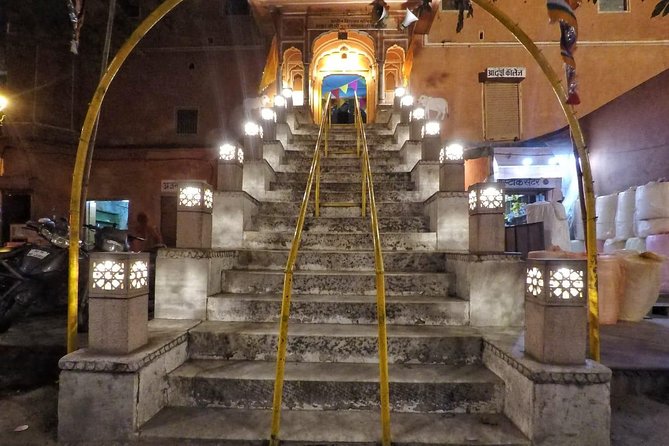
Around 5:30 PM, the route reaches Kishanpole Bazar Road, timed for dusk lighting. This stretch is all about atmosphere. As daylight fades, the warm yellow lighting hits temples, windows, gazebos, and historic entrances, turning the facades into a kind of living stage set.
This is the moment when the tour stops feeling like a checklist. You start noticing small things: how the same stone and arches look totally different once shadows lengthen; how courtyards and doorways feel more intimate after dark.
You also get a half-hour block here, which is just enough time to enjoy the glow and take photos without turning the whole tour into a standstill. If you’re the type who likes to stop, look up, and soak it in for a minute, you’ll appreciate that the pacing includes micro-pauses like this.
Tripolia Gate and local markets: shopping where people actually shop
At 6:00 PM, the tour moves to Tripolia Gate for local markets and cultural experiences. This is a “watch what’s for sale” stop, not a formal market tour. You’ll see Indian sarees, wedding attire, and sparkling accessories—exactly the kind of items that carry social meaning in Indian weddings and celebrations.
This part of the evening is also about how Jaipur works. Markets at night feel different than markets at midday. You’ll likely see more informal browsing, more quick conversations, and more of that everyday motion that makes a city feel real.
One practical note: markets mean crowds. They can be dense in narrow lanes, so keep your group close. Since you’re in a small group, the guide can manage the flow, but it still helps to be comfortable with close quarters.
If you want to buy something, this stop gives you the time window to compare what you like. If you’re not shopping, you still get value out of it—markets teach you how people present color, tradition, and celebration in daily life.
Hawa Mahal rooftop tea: palace views with a calmer pace
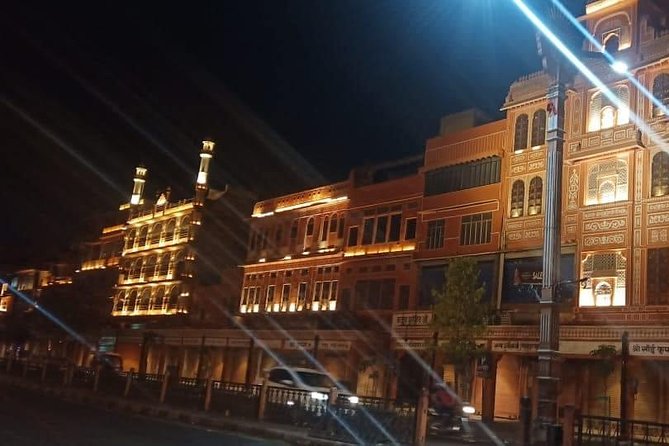
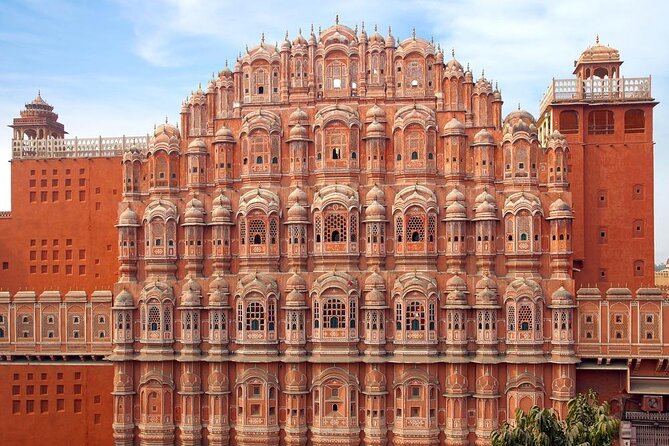
Around 6:30 PM, you reach Hawa Mahal (Palace of Wind) for a rooftop tea break. This is the tour’s “slow down and enjoy the view” moment.
Daytime Hawa Mahal is stunning, but evening light changes everything. Pink-tinted walls and illuminated palace details can look almost theatrical from the right angle. That’s why a tea pause works so well here: it turns the viewpoint into an experience rather than a quick photo stop.
You’ll get hot drinks (included), so you don’t feel like you’re waiting around in the cold. This also gives your feet a break before the food-focused part of the evening.
If you love architecture, keep your eyes moving here. Rooftops and elevated viewpoints make it easier to appreciate scale—how the facade patterns repeat and how the palace fits into the larger old-city grid.




Johri Bazaar food exploration: eating in the narrow lanes
At 6:45 PM, the tour heads into Johri Bazaar for culinary exploration. This is the stop built for food lovers. The route targets narrow lanes where smaller local eateries operate close together, letting you smell the cooking and see the daily rhythm of ordering and serving.
This is also where the tour’s snacks and drinks inclusion pays off. By the time you reach the food lane, you’re not just “tasting on an empty stomach.” You’ll be set up for the kind of eating you actually remember: warm bites, quick conversations, and the feeling that you’re sampling local routine rather than tourist-only dishes.
One thing to expect: food stops in old markets can involve some waiting and short transitions between vendors. It’s normal for a guided food moment to move in little segments rather than one big sit-down meal.
If you’re picky about trying new things, tell your guide what you do and don’t want. Tour leaders often adjust on the fly to keep the experience enjoyable for the whole group.
Albert Hall Museum finish: the night lights linger
The tour concludes at Albert Hall Museum at Ram Niwas Garden. The ending is timed for changing lighting and a “see it while it’s shifting” feeling. This museum area tends to look especially good after dark because the lighting creates depth around the building’s forms.
You’re finishing here, not necessarily getting a long indoor museum visit. So if you want extra time inside the museum itself, you’ll likely need to plan that separately before or after the walk.
The bright side: the ending doesn’t feel abrupt. By the time you reach Albert Hall, you’ve already gone through gates, artisans’ lanes, markets, and food. Finishing with a landmark that looks good at night gives you a clean wrap-up point.
What the guide adds: stories, mythology, and real-life context
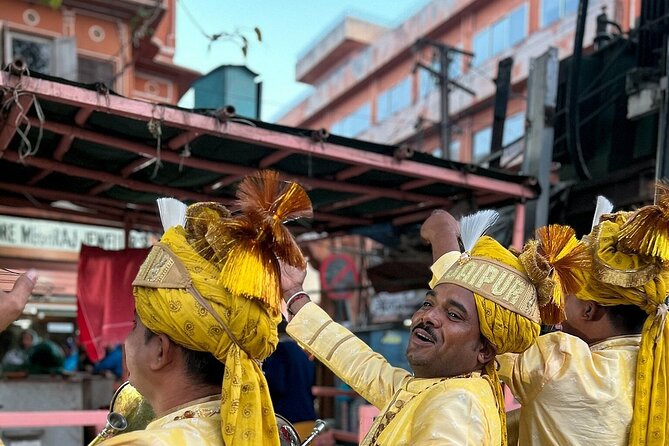
A tour like this lives or dies on the guide. Here, your explorer shares religious history, mythology, and lifestyle of Jaipur, with the aim of helping monuments connect to human life.
That’s exactly why guide names show up in so many memories. People have mentioned guides like Rajov, Archit, Himmad, and Archie for being strong at pacing and explanation. When a guide builds rapport and connects what you see to what it means, Jaipur’s old city feels less like scenery and more like a living place.
You might also notice hands-on energy in the artisan area. One review highlighted that there can be a chance to participate in creating something with the artisans. Even when it’s not fully hands-on, watching craftspeople work side-by-side still beats browsing a shop after the fact.
If you want the most value, ask questions early. Ask what the symbols mean, what role a craft plays, or how a religious feature shows up in daily life. A night tour is short—your guide is there for you right now, not later.
Price and value: what $35 buys you in the old city
The price is $35.00 per person, and the tour typically runs about 3 to 4 hours. For a guided night walk in Jaipur’s old city, that’s a solid value when you look at the whole package:
- Snacks, bottled water, and hot drinks/tea are included.
- You get a local explorer and guided movement through multiple key areas.
- Private transportation is included, plus the itinerary uses a battery-operated rickshaw to cover distance inside the old-city section.
What you’re really paying for is time and guidance. Night navigation is where free DIY plans often go sideways. You can easily waste energy finding the next street or missing the best lighting windows. Here, the route is timed so you see the city at the hour when it looks best.
One caution on value: if you’re the type who needs lots of downtime or long museum stops, this tour’s format may feel a bit full. It’s a “see and do” walk, not a sit-back evening.
Who this Jaipur night walk is best for
This tour fits travelers who like three things:
- walking and small-group pace
- food as part of culture, not just a side activity
- architecture and crafts explained in plain, human terms
It also sounds like a great fit for people who want safer navigation. The tour is designed to keep you moving in the right direction, so you’re not constantly checking maps while trying to enjoy the city.
It may be less ideal for kids if they’re younger and not into night walking. One review specifically suggested it’s better suited for grown-ups rather than children around age 10. If you’re traveling with children, think about stamina, attention span, and how they handle evening crowds.
Should you book the Jaipur Heritage Evening Walk?
I’d book this tour if you want a first taste of Jaipur after dark with the work of local artisans, market culture, and food lanes all tied together. The timing around 4:00 PM, the dusk lighting stops, and the tea break at Hawa Mahal make it feel like a designed route rather than random wandering.
I’d skip it or replace it with a different plan if you want a long indoor museum visit or you know your group doesn’t handle night crowds or walking well. And if weather looks questionable, know that the experience requires good conditions—if it gets canceled for weather, you should expect a reschedule or refund.
If you book, do two things: come hungry enough for the food stop, and ask your guide questions—especially during the artisan and religious-history moments. That’s where this walk turns into something you’ll remember.
FAQ
How long is the Jaipur Heritage Evening Walk?
The tour lasts about 3 to 4 hours.
What time does the tour start?
It starts at 4:00 PM.
Where do I meet, and where does the tour end?
You meet at Le Tour De India (14-B, near Mirza Ismail Road, Panch Batti, Jayanti Market, New Colony, Jaipur). The tour ends at Albert Hall Museum, Ram Niwas Garden, Ashok Nagar, Jaipur.
What does the tour cost?
The price is $35.00 per person.
What’s included in the ticket price?
Included items are snacks, bottled water, coffee and/or tea, and private transportation, plus a battery-operated rickshaw ride to cover maximum old-city distance. A local explorer shares religious history, mythology, and lifestyle.
What’s not included?
Transfers from your hotel to the start point and from the endpoint are not included.
Is the rickshaw ride included?
Yes. The tour includes a battery-operated rickshaw ride as part of covering the old city distance.
How many people are in the group?
The maximum group size is 10 travelers.
Is the tour suitable for children?
Most travelers can participate, but one review noted it may work better for grown-ups and suggested it is not ideal for children around age 10.
What if the weather is bad?
The tour requires good weather. If it’s canceled due to poor weather, you’ll be offered a different date or a full refund.