REVIEW · JODHPUR
Heritage walk blue city
Book on Viator →Operated by India Uncharted · Bookable on Viator
Jodhpur’s blue lanes feel like a storybook. This Heritage walk Blue City strolls through the old-town areas where blue paint carries meaning, not just decoration, and you see it best on foot. You’ll follow a route that mixes viewpoints, historic water architecture, and everyday bazaar streets.
I love how the walk builds from a quiet start to big sight lines, especially the 360-degree panorama from Pachetia Hill. I also love the inclusion of Toorji Ka Jhalra, a step well that connects you to royal-era city life in a way you don’t get from quick sightseeing stops.
One thing to keep in mind: Jodhpur’s “Blue City” look isn’t uniformly blue anymore. On some days you may find only a few especially photogenic patches of blue, so I’d go with the mindset of exploring the neighborhood texture, not chasing perfect blue house photos. And since the tour requires good weather, plan for a day that’s dry and clear.
In This Review
- Key things that make this walk worth your time
- Jodhpur’s Blue City: the color has a backstory
- The route: from Wilburys Café to the Clock Tower area
- Stop 1: Ranisar Padamsar Lakes (Rani Sagar) by Mehrangarh
- Stop 2: Pachetia Hill for a true 360° look at the Blue City
- Stop 3: Ghanta Ghar and the alleys near Sardar Market
- Stop 4: Toorji Ka Jhalra, the step well from Maharaja Abhai Singh Rathore
- Price and value: what $15 gets you in real terms
- Best day, best mindset: when this Blue City walk lands
- What kind of guide experience to expect
- Is it worth booking? My straight answer
- FAQ
- How long is the Heritage Walk Blue City?
- How much does it cost?
- Is pickup available?
- Do I need a paper ticket?
- Is this tour private?
- What are the main stops on the walk?
- Which stops include admission tickets?
- Where does the tour start?
- Where does the tour end?
- What happens if weather is poor?
Key things that make this walk worth your time
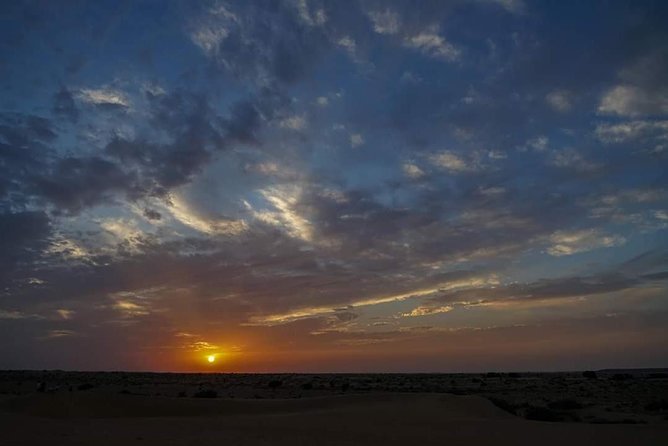
- Mehrangarh’s Rani Sagar lakes area: a calm, meaningful start tied to the older parts of Jodhpur
- Pachetia Hill 360° views: citywide perspectives that help you understand the layout fast
- Ghanta Ghar + Sardar Market lanes: you get the look and feel of daily trade, not just monuments
- Toorji Ka Jhalra step well: built during Maharaja Abhai Singh Rathore’s reign
- A private group format: your group moves together through the old lanes at a human pace
Jodhpur’s Blue City: the color has a backstory
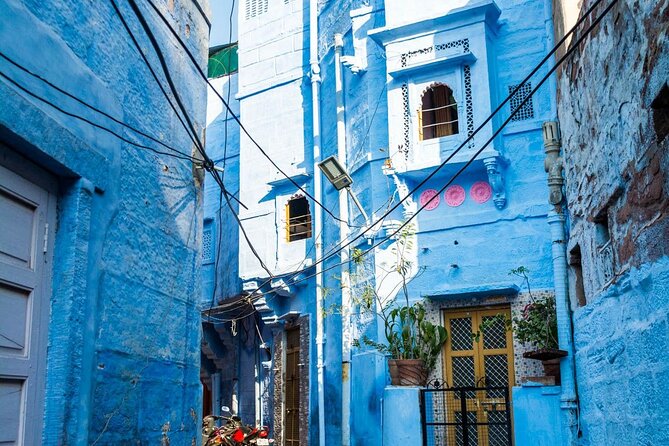
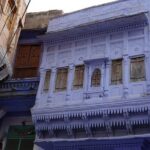
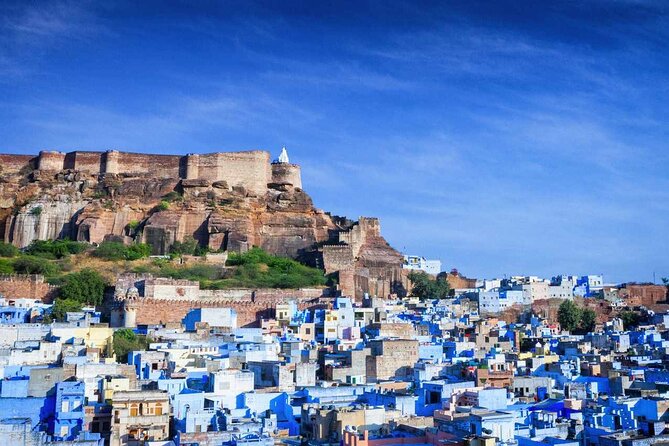
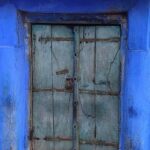
Jodhpur earns the name Blue City because so many homes, havelis, temples, and older buildings in parts of town have been painted in shades of blue. The story you’ll hear on this kind of heritage walk is that the color helped distinguish homes associated with the Brahmin caste. Whether you treat that explanation as history or local tradition, it gives the paint a purpose—and once you know that, you start noticing details you would normally skip.
The other big idea is how the old town works: narrow lanes, winding turns, and walls that shape what you see. From street level, Jodhpur can feel like a maze. That’s why this walk is effective. Instead of trying to “cover everything” by car, you move slow enough to spot the patterns—doorways, stairways, temple edges, and those blue-painted surfaces that still anchor the neighborhoods.
You can also read our reviews of more tours and experiences in Jodhpur.

The route: from Wilburys Café to the Clock Tower area
This tour starts at Wilburys Café and restaurants in Adgaron ka mohalla, Killi Khana, Gulab Sagar, Jodhpur (Rajasthan 342001). It ends on Clock Tower Road, near Shahi samosa. If you like tours that leave you near a place you can keep exploring after, this finish is convenient because the clock tower area is a natural hub.
Pickup is offered, and you’ll also get a mobile ticket. That matters because the start point is in the old-city web of streets—having a guide handle navigation saves time and hassle. The format is private, so it’s only your group, not a rotating crowd. For a heritage walk, that usually means a calmer pace and fewer interruptions.
The tour runs about 2 hours 30 minutes, which is a sweet spot. You’re out long enough to see multiple “types” of Jodhpur (water, views, market life, and heritage architecture) but not so long that the day collapses around you.
Stop 1: Ranisar Padamsar Lakes (Rani Sagar) by Mehrangarh
Your first meaningful stop is Ranisar Padamsar Lakes, described as Rani Sagar—a manmade lake in the quarry of Mehrangarh. It’s in Brahmapuri, the older part of Jodhpur. Even if you don’t know Mehrangarh by name, you’ll feel the connection: the landscape here is shaped by rock and quarry space, and the water element makes the whole area feel less dry and more grounded.
This is also a good “warm-up” stop. You’re only there for about 30 minutes, and it sets a historical mood before you head into hill views and market lanes. You’ll get a sense of how the city’s geography and water sources relate to the fortress presence nearby.
What to watch for: don’t rush photos here. Take a moment to look around for how the lake sits against the surrounding terrain. That context helps later when you reach Pachetia Hill and see Jodhpur’s layout from above.
Stop 2: Pachetia Hill for a true 360° look at the Blue City
Next comes Pachetia Hill, a hill in the middle of the city with 360-degree views. This stop is free for admission and lasts about 45 minutes, which is just enough time to get your bearings, snap a few photos, and watch the light shift.
This is one of those stops that changes how you understand everything else. When you’re walking through narrow streets, it’s hard to imagine where you are within the larger city. From a high point, you see the neighborhood spread, the rooftops, and the way the hills and city connect. Even if you’re not a “view person,” you’ll probably appreciate the way it helps you stop feeling lost.
Small practical tip: wear something comfortable for short walking and steps. Even if it’s not described as a long climb, hills mean uneven ground. And because the view is the payoff, it’s worth staying a little longer if the sky is clear.
Stop 3: Ghanta Ghar and the alleys near Sardar Market
Ghanta Ghar is your next stop, about 45 minutes, with admission included. The description ties it to the Sardar Market area, with a tower landmark nearby and narrow alleys branching into a bazaar selling goods.
This is where the tour shifts from “sites” to “street life.” You’ll walk those lanes that feel like they fold into each other—exactly the kind of environment that makes a heritage walk more than a photo run. Markets also add atmosphere: you notice the rhythm of the place, the density of activity, and the fact that this is a working city, not a staged set.
One caution: market areas are busy and sometimes noisy, so keep your expectations realistic. If you’re hoping for quiet reflection, this is not that stop. But if you want to see how people live and shop, it’s a strong match.

Stop 4: Toorji Ka Jhalra, the step well from Maharaja Abhai Singh Rathore
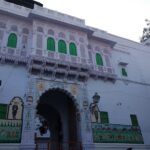
Toorji Ka Jhalra is one of the most intriguing stops on the route: a step well built during the reign of Maharaja Abhai Singh Rathore. Admission is included, and you’ll spend about 30 minutes here.
Step wells are a special category of heritage because they’re functional, not just decorative. You can think of them as architecture designed around water access. Even without a long technical explanation, the design shows how people solved practical problems in the landscape—steps for reaching water, structural geometry for durability, and a built form that turns everyday needs into a civic space.
For me, this stop is the one that gives you emotional contrast. After hill views and market streets, the step well feels slower and more “human-scale.” It’s the kind of place where you start noticing how heritage ties into daily life.
What to look for: notice the layers of steps and how the well is framed. Even if blue paint is the headline theme, water architecture is what makes the walk feel layered.
Price and value: what $15 gets you in real terms
At $15.00 per person for about 2.5 hours, this is priced like a genuine “local walk” rather than a full-day sightseeing product. The real value comes from a few smart inclusions: you get a guide-led route with admission tickets included at multiple stops (Ranisar Padamsar Lakes, Ghanta Ghar, and Toorji Ka Jhalra). Pachetia Hill is free, so you get a mix of paid and free moments without needing to juggle tickets.
It’s also good value because the walk focuses on variety. You’re not repeating the same type of photo stop. You get water scenery first, then panoramic orientation, then market lanes, then heritage water architecture again. That mix makes the time feel efficient.
Also, private group format matters for value. Even if the group is small, moving through old city streets is easier when you’re not packed into a larger tour with constant pace changes.
Best day, best mindset: when this Blue City walk lands
This experience requires good weather. That’s not a random rule—old-city walking and hill viewpoints are much more enjoyable when it’s dry and visibility is good. Clear conditions also help you with the Pachetia Hill 360-degree views.
I’d also plan with a realistic mindset about the blue color. Some areas have changed, and the “Blue City” look may be concentrated into only a few standout spots on certain days. If you go hunting for uniform blue across every street, you might feel slightly underwhelmed. But if you show up ready to experience the city’s texture—lanes, water architecture, market energy, and local explanations—you’ll likely leave with a stronger sense of Jodhpur than you would from a bus-only route.
This walk suits you if you:
- want a human-paced introduction to the old part of Jodhpur
- enjoy learning context behind what you see
- prefer walking routes that end near an easy place to continue exploring
What kind of guide experience to expect
The reviews associated with this kind of tour are consistently positive about guide enthusiasm and city pride. The guides tend to share history and culture in a way that feels connected to how Marwar life works, not just dates and names. There’s also praise for guides who stay polite and smile through the walk—small detail, but it changes the feel of a long street trek.
If you’re someone who likes questions, bring them. With a heritage walk, the best moments usually happen when you ask what a building detail means, or why a stop matters. The format supports that kind of back-and-forth.
Is it worth booking? My straight answer
Yes, you should book this if you want a guided, walkable heritage route that mixes views, water heritage, and market streets in just about 2.5 hours. It’s also a solid choice for first-time Jodhpur visitors because it helps you get oriented quickly from Pachetia Hill and then grounds that orientation with nearby historic spots like Ranisar Padamsar Lakes and Toorji Ka Jhalra.
Skip it if your #1 goal is guaranteed, Instagram-perfect blue walls around every corner. The blue look can be patchy, and this walk is more about understanding the city than chasing uniform color.
If you want a practical “decision rule,” go for it when you have a dry-weather window and you’re happy trading a bit of photo certainty for a better feel for how Jodhpur actually works at street level.
FAQ
How long is the Heritage Walk Blue City?
It runs for approximately 2 hours 30 minutes.
How much does it cost?
The price is $15.00 per person.
Is pickup available?
Yes, pickup is offered.
Do I need a paper ticket?
No, you’ll receive a mobile ticket.
Is this tour private?
Yes. It’s private, meaning only your group participates.
What are the main stops on the walk?
You visit Ranisar Padamsar Lakes (Rani Sagar), Pachetia Hill, Ghanta Ghar near Sardar Market, and Toorji Ka Jhalra (Toorji’s Step Well).
Which stops include admission tickets?
Admission is included for Ranisar Padamsar Lakes, Ghanta Ghar, and Toorji Ka Jhalra. Pachetia Hill is free.
Where does the tour start?
It starts at Wilburys Café and restaurants, Adgaron ka mohalla, Killi Khana, Gulab Sagar, Jodhpur, Rajasthan 342001, India.
Where does the tour end?
It ends on Clock Tower Road (near Shahi samosa).
What happens if weather is poor?
This experience requires good weather. If it’s canceled due to poor weather, you’ll be offered a different date or a full refund.