REVIEW · VARANASI
Explore Varanasi’s heritage
Book on Viator →Operated by The Heritage Walk By Manjeet · Bookable on Viator
Varanasi won’t feel like a postcard after this walk. This private heritage tour is led by Manjeet Sahani, a local whose family has lived in Varanasi for 500 years, so you’re not just checking boxes around the ghats—you’re getting the city’s logic. We start near Dashashwamedh Ghat, then move through Kashi’s layered sacred sites and old-city streets at a human pace.
I love two things most. First, the itinerary connects viewpoints, rituals, and craftsmanship in one loop, from the panoramic overlook at Meer Ghat to the well-known death-ritual focus of Manikarnika Ghat. Second, it’s a private experience with real flexibility: pickup is offered, the tour adjusts to your interests, and even the finishing point can be arranged if it works better for you.
One thing to consider: admission costs are mixed. Some stops include tickets, while others (like Nepali Temple and major temple complexes) don’t, so you’ll want to be prepared for a few extra on-site fees while you’re in the area.
In This Review
- Key things to know before you go
- Why Manjeet’s local roots change the whole feel
- Value for $20.69: what makes this price feel fair
- Meeting at Dashashwamedh Ghat and getting oriented fast
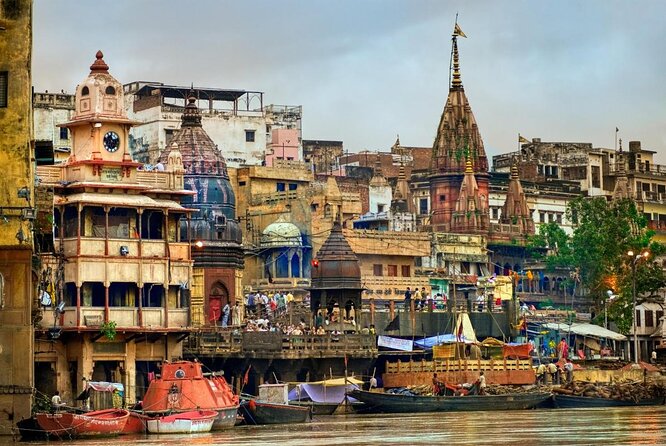
- Stop 1: Dashashwamedh Ghat as your heritage anchor
- Stop 2: Vishalakshi Temple through the old bylanes
- Stop 3: Meer Ghat and the wow-factor of 84 ghats
- Stop 4: Nepali Temple (Kathwala Temple) and teak-wood craftsmanship
- Stop 5: Manikarnika Ghat and the gravity of ritual
- Stop 6: Panchganga Ghat and Mughal-era structure at your side
- Stop 7: Shri Kashi Vishwanath Temple (Golden Temple) and sacred navigation
- Stop 8: Bhans Phatak, Chowk Godowlia and the flower market
- Stop 9: Madanpura and weaving heritage you can see
- Stop 10: Manmandir Ghat and the sages of Kashi
- How the guide handles real-world moments (when Varanasi changes the plan)
- Practical tips that make the walk easier
- Who this tour is best for
- Should you book this heritage walk?
- FAQ
- How long is the tour?
- Is this a private tour?
- Is pickup included?
- Are temple and ghat admission tickets included?
- Where do we meet?
- Can the tour end somewhere other than the start point?
- What happens if the weather is poor?
- What is the cancellation policy?
Key things to know before you go
- Local ownership of the experience: Manjeet doesn’t pass you to another guide, and his family roots shape the story you hear.
- A route built around the ghats: you get sweeping Kashi views from Meer Ghat and a close look at Manikarnika’s role in Hindu death rituals.
- Temple hopping with context: the walk moves through multiple sacred layers, including Kashi Vishwanath and nearby historic structures.
- Private, not crowded: it’s only your group, so you can move at a pace that fits your comfort level.
- Mixed admission tickets: some sites are included, others are not, so plan for a couple of paid entries.
- Weather matters: the experience requires good weather, and you’ll be offered a different date or a full refund if poor conditions cancel it.
Why Manjeet’s local roots change the whole feel
Varanasi can overwhelm fast if you’re only following a route on a map. This tour is different because it’s led by someone who has lived the rhythms of the city for generations. Manjeet Sahani frames what you see as everyday life, not staged sightseeing. That matters in Varanasi, where the ghats are not just scenery—they are part of how people worship, mourn, and mark time.
You’ll also notice the pacing. The tour is built for a walking rhythm over about 2 to 4 hours, not a sprint to “hit everything.” The guide has room to tailor the order based on what you care about most as you go.
And the private setup is practical. You’re not squeezed into a larger group, and that makes a big difference when you’re navigating temples, bylanes, and crowded areas around the river.
You can also read our reviews of more tours and experiences in Varanasi.

Value for $20.69: what makes this price feel fair
At $20.69 per person, this is one of those tours that works because it’s not trying to monetize extras. You’re paying for a person to guide you through the city’s key heritage sites, and you’re getting a private experience with pickup offered and a mobile ticket.
What you really get for the price is time well used. Instead of wandering between sites and trying to guess which door to use or what to look for, you’re moving with a plan and a translator-for-life mindset. The itinerary also includes several admission tickets (like Vishalakshi Temple, Meer Ghat, and Manikarnika Ghat), which helps offset any extra you might pay at the stops that aren’t included.
One more value point: finishing is flexible. The tour ends at the same general meeting area, but the guide notes it can be adjusted if it helps your day. That flexibility is worth something in a city where crossing from the ghats back to your hotel can be time-consuming.
Meeting at Dashashwamedh Ghat and getting oriented fast
You meet near Dashashwamedh Ghat Rd, in the Ghats of Varanasi area around Godowlia. The start and end point are listed as the same place, but the guide keeps it practical by saying the finishing spot can be changed if you want.
This matters because first impressions in Varanasi are real. If you start near the Dashashwamedh area, you’re immediately in the part of the city that sets the tone: river life, old-street energy, and the constant presence of religion in public space.
The tour runs most of the day (it’s open 12:00 AM to 11:30 PM in the listed hours). That’s useful if you’re trying to dodge the worst crowds or match the timing of your own schedule. The key catch is weather: good weather is required. If it’s not good, the operator will offer a different date or a full refund.
Stop 1: Dashashwamedh Ghat as your heritage anchor
The walk begins at Dashashwamegh ghat, with the tour set up as a heritage overview through Manjeet’s family roots. Think of this as your orientation stop—the one that helps you understand why the route matters before you start collecting details.
In practice, this early positioning helps you read everything that follows. When you know what you’re seeing on the ghats and why the riverfront is central to Kashi life, the later temples and viewpoints make more sense.
Stop 2: Vishalakshi Temple through the old bylanes
Next up is Vishalakshi Temple. You’ll walk through the bylanes of old Kashi town to reach it, so the tour isn’t only about landmarks. It’s also about how you get there—on foot, through streets that feel like they belong to the city, not to tourists.
Admission here is included, so you can focus on the experience instead of juggling ticket costs at the start of the day. It’s also a shorter stop (listed around 10 minutes), which keeps the flow moving. That’s a good thing on a heritage route: you don’t want to get stuck in one place when the story is spread out.


Stop 3: Meer Ghat and the wow-factor of 84 ghats
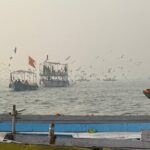
At Meer Ghat, you’re treated to a panoramic view of all the 84 ghats of Kashi. This is the big-sweep visual moment on the route. Even if you don’t catch every single detail, you’ll understand the scale: Varanasi’s riverfront isn’t one ghat—it’s a whole system.
Admission is included here too. The practical benefit is that the guide can spend more time helping you interpret what you’re seeing, rather than you spending it figuring out entry rules.
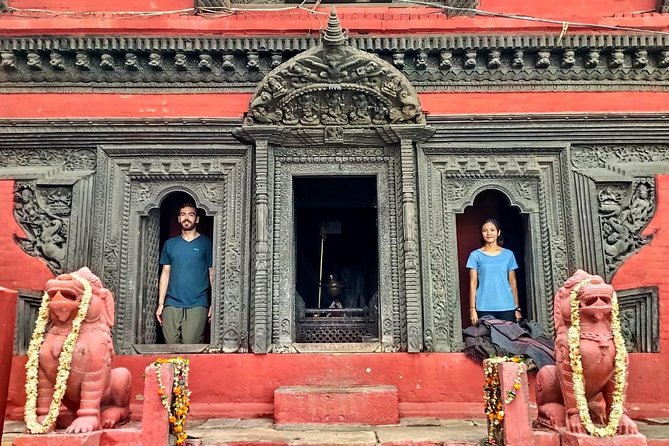
Stop 4: Nepali Temple (Kathwala Temple) and teak-wood craftsmanship
Then you head to Nepali Temple (Kathwala Temple), built by the King of Nepal using only teak wood. The standout feature is the intricate erotic and historical carvings.
Admission is not included at this stop, so you may want to budget a little extra if you’re planning carefully. Still, for many people, this is the most unusual artistic stop on the route—because the carvings are not just decoration. They’re part of the temple’s long cultural story, tied to Nepalese involvement and the materials used.
If you prefer a tour that stays mostly on the main sacred circuits, this stop may feel more artsy and specific than you expect. But that’s also why it’s a nice contrast after the broader riverfront views.
Stop 5: Manikarnika Ghat and the gravity of ritual
At Manikarnika Ghat, you come to the main ghat associated with Hindu death rituals for thousands of years. This is the emotional weight of the itinerary. No matter how prepared you think you are, this stop tends to slow you down, because it’s directly tied to remembrance and the sacred handling of death.
Admission is included. The value here is not the ticket—it’s the guided framing. Without context, people often stare awkwardly or miss the meaning of what they’re seeing. With a local guide, you’re more likely to understand the difference between viewing and participating in observation.
If you’re sensitive to religious ritual around death, take your time here. You don’t need to push through fast to keep the schedule.
Stop 6: Panchganga Ghat and Mughal-era structure at your side
Next is Panchganga Ghat, paired with a visit to the Alamgir mosque built in the Mughal era. This stop adds a different historical layer: not only temple traditions, but also a visible Islamic architectural presence tied to a much later period.
Admission is not included here. But the pairing—ghat space plus an identifiable historic mosque—helps show Varanasi as a crossroads rather than one monolithic religious site.
This is also one of the better stops if you like seeing how different eras sit next to each other in the same neighborhood.
Stop 7: Shri Kashi Vishwanath Temple (Golden Temple) and sacred navigation
The tour then reaches Shri Kashi Vishwanath Temple (Golden Temple), described as one of the most sacred Hindu temples. Admission is not included here.
What makes this stop worth a private guide is practical movement inside complex sacred spaces. In real life, it can be easy to lose time at entrances or miss the right access. A strong guiding highlight from past experiences is that Manjeet helps people get to the right gates within the temple complex, and then points out key places to see once you’re inside.
One caution: since this stop isn’t ticket-included, you should expect a little extra cost and time depending on how the temple complex is running at the moment you arrive.
Stop 8: Bhans Phatak, Chowk Godowlia and the flower market
Then you shift from temples back to everyday sensory city life at Bhans Phatak, Chowk Godowlia, known for its famous flower market. This stop is quick (about 10 minutes) and admission is free.
I like this kind of change of pace. After major sacred stops, a market moment helps you see how worship becomes supply: flowers, daily trade, and the practical side of devotion. It also gives you a short reset for your senses.
Stop 9: Madanpura and weaving heritage you can see
At Madanpura, you visit an artisans market linked to a centuries-old weaving industry. This stop is longer (around 30 minutes) and admission is free.
This is where the tour helps you understand Varanasi beyond sacred architecture. Craft and textile production are part of how the city endures. If you’re the type of traveler who likes to connect culture to livelihoods, you’ll probably enjoy this more than you expect.
Stop 10: Manmandir Ghat and the sages of Kashi
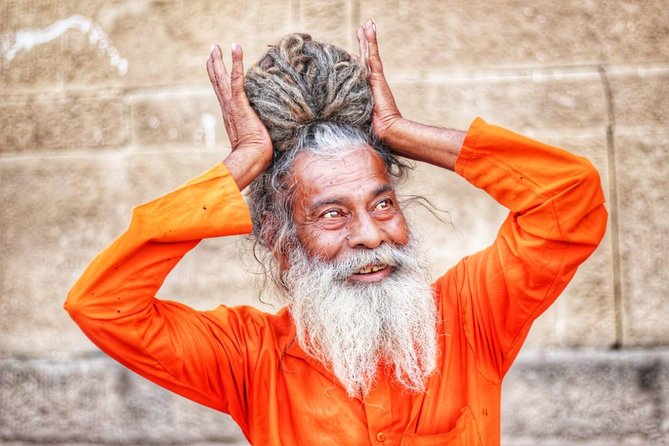
You finish at Manmandir Ghat, with time to see the sages of Kashi. This is another brief stop (about 10 minutes), and it’s free.
Ending on a ghats note feels right. It brings the story full circle: you start at Dashashwamedh, spend time seeing how ghats operate as more than scenic viewpoints, and then wrap with a place tied to spiritual tradition.
How the guide handles real-world moments (when Varanasi changes the plan)
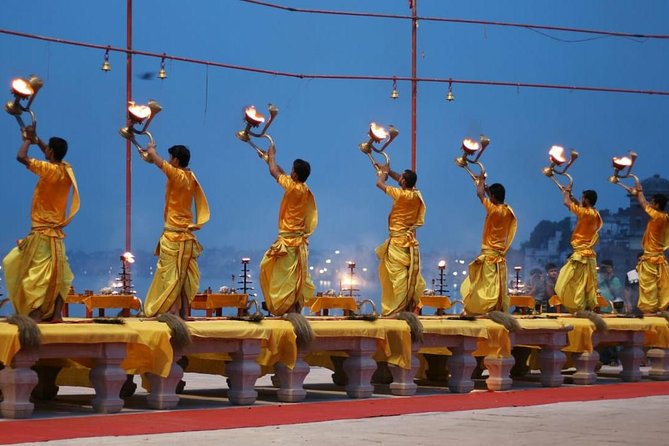
Varanasi is weather-sensitive. A known challenge is that rain can disrupt normal daily routines. In one set of experiences, Manjeet helped adapt when heavy rains left the ghats underwater and the daily Aarti ceremony was suspended—he secured front-row VIP rooftop Aarti access instead.
That kind of problem-solving is exactly what you want from a local-led private tour. You can’t control the weather, but you can choose a guide who has enough trust in the local system to find a workable alternative.
Practical tips that make the walk easier
This tour is built as a walking experience across multiple heritage stops, some sacred complexes and some open ghats. So keep your expectations realistic: you’ll spend more of your day moving and less of it sitting.
Here are the practical points I’d keep in mind:
- Wear comfortable shoes for uneven and crowded spaces around the ghats and temple approaches.
- Plan around good weather, because the experience explicitly requires it.
- Budget for mixed admissions: some stops include tickets, others do not.
- Bring your questions as you go. The tour is tailored, and a private format means you can ask for what you’re curious about rather than waiting your turn.
Who this tour is best for
This heritage walk is ideal if you want:
- Authentic context, not just photos
- A private guide who doesn’t hand you off
- A route that mixes ghats, temples, and crafts
- A flexible experience that can adjust to your interests as you move through old Kashi
If you only want the absolute biggest sights with minimal walking, you might find it a bit more involved than a quick highlight tour. But if you like history that feels lived-in—this works well.
Should you book this heritage walk?
If you’re coming to Varanasi and you want to understand how the city works—through ghats, sacred temples, and local craft—book it. The private format and the guide’s deep family ties add real value for the money, especially because several admissions are included and the guide helps you navigate complex sacred spaces.
I’d be cautious only if you’re very uncomfortable around death-related rituals at Manikarnika Ghat, or if your travel timing is unstable due to weather. Since good weather is required, have a backup day in your schedule if you can.
In short: this is a practical, local-led way to experience Varanasi as a place people live, not a museum you pass through.
FAQ
How long is the tour?
It runs about 2 to 4 hours.
Is this a private tour?
Yes. It’s a private experience, and only your group participates.
Is pickup included?
Pickup is offered.
Are temple and ghat admission tickets included?
Some are included and some are not. Admission is listed as included for Vishalakshi Temple, Meer Ghat, and Manikarnika Ghat. Admission is not included for Nepali Temple (Kathwala Temple), Panchganga Ghat, and Shri Kashi Vishwanath Temple (Golden Temple).
Where do we meet?
You start near Dashashwamedh Ghat Rd, in the Ghats of Varanasi area around Godowlia, Varanasi.
Can the tour end somewhere other than the start point?
The end point is listed as the same area, but it’s flexible. Let the guide know if you’d like to finish somewhere else.
What happens if the weather is poor?
The experience requires good weather. If it’s canceled due to poor weather, you’ll be offered a different date or a full refund.
What is the cancellation policy?
Free cancellation is available up to 24 hours in advance for a full refund. If you cancel less than 24 hours before the start time, the amount paid isn’t refunded.