REVIEW · LAHORE
Lahore Heritage and Sightseeing Guided Tour
Book on Viator →Operated by Past Enlighten · Bookable on Viator
Lahore’s heritage feels close fast. This 8-hour guided circuit links Mughal landmarks and national sites in one logical route, with pickup offered and an English-speaking guide. I especially liked the IELTS-certified, officially licensed leadership and the relaxed feel of the day—guided by Bilawal, who brings an academic background in Pakistani history and keeps things unhurried.
You’ll also get admission tickets included for several major stops, including Lahore Fort, Badshahi Mosque, Minar-e-Pakistan, Shahi Hammam, and the Wagah Border ceremony. The one real drawback to factor in: meals aren’t included, and Masjid Wazir Khan’s ticket is listed as not included—so plan a snack plan and budget for that if you want to enter without hassle.
In This Review
- Key highlights you’ll care about
- Why this Lahore Fort start matters more than a quick photo
- Badshahi Mosque: scale you can feel in 45 minutes
- Minar-e-Pakistan and Allama Iqbal: national identity in small steps
- Shahi Hammam and Gali Surjan Singh: the Mughal life you don’t expect
- Masjid Wazir Khan: gorgeous mosaics, but ticket costs you’ll want to plan
- Shalimar Gardens: UNESCO calm after the mosques
- Wagah Border flag-lowering: a full ceremony block worth planning for
- Price and value: $135 makes sense when you add up the admissions
- Timing, meeting point, and how to plan your day
- Who should book this Lahore Heritage and Sightseeing tour?
- Should you book this tour?
- FAQ
- How long is the Lahore Heritage and Sightseeing Guided Tour?
- Is pickup included?
- Does the tour include tickets for attractions?
- Are meals provided?
- Is the guide English-speaking?
- Is this a private tour?
- Is there free cancellation?
Key highlights you’ll care about
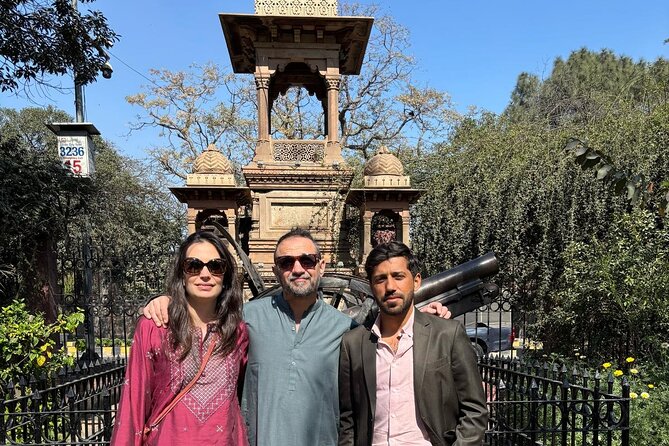
- Bigger sights, set times: You move through major landmarks without endless wandering.
- Bilawal’s calm pace: The tour is designed to feel comfortable, not rushed.
- UNESCO stops on the route: Lahore Fort and Shalimar Gardens are built into the experience.
- Useful ticket mix: Many entrances are included, but Masjid Wazir Khan is not.
- Wagah Border is the finale: A full two-hour ceremony block anchors the day.
Why this Lahore Fort start matters more than a quick photo
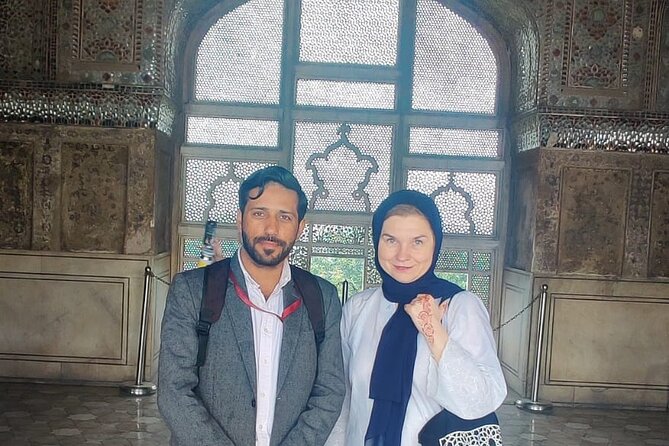
Lahore Fort is where the whole story clicks. You get about two hours at this UNESCO World Heritage site, and the timing is long enough to actually look—arches, courtyards, and defensive-and-residential Mughal planning rather than just passing by gates.
The fort’s backstory matters: it was built in 1566 by the Mughal emperor Akbar, with brick masonry made for two primary purposes—abode and defence. That combination is why the place feels different from a palace you only tour for decoration. Here, design does double duty. Even if you’re not a hardcore history person, you’ll feel how walls and layout guided daily life and safety.
Practical note: forts can mean uneven floors and some walking inside. If your legs are sensitive, bring comfortable shoes you can trust for a long day. Also, it helps to go in with one goal: don’t just look up at the architecture—track the transition from open spaces to enclosed areas. That’s where the “defence vs. living” theme shows up.
You can also read our reviews of more tours and experiences in Lahore.
Badshahi Mosque: scale you can feel in 45 minutes
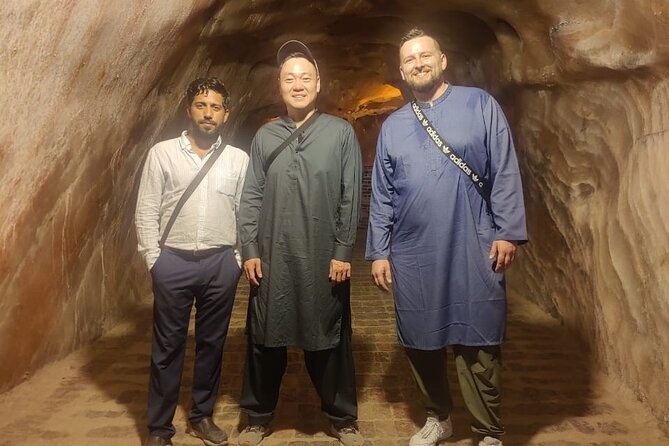
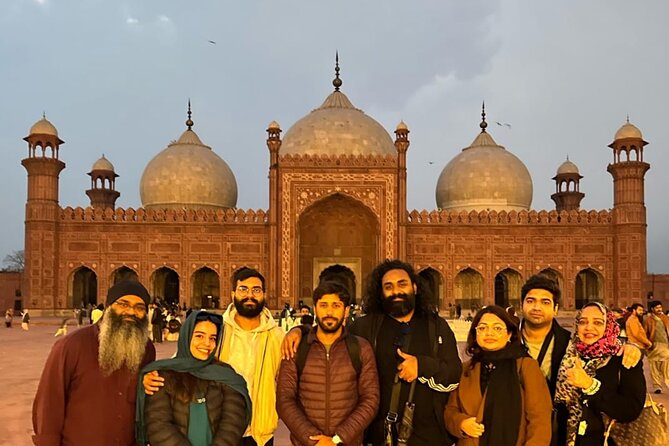
Next up is Badshahi Mosque, with about 45 minutes on-site and an admission ticket included. This is one of Lahore’s big “wow” stops, and it’s not only because of the famous red sandstone. It was built in the 17th century by the Mughal emperor Aurangzeb Alamgir, and its scale is described clearly in the tour details: it can accommodate up to 100,000 people.
Even with a short visit, the mosque’s proportions hit fast. I like that the tour keeps the timing tight enough to prevent decision fatigue. You’ll have time to orient yourself, take in the main space, and still move on before fatigue sets in.
What to watch for (this is where a guide helps): look at how the design creates a sense of openness while still feeling structured. Mosques are not just buildings here—they’re places built to shape movement and attention. With an English-speaking, formally trained guide, you’re less likely to miss what’s meaningful versus what’s just impressive.
One consideration: mosque etiquette matters. The tour doesn’t spell out dress rules in the details you provided, but you should plan modest clothing and keep plans flexible. If you’re not sure what to wear, choose something comfortable and easy to adjust.
Minar-e-Pakistan and Allama Iqbal: national identity in small steps
After the major Mughal icons, the tour shifts to modern Pakistani identity—starting with Minar-e-Pakistan. You’re there for a short 15 minutes, and the stop is inside Allama Iqbal Park. The monument is raised to commemorate the Pakistan resolution, passed at the place where it was passed—so this isn’t a random skyline tower stop. It’s tied to a specific moment of political history.
Then you also stop for Dr. Allama Muhammad Iqbal, described with multiple identities: National Poet of Pakistan, Poet of the East, and the Spiritual Father of Pakistan. Whether you already know Iqbal’s work or you’re seeing his role for the first time, this part gives you a guide-shaped “bridge” between Lahore as an imperial city and Lahore as a place of ideas that influenced national direction.
Finally, you pass through the walled city area in context—Lahore’s old fabric is enclosed by 12 gates, including Delhi Gate. The tour information notes that the Royal family historically used Delhi Gate as a route into their castle, with natives welcoming and admiring them. That one detail helps you picture the street-level reality of empire: gates weren’t only for defence; they were stages for public presence.
In short: this section is brief by design. If you hate short stops, you might feel it—but if you prefer a route that keeps you moving, it’s a good way to get context without burning the whole day on monuments.
Shahi Hammam and Gali Surjan Singh: the Mughal life you don’t expect
Now the tour gets more interesting in a different way: it slows down into everyday life and not just big public landmarks.
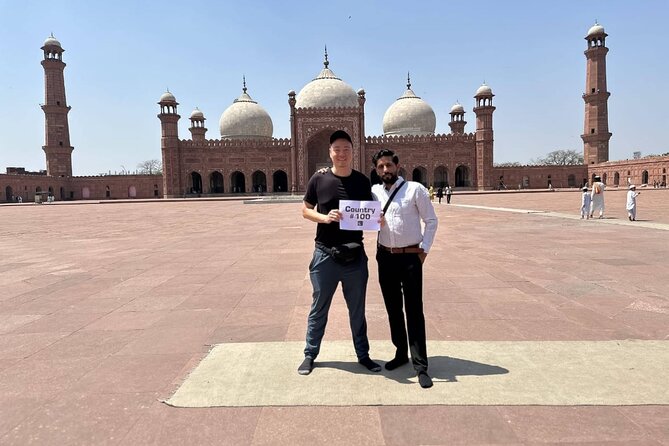
At Shahi Hammam, you get about 30 minutes with admission included. Built in 1634 during the era of Mughal emperor Shah Jahan, this hammam is described as the first place of rest and refreshing for royals when entering the walled city. That’s a big shift from thinking of royal spaces as purely ceremonial. Here, the emphasis is comfort, routine, and the rhythms of elite daily life.
After that, there’s a quick walk to Gali Surjan Singh (around 10 minutes). This is one of the traditionally decorated street scenes inside the walled city, attributed to Surjan Singh, who is described as a Mughal physician who resided there. The value of this stop is atmosphere. You’re not going to “read” a street like a museum, but you can connect architecture and decoration to who lived there and why it mattered.
If you’re a “detail reader,” this is a highlight. If you only like grand monuments, you might think it’s small. I’d argue this is where your brain starts understanding Lahore as a living city rather than an open-air photo album.
Masjid Wazir Khan: gorgeous mosaics, but ticket costs you’ll want to plan
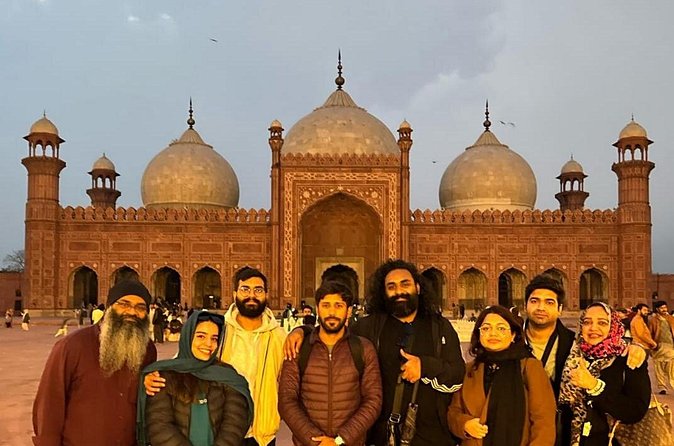
Then comes Masjid Wazir Khan, with about 30 minutes. The important catch: the details you have list the admission ticket as not included.
The guide framing for this stop is strong. The tour describes the mosque as iconic and built in 1634, representing Mughal aesthetic taste attributed to Shah Jahan’s era, featuring intricate mosaic work, fresco painting, and calligraphy. Those ingredients are the reason Wazir Khan is famous beyond Lahore Fort and the big mosque stops. This isn’t only about scale; it’s about craft.
So here’s my practical advice: if you’re specifically interested in mosaic-and-calligraphy artistry, plan for this one ticket separately. If you’re mainly there for the general circuit, you can treat the stop as a look-and-understand pause rather than an extended ticketed exploration.
Also, keep in mind that mosque interiors can mean more time spent looking closely and less time doing the “scan and move” thing. Your guide’s pace matters here, and Bilawal’s calm style—unhurried, at your group’s comfort—works well for sites like this.
Shalimar Gardens: UNESCO calm after the mosques
The itinerary also includes Shalimar Gardens, noted as a UNESCO World Heritage site. The tour details describe it as a royal recreational area and an “earthly utopia” associated with Shah Jahan, focused on harmony in the human–garden relationship.
Because the timing and ticket information for Shalimar Gardens aren’t specified in the details you provided, you should treat it as a flexible piece of the route. Still, the inclusion is a smart contrast. After fort walls, mosque craft, and walled city lanes, the gardens offer a different kind of history: planned space made for leisure and visual rhythm.
If your day is already heavy on architecture, this is a nice reset. And if you’re the type who likes to understand how rulers imagined the ideal world, the “earthly utopia” framing gives you a lens—look for symmetry, water/space planning (when visible), and the way the layout directs movement.
Wagah Border flag-lowering: a full ceremony block worth planning for
The finale is Wagah Border, with about two hours. The tour describes the daily flag-lowering ceremony as choreographed—Pakistani and Indian soldiers perform synchronized, theatrical displays of martial skill and patriotism before flags are lowered.
This is the kind of event where context matters. Without it, you might just see marching and feel “what am I supposed to look for?” With a guide, you can connect what you’re seeing to the ceremony’s structure and meaning.
Two hours can feel long if you’re expecting constant action. But that’s the nature of ceremonies: there’s buildup, pacing, and moments that land in sequence. Come prepared to stay put for stretches of time. Bring or plan for sun protection and water, and wear something comfortable enough for standing.
One more note: because the tour includes admission ticket info for this stop, it’s likely set up to cover your entry to whatever viewing area you use. Still, exact seating and entry flow aren’t specified in the provided details—so arriving at the right time with your group matters.
Price and value: $135 makes sense when you add up the admissions
At $135 per person, this tour lands in the “more than a basic city walk, less than a full-blown private museum day” tier. The value logic is simple: you get transportation plus an English-speaking guide, and you also get admissions included for several key stops.
Based on the details you provided, ticketed entrances include:
- Lahore Fort
- Badshahi Mosque
- Minar-e-Pakistan
- Shahi Hammam
- Wagah Border ceremony
Masjid Wazir Khan is listed as not included, and meals are not included.
So how do you decide if it’s worth it? Think about what you’d pay if you did this alone:
- You’d spend time figuring out entry logistics and transit between the walled city and major sites.
- You’d likely pay separate admissions for most of the biggest stops.
- You’d miss the interpretive layer that makes Lahore Fort and the walled city feel connected instead of like five separate pins on a map.
That interpretation piece is exactly what the review snippet points to: Bilawal is described as knowledgeable with an academic background, and the pacing is non-rushed. In practical terms, that means you don’t feel dragged through a checklist. You get the “why” behind what you see, without the day turning into a marathon.
Also, the tour is typically booked about 15 days in advance on average. If your schedule is tight, don’t leave it to the last minute.
Timing, meeting point, and how to plan your day
The tour starts from Food Street Fort Road in the Shahi Mohallah Walled City area. It ends back at the meeting point, which is convenient after a long day that finishes at Wagah Border.
The opening hours listed for the activity are 8:00 AM to 9:30 PM, and the tour duration is 8 hours (approx.). That means you could be out for much of the day, depending on your start time. If you’re sensitive to long outings, ask the provider to confirm the exact schedule day-of so you can plan meals and rest.
You also get a mobile ticket, and you’re told confirmation is received at booking time. Pickup is offered, and the tour is private: it’s only your group.
Simple planning tips (based on the kind of route you’re doing):
- Wear comfortable walking shoes. You’re moving between fort, mosques, and walled city lanes.
- Consider modest clothing for religious sites.
- Keep a small snack and water for gaps, since meals aren’t included.
Who should book this Lahore Heritage and Sightseeing tour?
This tour fits best if you want a structured day that connects Lahore’s story—from Mughal power and architecture to national identity and a major public ceremony—without trying to self-organize everything.
It’s especially good for:
- First-time visitors who want the main landmarks handled in one loop
- People who appreciate an English-speaking, formally trained guide
- Anyone who hates rushing but still wants a full itinerary
- Travelers who value clarity and pacing more than sitting in one museum for hours
If your priority is pure leisure, or if you hate religious sites and ceremonies, you might find the day packed. Still, the route includes time blocks that feel balanced: a couple hours here, smaller focused visits there, then the ceremony finale.
Should you book this tour?
If you want a guided Lahore day where the landmarks are connected by explanation—not just visited—this is an easy yes. The strongest reason to book is the combination of English guidance, a calm pace led by Bilawal, and admissions included for many of the biggest stops.
My one caution is budgeting: Masjid Wazir Khan’s admission isn’t included, and meals aren’t provided. If you’re fine covering those on your own, you’ll get a very complete heritage circuit for the price.
If you want, tell me your travel dates and whether you prefer an earlier start or later sightseeing, and I’ll suggest how to time meals and breaks around the stops you’ll hit.
FAQ
How long is the Lahore Heritage and Sightseeing Guided Tour?
It runs for about 8 hours.
Is pickup included?
Yes. Pickup is offered.
Does the tour include tickets for attractions?
Tickets are included for several stops such as Lahore Fort, Badshahi Mosque, Minar-e-Pakistan, Shahi Hammam, and Wagah Border. Masjid Wazir Khan admission is listed as not included.
Are meals provided?
No. Meals are not included.
Is the guide English-speaking?
Yes. The tour includes an English-speaking guide.
Is this a private tour?
Yes. It’s described as a private tour/activity, meaning only your group participates.
Is there free cancellation?
Yes. Free cancellation is available, and you can cancel up to 24 hours in advance for a full refund.