REVIEW · PRAGUE
Prague: World War II and Communist History Tour
Book on GetYourGuide →Operated by Discover Prague Tours sro · Bookable on GetYourGuide
Nazi secrets and street corners shape Prague. This 2.5-hour guided walk turns major 20th-century events into real, touchable street-level stories, with stops tied to the Municipal House and the Velvet Revolution. I like that the tour follows a clear timeline, so the city stops feeling like a bunch of attractions and starts feeling like a living record.
My favorite part is how the guide connects the Nazi occupation and local resistance to what came afterward, including the assassination linked to Operation Anthropoid and the later dissident era names like Plastic People of the Universe and Charta 77. One thing to consider: it’s a story-first route with plenty of walking, and some stops won’t look dramatically different from today, so you’ll get the most by leaning in to the narration.
In This Review
- Key things that make this tour worth your time
- Why this Prague WWII and Communist history walk feels different
- Start at Týnská and get your bearings fast
- Municipal House and the shock of occupation
- Jewish Quarter context and why it matters for the whole story
- Dancing House as a symbol of modernity under pressure
- Operation Anthropoid: resistance, secrecy, and consequences
- From WWII to communist coup: how the timeline clicks into place
- Prague Spring, the Warsaw Pact invasion, and why euphoria hurts
- Normalization, Plastic People, and Charta 77
- Velvet Revolution and Václav Havel: the story ends with action
- Guides who make the facts stick
- Price and logistics: is $34 good value?
- Who this tour suits best
- Should you book this Prague WWII and Communist History Tour?
- FAQ
- FAQ
- How long is the Prague WWII and Communist History Tour?
- Where is the meeting point?
- Is the tour guided in English?
- What key locations does the tour include?
- What does the tour cover about World War II and Nazi rule?
- What does the tour cover about Communism in Prague?
- Is free cancellation available?
Key things that make this tour worth your time
- A timeline you can follow from Nazi occupation to 1989, without the facts getting scattered
- WWII resistance sites tied to Operation Anthropoid, including the church/crypt connection
- Communist-era landmarks in central Prague, paired with names you’ll recognize from textbooks
- Guides who tell it like a scene, with energy even in rain or heat
- Practical history follow-through, with film recommendations like Anthropoid and Munich
Why this Prague WWII and Communist history walk feels different
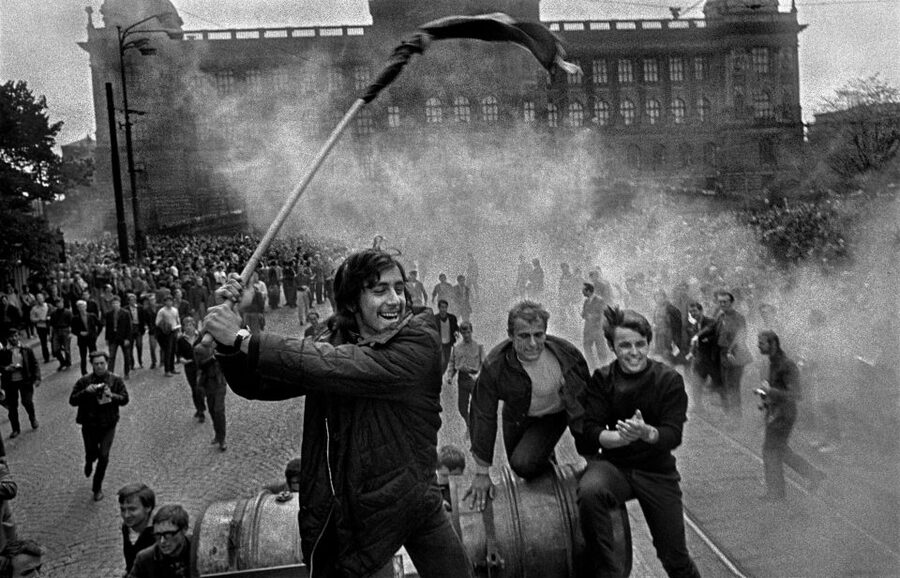
Prague can look calm from street level. This tour shows you the opposite. In about 150 minutes, you walk through the city center while the guide lays out how occupation, rebellion, coup, and resistance reshaped everyday life.
What I like most is that the guide keeps the story grounded in place. You’re not just hearing a lecture. You’re standing in front of sites such as the Municipal House, the Dancing House, and Wenceslas Square while the political shifts of the 20th century are explained in plain language.
Another strong point is balance. The route doesn’t whitewash hard choices or awkward realities. That matters for a subject like this, because Prague’s 20th-century story includes courage, collaboration, coercion, and consequences that still shape how people talk about the past.
You can also read our reviews of more tours and experiences in Prague.

Start at Týnská and get your bearings fast
Your meeting point is Týnská 639/4, Staré Město, 110 00 Praha-Praha 1. From there, you’re set up for an Old Town-to-city-center progression, which is exactly what you want for this kind of story tour.
The biggest practical tip for you: treat this like a walking tour first, not a stop-and-snap photos tour. Several stops are more about what happened there than what you can see today. Wear shoes you can handle for a solid stretch, and be ready to listen closely at each corner and façade.
Weather also matters. Past departures proved the guide carries the energy in pouring rain and in oppressive heat. You should still dress for the weather, since you’ll be outside most of the time.
Municipal House and the shock of occupation
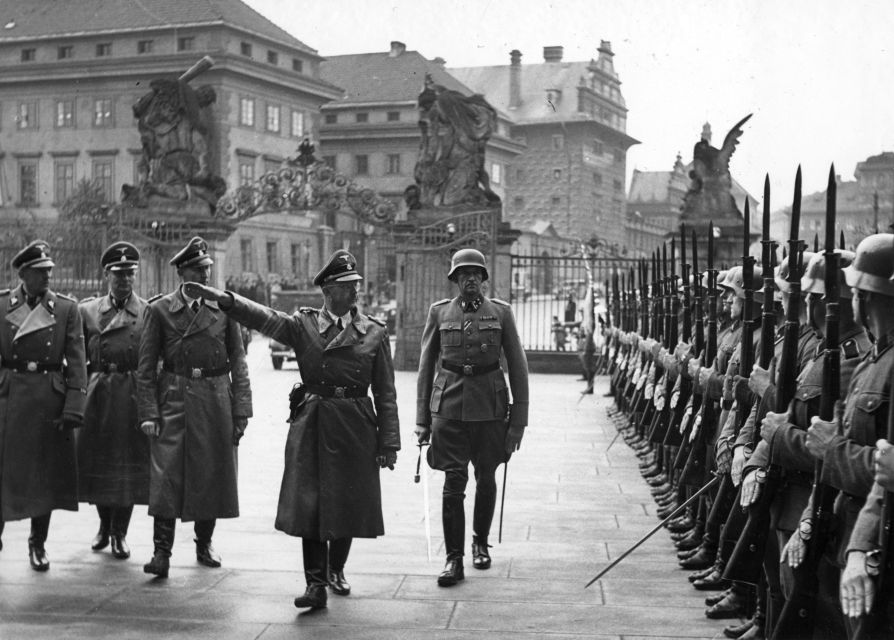
The tour includes the Municipal House, and it’s a smart choice. This is the kind of site that makes it easy to think of Prague as modern and proud—then the guide reminds you what Nazi occupation did to the city’s momentum and people.
You’ll hear how the occupation turned one of Europe’s more progressive and industrialized regions into a nightmare. The Nazi chapter here isn’t presented as distant history; it’s explained as a process—control tightening, resistance forming, and propaganda replacing ordinary life.
If you like stories that explain cause and effect, this is one reason the tour gets repeated high marks. It’s not only what happened, but how it changed what people could say, do, and risk.
Jewish Quarter context and why it matters for the whole story
The tour also works through the Jewish Quarter area. Even if you already know Prague’s older layers, this stop gives the 20th-century narrative a critical anchor.
This is where the guide helps you understand the human stakes beneath the politics. When you later hear about communist rule and dissident movements, it lands differently because you’ve already been reminded how oppression can look in real neighborhoods, not just in dated documents.
One thing I’d flag for you: this is not the kind of tour where the street is shouting the lesson. Some people want heavy physical reminders at every stop. You’ll still learn a lot, but the guide’s narrative is the main tool.
Prague’s 20th century sits on much older foundations, sometimes literally. PragueExplorer has the medieval underground and dungeon tour written up for anyone who wants the layer beneath this one, and the Prague City Museum holds the artifacts that connect the two eras.
Dancing House as a symbol of modernity under pressure
The Dancing House appears on the route, and it works well as a visual contrast. It helps you frame the theme: Prague’s modern face vs. the brutal political forces that kept trying to control the future.
The guide uses these city-center landmarks to show how “progress” can be redirected, constrained, or destroyed by power. That’s a helpful way to remember the story because you’re not only learning dates—you’re learning a pattern.
If you’re the type who likes a tour that connects aesthetics to history, you’ll appreciate this. It’s also a good reset point before the tour turns toward the resistance and the violence of retaliation.
Operation Anthropoid: resistance, secrecy, and consequences
One of the tour’s standout themes is the assassination of a high-ranking Nazi security figure, tied to Operation Anthropoid. This is not taught as a movie plot. The guide places it in the real logic of occupation—how people planned, hid, and paid for success with brutal consequences.
The tour includes a stop connected to the church/crypt site and the hiding place linked to Czech resistance fighters at the Church of Saints Cyril and Methodius area. The point isn’t to show you trivia. It’s to show you the geography of risk.
You’ll also hear how the Nazis responded afterward, and why that mattered to people beyond the immediate participants. That’s where the tour’s pacing earns its keep: it doesn’t jump away from WWII once the assassination happens. It carries the aftermath forward so you understand the emotional and political aftermath.
From WWII to communist coup: how the timeline clicks into place
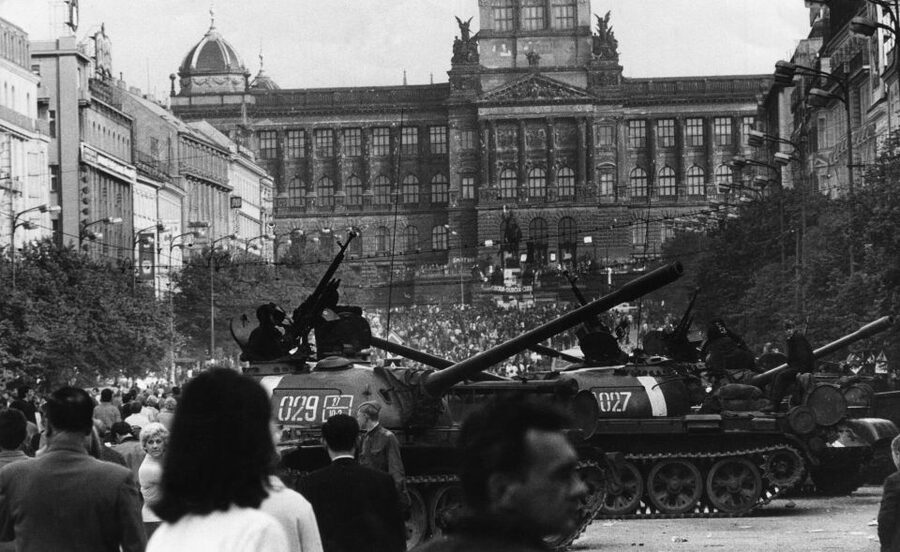
After the Nazi occupation chapter, the tour moves into the turbulent years that followed: the Czech uprising, the Communist coup, and then the long stretch of life under Communist rule.
You’ll hear about the shift from Nazi oppression to a different system of control. The guide also explains the letdown that often followed major moments—because history rarely moves in a straight line to the victory people hope for.
What I like here for you is clarity. The tour tries to keep the story coherent, even when the topics are heavy: occupation, uprising, coup, and then the political climate where dissent becomes dangerous.
Prague Spring, the Warsaw Pact invasion, and why euphoria hurts
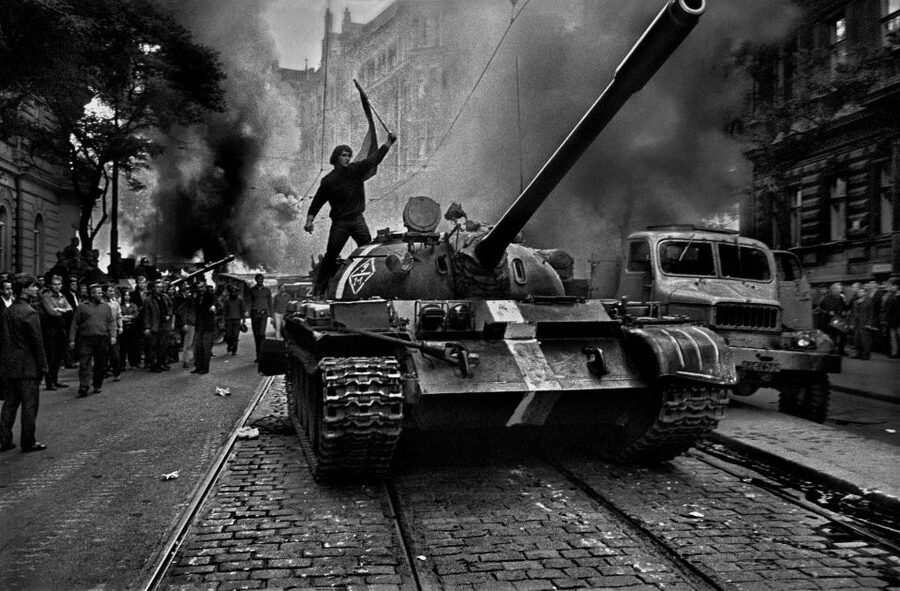
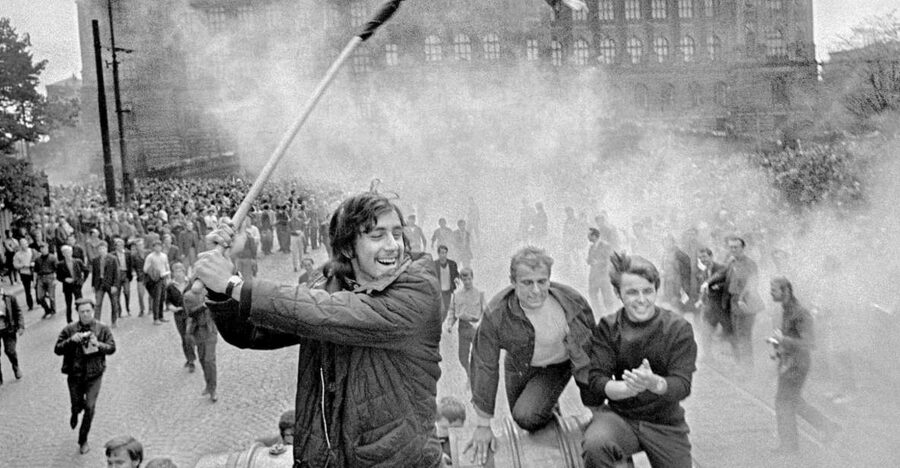
The route covers the Prague Spring and the trauma of the Warsaw Pact invasion. This is one of the emotional pivots of the tour, and the guide’s job is to make the roller-coaster make sense.
You’ll get the sense that change brought real hope, not just propaganda promises. Then the invasion snaps that hope. The lesson is powerful: even short periods of freedom can leave long scars when they get crushed.
For you, this is also a memory hook. If you’ve ever heard about Prague Spring in passing, this tour helps you place it inside a broader pattern of rising expectations followed by harsh control.
Normalization, Plastic People, and Charta 77
The tour then moves into Normalization, when Communist authorities tightened control again. You’ll hear about persecution targeting cultural life, including the Plastic People of the Universe, plus the role of Charta 77.
Even though these ideas can feel abstract in a book, the guide ties them to what people had to do—what they risked to speak up, how they organized, and why documents and cultural acts mattered.
One practical benefit for you: if you’re trying to understand modern Czech identity, these names give you a starting map. You can carry them forward and read more without getting lost.
Velvet Revolution and Václav Havel: the story ends with action
The final movement of the tour focuses on the Velvet Revolution of 1989—including how Václav Havel and other dissidents were swept to power. This isn’t treated as a sudden miracle. The guide frames it as the result of pressure, courage, and years of opposition.
The tour includes Wenceslas Square, which is a good final stop because it lets the story breathe. After walking through occupation and coercion, it’s a relief to see how public space became part of political change.
You’ll finish with a sense of how quickly history can flip when people push in the same direction. And you’ll also understand why the past still matters there, because the memory of what it cost to speak up is part of how people talk about freedom today.
Guides who make the facts stick
A big reason this tour scores high is the guide style. People specifically praise guides like Daren, Adam, Tony, Zac, Sean, and Amanda Mayne for story-driven delivery and strong engagement.
You don’t need to be a history fanatic to enjoy this. The best guides here are selling you clarity. They set up the scene, then explain the stakes, then help you connect each stop to the next.
If you’re the type who asks questions, you’re likely to do well too. Several comments mention being able to ask a lot, which usually means a small-group feel and enough time for follow-ups.
Price and logistics: is $34 good value?
At $34 per person for a 150-minute live English walking tour, this is good value if your goal is understanding rather than just seeing.
Here’s why: you’re paying for (1) an expert storyteller who can handle WWII through 1989 without losing the thread, and (2) access to sites in the city center where the history is tied to real urban geography. That combination costs more on tours that focus only on one era or that cram too many facts with no narrative.
The walking format is a key trade-off. You’ll get more out of it if you’re comfortable on foot and you like listening while moving. If you want lots of physical remnants at each stop, you might find the narration carries more weight than scenery.
Who this tour suits best
Book this if you:
- want a single Prague walk that connects WWII to Communism to 1989
- like history told as human decisions and street-level risk, not just dates
- enjoy tours where guides explain why names like Plastic People of the Universe and Charta 77 mattered
You might hesitate if you:
- strongly prefer resting at many landmark photo stops with minimal walking
- need very visual proof at each stop, since some locations rely more on what the guide teaches than on visible remnants
Should you book this Prague WWII and Communist History Tour?
If you’re in Prague for just a few days and you want one high-impact historical experience that covers the full arc of the 20th century, I think this is an easy yes. The route hits central landmarks like the Municipal House, Dancing House, and Wenceslas Square while the guide connects the dots from occupation and resistance through Normalization to the Velvet Revolution.
My advice to you: plan to listen hard. Bring good shoes, dress for the weather, and be ready for a walking tour where the story is the main attraction. Do that, and you’ll leave with a much clearer picture of why modern Prague feels the way it does.
FAQ
FAQ
How long is the Prague WWII and Communist History Tour?
The tour lasts 150 minutes, which is about 2.5 hours.
Where is the meeting point?
You meet at Týnská 639/4, Staré Město, 110 00 Praha-Praha 1, Czechia.
Is the tour guided in English?
Yes. It includes a live tour guide in English.
What key locations does the tour include?
The tour includes important locations related to the events discussed, including the Municipal House, Jewish Quarter, Dancing House, and Wenceslas Square.
What does the tour cover about World War II and Nazi rule?
You’ll learn about the Nazi occupation and resistance, including where the Nazi head of the security services was assassinated.
What does the tour cover about Communism in Prague?
The tour covers the years after the coup, including the Prague Spring, the Warsaw Pact invasion, Normalization, persecution of the Plastic People of the Universe and Charta 77, and the Velvet Revolution of 1989 with Václav Havel.
Is free cancellation available?
Yes. You can cancel up to 24 hours in advance for a full refund.