REVIEW · RIO DE JANEIRO
Rio: Olympic Boulevard, Museum of Tomorrow & History Tour
Book on GetYourGuide →Operated by C2RIO TOURS & TRAVEL · Bookable on GetYourGuide
Rio’s Downtown tells stories at sidewalk speed. This 4-hour tour threads UNESCO Valongo Wharf history into the futuristic Museum of Tomorrow, then adds street art, Baroque gold, and a classic café stop.
I love how the stops connect ideas, not just sights. You’ll walk from the African influence at Valongo Wharf to the five ethnic groups painted by Eduardo Kobra, all with a guide who explains why each place matters. I also like the pace: it is short enough to feel manageable, yet packed with major Rio landmarks.
One possible drawback: the experience depends on timing and guide focus. If a guide loses the thread, the van can feel like it’s rushing to catch the schedule, which is especially noticeable when you’re heading into a timed museum visit.
In This Review
- Key highlights in 5 minutes
- Downtown Rio, the walk that makes the city click
- Valongo Wharf and the African influence lesson you can see
- Eduardo Kobra mural: big scale street art with a clear theme
- Olympic Boulevard to the Museum of Tomorrow: future-thinking in glass and angles
- Monastery of Saint Benedict: when the façade lies
- Rio 2016 Olympic Cauldron: a sports landmark with design power
- Praça XV and empire-era corners: understanding Rio’s center
- Confeitaria Colombo: art nouveau drama, plus the snack you’ll remember
- What the $67 price gets you (and why it can be a good deal)
- Guide quality swings the day: Emma, Pedro, Emanuella—and what to watch for
- Who this tour suits best (and who might feel cramped)
- Should you book Rio: Olympic Boulevard, Museum of Tomorrow & History Tour?
- FAQ
- FAQ
- How long is the Rio Olympic Boulevard, Museum of Tomorrow & History Tour?
- Is the tour mostly walking, and should I wear comfortable shoes?
- Where are pickup and drop-off located?
- What’s the pickup window for South Zone hotels?
- What is included in the price?
- Are food and drinks included at Confeitaria Colombo?
- Does the tour run in rain?
- Is Confeitaria Colombo open every day?
- Are there age restrictions for children?
- Can I cancel, and do I get a refund?
Key highlights in 5 minutes
- Valongo Wharf UNESCO: learn how African influence shaped Brazil, right where the story began
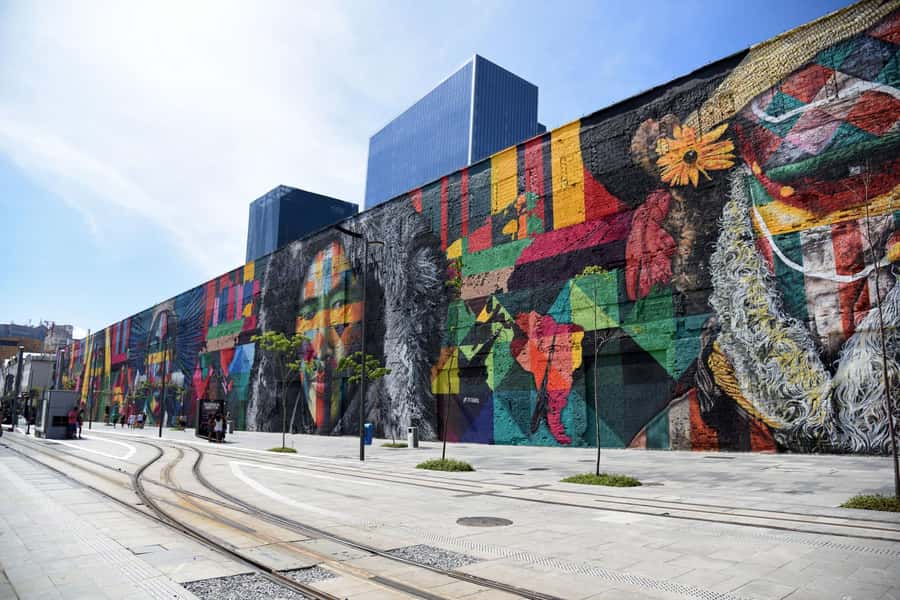
- Eduardo Kobra’s massive mural: five ethnic groups in bold geometric color
- Museum of Tomorrow ticket included: a science museum with architecture that matches the theme
- Monastery of Saint Benedict contrast: simple exterior, Baroque interior with golden ornament
- Rio 2016 Olympic Cauldron: reflective-kinetic spherical design by Anthony Howe
- Confeitaria Colombo finish: art nouveau splendor plus classic Brazilian snacks (not included)
Downtown Rio, the walk that makes the city click
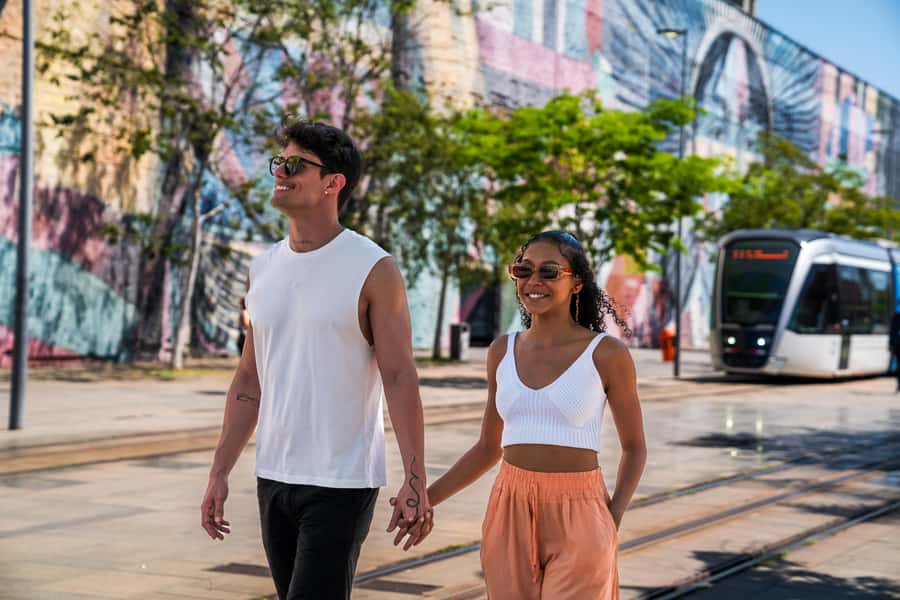
This tour is designed for people who want more than a quick drive-by. You start with hotel pickup in Rio’s South Zone (Copacabana, Ipanema, Leblon, and Leme). Then you head into Downtown Rio for a focused mix of culture, architecture, and street art—mostly on foot, with moderate walking.
The value is that you’re not just collecting photos. The route is built like a timeline and a theme. You begin with African history at Valongo Wharf, move into visual storytelling at Eduardo Kobra’s mural, then shift to futuristic thinking at the Museum of Tomorrow. After that, the day swings back to the past with a Baroque monastery and empire-era context around Praça XV.
You can also read our reviews of more tours and experiences in Rio De Janeiro.

Valongo Wharf and the African influence lesson you can see
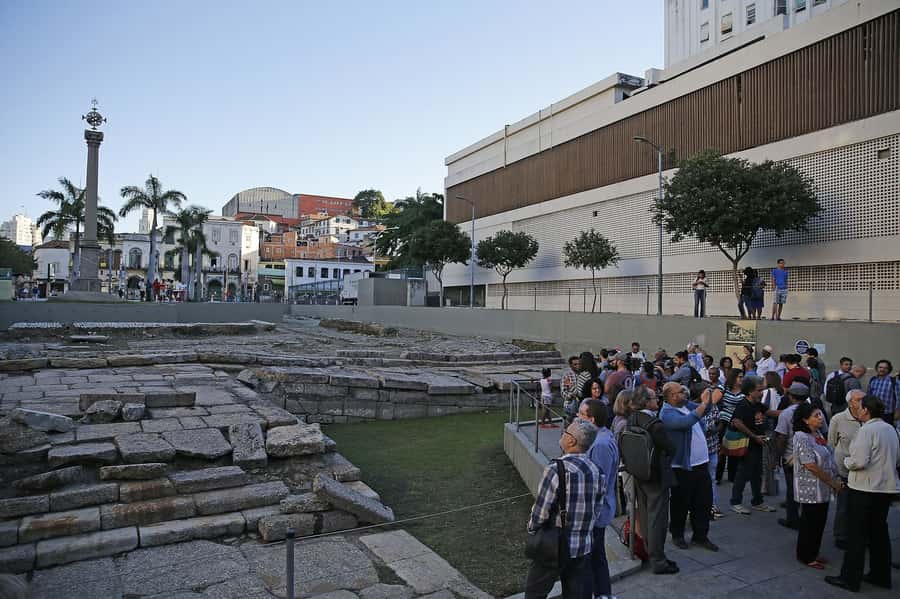
Your tour starts at Valongo Wharf, described as Rio’s latest UNESCO World Heritage site. This stop matters because it reframes Rio’s story. Instead of treating Downtown as just busy streets and old buildings, you get a clear explanation of how African presence shaped Brazil’s culture and development.
You’ll also appreciate why this spot works for a guided format. The area is historic, but it can be hard to interpret without context. With a guide leading you through it, you can connect what you see to what you’re learning—rather than wondering what you’re looking at.
If you’re the type who likes understanding the city’s roots before you move on, this is the start that earns its place. And because you’re early in the morning flow of traffic, it’s easier to take in the surroundings at a human pace.
Eduardo Kobra mural: big scale street art with a clear theme
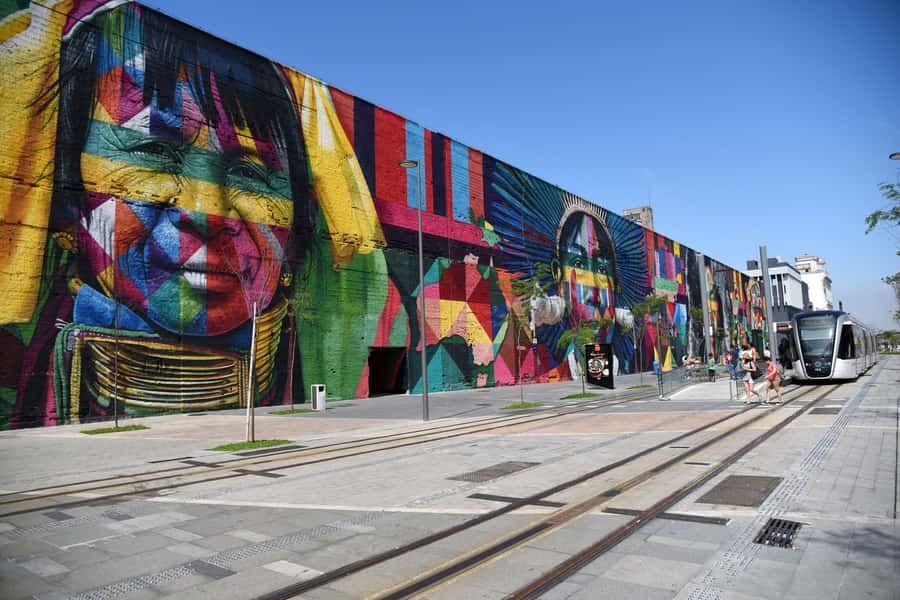
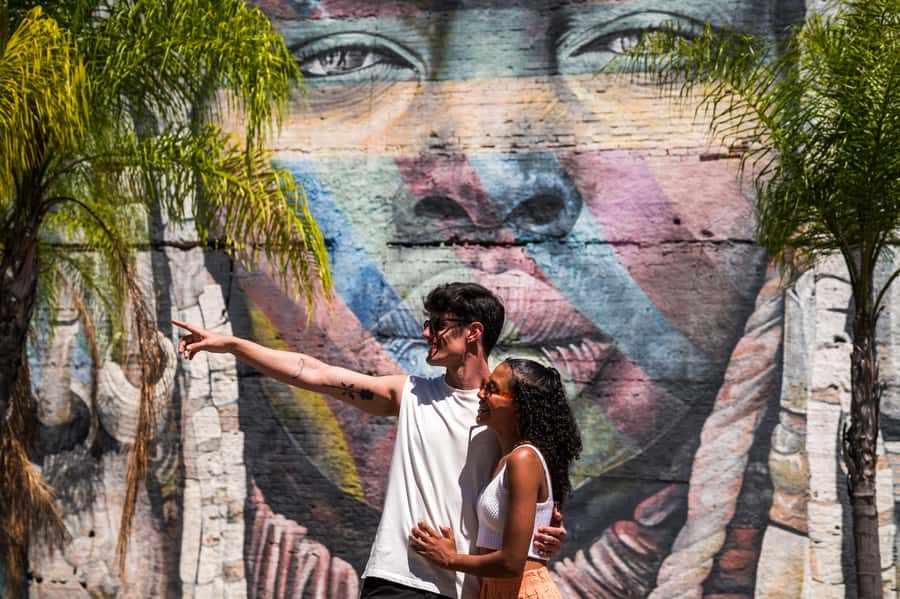
After Valongo Wharf, you head to one of the most famous street-art wall works in Rio: an Eduardo Kobra mural. The scale is part of the point—it’s described as one of the largest graffiti murals in the world. But the bigger win is the design message.
The mural portrays five ethnic groups against a colorful geometric background. That makes it more than decoration. It’s visual storytelling, and it’s the kind of art that benefits from a guide’s explanation because Kobra’s style is all about symbolism and composition.
This is also where the day gives you time to do what people usually want to do but rarely manage: stop, look closely, and take photos without feeling like you’re sprinting to the next stop. If your guide is organized, you’ll get breathing room here.
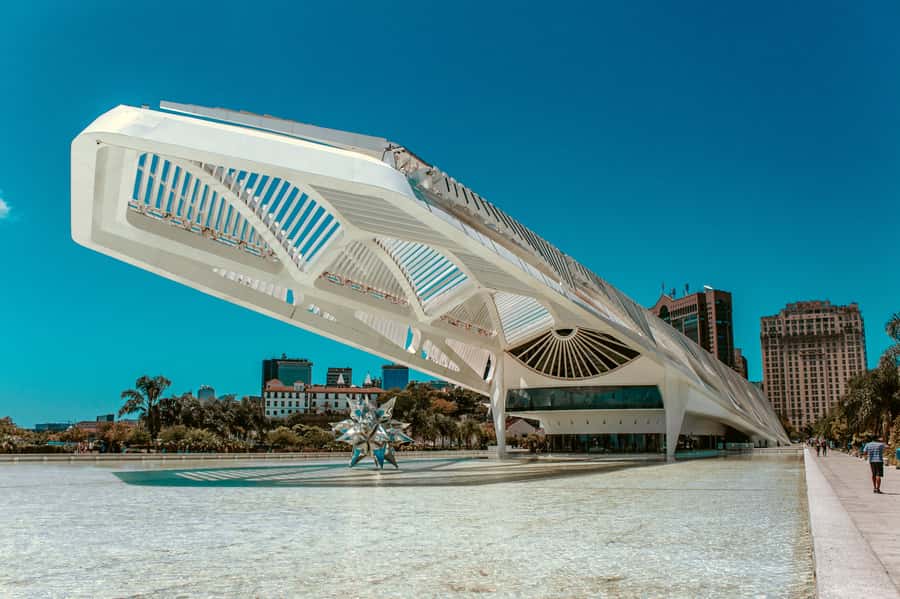
Olympic Boulevard to the Museum of Tomorrow: future-thinking in glass and angles
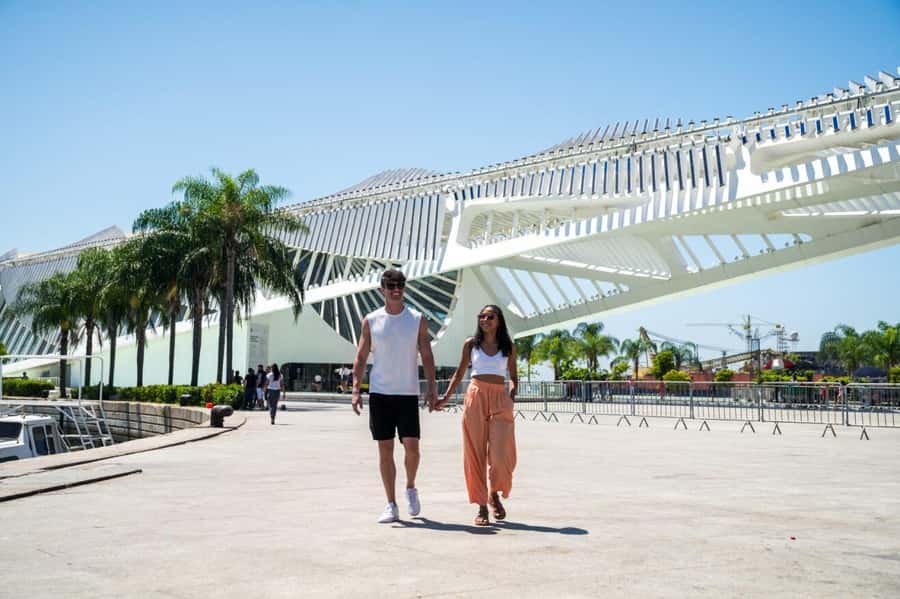
Next, you walk along Olympic Boulevard toward the Museum of Tomorrow. This is your science and future-thinking stop, and it has a strong identity. The museum is described as a modern, technological science museum dedicated to exploring and questioning possibilities for the future of the planet and humankind.
One thing I really like about this museum on a guided tour: you get the architectural intro before you go in. The building itself is part of the experience, so it helps to know what to notice when you arrive. Then, once you’re inside, you can spend time at your own pace. A guide’s approach matters here—some guides (like Emma in past bookings) are known for keeping things friendly and letting you move through the exhibits without feeling herded.
Also, this museum is noted as the most visited museum in Brazil. That doesn’t automatically mean it’s for everyone, but it does mean the building and exhibits are a major part of how Brazil showcases science to the public. If you like museums that ask questions instead of only delivering answers, this one will click.
Practical tip: plan to slow down for the museum portions. The tour is only 4 hours total, so you’ll want comfortable shoes and a mindset that says: I’ll pick up the main ideas, not try to read every single label.
Monastery of Saint Benedict: when the façade lies
After the Museum of Tomorrow, the tour shifts hard into the past with the Monastery of Saint Benedict. The contrast is the whole story here. You experience a simple façade outside, then step inside and see the interior covered with golden ornaments from the Baroque period.
This kind of contrast is exactly why guided tours work. You feel the surprise because you understand what you’re about to encounter. Without context, people sometimes miss how much Baroque decoration is doing the work of power and devotion.
I’d call this stop the emotional palate cleanser of the day. You go from future-focused science inside a sleek modern building, then you walk into an interior that feels visually loud and historical. It’s a smart pairing, and it keeps the tour from becoming only one style of attraction.
Rio 2016 Olympic Cauldron: a sports landmark with design power
Back outside, you’ll see the Rio 2016 Olympic Cauldron, created by the American artist Anthony Howe. The structure is described as a reflective-kinetic-sphered design, built as a reminder of the Games.
Even if the Olympics aren’t your main interest, this stop gives you something valuable: a link between design and memory. It’s public art you can approach without a ticket, and it helps you connect the city’s global events to physical objects in the street.
In a route like this, it also works as a tempo shift. You’re moving between big-ticket indoor and heritage sites, and the cauldron is the kind of outdoor stop where you can take photos fast and still feel like you got something meaningful.
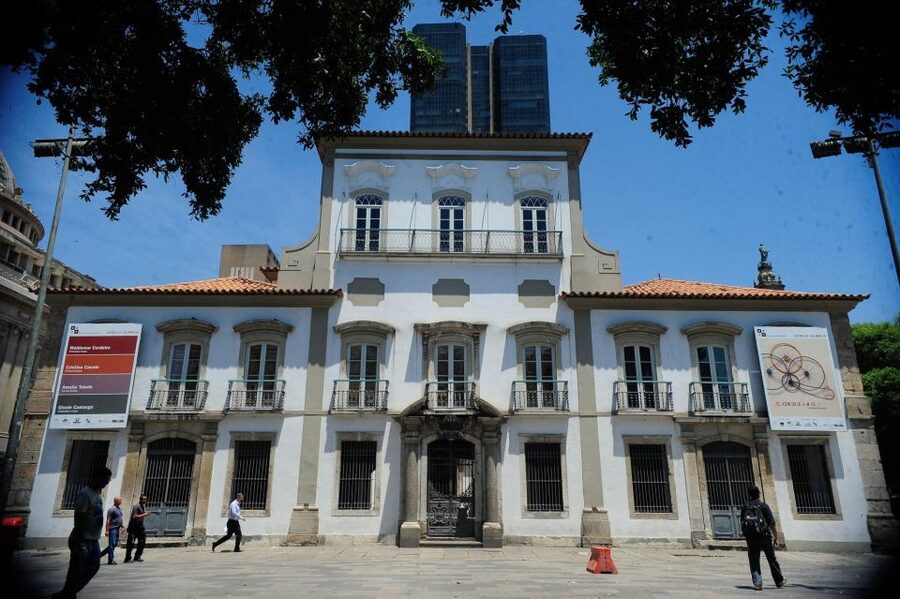
Praça XV and empire-era corners: understanding Rio’s center
At Praça XV, you’ll look at one of the former headquarters of the Brazilian empire. This is where the guide turns the morning from sightseeing into “what does it mean” history.
The area is important because it’s tied to major events that shaped Brazil, and the guide helps you place those facts in the space around you. Again, this is the kind of moment where you’ll benefit if you like stories and cause-and-effect, not just architecture.
If you prefer only the most famous landmarks, you might think Praça XV is less exciting than the museum or cathedral-adjacent stops. But in practice, it’s often the part that helps your entire morning make sense. It’s where the pieces connect: migration history, modern thinking, and the political story of the empire era.
Confeitaria Colombo: art nouveau drama, plus the snack you’ll remember
The tour ends at Confeitaria Colombo, one of Rio de Janeiro’s “must-see cafés” (and it’s closed on Sundays). This is where you get the fun payoff after all the walking and thinking.
Inside, the vibe is opulent art nouveau: huge stained glass, tiles, and mirrors imported from France, Portugal, and Belgium. It’s the kind of place where the room becomes a second attraction. You’re not going just for coffee. You’re going for the space.
Food and drinks are not included, but the guide can point you toward classic Brazilian options. The tour description specifically calls out snacks like coxinha de frango and desserts like brigadeiro. If you want a simple, safe order that tastes like Brazil, these are solid choices.
One Sunday planning note: if your trip lands on a Sunday, plan on a different day or accept that the café stop won’t happen as part of this exact tour.
What the $67 price gets you (and why it can be a good deal)
At $67 per person for 4 hours, this tour isn’t trying to be a budget bus ride. You’re paying for several real costs to be handled for you:
- Hotel pickup and drop-off from the South Zone
- A guided walk with a professional guide in English, Spanish, and Portuguese
- Museum of Tomorrow tickets included
- Taxes and fees included
- Transportation in an air-conditioned van (small group size up to 19)
The biggest value driver is usually the museum ticket plus guide time. Many independent plans in Rio cost more once you add entrance fees, a guide, and transport. Here, you’re bundling the most structured part of the experience into one price.
Group size also matters. With a maximum of 19 passengers, you’re less likely to feel lost in a crowd. Still, because the route is time-sensitive, you’ll want to show up ready to go at pickup time and keep your schedule flexible.
Guide quality swings the day: Emma, Pedro, Emanuella—and what to watch for
This is a tour where the guide can make the difference between smooth flow and frustration. Positive experiences in past bookings highlight guides who stay engaged and keep the group moving without rushing museum time.
Guides like Pedro are described as dedicated and very informative on Brazilian history. Emanuella is noted for sharing lots of context and speaking about history and buildings in an engaging way. Emma is praised for friendliness and flexibility at the Museum of Tomorrow, letting people explore at their own pace.
On the flip side, there are also cautionary examples where timing went wrong. One account described Marilia as getting lost and rushing after losing time, which nearly impacted the end-of-tour transport. Another mentioned Gabriela rushing to a second job and the bus leaving without the group needing to wait for an Uber to fix the drop-off.
I’m not saying this will happen to you. I’m saying you should choose your day wisely and pay attention at pickup. If your hotel pickup time is confirmed, you’re already reducing the risk of confusion.
Who this tour suits best (and who might feel cramped)
I think this tour is a good match if you want:
- A guided mix of Downtown Rio sites without planning each stop
- A balance of African influence, street art, and architecture
- A structured way to see the Museum of Tomorrow without worrying about ticket timing
- A small-group experience that includes a final café moment
It may feel less ideal if:
- You dislike museum visits where you’ll need to prioritize what to see
- You’re traveling with someone who has trouble with walking (the walking is described as moderate, but it still adds up over 4 hours)
- You’re trying to do this tour without using the South Zone pickup option, since pickup is limited to hotels in Copacabana, Ipanema, Leblon, and Leme
Also, it’s not allowed for unaccompanied minors, and children must be accompanied by an adult. Under age 5 go free if they don’t occupy a seat.
Should you book Rio: Olympic Boulevard, Museum of Tomorrow & History Tour?
I’d book it if you want one organized half-day that hits a wide range of Rio—historic meaning at Valongo Wharf, big visual impact at Eduardo Kobra’s mural, a modern science museum with major cultural presence, and a finish at Confeitaria Colombo that lets you relax and eat something distinctly Rio.
Pass or compare if:
- You’re set on a Sunday (the café stop is closed)
- You hate any chance of schedule pressure and want only slow sightseeing
- Your hotel is outside the South Zone and you prefer a more flexible pickup plan
If you go in with comfortable shoes, a curious mindset, and realistic expectations for a 4-hour route, this tour is a strong way to understand Downtown Rio without getting lost in the details.
FAQ
FAQ
How long is the Rio Olympic Boulevard, Museum of Tomorrow & History Tour?
The tour lasts 4 hours.
Is the tour mostly walking, and should I wear comfortable shoes?
Yes. The itinerary includes a moderate amount of walking, so comfortable shoes are recommended.
Where are pickup and drop-off located?
Hotel pickup and drop-off are available from hotels in Rio’s South Zone, including Copacabana, Ipanema, Leblon, and Leme. If you stay in a hostel or B&B, you’ll be informed of the nearest hotel for pickup and drop-off.
What’s the pickup window for South Zone hotels?
Pickup is included between 8:10 AM and 8:55 AM (you should confirm the exact pickup time with the provider).
What is included in the price?
You get a guided half-day walking tour in Downtown Rio, tickets to the Museum of Tomorrow, taxes and fees, live tour commentary in English/Spanish/Portuguese, and hotel pickup and drop-off (plus an air-conditioned van with a maximum capacity of 19 passengers).
Are food and drinks included at Confeitaria Colombo?
No. Food and drinks are available for purchase at Confeitaria Colombo.
Does the tour run in rain?
Yes. The tour operates rain or shine.
Is Confeitaria Colombo open every day?
No. Confeitaria Colombo is closed on Sundays.
Are there age restrictions for children?
Unaccompanied minors are not allowed. Children must be accompanied by an adult. Children under 5 go free if they do not occupy a seat.
Can I cancel, and do I get a refund?
There is free cancellation up to 24 hours in advance for a full refund. You can also reserve now and pay later.