REVIEW · THESSALONIKI
Learn an Ancient Music Instrument: The Lyre of Apollo
Book on Viator →Operated by Seikilo · Bookable on Viator
You can play the ancient lyre in an hour. At the Seikilo Museum in Thessaloniki, this Lyre of Apollo experience turns a living artifact into something you actually hold, tune by ear, and play, learning the music system and then jumping into the famous Seikilos Epitaph. I especially like having loaner lyres provided, so you’re not stuck figuring out logistics, and the lesson is private, which means you can ask questions without feeling rushed.
One thing to keep in mind: the meeting location can be easy to misread if you rely on a general map pin—use the address from your confirmation email so you start on the right street.
Key highlights I think you’ll care about
- Hands-on lyre time from minute one, not just museum viewing
- Loaner instruments for every participant, including handcrafted lyres from Luthieros
- Private, English-speaking instruction for your group, with step-by-step pacing
- You learn the Seikilos Epitaph, described as the oldest complete melody with lyrics that survives
- Museum exhibits included while you practice, with no extra charge at the Seikilo Museum
- Designed for beginners, and adjustable even if you already play music
In This Review
- Thessaloniki’s Seikilo Museum Turns Music Into a Lesson
- From Reconstructed Lyre to Real Sound: What Happens in the First Phase
- Loaner Lyres and the Luthieros Connection You’ll Appreciate
- The Seikilos Epitaph: Learning the Oldest Complete Melody With Lyrics
- Museum Time That’s Actually Useful, Not Just Waiting
- Private Instruction in a Small Setting: Why It Changes Everything
- Price and Timing: Is $48.06 Worth It?
- Where You’ll Get the Most Out of This Lesson
- Logistics That Matter on the Ground
- Should You Book the Lyre of Apollo Lesson?
- FAQ
- How long is the Lyre of Apollo experience in Thessaloniki?
- Do I need any musical experience to take this lesson?
- Are lyres provided, or do I need to bring an instrument?
- Is the tour private?
- Is instruction offered in English?
- What will I learn to play?
- Where is the meeting point?
- What if the weather is poor?
- Can I cancel for free?
Thessaloniki’s Seikilo Museum Turns Music Into a Lesson
This is the kind of activity that feels built for real people, not just museum browsers. You start at the Seikilo Museum of Ancient Music on Filippou 5, and the goal is simple: you hear the reconstructed ancient Greek lyre, then you play it yourself. That shift matters. Most history tours show you objects behind glass. This one uses the instrument as the teaching tool.
What makes it work is the way the session is structured. You begin by examining the lyre’s sound and look—how it’s reconstructed, and how the ancient music system fits together. Then you move from listening to doing, which is where the experience becomes memorable. If you like hands-on learning, you’ll probably find yourself paying attention in a different way than you would in a standard lecture.
Another practical plus: it’s English-speaking and tailored to your level. You don’t need musical education. If you do play something, you can still get something useful out of it, because the instructor can adjust the pace and focus.
From Reconstructed Lyre to Real Sound: What Happens in the First Phase
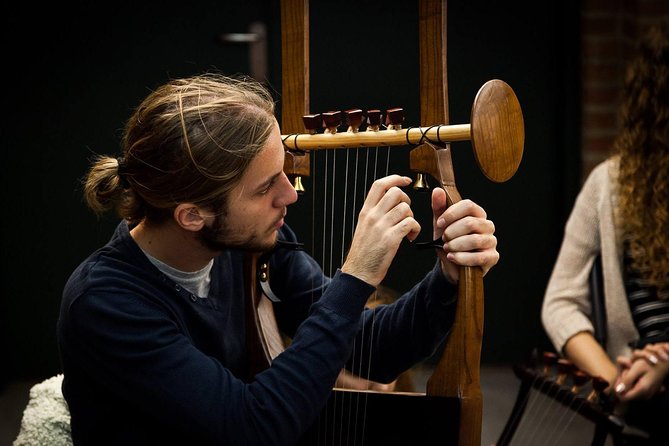
Before you play the Seikilos Epitaph, you get the foundation. The lesson starts with a closer look at how the reconstructed ancient Greek lyre sounds and what makes it visually distinct. That matters even if you have zero music background. When you understand what you’re hearing, you can reproduce it more easily.
Then comes the part that usually makes people nervous on music experiences: learning the mechanics. The good news is that this lyre is framed as simpler to learn than many modern instruments. You’re not learning a whole band setup, and you’re not being asked to master advanced techniques right away. Instead, the teaching approach builds from basics toward a specific piece.
You’ll also learn about the “music system of antiquity.” The phrase sounds technical, but what you can take away in real terms is this: you’ll get a sense of how ancient musicians organized pitch and melody. Even if you don’t remember every detail later, you’ll walk away with a mental model that makes the music feel less random.
You can also read our reviews of more tours and experiences in Thessaloniki.



Loaner Lyres and the Luthieros Connection You’ll Appreciate
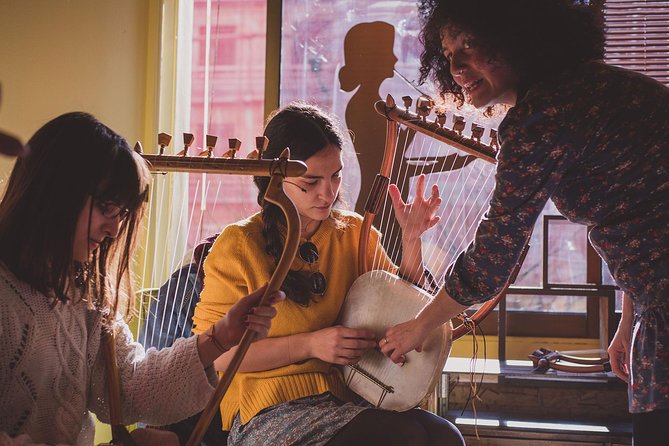
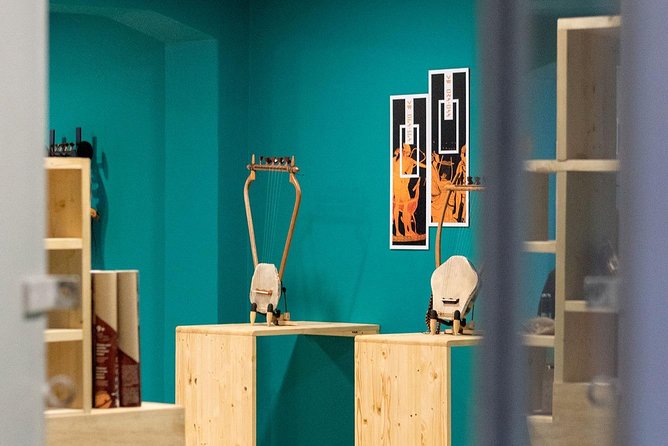
A lot of music workshops fall apart at the first hurdle: the instrument. Here, you don’t bring anything. Loaner lyres are provided to all participants, and the instruments are described as handcrafted by the niche brand Luthieros. That detail isn’t just marketing. Handcrafted instruments tend to be consistent enough for a shared lesson, and they’re stable enough for a short, guided session.
Also, since everyone gets their own instrument, you’re not stuck waiting your turn to touch the “real thing.” You can follow the instructor’s steps immediately. That reduces frustration, and it speeds up the learning curve.
If you’re traveling light, this is a win. If you’re traveling with someone who thinks they don’t have a music bone in their body, this is also a win, because the setup removes barriers.
The Seikilos Epitaph: Learning the Oldest Complete Melody With Lyrics
Now for the headliner: the “Epitaph of Seikilos.” The session focuses on learning how to play it on the spot. It’s described as the oldest complete melody with lyrics that survives today. Even if you’re not a music-nerd, that alone gives the lesson emotional weight. You’re not just practicing scales. You’re working on a melody that has outlasted centuries.
What you’ll likely find (and this is the key for value) is that learning a specific named piece gives the lesson structure. You’re not wandering through music theory for an hour. You’re aiming at something.
The way it’s presented also helps: the instructor doesn’t treat the lyre as a fragile museum relic. Instead, it’s a working instrument used for teaching young people in ancient Greece. That teaching framing is useful for you, because it implies the goal: learn by doing, not by watching.
One more practical note: a one-hour session means you won’t leave with full mastery of everything about ancient lyre music. But you can leave with a playable melody, and you’ll understand the basic “why” behind it. That combination is what makes this feel worth your time.
Museum Time That’s Actually Useful, Not Just Waiting
You’re not just entering a museum to check off a box. You get time to explore the Seikilo Museum exhibits at no extra charge while the lesson is happening. For your brain, this creates a nice loop: you see instruments and reconstructions, then you connect that visual information to the sound and playing technique.
The museum is described as filled with historically accurate and handmade lyres. Even if you only catch part of the story behind each display, you’ll benefit from seeing how the reconstructions were made and why they matter. The exhibits become reference points, not distractions.
And because you’re actively playing, your museum experience isn’t passive. You’re listening differently. You’ll likely notice details you would’ve missed if you’d just walked through and moved on.
Private Instruction in a Small Setting: Why It Changes Everything
This is a private tour/activity, which means only your group participates. In practice, that usually translates to: the instructor can slow down if you need it, or speed up if you’re catching on fast. It also makes a difference for confidence. Music lessons have an emotional side. With private attention, you’re less likely to feel embarrassed when you miss a note.
The session is also described as step-by-step and dense but pleasant, so plan for focused learning rather than a relaxed stroll. Think of it as a short workshop blended with a museum stop.
If your group includes different skill levels, you’ll appreciate that the lesson can be tailored. The information about no musical education needed is important, but so is the flexibility for professionals. You won’t have to sit through a “beginner-only” script if you already understand music basics.

Price and Timing: Is $48.06 Worth It?
At $48.06 per person for about 1 hour, this isn’t an expensive tour, but it’s not a throwaway either. The value comes from three things you get in one package:
- a loaner ancient lyre (so you avoid instrument rental problems)
- private, English-speaking instruction
- museum access included while you learn
If you’ve paid for hands-on workshops elsewhere, you know the usual math: either you get a longer session with an instrument you bring, or you get a shorter session with an instrument that’s shared and limited. Here, the lesson length is tight, but the instrument situation is handled and the instruction is personal.
Timing is also sensible. It starts at 11:30 am and ends back at the meeting point, so it’s easy to place in your Thessaloniki day. And since it’s booked about 20 days in advance on average, it’s worth reserving sooner rather than later if you have a narrow schedule.
Where You’ll Get the Most Out of This Lesson
This experience is best if you want something different from the usual sightseeing. It’s perfect for:
- history lovers who want to do something physical, not just read labels
- music beginners who are curious but worried they’ll be lost
- travelers who like “one special hour” with a clear goal
- couples and small groups who want private attention without paying for a full evening class
If you’re coming with kids, it’s promising because the lyre teaching approach is described as simpler to learn than many modern instruments. That said, you’ll still want to bring patience. The session moves at the pace needed to teach a specific melody and connect it to how the ancient system works.
If you’re a serious musician, you’re not locked out either. The lesson can be tailored to your level, which usually means you can focus on the right musical details without feeling treated like a total beginner.
Logistics That Matter on the Ground
Because this starts at the Seikilo Museum of Ancient Music (Filippou 5), give yourself buffer time to find the exact entrance. One practical hint from real-world experience: use the address listed in your confirmation email, not an approximate map pin.
The experience includes a mobile ticket, and instruction is offered in English. Confirmation is received at the time of booking, and the activity is near public transportation. Service animals are allowed, and most travelers can participate.
Also, plan around the idea that the experience requires good weather. If it can’t run, you’ll be offered another date or a full refund. That’s the kind of safety net you want in a short activity.
Should You Book the Lyre of Apollo Lesson?
If your travel style includes hands-on moments, I think you should book it. For around an hour, you get a chance to play an ancient instrument with private attention, with lyres provided for you and museum exhibits included. That’s a strong “time-to-reward” ratio.
I would skip it only if you hate structured learning or you strongly prefer passive sightseeing. This isn’t a casual wander. It’s an active music lesson, anchored by the Seikilos Epitaph and supported by what you see at the Seikilo Museum.
FAQ
How long is the Lyre of Apollo experience in Thessaloniki?
It lasts about 1 hour.
Do I need any musical experience to take this lesson?
No. You do not need any musical education, and the lesson can be tailored to your level if you are a professional musician.
Are lyres provided, or do I need to bring an instrument?
Loaner lyres are provided to all participants.
Is the tour private?
Yes. It’s a private tour/activity, and only your group participates.
Is instruction offered in English?
Yes, the experience is offered in English.
What will I learn to play?
You’ll learn about the ancient Greek lyre and play the “Epitaph of Seikilos,” described as the oldest complete melody with lyrics that survives.
Where is the meeting point?
You meet at the Seikilo Museum of Ancient Music, Filippou 5, Thessaloniki 546 30, Greece.
What if the weather is poor?
If the experience is canceled due to poor weather, you’ll be offered a different date or a full refund.
Can I cancel for free?
Yes. You can cancel up to 24 hours in advance for a full refund.