REVIEW · MADRID
Madrid Historical Tour with Local Guide in Eco Tuk Tuk Private
Book on Viator →Operated by Eco Tuk Tuk - Spain · Bookable on Viator
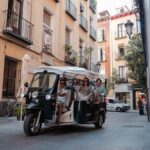
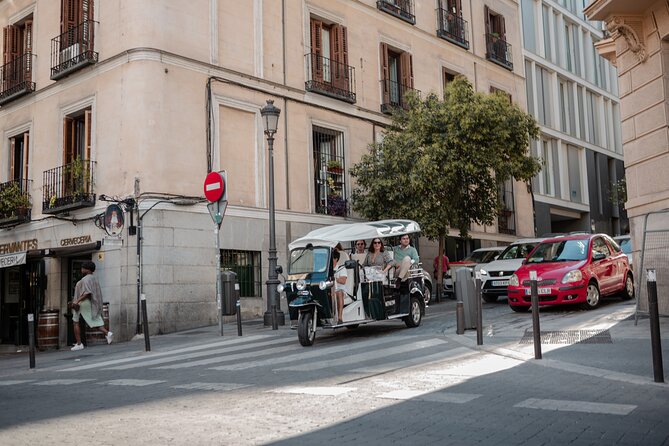
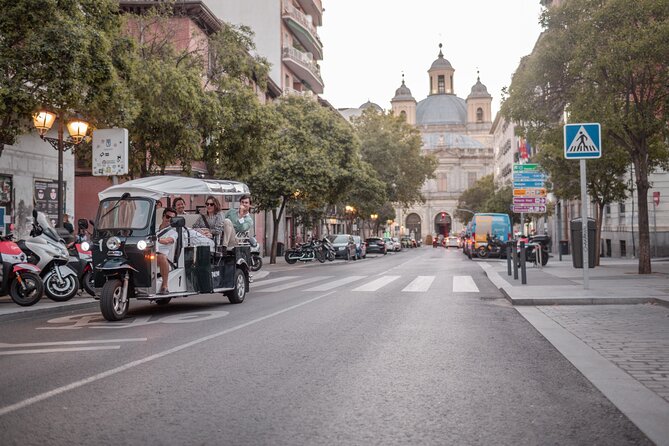
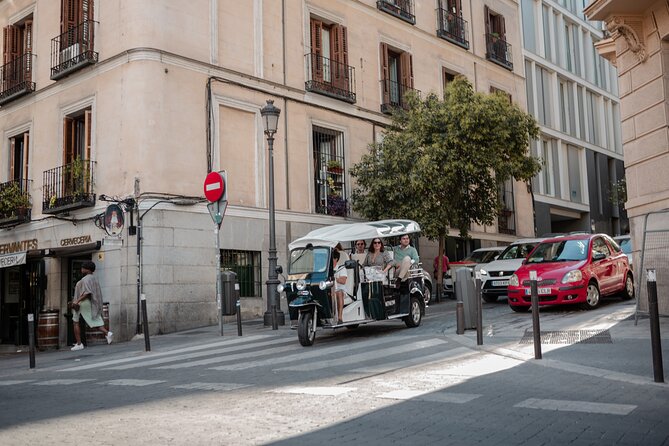
Madrid gets a faster start in an eco tuk-tuk. This private ride mixes big landmarks with neighborhood flavor, using a 100% electric vehicle.
What I really like: it’s just your group, so your guide can keep the pace and answer your questions on the spot. I also love the winter setup, with blankets and protective layers so the ride stays comfortable when Madrid is windy.
One thing to consider: the route is fixed with pre-selected photo stops, and the itinerary can shift if streets close or there’s a demonstration.
In This Review
- Key things to know before you go
- Getting on the Eco Tuk-Tuk: meeting at Puerta del Príncipe
- Price and time: what $28.66 buys you
- The route in fast, friendly chunks: from a 1916 market to Atocha
- A 1916-era covered market stop: food and elegance
- San Francisco el Grande: a dome you can’t ignore
- Atocha station: the busiest rail hub in Spain
- Palacio of the Spanish Courts: the building that holds the country’s debates
- Atlético and Real Madrid: Plaza of gods, stadium pride
- Prado area and Jerónimos: art + a Gothic-Renaissance church
- Prado Museum area: European painting at world-class scale
- San Jerónimo el Real (Los Jerónimos): what survives after centuries of changes
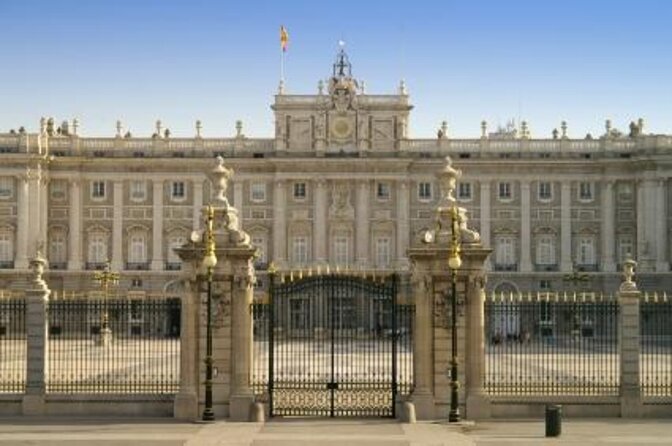
- Almudena Cathedral and the Royal Palace: religion meets monarchy
- Almudena Cathedral and its museum story
- Palacio de Oriente: royal residence, now official events
- Campo del Moro and Sabatini gardens: the royal outdoors
- Puerta de Alcalá, Plaza de Santa Ana, and the “money” belt
- Puerta de Alcalá: Carlos III’s 1778 gateway
- The palaces and institutions around it
- The Bank of Spain building: decorative, awarded, and function-first
- Plaza de Santa Ana: a square that kept changing
- Temple of Debod: the ancient Egyptian break in the middle of it all
- Who should book this private tuk-tuk (and who may not love it)
- Should you book this Madrid Eco Tuk-Tuk tour?
- FAQ
- What languages is the tour offered in?
- How long is the tour?
- Is this tour private or shared?
- What’s included in the price?
- Where do I meet the tuk-tuk?
- What are the age and child rules?
- Can I cancel for free?
Key things to know before you go
- Private means your timing matters: you ride together and get direct guidance instead of joining a large group shuffle.
- Electric tuk-tuks keep it easy: expect minimal walking versus a classic walking tour.
- Weather gear is included: blankets and layers help when temperatures drop or the wind picks up.
- You’ll get photo moments planned in: stops are set for pictures, not frequent pull-offs.
- Major Madrid landmarks in a short window: from an iconic church dome to royal palaces and an Egyptian detour.
- Guides can be funny and personal: names you might get include Carlos, Laura, Fernando, Clara, Gloria, Alejandro, Sandra, Juan, and Nerea.
Getting on the Eco Tuk-Tuk: meeting at Puerta del Príncipe
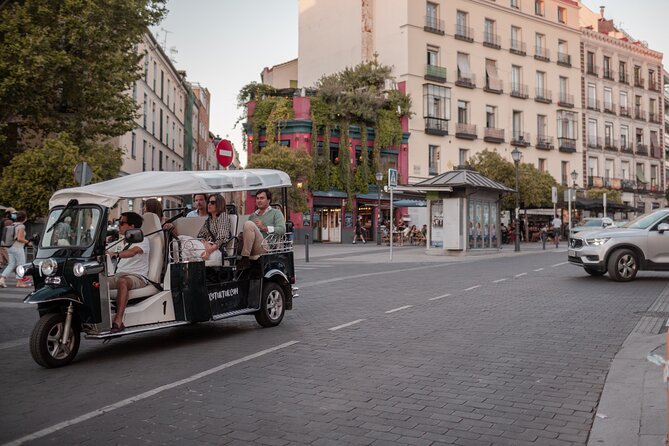
This tour starts near the Royal Palace area, with the meeting point at C. de Bailén, 4 (Centro, 28013). The helpful detail is that the actual pickup spot is inside the bus station’s underground level by Plaza de Oriente, right next to the Royal Palace.
Here’s what to do: search for Calle Bailén 4 or Puerta del Príncipe on Google Maps. You should see the stairs that lead down to the station across from the Prince’s Gate. Look for the Eco Tuk Tuk signage, then meet your driver there.
If you have mobility needs, the operator notes that you should contact them so they can help you access the meeting point by elevator. The vehicles are also described as suitable for older people, and drivers will help you get on if needed.
Plan on arriving on time. If you’re delayed, the tour can be shortened based on lost time, and it’s canceled if your delay goes beyond 15 minutes with no refund.
You can also read our reviews of more tours and experiences in Madrid.


Price and time: what $28.66 buys you
At $28.66 per person, this is positioned as an efficient Madrid intro—especially because it includes an expert guide and a private vehicle for your group. You also start the tour without queues or waiting, which matters in a city where the “line experience” can eat your day.
Duration is listed as about 1 to 4 hours, so you’re choosing how much of the city you want to sample. For first-time visitors, shorter versions work as an orientation sweep. Longer versions help you connect the dots between neighborhoods, landmarks, and local stories.
A useful tradeoff: this isn’t a “park here all afternoon” tour. If you want lots of time inside museums and churches, you’ll likely treat this as your map-making day. Then you return later on your own with more targeted ticket time.
And quick heads-up: tips for the driver guide aren’t included.
The route in fast, friendly chunks: from a 1916 market to Atocha
The tour’s big strength is how it stitches together Madrid’s “why it looks like this” story without demanding long walks. You’ll ride through different eras and power centers, with photo stops placed where you’ll actually want a clear view.
A 1916-era covered market stop: food and elegance
The tour includes a covered market dating from around 1916, known for local food, delicatessen-style shopping, and events in a refined setting. Even if you don’t snack right away, this kind of stop helps you understand how Madrid built its everyday culture around places you can smell and see—bread, cheese, cured meats, and that lively indoor energy.
San Francisco el Grande: a dome you can’t ignore
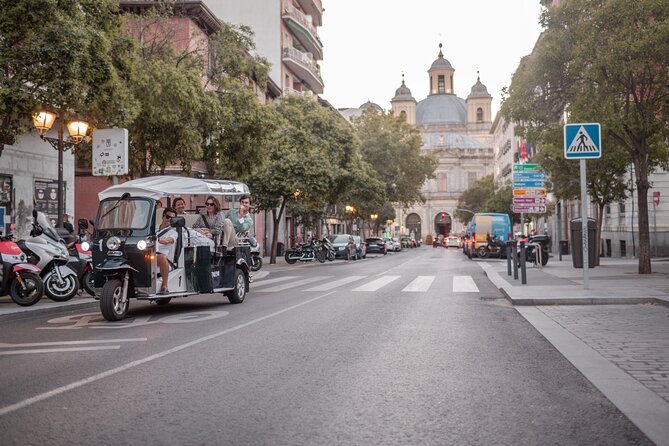
Next up is the Royal Basilica of San Francisco el Grande (officially the Basilica of Our Lady of the Angels) in the Palacio neighborhood. This is one of those Madrid landmarks that quickly changes how you think about the city’s architecture. You get a sense of why religious buildings here are so central to the skyline, even when you’re only seeing it from the route.


Atocha station: the busiest rail hub in Spain
Then there’s Atocha station, described as the busiest station in the country and one of the busiest in Europe. It’s near Plaza del Emperador Carlos V, and it’s a reminder that Madrid isn’t only historic sightseeing—it’s also a major living transportation hub that shapes where people move and how the city works day to day.
Palacio of the Spanish Courts: the building that holds the country’s debates
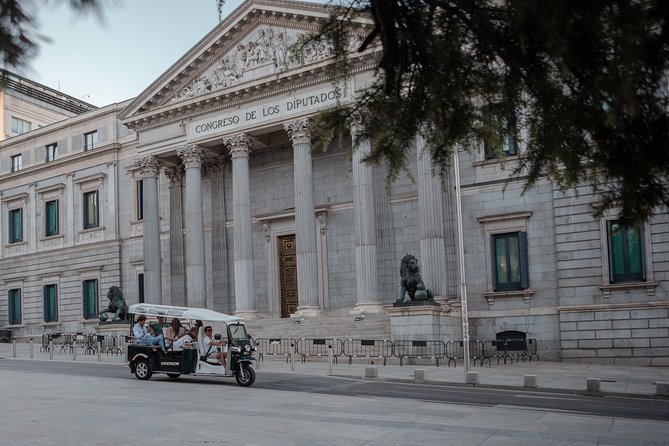
The tour also stops at the Palace of the Spanish Courts—built on the site of the former convent of the Holy Spirit, which served as the seat of Congress between 1834 and 1841. From the outside, the façade details are the point: a neoclassical staircase leading to a portico with six Corinthian columns, a triangular pediment with reliefs by Ponciano Ponzano, and flanking lions whose iron was cast from cannons captured in Africa.
The tour notes that the bronze door opens only on very marked occasions, which tells you how access to the interior is limited in practice. Still, the exterior is rich enough to help you read Madrid’s political language in stone: rules, symbolism, and authority.
Atlético and Real Madrid: Plaza of gods, stadium pride
One of the most fun parts is the sports symbolism stop. Atlético de Madrid fans celebrate at Plaza del Dios del Mar, while Real Madrid fans celebrate at Cibeles. It’s not just a photo moment. It’s a quick lesson in how Madrid’s public art became a stage for modern identity.
Prado area and Jerónimos: art + a Gothic-Renaissance church
Prado Museum area: European painting at world-class scale
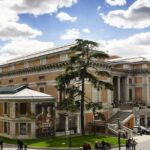
The tour includes the Prado museum area, and it comes with an art-world credibility note: art historian and Hispanicist Jonathan Brown is cited saying that few would dispute it as the world’s most important museum for European painting. The key for you is what that implies: the Prado is not a “maybe later” stop if you’re even mildly into painting. This route gives you the orientation so you can plan a real museum visit afterward.
San Jerónimo el Real (Los Jerónimos): what survives after centuries of changes
Right after the art stop comes the Parish Church of San Jerónimo el Real, popularly called Los Jerónimos. It’s described as late Gothic with Renaissance influences from the early 1500s, but also a building where relatively little of the original structure remains due to heavy remodeling and restoration over the centuries.
That’s a valuable thing to notice on a first pass: Madrid’s famous landmarks aren’t frozen in time. They’re rebuilt, repaired, adjusted—like the city itself.
Almudena Cathedral and the Royal Palace: religion meets monarchy
This portion of the route is about the two big “anchors” Madrid revolves around: the Church and the Crown.
Almudena Cathedral and its museum story
The tour includes Almudena Cathedral, described as the most important religious building in Madrid. The tour data also states it was consecrated on June 15, 1993 by Pope John Paul II, and it became the first consecrated cathedral outside Rome.
You’ll also pass the Almudena Cathedral Museum, which gathers objects telling the story of the diocese of Madrid. It’s laid out across twelve rooms, with items like mosaics and episcopal shields. Even if you don’t have time for the museum itself, knowing it exists helps you connect what you see outside to how the cathedral functions as a living institution.
Palacio de Oriente: royal residence, now official events
Then you’ll head to the Royal Palace, also called the Palacio de Oriente. A key detail here: today it’s used exclusively for receptions, ceremonies, and official events, because the Spanish kings reside in the Palacio de la Zarzuela. That changes the vibe from “living monarchy” to “ceremonial monarchy.”
Construction began in 1738 and took 17 years. After completion, Carlos III established his habitual residence there in 1764. The tour notes the site used to hold the Palace of the Austrias, destroyed in a fire on Christmas Eve in 1734—a reminder that Madrid’s grandeur often has a rebuild story behind it.
Campo del Moro and Sabatini gardens: the royal outdoors
The route also includes the surrounding gardens. Campo del Moro lies to the west and is said to date from the Middle Ages, and the tour notes it can be visited during the day. The Sabatini gardens are located in front of the north façade of the Royal Palace, between Bailén street and the San Vicente slope, with an area of 2.66 hectares and created in the twentieth century.
For you, this matters because it shows how Madrid’s royalty didn’t just build palaces. They built a controlled connection to nature.
Puerta de Alcalá, Plaza de Santa Ana, and the “money” belt
Puerta de Alcalá: Carlos III’s 1778 gateway
The tour includes Puerta de Alcalá, described as a monumental gate built by order of Carlos III to replace an earlier 16th-century gate. It was inaugurated in 1778.
This is a perfect “stop your brain and look up” moment. Gates like this helped define Madrid’s boundaries and identity when the city was less sprawling and more concentrated.
The palaces and institutions around it
The route notes nearby buildings including Buenavista Palace (Army Headquarters), Linares Palace (America House), Communications Palace (formerly the Post Office and now Madrid City Council), and the Bank of Spain.
The Bank of Spain building: decorative, awarded, and function-first
There’s also a specific description of the Bank of Spain building: it’s described with the phrase decorative waste, and it notes it received an award at the National Exhibition of Fine Arts in 1884. The tour says the building was meant to give the National Bank a headquarters matched to the importance of its functions, including the single issue of coins and bills for all Spanish territory.
Whether you love the style or find it a little too showy, the message is clear: money still needs theater.
Plaza de Santa Ana: a square that kept changing
Finally, you pass Plaza de Santa Ana, an open space in the Cortes neighborhood dating from 1810. The tour data points out that it’s undergone numerous urbanization processes that changed its look over time. This is the kind of background detail that makes Madrid feel lived-in instead of just postcard-perfect.
Temple of Debod: the ancient Egyptian break in the middle of it all
Near the end (or as part of your route, depending on how long you book), you may stop at Templo de Debod. The tour notes it’s an ancient Egyptian building currently located in Madrid, west of Plaza de España near Paseo del Pintor Rosales.
It sits on a hill where the Cuartel de la Montaña used to be. The time is short—about 10 minutes—and the tour states admission is free with a ticket marked free.
This is the kind of detour that makes the tour feel different from just “more European monuments.” It’s a story of how Madrid absorbed pieces of the wider world into its city fabric.
Who should book this private tuk-tuk (and who may not love it)
This tour shines for:
- First-time visitors who want a fast, structured orientation across multiple neighborhoods.
- People who prefer less walking but still want clear landmarks and photo moments.
- Families and mixed-age groups, since the ride is described as suitable for older people and drivers help with getting on.
This tour may not be your best fit if:
- You want to customize your stops or spend long hours inside museums and churches. The stops are pre-selected for photos, and the itinerary can vary due to street closures.
- You’re traveling with a pet; pets aren’t allowed.
- You’re coming with very young children. The data notes a minimum age of two, and also a minimum weight of 9 kg.
One more practical note: one review mentioned the sound system wasn’t the best. That’s not guaranteed for every trip, but it’s a fair reminder that if you’re relying on audio narration, you’ll still want to look at the guide and the sights.
Should you book this Madrid Eco Tuk-Tuk tour?
If you’re trying to make your first day (or first half-day) in Madrid feel organized, this is a strong pick. You get a private electric tuk-tuk ride, an English-speaking guide, and a route that jumps from market life to churches, then into government, art territory, and royal Madrid—without tiring yourself out on long walks.
I’d book it if:
- you want a guided overview that helps you plan what to do next,
- you care about weather comfort (blankets are included),
- and you like your history explained in a way you can actually remember.
I’d skip it if:
- you already know Madrid well and want deep time inside specific sites,
- or you need total flexibility to roam beyond pre-set photo stops.
FAQ
What languages is the tour offered in?
The tour is offered in English.
How long is the tour?
It runs for about 1 to 4 hours, depending on the option you choose.
Is this tour private or shared?
It’s a private tour, meaning it’s just your group.
What’s included in the price?
The tour includes an expert companion guide/driver, a 100% electric and sustainable vehicle, pre-selected stops for photographing, blankets and protective layers, and a mobile ticket. Tips are not included.
Where do I meet the tuk-tuk?
You meet at C. de Bailén, 4, Centro, 28013 Madrid, and the pickup is described as in the underground bus station by Plaza de Oriente next to the Royal Palace, near the Puerta del Príncipe area.
What are the age and child rules?
The minimum age is two (2) years and the tour data notes babies are not allowed. There’s also a minimum weight requirement of 9 kg.
Can I cancel for free?
Yes. You can cancel up to 24 hours in advance for a full refund. If you cancel less than 24 hours before the start time, the amount paid is not refunded.