REVIEW · MADRID
Roots and Resistance: A Black History Tour of Madrid
Book on Viator →Bookable on Viator
Madrid has buried Black history in plain sight. This 2-hour walk makes big monuments feel personal, and I love how Black presence is woven into the streets you already want to see. I also love the way the guide, Kwame, turns architecture and names into clear stories about the transatlantic slave trade and the African diaspora. One possible drawback: the topic is heavy, and with an approximately 2-hour format, the pace can feel brisk.
You’ll start at Plaza de Isabel II near Teatro Real and work your way toward the center of everything at Puerta del Sol. The tour is private (only your group), offered in English, and priced at $42.10—especially good value because multiple stops include admission tickets. The biggest practical thing to plan for is weather and comfort: this is an outdoor, walking-heavy experience.
Here’s the key: this tour isn’t just about adding a footnote. It shows how slavery and Black life shaped Madrid long before most people ever think to ask the question.
In This Review
- Key points before you go
- A walk where street names and statues do the talking
- Teatro Real and Plaza de Isabel II: clues around the slave trade
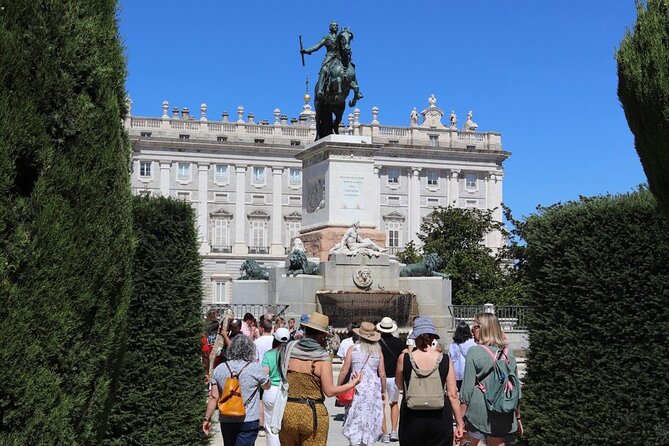
- The Royal Palace and the House of the Blacks: power on display
- Almudena Cathedral and San Ginés: religion, permission, and older foundations
- Plaza Mayor and Puerta del Sol: trade routes and public memory
- What you’re paying $42.10 for (and why it’s fair)
- Timing and pacing: how to make 2 hours work for you
- Who this tour fits best in Madrid
- Should you book Roots and Resistance in Madrid?
- FAQ
- How long is the Roots and Resistance Black History Tour of Madrid?
- What is the price per person?
- What language is the tour offered in?
- Where does the tour start and end?
- Is the tour private?
- What ticket type do I receive?
- Are admission tickets included?
- What is not included in the tour price?
- Are service animals allowed?
- Can I cancel for a full refund?
Key points before you go
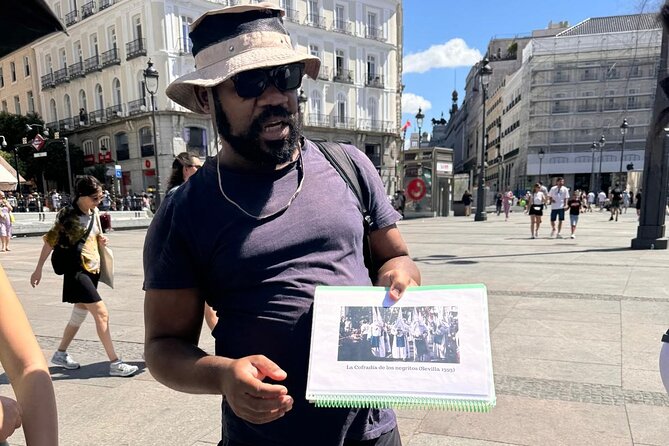
- Kwame’s storytelling connects Madrid’s landmarks to the African diaspora and global history in a way that actually sticks.
- Multiple major sites are included, not just a quick photo stop.
- Admission is part of the experience at several stops, including Teatro Real, Santa María la Real de la Almudena, San Ginés, and Plaza Mayor.
- The Royal Palace visit includes the House of the Blacks, a must-see for anyone who wants context beyond slogans.
- The tour runs as a private group, so you’re not lost in a crowd or fighting for attention.
- You finish at Puerta del Sol, which is the center (Km 0) for Spain’s radial road network—handy for planning what’s next.
A walk where street names and statues do the talking
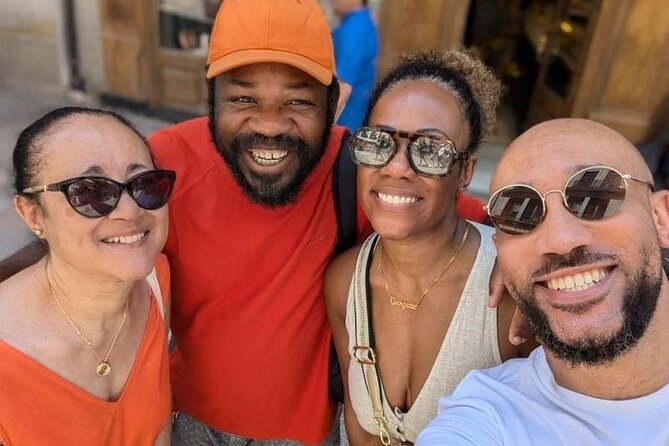
Madrid is famous for its grand squares and elegant buildings. But this tour flips the script: you don’t just look at beauty—you read it.
The route is built around the idea that traces of enslaved people and Black communities show up in plain sight, from the city’s layout to the names and monuments tied to power. You’ll hear how Madrid’s story intersects with the transatlantic slave trade, not as a side note, but as part of how the city grew.
And because the tour is offered in English with a dedicated guide, you get context on the spot. That matters here, because the details you’ll hear connect several locations that many first-time visitors never connect on their own.
You can also read our reviews of more tours and experiences in Madrid.


Teatro Real and Plaza de Isabel II: clues around the slave trade
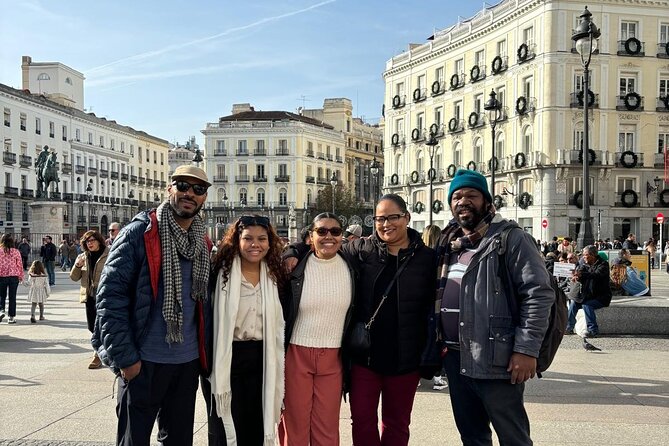
You begin at Plaza de Isabel II, right in the Centro area. The tour starts with an important framing: this is a journey through slave history in Madrid, and it begins with the idea of business and traces still visible today.
From there, the walk focuses on how enslaved people influenced Madrid’s configuration—especially around the Puerta del Sol area. You’ll also look at major references that tie into Spain’s role in the transatlantic slave trade, including Calle Alcalá, which played a major role.
One of the most striking elements at this stage is the attention to who held power. The tour points to the equestrian statue of Carlos III, a king credited with owning more than 20,000 enslaved people, and uses that to talk about the scale of exploitation behind what can look like just another “pretty statue” stop.
Then you move into the area around the iconic Plaza Mayor, where the tour highlights that a slave market used to operate there. This isn’t meant to shock you for shock’s sake. It’s meant to help you see the city as it really was—economic power, human cost, and politics layered into everyday sightseeing.
Practical note: this stop includes an admission ticket and clocks in around 20 minutes, so show up ready to listen and then keep walking.
The Royal Palace and the House of the Blacks: power on display
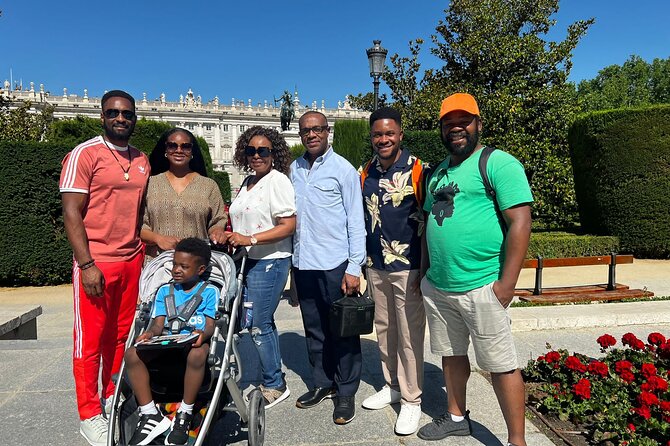
Next comes the Royal Palace of Madrid, described as one of the best preserved in Europe, with more than 135,000 square metres. The time here is shorter—about 15 minutes—but the point is focused.
The key draw for this tour is what’s inside: the Royal Palace houses the House of the Blacks. That’s the kind of name you might walk past on a regular visit. With a guide, it becomes a doorway into the reality that Black life was interwoven with the palace world, not something added later in interpretation.
This stop is a smart pivot. After learning how the slave trade shaped Madrid’s streets and institutions at ground level, you shift to a place that symbolizes state power and wealth. You come away with a clearer sense of how exploitation sat comfortably alongside prestige.
If you’re the type who likes to connect dots—why certain families mattered, why the city looked a certain way, how authority worked—this is where the dots start to feel less abstract.
Practical note: the Royal Palace admission is listed as ticket free for this tour stop, which improves the value.
Almudena Cathedral and San Ginés: religion, permission, and older foundations
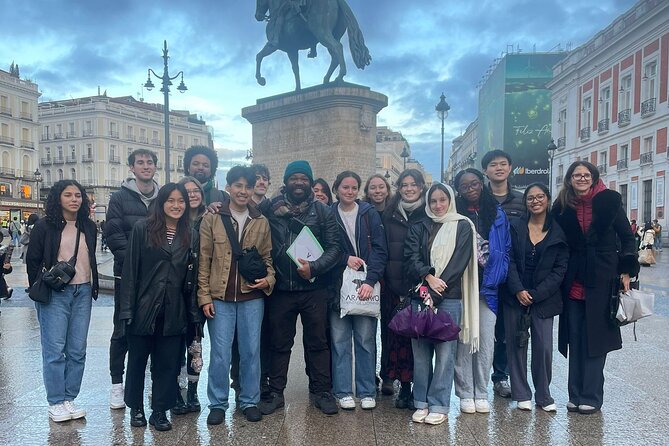
After the palace, you head to Catedral de Santa María la Real de la Almudena. Construction is tied to a specific moment in time: it began on 22 December 1868 after the Congregation of Slaves of the Virgin of Almudena asked the Archbishop of Toledo for permission to build a new church, dedicated to the Virgin of Almudena, after an earlier one was demolished in the revolution of 1868.
That’s a powerful detail because it changes what a cathedral visit usually means. You’re not only admiring design. You’re hearing how enslaved people and Black communities had religious structures, organizations, and ways of seeking permission and building space.
The stop runs about 25 minutes, with admission included.
Then you continue to Iglesia de San Ginés, on Arenal Street. This church is dedicated to San Ginés de Arles, and it’s described as one of Madrid’s oldest churches. It was built in 1645 on what’s believed to be the remains of a Mozarabic hermitage.
That Mozarabic reference matters. It helps you understand layers of history at the site: old Christian traditions, the city’s longer timeline, and how different communities—some connected to migration and conquest, others to religious brotherhoods—showed up in Madrid’s built environment over centuries.
This stop takes about 15 minutes and includes admission.
Practical note: since both of these are indoor/outdoor mix stops depending on how you navigate entrances, wear shoes that won’t betray you after an hour of walking.
Plaza Mayor and Puerta del Sol: trade routes and public memory
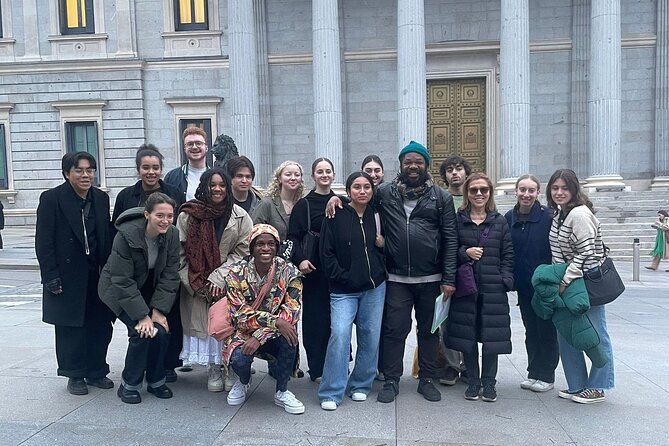
Then you arrive at Plaza Mayor, in the oldest part of Madrid tied to Hapsburg-era power. The tour frames it as the perfect starting point for strolling the surrounding district, but with a history-loaded lens.
Plaza Mayor is where the walking tour’s themes become visible in a public square you probably already planned to see. The tour also ties this space to the idea of a slave market that used to operate there, which adds a weight to an otherwise “everyone meets here” kind of place.
This stop runs about 15 minutes, and admission is listed as included.
Finally, you end at Puerta del Sol, the busy heart of central Madrid. It’s also the symbolic center point for Spain’s road network, listed as Km 0. The tour also notes Puerta del Sol’s semi-circular design as a junction linking major streets, including Calle Mayor and Calle del Arenal, plus it connects to radial roads across Spain.
This ending location is more than convenient. It reinforces the tour’s message: the slave trade didn’t only exist on ships or in far-off places. It connected to how cities functioned, where people moved, and whose interests shaped public space.
The tour ends at Puerta del Sol, and this last segment is about 15 minutes, with admission listed as included at this stop as well.


What you’re paying $42.10 for (and why it’s fair)
At $42.10 per person for about two hours, this isn’t the cheapest Madrid walk. But it’s not overpriced either, because several things are bundled in.
You’re getting:
- A private tour for only your group
- An English-speaking guide
- A route that includes multiple key monuments
- Admission tickets included for several stops (with the Royal Palace ticket listed as free for that stop)
In other words, you’re not paying just for information. You’re paying for access and for a guided connection between places that look unrelated if you only visit on a self-guided loop.
A detail that also signals demand: the tour is commonly booked about 24 days in advance. That usually means people treat it as one of their Madrid “must-places” rather than an optional add-on.
My take on value: if you care about how history shapes the city you’re standing in, the ticket price makes sense. If you just want a quick look at famous sites without context, you’ll probably feel the time pressure.
Timing and pacing: how to make 2 hours work for you
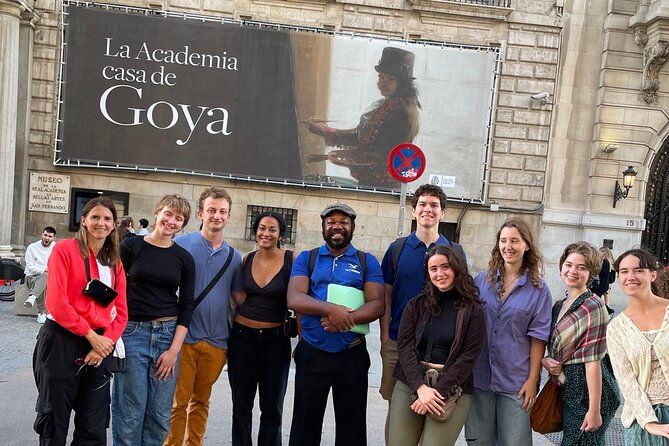
The tour runs around 2 hours and moves stop-to-stop through central Madrid. That’s long enough to build a narrative, but short enough that you’ll likely keep moving.
Here’s how to get the most:
- Bring water. Drinks like soda/pop are explicitly not included.
- Wear comfortable shoes. The route links major central areas, so it adds up.
- Expect a serious tone. Even when the storytelling is engaging, the subject matter is about slavery and exploitation.
- Plan for weather. One piece of feedback emphasized it works rain or shine, so pack for the sky, not the forecast alone.
If you like to ask questions, this is a good format. With a private group, you’re less likely to get lost between other people’s conversations.
Who this tour fits best in Madrid
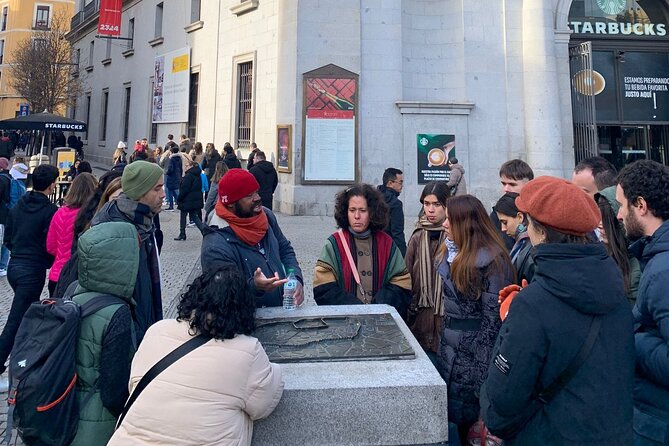
This tour is a strong match if you want more than postcard sights. It’s built for people who like to understand how power, economics, and everyday city life connect.
It’s also ideal if you’re pairing history with sightseeing. One useful strategy: do this early on, then return later for your own pace—because the landmarks will make more sense after you’ve learned why they matter.
If you’re traveling as a family, it can still work as long as everyone is ready for weighty content and you’re comfortable keeping up a walking pace.
And if you want extra support, the tour notes that service animals are allowed and that most people can participate.
Should you book Roots and Resistance in Madrid?
Yes, if you’re willing to trade a standard highlights walk for a meaning-first route. I’d book it if you want Black history connected to Madrid’s exact streets and monuments, guided by Kwame’s storytelling and research-focused approach from earlier centuries into the present.
I’d think twice if you prefer light and breezy sightseeing, or if you get uncomfortable with topics like slavery. The tour’s value comes from facing the subject head-on, not smoothing it over.
If you do book, plan your day with the end point in mind: finishing at Puerta del Sol makes it easy to keep moving—whether that means museums, shopping, or just finding a place to slow down and process what you learned.
FAQ
How long is the Roots and Resistance Black History Tour of Madrid?
The tour lasts about 2 hours.
What is the price per person?
The price is $42.10 per person.
What language is the tour offered in?
The tour is offered in English.
Where does the tour start and end?
It starts at Plaza de Isabel II, Centro, 28013 Madrid, Spain, and ends at Puerta del Sol, Centro, Madrid.
Is the tour private?
Yes. It’s listed as private, meaning only your group participates.
What ticket type do I receive?
You receive a mobile ticket.
Are admission tickets included?
Admission tickets are included for multiple stops, and the Royal Palace stop is listed as ticket free.
What is not included in the tour price?
Soda/pop drinks are not included.
Are service animals allowed?
Yes, service animals are allowed.
Can I cancel for a full refund?
You can cancel for a full refund up to 24 hours before the experience’s start time.