REVIEW · GIZA
Private Tour with Pyramids Odyssey and Ancient Egypt
Book on Viator →Operated by Moustafa Egypt Tours · Bookable on Viator
A 7am start makes the Giza day feel calmer. This private tour links the Pyramids of Giza with a guided visit to the Egyptian Museum for a focused King Tut stop. I especially like the plan to spend real time around the Cheops, Chephren, and Mykerinos pyramids, including going inside the great pyramids if that’s available on the day. One thing to plan for: site entrance fees and lunch are not included, so you’ll want extra budget ready.
My second big draw is the human factor: you get an English-speaking guide through the whole day, plus air-conditioned vehicle transfers and mineral water. In other words, you’re not just checking boxes—you’re getting explanations while moving between the sites.
The main consideration is simple: you’ll pay additional entrance fees (listed as about $25 per person) and you’ll need to handle lunch on your own. If you’re expecting a fully all-in day price, this isn’t that kind of ticket.
In This Review
- Key Points That Make This Tour Worth Your Time
- Private Pyramids + Egyptian Museum: How the 6–8 Hours Works
- Stop 1: Giza Necropolis Highlights (Cheops, Chephren, Mykerinos + Sphinx)
- Camel ride and the papyrus school (only if timing allows)
- The best way to use your time here
- Stop 2: Egyptian Museum for King Tut’s Golden Treasures
- What 3 hours can realistically cover
- Price and Logistics: What You’re Really Paying For
- What’s included
- What’s not included
- Duration timing reality
- Guide Moustafa and Why Private Feels Easier in Cairo
- The Small Practical Stuff That Makes a Big Difference
- Start time: 7:00 am is a strategy
- Water and comfort
- Mobile ticket
- Walking and uneven ground
- Who This Tour Fits Best (and Who Might Skip It)
- Should You Book This Pyramids Odyssey Tour?
- FAQ
- How long is the Private Tour with Pyramids Odyssey and Ancient Egypt?
- Where does the tour start and end?
- Is pickup included?
- Are entrance fees included in the price?
- What’s included in the tour besides the guide?
- Is this tour private?
Key Points That Make This Tour Worth Your Time
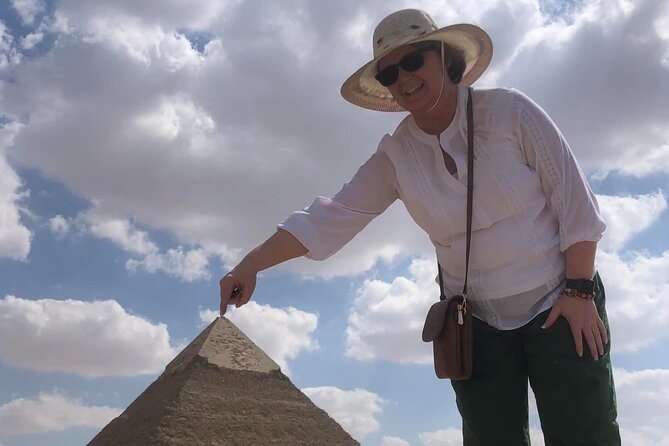
Early 7:00 am departure at Giza helps you beat some of the worst crowds and heat.
Private format means only your group participates, so you can ask questions and move at your pace.
Pyramids focus plus Sphinx time includes the Great Sphinx and areas tied to the Temple of Kheops.
Inside-the-pyramids element is part of the experience plan for the great pyramids (when available).
Egyptian Museum guided stop is built around King Tut’s golden treasures and major galleries.
Air-conditioned transfers and mineral water keep a long day manageable.
Private Pyramids + Egyptian Museum: How the 6–8 Hours Works
This is a private day tour in Giza that runs about 6 to 8 hours, and the clock includes the travel time between stops. The day starts at 7:00 am at Giza Necropolis Al Haram (and you return there at the end), which is a big deal in Cairo-area timing. You’re basically booking the morning “best hours” instead of arriving late and fighting crowds.
The tour is priced at $160 per person, which is a mid-range cost for a private, guided, two-stop day. You should think of it as paying for three things: coordination (getting you where you need to go), a guide who can explain what you’re seeing, and comfortable transfers. Then you top it off with what’s not included: entrance fees and lunch.
Also note the physical piece: the tour asks for moderate physical fitness. That usually means walking and standing around large sites with uneven ground and stairs where applicable. If you know you tire quickly, plan on slower pacing and plenty of breaks.
Stop 1: Giza Necropolis Highlights (Cheops, Chephren, Mykerinos + Sphinx)
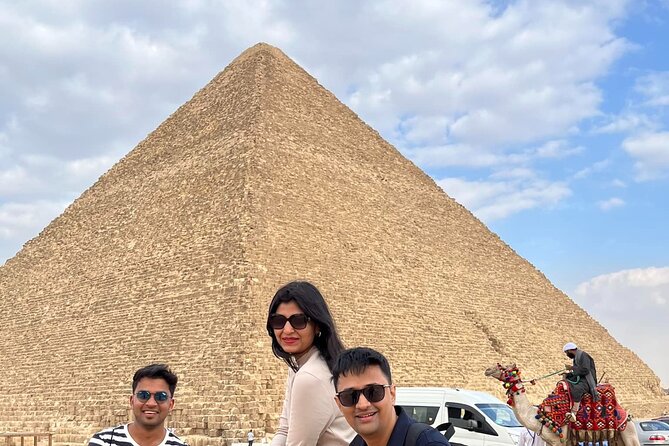
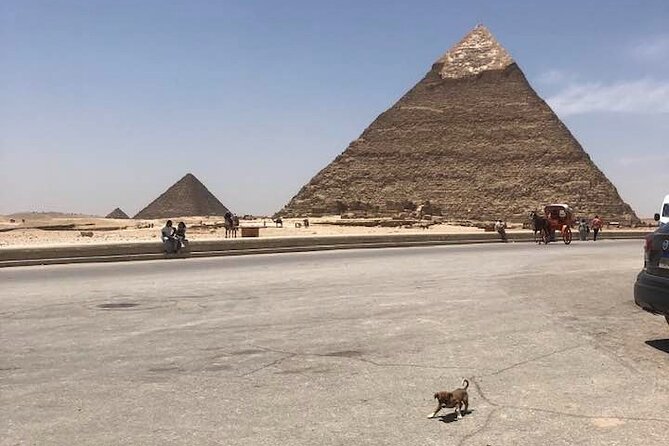
The first stop is where the day earns its reputation. You’ll get a guided tour of the Pyramids of Giza, specifically mentioning the pyramids of Cheops, Chephren, and Mykerionos. The itinerary also includes seeing them by getting inside the great pyramids—this is one of those “only in Egypt” moments that people usually remember more than the photos.
What’s smart about this first stop is that it’s not only pyramid time. After the pyramids, you also visit the Great Sphinx, tied in the itinerary to the Royal Burial Chambers and the Temple of Kheops. That matters because the Sphinx isn’t just a photo prop. It sits in the same big historic story as the surrounding Giza complex, so the guide’s context helps you connect what you’re seeing.
Camel ride and the papyrus school (only if timing allows)
Two optional extras are written into the plan:
- Camel ride if you want one
- Papyrus school if there’s time, focused on how ancient Egyptians made early paper
This is good because it gives you flexibility without turning the day into a chaotic choose-your-own-adventure. But do keep your expectations grounded: these are conditional on time and the flow of the morning. If you’re the type who hates last-minute changes, ask your guide early how likely you’ll have time for these add-ons.
The best way to use your time here
At the pyramids, you’ll usually hit three moods: “wow,” “why is it so big,” and “I need a snack.” With a guided private pace, you can spend more time on the parts that hook you. If you care about the story behind the monuments, lean into the guide’s explanations. If you care about photos, this format typically helps you find viewpoints with less hassle.
Stop 2: Egyptian Museum for King Tut’s Golden Treasures
Next comes the Egyptian Museum, with a guided tour inside. The focus is clearly on the golden treasures of Tut-Ankh-Amun, plus a gallery of statues and portraits and other displays.
The useful part here is the guide-led structure. Egyptian Museum visits can go off the rails fast if you wander without a plan. With only about 3 hours for the museum, you’ll want to spend that time efficiently, and the tour is designed for exactly that: hit Tut’s material, then move through key galleries rather than getting stuck in one wing for half the day.
What 3 hours can realistically cover
A museum of this size can swallow a whole trip if you let it. Three hours is tight, but it’s not short if you have someone who knows how to connect the dots. You should expect to see a highlight route—enough to feel oriented and learn the big context—rather than a museum-marathon.
If you’re a first-timer, this is a strong approach. If you’re a repeat Egypt museum visitor, you may still appreciate the structure, but you’ll want to compare what the tour prioritizes against what you personally want most.
Price and Logistics: What You’re Really Paying For
Let’s talk value, because $160 per person can mean different things depending on what’s included.
What’s included
Your ticket includes:
- All transfers by air-conditioned vehicles
- An excellent English-speaking guide
- Mineral water
- Pickup offered (you’ll coordinate the pickup as part of the experience setup)
- Mobile ticket
For a full-day Giza + museum program, those pieces matter. Air-conditioned transport isn’t a luxury detail when the itinerary spans morning heat and long driving. The guide language matters even more: you’ll get explanations, not just directions.
What’s not included
You should budget for:
- Entrance fees for the listed sites (around $25 per person)
- Lunch
That’s the real “gotcha” for planning. If you’re comparing to cheaper options, make sure you’re not comparing an all-in museum day with a guided transport day. Here, the core experience is guided and private, but the entry fees and meals are on you.
Duration timing reality
The total time is 6 to 8 hours, and transportation time is included. That means your “on-site” time is more limited than the whole day suggests, so you should come with the right mindset: don’t expect endless lingering. Expect a guided highlight circuit with time to ask questions.
Guide Moustafa and Why Private Feels Easier in Cairo
This is a private tour through Moustafa Egypt Tours, and the name comes up again and again in the feedback patterns for one big reason: the guide experience. People consistently describe the guide as the difference-maker—someone who explains with patience and connects the dots so the monuments feel less like random stone and more like a coherent story.
That shows up in the kinds of compliments that actually matter for visitors:
- A sense of personal customization (not just a standard script)
- Patience while you absorb details
- Help finding good photo spots, including viewpoints that reduce the hassle of other people being in your frame
- A history-and-culture approach that makes the pyramids and museum stops feel tied together
In plain terms: with a private guide, you don’t just see more—you often understand more. And in a place like Giza, understanding what you’re looking at changes the experience from sightseeing into something you’ll remember.
The Small Practical Stuff That Makes a Big Difference
A few details in the plan are worth paying attention to before your day starts:
Start time: 7:00 am is a strategy
This tour begins at 7:00 am. That’s early enough to help with comfort and crowd management. If you’ve ever done Giza mid-day, you know the difference. Early start tends to mean better pacing and a more relaxed feeling.
Water and comfort
Mineral water is included, which is exactly the kind of small comfort you appreciate halfway through the day. Also, air-conditioned vehicles mean you get a real break between stops instead of bouncing around in open-air transit.
Mobile ticket
A mobile ticket is included. That usually means less paper to track and less fumbling when you’re tired. Still, I’d keep it ready on your phone and also take a quick screenshot in case reception acts up.
Walking and uneven ground
The tour lists moderate physical fitness as a requirement. At Giza, you’re often stepping over uneven terrain while standing for long stretches. If you bring good shoes and plan for slower movement, you’ll get more enjoyment out of it.
Who This Tour Fits Best (and Who Might Skip It)
This tour is a strong match if you want:
- A private day with an English-speaking guide
- A structured route that combines pyramids + King Tut at the museum
- A plan that uses the morning hours
- More than surface-level reading—someone to explain what you’re seeing
It may be less ideal if:
- You’re trying to keep every cent tight and don’t want to pay extra for entrance fees and lunch
- You hate any “time-based” structure (like optional camel ride or papyrus school only if there’s time)
- You need a fully sedentary schedule (moderate fitness is listed)
Should You Book This Pyramids Odyssey Tour?
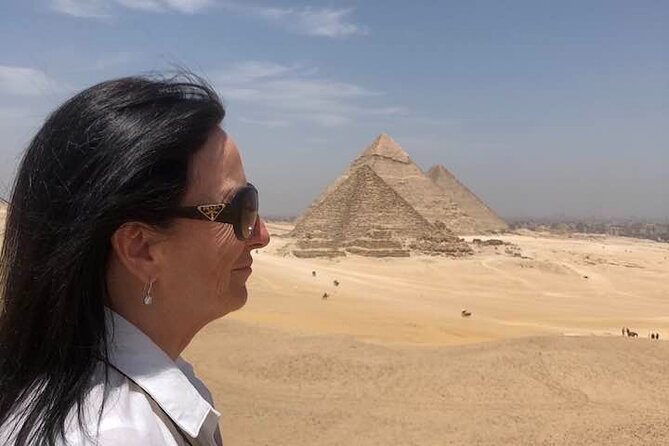
If your priority is a guided, private Giza day that doesn’t leave you guessing what matters, I’d book it. The combination is practical: you get the pyramids and Sphinx first while the day is fresh, then you shift indoors to the Egyptian Museum for the Tut-Ankh-Amun golden highlight.
I’d also book it if you like the idea of a guide who can handle the flow—pacing, questions, and the little problem-solving moments that come with Giza and a major museum.
Before you commit, do one quick sanity check: plan for entrance fees and lunch, and wear shoes that can handle uneven ground. If you’re good with that, this tour is a solid value at $160 per person for a private, English-led, two-stop day in one of the world’s most famous historic zones.
FAQ
How long is the Private Tour with Pyramids Odyssey and Ancient Egypt?
The tour runs about 6 to 8 hours total, with transportation time included.
Where does the tour start and end?
It starts at Giza Necropolis Al Haram, Giza Governorate 3512201, Egypt at 7:00 am and ends back at the meeting point.
Is pickup included?
Pickup is offered as part of the experience.
Are entrance fees included in the price?
No. Entrance fees for the listed sites are not included and are around $25 per person.
What’s included in the tour besides the guide?
The tour includes all transfers by air-conditioned vehicles, mineral water, an excellent English-speaking guide, and a mobile ticket.
Is this tour private?
Yes. It’s a private tour/activity, so only your group participates.