REVIEW · ATHENS
Private Tour of Epidaurus, Ancient Corinth & Isthmus Canal From Athens
Book on Viator →Operated by Ancient Greece Tours & Transfers · Bookable on Viator
Ancient Greece, packed into one smooth day. I like the private door-to-door pickup from your Athens hotel, and I also love the way this route gives you the big Epidaurus theatre moment with its famous acoustics. You’re traveling in an air-conditioned vehicle with Wi-Fi on board, so the long day feels manageable even when the schedule runs tight.
One thing to plan for: site entrance fees and the museum stops are not included, and food is also on you. That means your final cost will be a bit more than the $297.26 base price per person.
In This Review
- Quick hits before you go
- Private pickup from Athens, with real comfort for a long day
- Corinth Canal and Ancient Diolkos: where ships got help
- Acrocorinth: fortress power on a monolithic rock
- Fountains and springs: small stops that explain the big city
- Ancient Corinth: Apollo, the Agora, the Bema, and Roman layers
- A village-style lunch overlooking the ruins
- Kenchreai (Cenchreae) port town: a Paul stop with maritime context
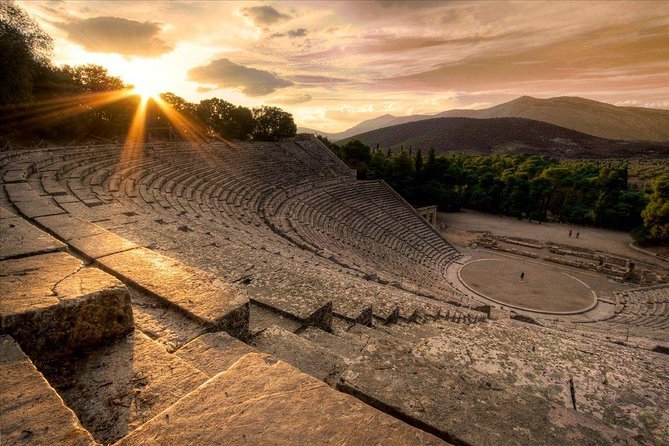
- Epidaurus theatre: test the acoustics with a coin
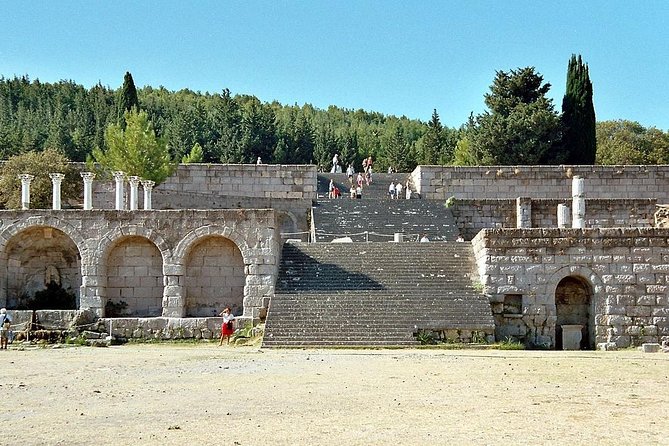
- Epidaurus museum and the Asclepius sanctuary for the medicine story
- Price and what you’re really getting for $297.26 per person
- Who this private day tour suits best
- Should you book this private Epidaurus–Corinth–Canal day trip?
- FAQ
- How long is the tour from Athens?
- Is this tour private or shared with other people?
- Does the tour include hotel pickup and drop-off in Athens?
- What’s included during the drive?
- Are entrance fees to Epidaurus, Corinth, and the museums included?
- Is food included in the tour price?
- Can I get skip-the-line tickets?
- FAQ
- What is the cancellation policy?
Quick hits before you go
- Private Athens pickup at your lobby or your Airbnb entrance, then back again at the end of the day
- Air-conditioned vehicle + Wi-Fi, plus bottled water, wipes, and Greek biscuits to keep you comfortable
- Corinth Canal + Ancient Diolkos, including the overland boat-moving idea that shaped Mediterranean trade
- Acrocorinth fortress views, with temple traces and remains from multiple eras layered on the same rock
- Ancient Corinth highlights like the Apollo temple, the Agora/Bema tied to Paul, and a port-town stop at Kenchreai
- Epidaurus UNESCO stop, including time for the theatre and then the museum plus the Asclepius sanctuary
Private pickup from Athens, with real comfort for a long day
This is a full-day private outing built around one simple promise: you don’t waste time negotiating trains, buses, or complicated transfers. You’ll be picked up directly from your hotel, Airbnb, or apartment in Athens, and your driver meets you at the lobby level or at the building entrance.
Inside the vehicle, the comfort is practical, not fancy-for-fancy’s sake. You get an air-conditioned ride, Wi-Fi on board, bottled water, and refreshing wipes, plus handmade Greek biscuits to tide you over between stops.
The tour runs about 8 hours, so pacing matters. Some of the time windows at each site are shorter, which is great for seeing a lot—but if you’re the type who likes to linger for hours in one place, you’ll want to accept the “see-and-move” rhythm.
You can also read our reviews of more tours and experiences in Athens.


Corinth Canal and Ancient Diolkos: where ships got help
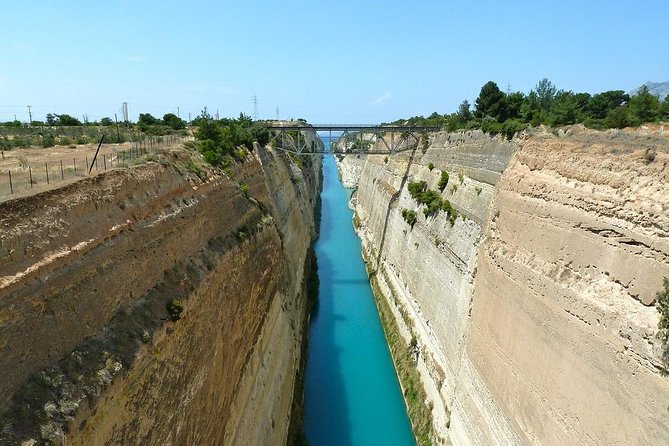
Corinth is where geography turns into history. The Corinth Canal stop is a strong first “wow” because it shows the importance of this narrow strip of land between seas and trade routes. It’s described as a major project and an engineering masterpiece from the 19th century, with a catalytic role for Mediterranean commerce.
Then you’ll step into the ancient logic with Ancient Diolkos, a paved trackway that helped move boats over land across the Isthmus of Corinth. Even if you already know the canal story, this Diolkos piece makes the whole region feel more believable—like the idea existed long before the modern canal ever did.
This is also a good moment to reset your expectations for what comes next. You’re not just visiting ruins; you’re following a route shaped by movement of goods, ships, and armies.
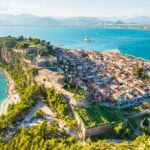
Acrocorinth: fortress power on a monolithic rock
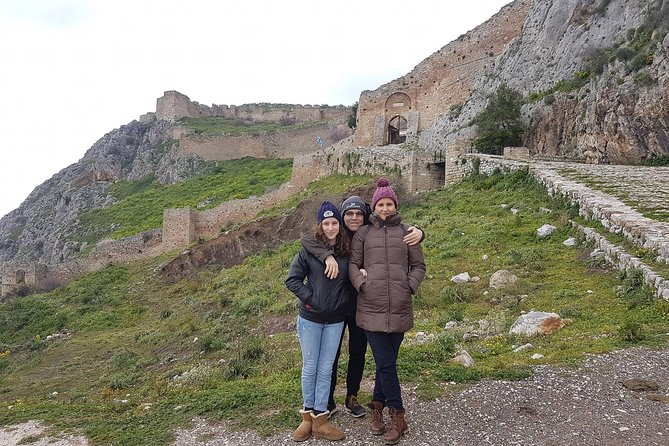
Acrocorinth is the kind of place where you immediately understand why someone would build a stronghold there. It’s the acropolis of ancient Corinth, rising as a dominant feature above the city, and the tour gives you about an hour to explore the area.
You’ll see a fortress system with three circuit walls reinforced by towers, which explains how the defenses were meant to work in layers. From the top, the views help you picture how the city controlled the region below, not just the ground inside the walls.
Within that same rocky space, the tour points out smaller, meaningful remnants, too. There are traces of the Temple of Aphrodite on one of the mountain’s highest points, plus the Frankish Tower and remains of churches, mosques, houses, fountains, and cisterns—evidence of how many different peoples used this strategic location over time.
If you love ruins where layers of history physically overlap, this stop is one of the best balances on the day. The tradeoff is that it’s a hilltop fortress area, so you’ll want comfortable walking shoes and a bit of stamina for steep bits.
Fountains and springs: small stops that explain the big city
Between major monuments, this tour uses shorter pauses to help you connect the dots. You’ll stop at Upper Peirene Fountain and learn about the Peirene Spring as a gift tied to mythology in local tradition.
Later you’ll also hear about springs associated with different eras, including Hadgimoustafa spring in Ancient Corinth. It’s easy to skip these details when you’re rushing for the headline buildings, but these small stops make Corinth feel like a lived-in place instead of a photo set.
You also get Geraneia Mountain views with a short break designed for a panorama. The point here isn’t a long hike; it’s a quick visual grounding so the rest of the sites make spatial sense—especially the Corinthian gulf and the Peloponnese coast.
Ancient Corinth: Apollo, the Agora, the Bema, and Roman layers
This is the heart of the day, and it’s where you’ll spend the most time in a dense concentration of major Corinth stops. Ancient Corinth Archaeological Museum is one anchor point, followed by outdoor sites that cover religion, politics, and everyday life.
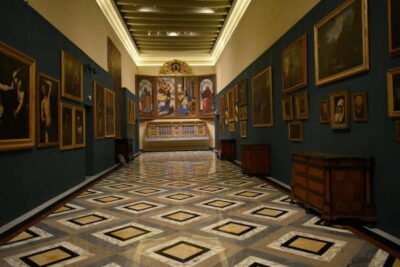
At the museum, you’ll see a large collection of artifacts tied to the local area and neighboring sites. It’s a useful start because it gives context before you walk among temples and foundations outside.
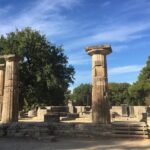
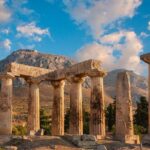
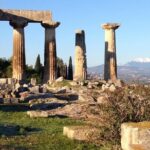
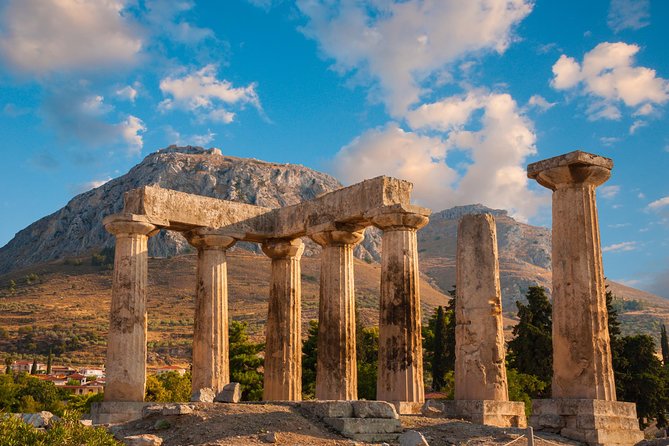
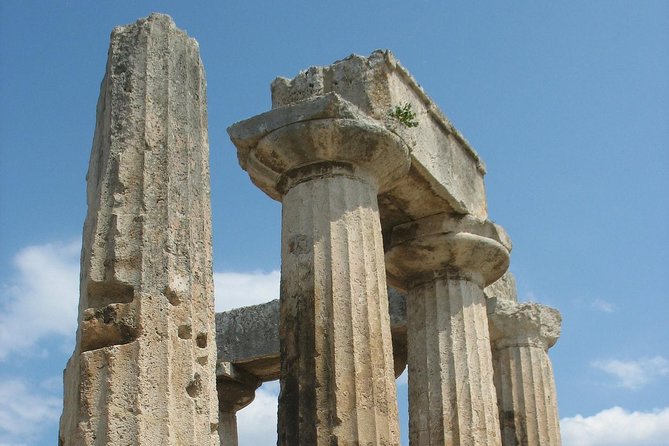
Then comes Temple of Apollo, one of the earliest Doric temples in the Peloponnese and Greece mainland. The tour highlights the monolithic columns—rare in the ancient world—and the temple’s construction date around 560 BCE, which helps you appreciate how early Corinth’s influence already was.
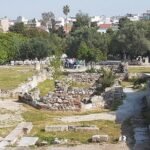
Next is the Agora and the Bema area. The Agora is described as a rectangular space with central shops, small temples, an altar, and the famous podium or Bema from where Apostle Paul addressed the Corinthians in 52 AD. If you like historical storytelling, this is where the city stops feeling purely archaeological and starts acting like a stage for real events.
You’ll also see Roman buildings mixed into the area. That layering matters: it shows how later eras didn’t erase Corinth; they built over it, adapted it, and kept using the bones of the old city.



A village-style lunch overlooking the ruins
Food on a tour can be hit-or-miss, so I like that this one doesn’t treat lunch like a checkbox. There’s time for an authentic village-style lunch on a terrace overlooking the ancient archaeological site and the Temple of Apollo.
Because food isn’t included in the price, you’ll pay for your meal, but the location is the value. You’re eating with the ruins in front of you, which means you’re not rushing to find a random restaurant near a parking lot.
There’s also room to wander afterward in the nearby village area. You’ll be able to stroll among shops and look for handmade souvenirs, which is a nice way to stretch the day without adding more driving.
Kenchreai (Cenchreae) port town: a Paul stop with maritime context
Corinth wasn’t just an inland city. It also had ports, and this tour includes one of the two: Kenchreai (Cenchreae).
You’ll learn that Apostle Paul stopped there during his second missionary journey, and that his hair was cut there as part of a vow. It’s a small stop in time, but it adds a big “why” to the broader story: Corinth’s influence depended on links to the sea.
This kind of port stop also helps you understand why the canal and Diolkos matter so much in the earlier part of the day. The geography isn’t an afterthought—it’s the engine.
Epidaurus theatre: test the acoustics with a coin
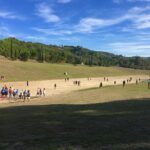
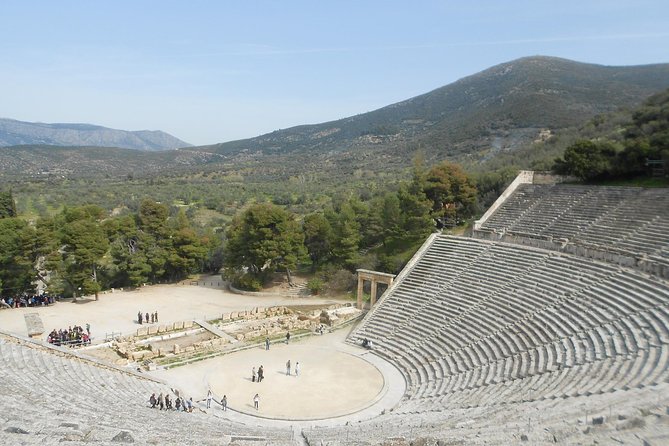
Then you reach the UNESCO highlight, and it feels like the day switches gears. Epidaurus is one of Greece’s most popular archaeological sites, and the theatre is the star attraction.
The theatre stop is about 45 minutes, and it’s built around the famous Greek construction and astonishing acoustics. The fun detail is simple: drop a pin or coin on the stage area and it can be heard even from the last seats.
That’s not just a gimmick. It’s a reminder that ancient engineering wasn’t only about temples—it was also about controlling sound and audience experience. If you’re even a little curious about how public spaces work, you’ll appreciate that design choice.
Because time is limited, you’ll want to arrive at your best viewing spot quickly and resist the temptation to look at every wall detail first. Pick your seat area, get oriented, then enjoy the acoustics moment.
Epidaurus museum and the Asclepius sanctuary for the medicine story
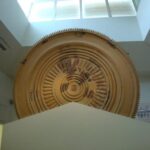
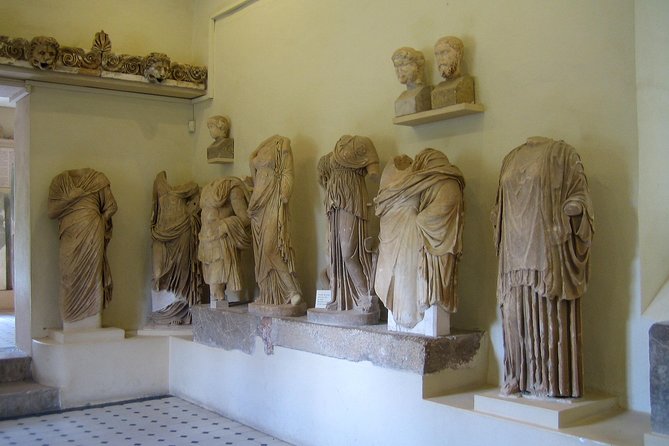
After the theatre, the tour continues into Epidaurus Archaeological Museum time (about 45 minutes) and then into the sanctuary areas. The museum is noted for reconstructions of temples and its columns with inscriptions, which helps you interpret what you’re about to see and what you might not easily notice.
The sanctuary dedicated to Asclepius is where the mood shifts again. This wasn’t a place for casual sightseeing; it was an ancient medical retreat tied to the demi-god of medicine.
Even if you don’t know Greek mythology in depth, the physical setting communicates the idea of healing spaces and rituals. It’s the kind of stop that feels different from pure “columns and arches” tourism.
One practical consideration: museum-and-sanctuary time can involve lots of short walks on uneven surfaces. Comfortable shoes matter here as much as at Acrocorinth.
Price and what you’re really getting for $297.26 per person
At $297.26 per person, this tour isn’t the cheapest way to do the Peloponnese circuit—but it’s easier to justify if you value time and logistics.
You’re paying for:
- Private transportation in an air-conditioned vehicle
- Door-to-door pickup and drop-off in Athens
- On-board Wi-Fi, water, wipes, and Greek biscuits
- Skip-the-line ticket service on request
- Drivers described as professional with in-depth Greek history knowledge
The biggest reason the price can still feel fair is that most of these sites are far apart, and doing them efficiently takes more than just buying tickets. Private transport plus smart scheduling reduces stress, especially if you’re traveling with someone who hates rushing.
The caution is financial realism: entrance fees and food aren’t included. So if you’re budgeting, count on extra costs for site entry and your lunch.
If you’re the type who’s comfortable building a DIY route and you love public transit, you might spend less by organizing it yourself. If you want a smooth, guided day with minimal friction, this price starts making sense.
Who this private day tour suits best
This tour fits best if you:
- Want a one-day hit list of Corinth + Epidaurus without complicated planning
- Like driving-time context, not just stand-in-front-of-ruins sightseeing
- Prefer a private experience where you can move at your group’s pace
- Appreciate the engineering and practical history angle—Diolkos, canal logic, and fortress systems
It may be less ideal if you:
- Want long, unhurried time inside every museum room
- Dislike paying for add-on entrance fees on top of the tour cost
- Have trouble with hills and uneven archaeological surfaces (Acrocorinth and parts of Epidaurus involve walking on ancient terrain)
Should you book this private Epidaurus–Corinth–Canal day trip?
I’d book it if your goal is to see the major Corinth storyline plus the Epidaurus theatre experience in one day, with comfort and minimal hassle. The combination of canal/Diolkos engineering, Acrocorinth fortress viewpoints, and the UNESCO theatre moment makes for a tour that feels varied—not just another “ruins crawl.”
If you do book, plan for extra admissions and lunch costs, and bring shoes that work on slopes. If you want a calm pace, consider booking a tour that gives you more time per site—but if you want a smart-packed day, this one is built for that.
FAQ
How long is the tour from Athens?
The tour runs for about 8 hours (approx.), with multiple stops across Corinth and Epidaurus.
Is this tour private or shared with other people?
It’s a private tour/activity, meaning only your group participates.
Does the tour include hotel pickup and drop-off in Athens?
Yes. Pickup is offered from your chosen Athens hotel, Airbnb, or apartment, and the driver returns you to the same place at the end of the day.
What’s included during the drive?
You get a private first-class vehicle with Wi-Fi on board, bottled water and refreshing wipes, and fresh handmade Greek biscuits.
Are entrance fees to Epidaurus, Corinth, and the museums included?
No. Entrance fees to the sites are not included, including museum entries listed as not included.
Is food included in the tour price?
Food and drinks are not included. Lunch is available as a village-style option during the day, but you’ll pay for it separately.
Can I get skip-the-line tickets?
Skip-the-line ticket service is offered on request. It’s listed as part of the included services.
FAQ
What is the cancellation policy?
Free cancellation is available. You can cancel up to 24 hours in advance of the experience start time for a full refund.