REVIEW · COLOMBO
Colombo Heritage &Culture City Tour by Tuk Tuk ALL INCLUSIVE
Book on GetYourGuide →Operated by Glory Tour by Tuk Tuk · Bookable on GetYourGuide
Colombo is a city you can sample fast, and still feel its soul. This all-inclusive tuk-tuk tour strings together major landmarks with enough guided time to understand what you’re seeing, from Gangaramaya Temple’s mixed-style religious art to the Galle Face Green sea-breeze finale. I especially like how the route balances big sights with everyday Colombo moments like Pettah Market.
Two details I’d call out: you get built-in drinks and site access (including a king coconut drink and entrance tickets), and you’re not stuck with a rigid script—you can ask your guide to match the stops to your interests. One consideration: with multiple photo stops and quick guided windows, some places are more of a taste than a long stay, so bring patience for a fast city tempo.
In This Review
- Key highlights that make this tour work
- Why Colombo on a tuk-tuk fits so well into 4 hours
- Pickup zones, starting point, and how to plan your morning (or afternoon)
- Gangaramaya Temple: why its mix of styles is the real lesson
- Sri Kailawasanathan Swami Temple and Jami Ul-Alfar Mosque: three faiths, one city feel
- Old Parliament Building, Independence Square, and the Fort lighthouse clock tower
- Lotus Tower and the Port area: mixing modern height with maritime context
- Galle Face Green at sunset: the calm payoff
- Tea stops, Laksala, Pettah Market, and a quick gem lesson
- Value and included extras: does $20 cover enough?
- Who should book this tour, and who should add time?
- Should you book this Colombo Heritage &Culture City Tour by Tuk Tuk ALL INCLUSIVE?
- FAQ
- How long is the Colombo Heritage &Culture City Tour by Tuk Tuk ALL INCLUSIVE?
- What does the tour cost?
- Are hotel pickup and drop-off included?
- Which major stops are included?
- Is food included?
- Is the tour wheelchair accessible?
- What languages is the live tour guide available in?
- Where do cruise passengers meet the guide?
Key highlights that make this tour work
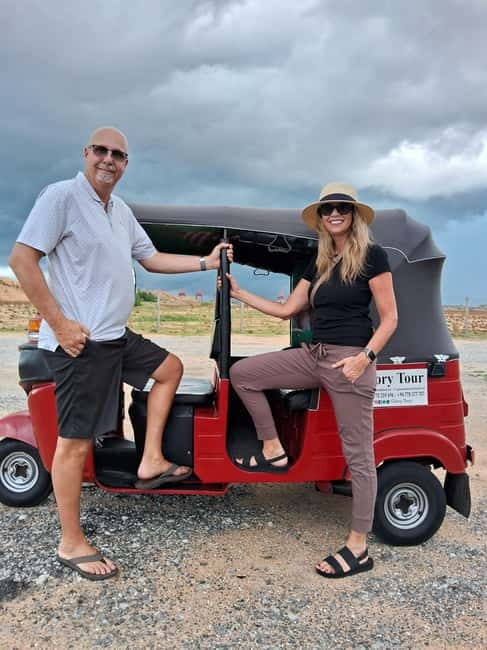
- Tuk-tuk pace for a 4-hour hit of Colombo without the stress of driving or parking
- Faith and culture stops in one loop: Buddhist, Hindu, and Islamic landmarks
- Views you can’t fake from Lotus Tower and the Fort-area lighthouse clock tower
- Local breaks included with tea tasting, coconut drink, and a market-and-crafts stop
- Guides who answer questions and adjust for real-life timing (people mention Starlin/Stalin/Sterlin)
Why Colombo on a tuk-tuk fits so well into 4 hours
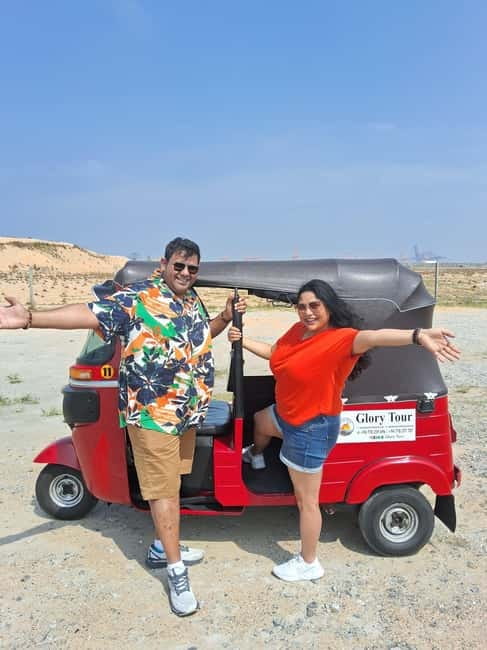
If your Colombo plan is tight, this is the kind of tour that gets you oriented fast. You travel by tuk-tuk between clustered neighborhoods, so you’re not wasting time figuring out routes, and you can enjoy small city moments en route. It also feels more “local” than bouncing in a bus—there’s a human scale here.
The best part is the mix. You start with temple complexity, then shift to Hindu and mosque architecture, and then move into the colonial-and-modern landmarks. That combo helps you understand Colombo as a cultural crossroads, not just a checklist of famous buildings.
The tour is also set up for the kind of traveler who likes short explanations. Each main stop is guided, but time is kept moving. If you want hours inside museums or long conversations with artisans, you’ll need extra time on your own later. For getting your bearings, though, this format is smart.
You can also read our reviews of more tours and experiences in Colombo.
Pickup zones, starting point, and how to plan your morning (or afternoon)
This is a hotel pickup-and-drop-off style tour, and the pickup options cover a lot of Colombo neighborhoods (plus nearby areas like Mount Lavinia and Dehiwala). That matters because Colombo traffic can be unpredictable, and starting close to you reduces friction.
If you’re arriving by cruise ship, you meet your driver/guide at the Lighthouse, about 350 meters from Port gate No 1 and gate No A1. Build in buffer time to reach that meeting point comfortably.
Practical tip: wear comfortable shoes. You’ll walk at several stops, including outdoor areas like Galle Face Green. Bring sunscreen and a hat too, because even when the route is short, Colombo sun adds up quickly. Also, keep a little modesty in mind for religious sites—cover shoulders and knees if you can. You’ll feel better entering.
Gangaramaya Temple: why its mix of styles is the real lesson
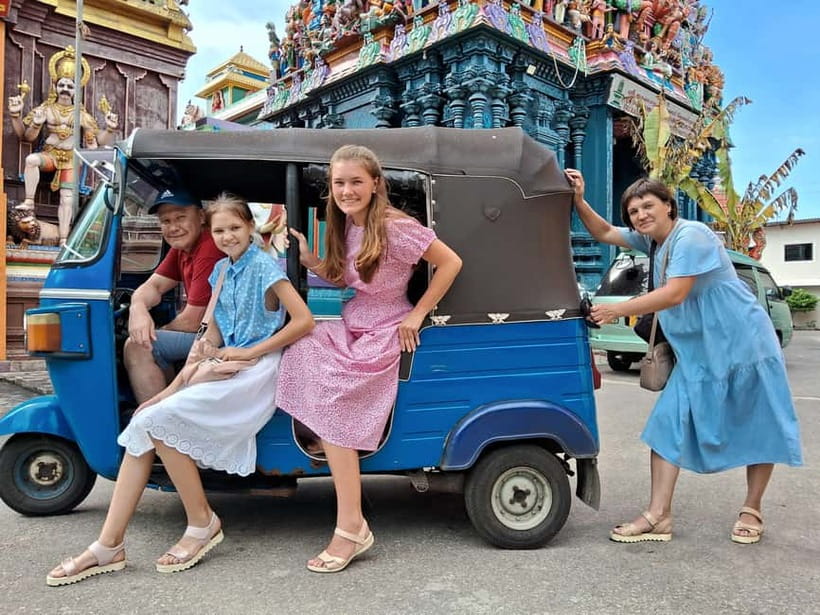
Gangaramaya Temple is where the tour earns its name. This isn’t just a photo stop with a few minutes of looking. You’ll get a guided visit and time to step inside, where the architecture blends multiple cultural influences. That matters because it’s Colombo in miniature: Buddhist devotion expressed through layered design traditions.
What I like most about this stop is how it sets you up for the rest of the day. Once you’ve seen the temple’s eclectic artwork, murals, and the museum-like feel of its collections, the other religious stops won’t feel like random side quests. They’ll start connecting into a bigger story of how different communities shape everyday city life.
You’ll also have time in calmer courtyard space to sit and meditate. The water gardens and serene atmosphere provide a needed reset before moving on. It’s one of those moments where the guided time feels worth it, because you’re switching gears from street energy to quiet observation.
If you’re prone to skipping temple interiors, don’t here. Even a short visit can give you context that makes later stops click.
Sri Kailawasanathan Swami Temple and Jami Ul-Alfar Mosque: three faiths, one city feel
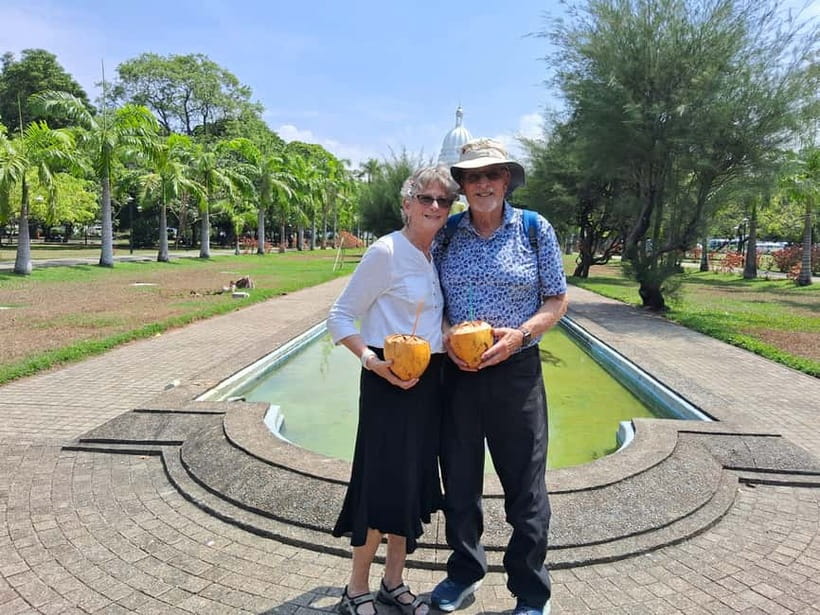
The tour doesn’t treat religion as separate worlds. It brings you from a Buddhist setting to a Hindu one, then onward to an Islamic landmark. That sequence works because the guides can point out how worship looks and feels differently, while the surrounding city life keeps overlapping.
At Sri Kailawasanathan Swami Temple, you’ll see Dravidian-style architecture, including intricately carved tower forms. You’ll also be around devotees during rituals, with chanting and offerings happening in real time. That gives you more than architecture. It’s the atmosphere that changes how you experience the place.
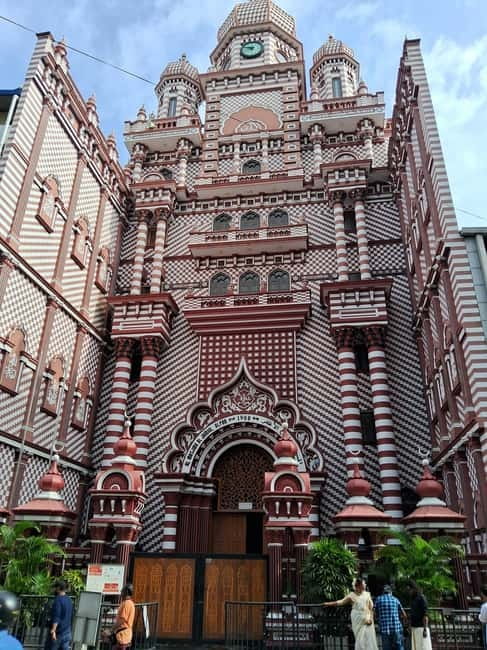
Then the route shifts to Jami Ul-Alfar Mosque. Expect a guided visit with time for photos. This stop is especially useful if you want to understand Colombo beyond the temples you might already know. Even if your time is brief, seeing how faith spaces operate in different ways helps you travel smarter, not just see more.
Quick consideration: don’t plan to sprint between religious sites in your head. You’ll feel rushed only if you treat each stop as a photo mission. The better move is to slow down for one or two moments—look at details, watch what people are doing, then move on.
Old Parliament Building, Independence Square, and the Fort lighthouse clock tower
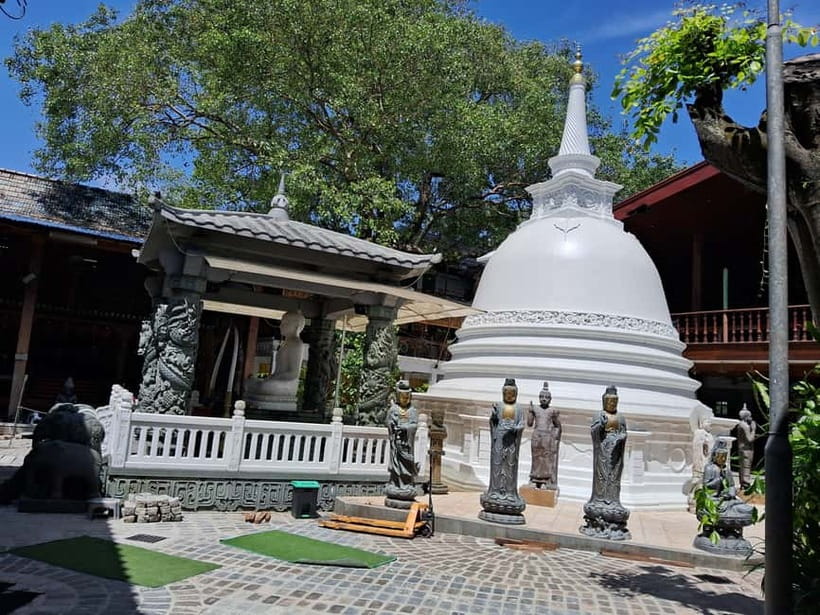
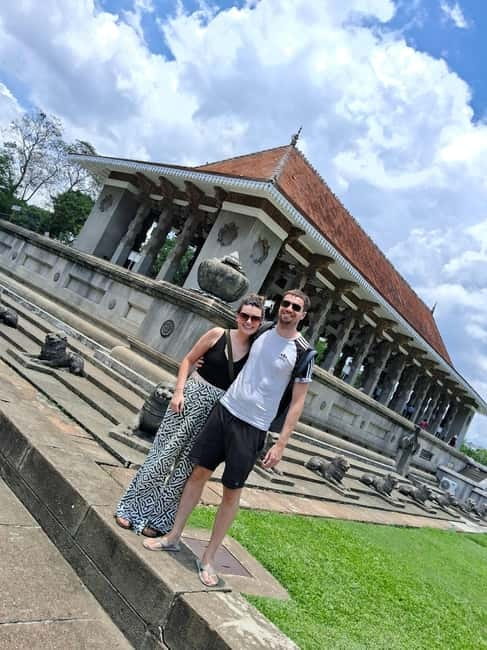
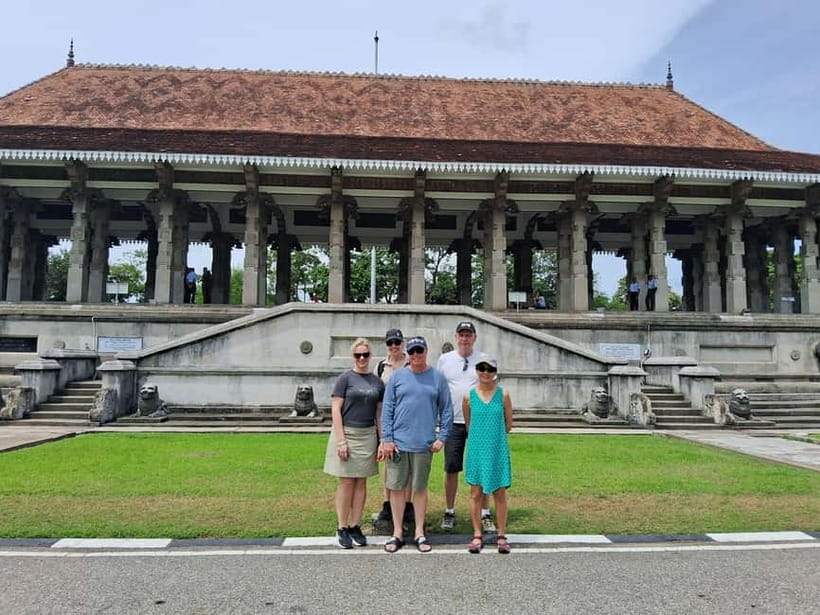
Colombo’s colonial footprint is visible in stone, columns, and layout. The tour gives you key exterior time at the Old Parliament Building, including a guided explanation of its place in the city’s political evolution. Interiors aren’t open to the public for this visit, so your focus is the exterior view—especially when light hits the building in the right way.
Independence Square adds another layer, helping you connect monuments to a national storyline rather than treating them as standalone backgrounds for selfies. The guided time helps you understand why these spaces matter to local identity.
Then you head into the Colombo Fort area with the Old Lighthouse and Clock Tower. The Fort-zone vibe is different—more urban, more historical “bones,” and often a great place for quick skyline context. If you like atmosphere, this is one of those stops where the short guided moment plus a photo window gives you enough to move from seeing to understanding.
If you get sweaty easily, this is also a good point to hydrate. The tour includes water, but you’ll still want to pace your own comfort.
Lotus Tower and the Port area: mixing modern height with maritime context
At Lotus Tower, you’ll have photo stop and guided time. This is the “modern Colombo” counterweight to the older temples and colonial buildings. It’s useful for two reasons: it gives you a visual landmark to remember the city by, and it frames Colombo as a place still building upward and outward.
Next, you visit the Colombo Port Maritime Museum. Even with a short guided window, a maritime stop is a smart move because Colombo’s identity is tied to sea routes and trade. You don’t need hours inside to get value here—you mainly want the context that makes the city’s economy and history make sense.
After that, the tour lands you back on the coast with one of the most relaxing parts of the whole day.
Galle Face Green at sunset: the calm payoff
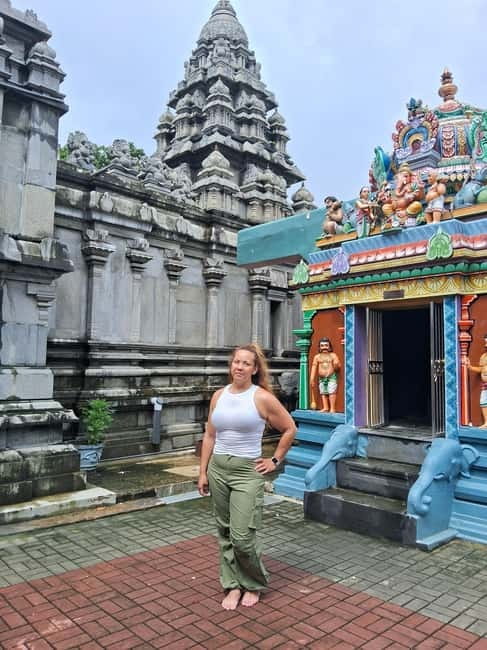
Galle Face Green is where the tour shifts from “seeing” to “breathing.” You get a break, a photo stop, and a guided walk, plus free time. The best use of that free time is simple: step away from the crowd rhythm, find a spot near the open viewing area, and let the evening air do its job.
This stop is especially good if you’ve spent the earlier hours indoors or tight around architectural details. Galle Face gives you movement, a horizon line, and a scene that feels distinctly Colombo.
Practical tip: if you’re sensitive to heat, plan to arrive ready to cool down. Even if the day is packed, this part of the route is built as a reward.
Tea stops, Laksala, Pettah Market, and a quick gem lesson
Between monuments, the tour includes a few local-experience breaks that matter because they prevent the day from turning into a nonstop walk of sights.
You’ll stop at Ceylon Tea Supermarket for a short break with tea and shopping time. You also get tea tasting as part of the local culture highlights, so the “tea” isn’t just a branded souvenir stop. If you’re curious about Sri Lankan tea culture, this is one of the easiest ways to get a small taste and ask questions without building your own plan.
Then there’s Laksala, which includes coffee or tea, plus breakfast options, shopping, and an arts-and-crafts market visit with a workshop. This is a useful stop if you want to pick up small handmade items or see how crafts are presented to visitors. Even if you don’t buy anything, watching the workshop setup can give you a different angle than museum browsing.
After that comes Pettah Market, with guided time and a little free time. Pettah is where Colombo feels loud, close, and very real. You won’t cover every lane in 10 minutes, but that’s not the point. You’re meant to get oriented: see the energy, notice what’s for sale, and learn how to navigate without feeling lost.
Finally, the day includes a Traditional Gem Mine visit with shopping and a short class. Expect it to be brief—more “get the basics” than “become a gem expert.” Still, if you want to ask what to look for and understand the pitch behind local gemstone sales, this stop gives you a guided starting point.
One small caution: shopping stops can tempt you into impulse buys. If you want to shop, set a budget in your head before you arrive. It keeps the day fun instead of stressful.
Value and included extras: does $20 cover enough?
At $20 per person for a 4-hour guided route, the value is strongest because several costs are already handled. You get hotel pickup and drop-off, entrance tickets to the listed sites, and small comforts like a water bottle plus Wi-Fi and tissues. You also get a complimentary king coconut drink, and there’s tea included at the tea stop.
That “all-inclusive” feeling is real in the sense that you’re not constantly paying entry fees or figuring out how to get tickets. For a short day, that’s what makes this kind of tour worth it.
What you should budget for: meals aren’t included, and shopping is optional (but available) at Pettah, Laksala, the tea stop, and the gem mine. If you go in with a clear plan—walk, learn, and maybe buy one or two thoughtful items—you’ll feel good about the overall spending.
From the guide side, people frequently mention names like Starlin, Stalin, and Sterlin, and the common thread is simple: they take time to answer questions, keep things organized, and adjust to traffic and local timing when needed.
Who should book this tour, and who should add time?
This fits you if you:
- Want a structured first look at Colombo
- Like mix-and-match culture stops (temples, mosque, monuments, coast)
- Prefer tuk-tuk travel and short guided explanations over long museum days
- Are staying a short time and want high returns per hour
It might not be perfect if you:
- Want deep time at one site (like long temple study or a long museum session)
- Hate markets and shopping stops even when they’re brief
If you’re staying longer, I’d book this early-ish in your trip. It helps you decide what to return to later with your own schedule.
Should you book this Colombo Heritage &Culture City Tour by Tuk Tuk ALL INCLUSIVE?
Yes, if you want an efficient, friendly way to see Colombo’s key cultural and coastal highlights in one go. The price is reasonable for an English-guide tour with pickup, entrance tickets, and included drinks. The only real trade-off is time: you’ll leave wanting more at a few places, which is often a good sign.
If you go, set your expectations like this: think of the day as orientation plus highlights, not a deep study course. Bring comfortable shoes, keep your questions ready for your guide, and save your slower wandering for Pettah or Galle Face after the tour ends.
FAQ
How long is the Colombo Heritage &Culture City Tour by Tuk Tuk ALL INCLUSIVE?
It runs for 4 hours.
What does the tour cost?
The price is $20 per person.
Are hotel pickup and drop-off included?
Yes, hotel pick-up and drop-off are included, with multiple pickup/drop-off options around Colombo.
Which major stops are included?
Key stops include Gangaramaya Temple, Sri Kailawasanathan Swami Temple, Independence Square, Jami Ul-Alfar Mosque, Colombo Port Maritime Museum, Colombo Fort Old Lighthouse & Clock Tower, Colombo Lotus Tower, Old Parliament Building, Pettah Market, and Galle Face Green, plus a tea and shopping sequence.
Is food included?
Meals are not included. Tea and drinks are included as part of the tour, and there is a break that includes tea and also breakfast options at Laksala.
Is the tour wheelchair accessible?
Wheelchair accessibility is listed as not included.
What languages is the live tour guide available in?
The guide is available in English, Tamil, Singhalese, and Hindi.
Where do cruise passengers meet the guide?
Cruise passengers meet the driver/guide at the Lighthouse, about 350 meters from Port gate No 1 and gate No A1.