REVIEW · KATHMANDU
Kathmandu: Explore Entire Kathmandu (World Heritage Sites) with Guide
Book on Viator →Operated by AM Travels and Tours · Bookable on Viator
Five monuments, one focused day. This guided circuit across UNESCO World Heritage sites keeps your logistics simple and gives you an honest feel for Kathmandu’s Hindu and Buddhist layers, with stops like Pashupatinath right at the start. I like that the whole day is organized as a route, not a scavenger hunt.
One possible drawback: entrance fees are not included, and you’ll move between sights on a schedule (some stops are only about 30–60 minutes). If you prefer to linger for hours in one place, this may feel brisk.
In This Review
- Key highlights you can plan around
- A 5–6 hour circuit through Kathmandu’s UNESCO core
- Pickup and private transport: how it affects your day
- Pashupatinath Temple: Shiva, the ghats, and a first taste of ritual life
- Baudhanath Stupa: a short stop with major spiritual weight
- Swayambhunath Hilltop: stupa views and the feel of Kathmandu from above
- Kathmandu Durbar Square: old royal center and an antique museum stop
- Narayanhiti Palace Museum: a royal residence turned into a museum
- Guide quality: what you’re paying for beyond transportation
- Price and value: why $85.34 can make sense
- What’s included vs not included (so you don’t get surprised)
- Who this tour is a good fit for
- Should you book this Kathmandu World Heritage tour?
- FAQ
- How long is the Kathmandu World Heritage tour?
- Is hotel pickup and drop-off included?
- Do I get an English-speaking guide?
- Is this tour private or shared?
- Which UNESCO sites are included in the route?
- Are entrance or monument fees included?
- Are meals included?
- Is a mobile ticket provided?
- Can I cancel for a full refund?
Key highlights you can plan around
- UNESCO Kathmandu Valley in a single day: five major sites, linked by an efficient route
- Hotel pickup plus round-trip private vehicle: fewer hassles in traffic and transfers
- Pashupatinath Temple first: Shiva’s temple complex and the burning ghats area
- Hilltop time at Swayambhunath: stupa visit paired with big valley-and-mountain views (clear weather helps)
- Museum stops included: Durbar Square’s antique museum and Narayanhiti Palace Museum
- Guide-led explanations in English: designed for clarity, not just photo stops
A 5–6 hour circuit through Kathmandu’s UNESCO core
This tour is built for one thing: getting you from one iconic Kathmandu landmark to the next without wasting your day sorting out timing, directions, or transport. The format is straightforward. You’ll spend about 5 to 6 hours covering five World Heritage highlights—Hindu temple, Buddhist stupa, hilltop stupa, an old royal square, and a palace museum.
What I like is the mix of sacred sites and royal-era settings. Kathmandu’s story isn’t just temples layered on temples; it’s also the way power, religion, and daily life have shaped the city. By the end, you should feel like you’ve seen the main “chapters” rather than collecting random photos.
You can also read our reviews of more tours and experiences in Kathmandu.

Pickup and private transport: how it affects your day
The biggest practical win here is that the day starts with hotel pickup and drop-off and runs on a private vehicle transfer for the route. That matters more than it sounds. Kathmandu traffic and finding meeting points can turn a sightseeing plan into a stress contest. With a pre-arranged vehicle and pickup/drop service, you can use your energy for the sights instead of the logistics.
This is also a private trip, meaning it’s just your group rather than a big shared bus experience. If you’re traveling as a couple or small group, that usually makes it easier to keep a steady pace and ask questions when they come up. The tour also includes bottled water for each participant, which is a small thing, but you’ll notice it over a multi-stop day.
Pashupatinath Temple: Shiva, the ghats, and a first taste of ritual life
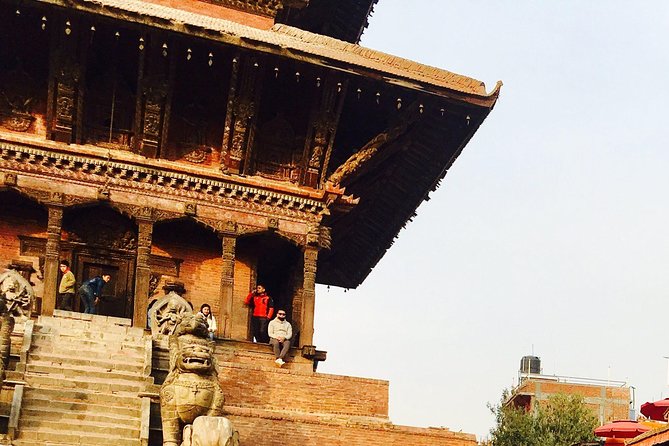
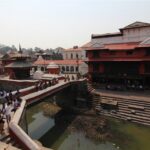
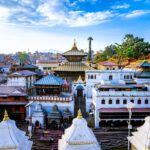
Pashupatinath is the first stop for a reason: it sets the tone. You’ll visit the Pashupatinath Temple, described as the world’s biggest Hindu temple of Lord Shiva. You’ll also spend time at the burning ghats, where cremations take place according to Hindu mythology.
This is the kind of place where you won’t just be looking at architecture. You’ll be watching a living religious process unfold around the temple complex. The guide-led time helps here because it’s easy to feel like you’re observing without understanding what you’re seeing.
Time on site is about 1 hour, so aim to use that hour intentionally. If you want photos, plan quick shots first, then slow down to take in the ritual spaces. If you’re more into details, ask your English-speaking guide to explain what’s happening at the ghats area and how it connects to Shiva worship.
Baudhanath Stupa: a short stop with major spiritual weight
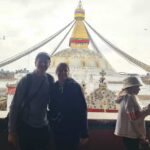
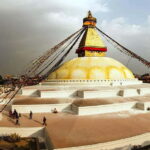
Next up is Boudhanath (Baudhanath) Stupa, a Buddhist temple stop with about 30 minutes allotted. Thirty minutes is not long in the grand sightseeing sense, but it can be enough if you treat it like a focused visit: look around, understand the stupa’s significance from your guide, and soak in the atmosphere without rushing to “collect” every corner.
What makes this stop work inside the full-day plan is contrast. You’re shifting from Hindu temple space with cremation ghats to a Buddhist stupa setting. That jump is one of the most useful ways to understand Kathmandu Valley. It’s not theory. It’s real geography and real worship spaces, in sequence.
Since admission tickets are not included, you’ll want to be ready to pay any required monument or stupa entry fees separately.
Swayambhunath Hilltop: stupa views and the feel of Kathmandu from above
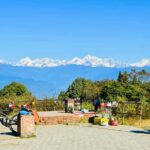
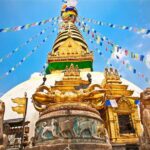
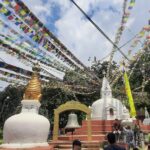
About an hour is set aside for Swoyambhu/Swayambhunath Mahachaitya—often referred to as a hilltop stupa. The key feature here is built into the itinerary: you visit the stupa and also get a great view of Kathmandu Valley and the mountains in clear weather.
This stop tends to be where the day stops feeling like a checklist and starts feeling like a place. Even if you’re not a “view person,” the hilltop perspective helps you connect the dots between the other sites. You see how different parts of the city relate to each other, and you understand why Kathmandu’s heritage sites are where they are.
The practical downside is weather. The tour description clearly says the mountains show best in clear weather, so if clouds roll in, the “bonus view” may be less dramatic. Still, the stupa visit itself is the core, and your guide will keep your time useful even when the sky isn’t perfect.

Kathmandu Durbar Square: old royal center and an antique museum stop
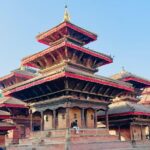
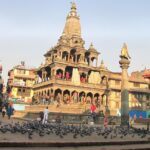
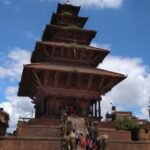
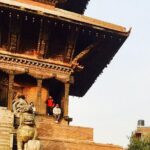
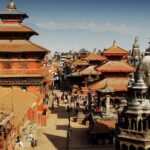
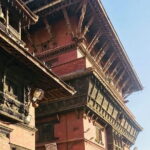
Then you move into the historic heart: Kathmandu Durbar Square. This is described as an area featuring the ancient palace of Nepal’s kings and an antique museum, listed under World Heritage.
This stop gives you more than one type of experience. You’re not only looking at buildings; you’re stepping into a museum setting tied to palace-era storytelling. It’s about how rulers shaped the city and how those symbols remain embedded in the square.
Your allotted time is about 1 hour. That’s enough to walk the main areas and get a sense of the place, but it’s still not the kind of visit where you can read every label slowly and then return for a second pass. If museums are your focus, go in knowing you’ll skim first and read deeper later if you still have time.
Narayanhiti Palace Museum: a royal residence turned into a museum
The last major heritage stop is Narayanhiti Palace Museum, with about 1 hour planned. The tour description explains the setup: it’s the latest king’s palace, later turned into a museum after the passing of his entire family.
This is a different kind of Kathmandu experience. Instead of religious worship spaces, you’re looking at palace life—how the royal environment functioned and how the site was repurposed into a public museum. If your interest leans toward politics, ceremony, and how power looks in architecture, this stop can be one of the most memorable on the route.
It also serves as a “thinking stop” after the intensity of temple sites. By this point, your brain has likely seen a lot of visual information. A palace museum tends to slow you down a notch and helps you connect what you’ve seen to the broader idea of how Nepal’s history is displayed.
Guide quality: what you’re paying for beyond transportation
The tour includes an English-speaking tour guide, and the difference a good guide makes is huge when you’re moving through sacred spaces plus a couple of museum settings. You don’t just want directions. You want meaning.
This operation has example staff that people specifically praised, including Mr. Govinda as a guide and Mr. Chetan as the driver. The theme in those comments is straightforward: the guide takes care of what you need and explains in an experienced, helpful way, while the driver keeps things smooth on the road.
In practical terms, that means you’re more likely to understand what you’re looking at at Pashupatinath and not just see a busy waterfront temple zone. It also means your time at Durbar Square and Narayanhiti is more than a quick circuit of rooms.
Price and value: why $85.34 can make sense
At $85.34 per person, this is not a “cheap and cheerful” sightseeing add-on. It’s a day of guided heritage touring with hotel pickup and drop-off, a private vehicle transfer, and a dedicated guide in English.
Here’s the value equation in plain terms:
- You’re paying for time-saving logistics (pickup/drop + private transfer).
- You’re paying for interpretation (English guide).
- You still pay separately for monument/entrance fees because they’re not included.
- Meals are not included either, but that can be a positive if you like choosing your own food spots.
So the tour can be a strong value if you’re in Kathmandu for a limited time and want a single organized day that hits the key heritage locations. If you already plan to hire a driver yourself and you’re comfortable navigating tickets on your own, the savings may be smaller. But if you want a guided route that prevents wasted time, this price can be fair.
What’s included vs not included (so you don’t get surprised)
Included:
- Hotel pickup and drop off
- English speaking tour guide
- Round trip transfer by private vehicle
- Bottle of water for each participant
- Private trip (only your group participates)
Not included:
- Meals and drinks (available for purchase)
- Monuments fees / entrance fees
- Gratitude (optional)
The biggest “watch item” is entrance fees. The itinerary notes that tickets aren’t included for each major site. That’s normal for many heritage tours, but you should budget for it so the day doesn’t turn into a money scramble at the doorway.
Who this tour is a good fit for
This works best if you:
- Want first-time orientation to Kathmandu Valley’s World Heritage sites
- Like a guided route that organizes your day around major landmarks
- Prefer the convenience of private pickup/transport instead of piecing it together yourself
- Travel as a couple or small group and want a private experience
It might be less ideal if you:
- Want to spend half a day at just one site
- Have a strict “no extra payments” budget and don’t want to handle entrance fees on top of the tour price
- Prefer totally free-form wandering without a time-structured itinerary
Should you book this Kathmandu World Heritage tour?
If you want one well-run day that covers Pashupatinath, Baudhanath, Swayambhunath, Kathmandu Durbar Square, and Narayanhiti Palace Museum, this is a strong match. The inclusion of pickup/drop-off, a private vehicle, and an English-speaking guide is the core reason it’s worth considering at this price.
Book it if your goal is to see the major heritage highlights efficiently and come away with clearer context. Skip it only if your style is slow and solitary, and you’d rather spend a long afternoon with one site than touch five in a single day.
FAQ
How long is the Kathmandu World Heritage tour?
It runs for about 5 to 6 hours.
Is hotel pickup and drop-off included?
Yes. Hotel pickup and drop-off are included.
Do I get an English-speaking guide?
Yes. The tour includes an English speaking tour guide.
Is this tour private or shared?
It’s private. Only your group will participate.
Which UNESCO sites are included in the route?
The stops are Pashupatinath Temple, Baudhanath Stupa, Swoyambhu/Swayambhunath Stupa, Kathmandu Durbar Square, and Narayanhiti Palace Museum.
Are entrance or monument fees included?
No. Monuments fees / entrance fees are not included.
Are meals included?
No. Meals and drinks are not included, but they are available for purchase.
Is a mobile ticket provided?
Yes. The tour uses a mobile ticket.
Can I cancel for a full refund?
You can cancel for a full refund if you cancel up to 24 hours in advance of the experience start time.