REVIEW · SAMARKAND
Samarkand Ancient Silk Road City Tour w/ Pickup & Lunch Option
Book on Viator →Operated by Tranquil Holidays · Bookable on Viator
First, you hit Samarkand’s biggest sights fast. This Ancient Silk Road city tour strings together famous monuments, a museum moment, and market time in about 8 hours, with pickup and an optional lunch. I especially liked how guide Islom explained the story behind places like Registan, and I liked that the group is kept small (max 15) so you can ask questions. One catch: entrance tickets are not included, and the fees for multiple sites can add up.
If you want a “see the highlights” day without playing archaeologist or guessing opening times, this is a practical option. At $40 per person, your money mainly buys the guide, the routing, and (if you choose it) lunch. Just budget separately for tickets, then you’ll feel in control instead of surprised.
In This Review
- Key things I’d plan around
- A fast-focused Silk Road day in Samarkand
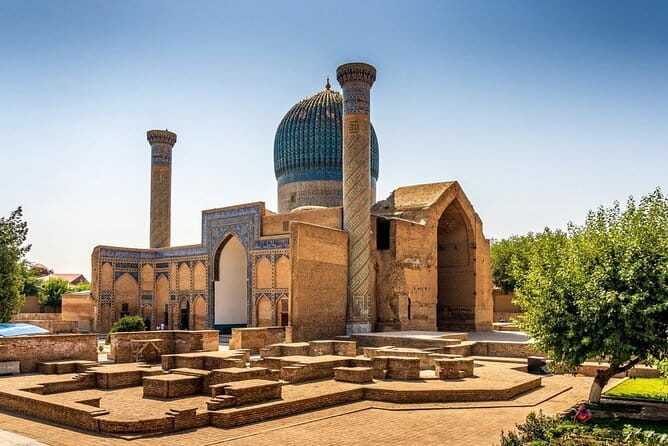
- Gur Emir Mausoleum: Timur’s final resting place
- Registan: the heart of Samarkand’s tile-work showpiece
- Bibi Khanym Mosque ruins: when size still speaks
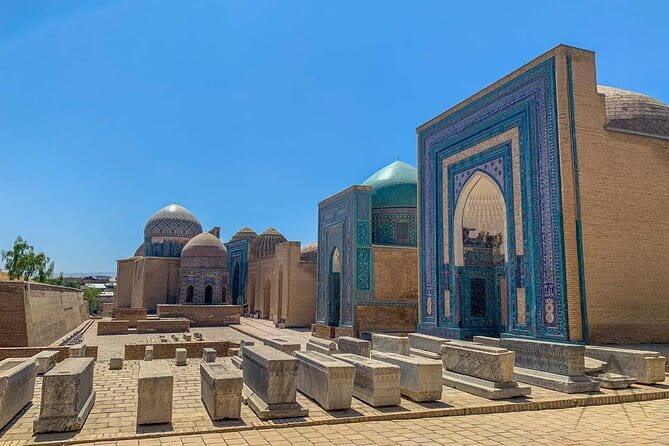
- Shah-i-Zinda: a necropolis you walk through, not around
- Afrasiyab Museum: the short stop that adds context
- Konigil tourist village: handmade paper and real technique
- Carpet weaving at the Silk Road Samarkand Tourist Center
- Siyab Bazaar (Siab Bazaar): shopping and food stops without the chaos
- Khoja Daniyor Mausoleum: a calm ending
- Price and tickets: what the $40 really covers
- Getting the most out of an 8-hour route
- Should you book this Samarkand Ancient Silk Road tour?
- FAQ
- What is the duration of the Samarkand Ancient Silk Road City Tour?
- How much does the tour cost?
- Does the tour include lunch?
- Is pickup offered?
- Are entrance tickets included in the tour price?
- Which stops have free admission on this route?
- How big is the group?
- What is the cancellation policy?
Key things I’d plan around
- Small group (up to 15): easier questions and smoother pacing than the big-bus style
- Guide-led history at the stars: especially at Registan and Gur Emir, with Islom called out in reviews
- Pickup included: you start the day already pointed the right way
- Two hands-on craft stops: Konigil paper-making and carpet weaving at a weaving workshop
- Market time at Siab Bazaar: good for shopping without turning the whole trip into a hunt
A fast-focused Silk Road day in Samarkand
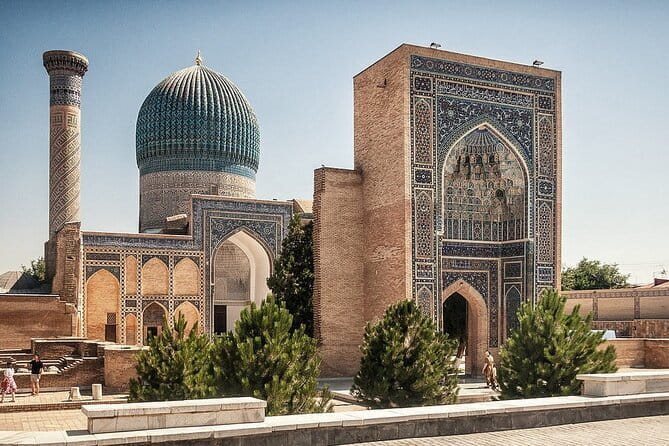
Samarkand can feel like a picture postcard that you step into. This tour makes it manageable by organizing your day around the core landmarks people come for, then sprinkling in a couple of hands-on craft experiences and a real bazaar stop. With travel time counted in the 8 hours, you get a clear sense of how your day will flow.
The biggest value is how the sites connect. You’re not just walking past buildings. You’re moving from one era and theme to the next—Timurid power, Islamic architecture, sacred tombs, and the living crafts of today. That structure matters because Samarkand’s main monuments are close enough to fit in, but too spread out (and too easy to mis-sequence) to do comfortably on your own.
This is also a good fit if you don’t want museum fatigue. The Afrasiyab Museum visit is brief, and most of your time goes to the outdoor architectural highlights and a market rhythm.
You can also read our reviews of more tours and experiences in Samarkand.
Gur Emir Mausoleum: Timur’s final resting place
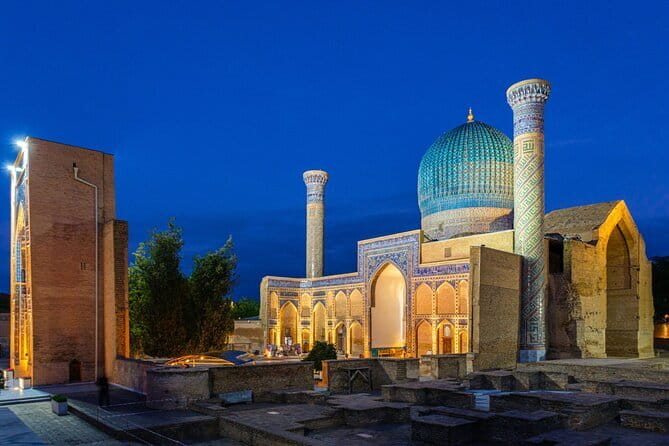
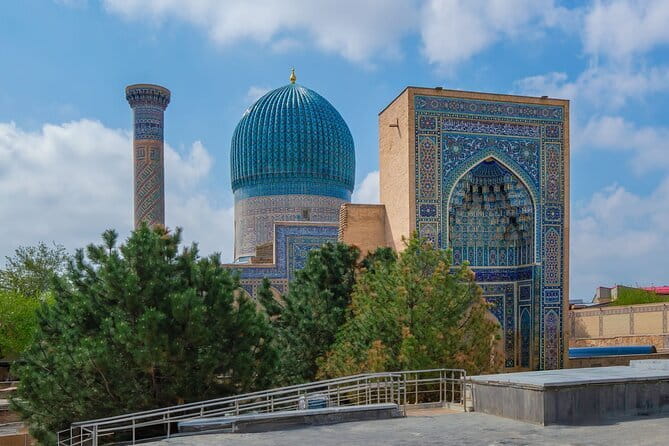
You start at the Gur Emir Mausoleum, known as the final resting place of Timur. This is the kind of site that sets the tone for the rest of the day. The architecture is described as beautifully intricate, and it carries real historical weight because it’s tied to the person who shaped power and politics across the region.
For me, the advantage of beginning here is simple: you get a big anchor early. When later you see other monuments connected to Samarkand’s rise, the day feels like one story instead of separate photo stops.
Practical note: this stop is listed as about 1 hour, and entrance is not included. Plan your timing so you don’t rush. If you’re the type who likes to slow down and look at details, you’ll be glad you gave this opening moment space.
Registan: the heart of Samarkand’s tile-work showpiece
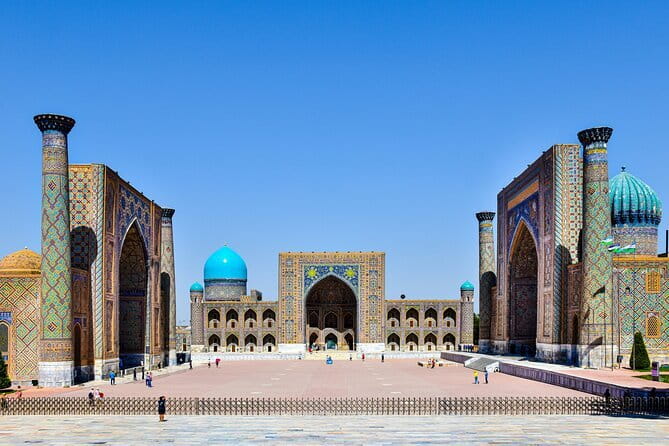
Registan is the headline. It’s the UNESCO World Heritage site centered on three madrasas, covered in intricate tile work and grand façades. Even if you’ve seen photos, being there in person changes the scale. It’s not just one building; it’s an ensemble, so your eyes keep moving across patterns, arches, and entrances.
What I like about including Registan in a guided route is that it’s easy to get lost in what you’re looking at. With a guide, you’re not stuck translating “beautiful building” into real meaning. You get the why behind the tiles and the madrasa layout—how this place functioned and why it became so iconic.
The tour gives about 1 hour here, and tickets for the Registan Square area are not included. Since this is a major stop, expect a bit of ticket-line time depending on the day. If your schedule is tight, still stick with the full hour rather than sprinting through.
Bibi Khanym Mosque ruins: when size still speaks

Next is the Bibi Khanym Mosque, visited through the ruins of what once was one of the largest and most magnificent mosques in the Islamic world. This stop works for two reasons.
First, ruins are honest. They show scale and ambition even without the full structure standing. Second, it helps you understand Samarkand as a city that changes—power, patronage, and building phases all leave traces.
The tour schedules about 1 hour for this, with entrance not included. If you’re a detail person, you’ll probably enjoy the contrast between what used to be grand and what is left now. If you only have a short attention span, you might still get something out of it because the site’s reputation is so well-known—your brain fills in the rest, and the guide can ground it with context.
Shah-i-Zinda: a necropolis you walk through, not around
Shah-i-Zinda is one of the most atmospheric stops on the route: a necropolis made of mausoleums adorned with exquisite tile work. The sacred element adds power to the architecture. It’s described as holding the tomb of Kusam ibn Abbas, noted as a cousin of the Prophet Muhammad.
The tour gives only about 15 minutes here, which tells you something important: the route is designed to keep momentum. This isn’t a slow, ceremony-style visit. It’s more of a highlight pass—enough time to get oriented, see the main character of the tilework and the corridor feel, and move on with the rest of the story.
My advice: if you want photos, use this window efficiently. If you want to really read the guide’s explanation, make sure you can hear clearly before you start snapping pictures. With 15 minutes, you have to choose your focus for the day.
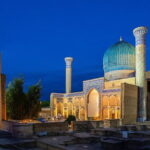
Afrasiyab Museum: the short stop that adds context

Afrasiyab Museum is scheduled for around 15 minutes. That’s not long, but it can be worth it because it anchors the day in archaeology. The museum houses artifacts from Samarkand’s earliest periods, connecting what you see outside to the deep timeline beneath it.
Why this matters: monuments like Registan and the tomb sites are easy to treat like standalone icons. A short museum stop reminds you that the city has layers. Even a brief visit can change how you interpret the rest of your sightseeing.
Keep your expectations realistic. This is not a museum marathon. It’s a quick context add-on, with entrance not included. If you’re traveling with someone who loves museum time, you might need an extra option day later. For most people, though, this works as a smart palate cleanser between big architectural moments and craft/market stops.
Konigil tourist village: handmade paper and real technique
Konigil is your first hands-on craft experience on the route. You’ll visit a tourist village where artisans create beautiful handmade paper using ancient techniques. The big advantage here is that you can watch the process rather than just buy a finished souvenir.
It’s also a nice change of pace after tile and mausoleums. Your senses shift from looking at monumental surfaces to watching careful work—hands, tools, and repeated steps. If you like practical souvenirs (things you understand and can explain later), this stop gives you that.
The tour schedules about 1 hour, and entrance is not included (listed as approximately 50,000 sum). You’ll likely have time to browse what’s made and choose a paper product that fits your budget.
Carpet weaving at the Silk Road Samarkand Tourist Center
Next comes the Silk Road Samarkand Tourist Center, linked with a carpet weaving factory. This part of the day is short—about 30 minutes—and it’s listed as free for admission at this stop.
You can see the intricate process of carpet weaving and, if you’re interested, you can purchase pieces. Even if you don’t buy, watching the work helps you understand why these carpets cost what they cost. They’re not mass-produced trinkets; the value is in the labor and skill.
The practical value is timing. Forty-five minutes after Konigil’s paper craft and right before the market stop, weaving gives you one more cultural skill without pushing your schedule. If you’re the kind of shopper who hates getting pressured, take your time. You can watch the process first, then decide.
Siyab Bazaar (Siab Bazaar): shopping and food stops without the chaos
Siyob/Siab Bazaar is Samarkand’s largest market on this route. The plan here is to stroll through the stalls, sample local delicacies, and shop for traditional crafts and souvenirs.
This is where your day turns from monument mode into daily life. You’re walking through a place locals actually use. Even if you stick to window-shopping, you’ll get a better sense of what everyday trade looks like.
The tour gives about 1 hour, and admission for this market stop is listed as free. That makes it a good place to spend your energy budget. If you have a sweet tooth, this is often where you’ll find a satisfying payoff. Just remember: markets move fast and prices can vary depending on how you ask and what you pick.
If you’re traveling with limited cash, decide up front what you want to buy and keep the spending focused. It’s easy to get carried away once you start comparing.
Khoja Daniyor Mausoleum: a calm ending
You finish at the Khoja Daniyor Mausoleum, a quieter capstone to the day. It’s described as serene, and it’s believed to be the tomb of the biblical prophet Daniel.
This last stop works well because the earlier part of the route is all big sights, crafts, and crowds. Ending here gives your brain a breather. It’s a chance to shift from shopping and photo angles to a more reflective pace.
The visit time is about 40 minutes, and entrance is not included (listed as around 40,000 sum). If you’re tired, this is still a good stop to slow down rather than rush—because the setting is meant for quiet.
Price and tickets: what the $40 really covers
The tour price is $40 per person for an 8-hour guided experience with pickup. That base price includes the guide service and lunch if you select the lunch option. It also runs with a small maximum group size (15 travelers).
But the main thing to understand is that most major entries are ticketed separately. In this route, entrance fees are not included for places like:
- Gur Emir Mausoleum: 40,000 sum
- Registan Square: 65,000 sum
- Bibi Khanym Mosque: 40,000 sum
- Shah-i-Zinda: 40,000 sum
- Afrasiyab Museum: 40,000 sum
- Konigil tourist village: approximately 50,000 sum
- Khoja Doniyor Mausoleum: around 40,000 sum
Two parts are specifically listed as free: the Silk carpet weaving at the Tourist Center and the Siab Bazaar market stop. So you’re not paying everywhere—but you are paying for multiple big sites.
So is the tour good value? Yes, especially if you:
- want a guide who helps you understand what you’re seeing
- prefer a structured route over figuring it out yourself
- plan to add lunch (if offered to your group that day)
No, if you’re trying to keep your total day cost extremely low. Because once you add multiple entry fees, your final spend can climb quickly. The ticket math is the main decision point.
My practical tip: treat the $40 as the routing + interpretation cost, then budget your tickets separately so there are no surprises mid-day. Also, keep some spare cash in small bills just in case ticket lines get slow and change-making takes time.
Getting the most out of an 8-hour route
This tour is built around momentum. That’s not bad—it just means you’ll get the best results by choosing how you want to spend your attention.
I suggest you do three things:
- Wear comfortable shoes: you’ll be walking through multiple major monuments plus the market
- Plan for ticket time: since many entries are not included, you’ll need a bit of patience at key stops
- Use the guide’s explanations: the reviews call out strong guiding, and with a guide like Islom, you’ll get more from the architecture than you would by reading alone
Lunch is included only if you select that option. If you’re the type who gets shaky energy when you skip meals, choose lunch. If you prefer to eat on your own schedule, you can skip that option and eat in the bazaar area—though you’ll still want a plan so you don’t lose time.
Finally, remember that this isn’t a private tour. Even though the group cap is 15, you’ll still follow the day’s flow. If you want extra photo time at one place, ask your guide how you can best squeeze it in without cutting the important parts.
Should you book this Samarkand Ancient Silk Road tour?
Book this if you want a smart, guided highlights day in Samarkand. The strongest reason is the guide-led approach—reviews mention a friendly guide like Islom who explains history well, and the pacing helps you see the core icons without guessing logistics. The pickup and optional lunch also make it easier on a first-time visit.
Skip or reconsider if you hate separate entrance fees and prefer fully included packages. Also rethink if you’re hoping for long time in museums or a slow walk with lots of empty-space wandering. This route is designed for a full day with a steady schedule, not for drifting.
If you like structure, appreciate craft and markets, and you’re ready to budget for tickets, this is a solid way to experience Samarkand’s Silk Road pull in one go.
FAQ
What is the duration of the Samarkand Ancient Silk Road City Tour?
The tour is approximately 8 hours, including travel time between stops.
How much does the tour cost?
The price is $40.00 per person.
Does the tour include lunch?
Lunch is included only if you select the lunch option.
Is pickup offered?
Yes, pickup is offered.
Are entrance tickets included in the tour price?
No. Tickets for multiple sites are not included and must be paid separately.
Which stops have free admission on this route?
The Silk carpet-related factory stop and the Siab Bazaar market stop are listed as free.
How big is the group?
The tour has a maximum of 15 travelers.
What is the cancellation policy?
Free cancellation is available. You can cancel up to 24 hours in advance for a full refund. If you cancel less than 24 hours before the start time, the amount paid is not refunded.