REVIEW · SAN ANTONIO
San Antonio UNESCO Premium Missions Tour
Book on Viator →Operated by See Sight Tours USA · Bookable on Viator
Five missions, one smooth morning. This UNESCO Premium Missions Tour strings together the big Spanish-era stops in about three hours, with clear narration and easy logistics. You start with Mission Espada and keep rolling through San Juan, San José, Concepción, plus the UNESCO World Heritage Center and a final hit at Alamo Plaza.
What I like most is the small group size (max 7) and the fact that you’re not just driving by. You get included admission at each mission stop, so the time you spend isn’t “hope we can see something later.” One thing to keep in mind: the on-site time is short at several stops (about 30 minutes each), so you’ll want to choose your photo targets early.
In This Review
- Key Highlights You’ll Actually Feel During the Tour
- Why This San Antonio Missions Route Works So Well in Three Hours
- Pickup, Timing, and Meeting Point: The Simple Side of Logistics
- Mission Espada: Oldest Mission, Working Skills, and an Irrigation System Still in View
- Mission San Juan: A Quiet White Chapel and the Self-Sustaining Idea
- Mission San José: The Queen of the Missions and the Rose Window Moment
- UNESCO World Heritage Center: Connecting Missions to the Neighborhood Around Them
- Mission Concepción: Best-Preserved Church, Frescoes Still Visible, and Twin Towers
- Alamo Plaza Stop: 1836 Meets Today’s San Antonio
- Price and Value: What $107 Buys You
- What the Guides Do Well (and Why It Changes the Feel of the Tour)
- Tips to Get More Out of Short Stops (Without Feeling Rushed)
- Who Should Book This Tour
- A Quick Note on Missed Pickup Risk
- Should You Book the San Antonio UNESCO Premium Missions Tour?
- FAQ
- How long is the San Antonio UNESCO Premium Missions Tour?
- What does the tour cost?
- Is admission included for the missions?
- Are pickup and drop-off included?
- Where do I meet the tour?
- What time does the tour start?
- Is the tour offered in English?
- How many people are in the group?
- Can I cancel and get a full refund?
- Is the tour okay for someone with moderate physical fitness?
Key Highlights You’ll Actually Feel During the Tour
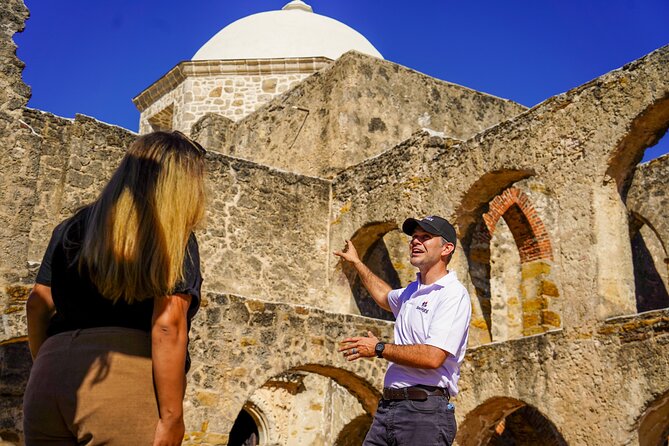
- Max 7 travelers keeps the pacing human and the Q&A easier
- Admission included at Concepción, San José, San Juan, Espada, plus the UNESCO World Heritage Center
- Fully narrated driving tour gives you the big-picture story while you move between sites
- Guides adapt in real time, including Sunday Mass timing, when it applies
- Pickup and drop-off in downtown makes a car-free morning possible
Why This San Antonio Missions Route Works So Well in Three Hours
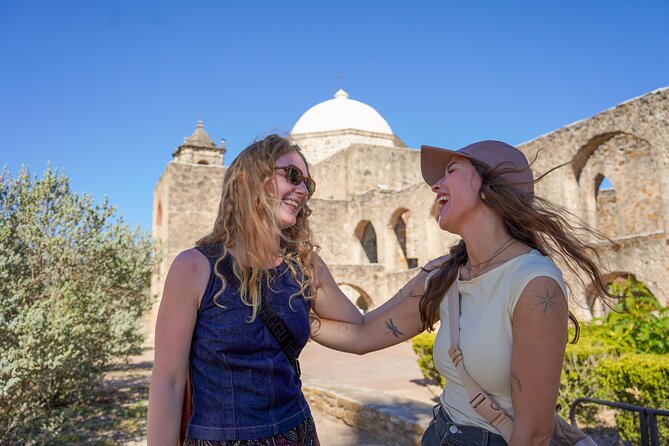
San Antonio Missions can feel like a choose-your-own-adventure. This tour turns that into a plan you can follow without stress. You get a guided route that connects the missions to the wider UNESCO story, then lands you back where you started.
The best part is that the visit time isn’t wasted on waiting around. You hit Mission Espada first (roughly 30 minutes), then Mission San Juan (another ~30), and Mission San José gets more attention (~1 hour). After that you still have time for the UNESCO World Heritage Center and Mission Concepción (~30 minutes), with Alamo Plaza as a final landmark stop.
If you’re short on time but you want more than a drive-by photo, this is built for you. The schedule is tight, but that’s also what makes it good value for an afternoon that might otherwise disappear into traffic and parking.
You can also read our reviews of more tours and experiences in San Antonio.
Pickup, Timing, and Meeting Point: The Simple Side of Logistics
The tour starts at 9:30am. Your meeting point is 515 S St Mary’s St, San Antonio, TX 78205, and the experience ends back at that same point.
Pickup is available for people staying in downtown San Antonio. If you’re not in the downtown area, you’ll need to arrange a meeting location with guest services. That matters because the tour is capped at 7 travelers, so it runs like a tight group operation rather than a mass transit shuttle.
You’ll also get a mobile ticket, which is convenient and modern. Service animals are allowed, and the tour notes moderate physical fitness. That usually translates to comfortable walking at each stop, not a hardcore hike.
Mission Espada: Oldest Mission, Working Skills, and an Irrigation System Still in View
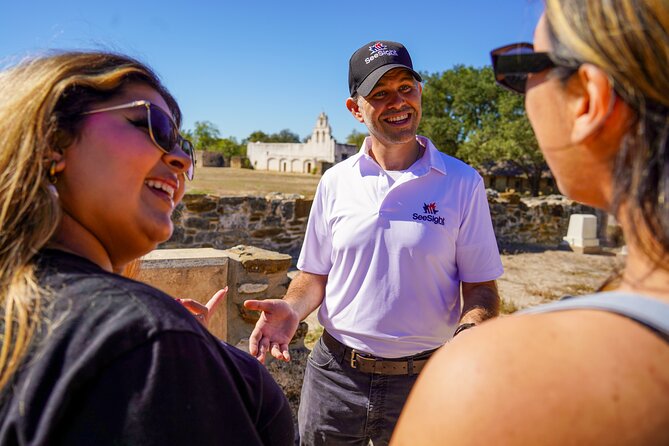
Mission Espada is the opener for a reason. It’s the oldest of San Antonio’s five Spanish colonial missions, founded in 1690, and relocated to its current site in 1731. The place has a calm, rustic feel, and the tour leans into the practical side of how these missions functioned.
You’ll also get a specific kind of detail here: Espada was known as a teaching hub for Indigenous converts, including trades like blacksmithing and weaving. That theme helps you move beyond just looking at buildings and start understanding why they were built.
Another standout is the original aqueduct system. You’ll see how Spanish engineering supported the missions through irrigation, which ties directly into how agriculture and daily life were sustained. The included time is about 30 minutes, which is enough to orient yourself, spot key architecture, and take in the setting—just not enough to read every sign cover to cover.
Practical tip: At Espada, pick one or two “must-see” points (like the aqueduct area and the church structures) before you arrive. It’ll help you enjoy the place instead of racing through it.
Mission San Juan: A Quiet White Chapel and the Self-Sustaining Idea
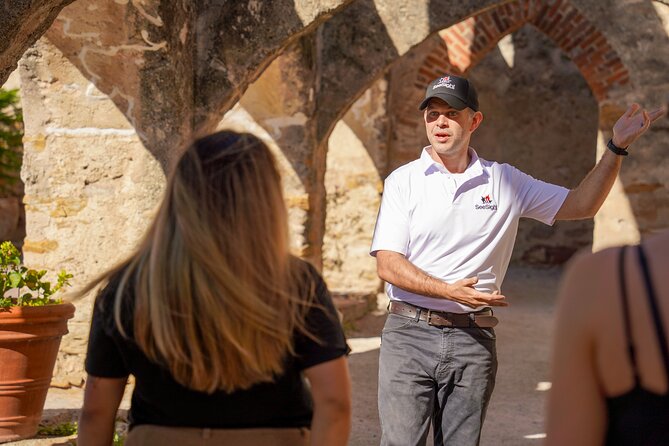
Next up is Mission San Juan, established in 1731. The tour describes it as having a serene, park-like setting, with a simple white chapel that keeps the focus on the mission’s everyday role rather than dramatic showpieces.
This mission is especially interesting because it was meant to function as a self-sustaining community. That included farmland, living quarters, and workshops. You can think of it as a working system: people, production, and community life all tied together.
The tour also frames San Juan through agriculture—how crops and goods supported the region. That makes the mission feel less like a museum set and more like a place that actually fed and supplied its neighbors.
Your time here is about 30 minutes, and that’s the trade-off: you’ll get a solid introduction, but you won’t be able to settle in for long. If you like slower visits, you might want to plan a follow-up stop on your own later.
Mission San José: The Queen of the Missions and the Rose Window Moment
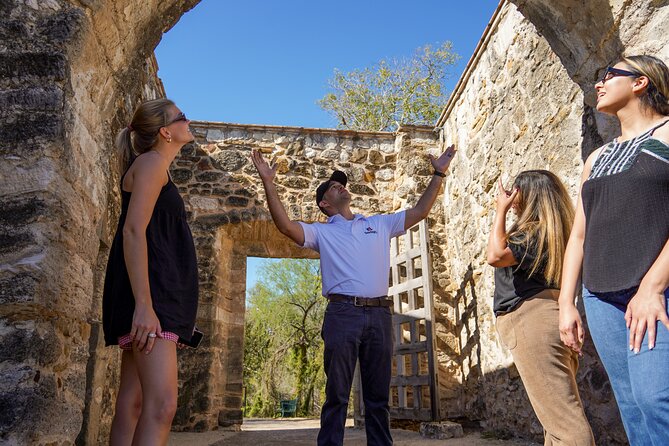
Mission San José is the one most people think of when they think of the missions. It’s known as the Queen of the Missions, and it’s also the largest of the Spanish colonial sites in San Antonio.
Founded in 1720, it has the most visual payoff: a beautifully carved stone church, the famous Rose Window, and original walls that once sheltered hundreds of Indigenous residents. The tour’s approach is to connect those features to lived experience—who was here, what the mission had to do, and how the architecture reflects that work.
This stop is about 1 hour, which is a meaningful difference from the earlier missions. You’ll likely have time to walk the grounds more comfortably and take more photos without feeling like you’re sprinting.
One extra bonus from the guide experience: on at least one Sunday, your guide can adjust the route when Mass is happening at a mission. That flexibility can help you see what you can without stepping on ceremonies.
If you care about details (window, stonework, walls), Mission San José is where you should spend your attention.

UNESCO World Heritage Center: Connecting Missions to the Neighborhood Around Them
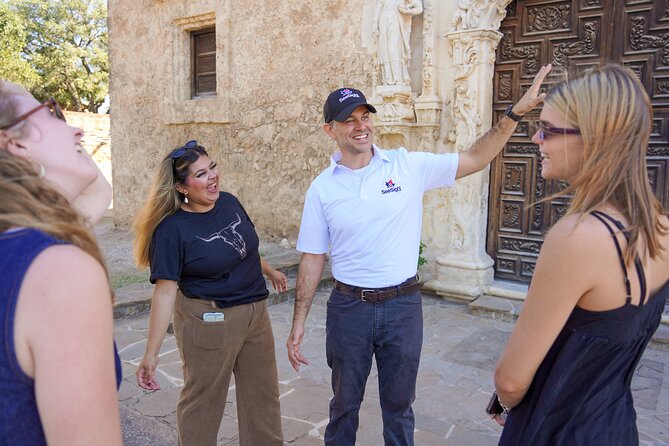
Between missions, the tour includes the World Heritage Center, a community space built to celebrate the UNESCO-listed missions. This stop matters because it helps you connect what you’re seeing to the wider story—how the missions relate to nearby neighborhoods, culture, and local history.
Think of it as your “orientation buffer.” After walking through mission churches and grounds, you’ll want a quick piece of context that ties it all together. The time here is about 30 minutes, so it’s not a long museum marathon, but it’s often enough to make the rest click.
This also helps you avoid the common problem of mission touring: you leave with photos but not much sense of how the pieces connect. The World Heritage Center is designed for exactly this kind of clarity.
Mission Concepción: Best-Preserved Church, Frescoes Still Visible, and Twin Towers
Mission Concepción is described as the best-preserved Spanish colonial church in the United States. It’s completed in 1755, and it’s famous for its original frescoes—still visible after nearly 300 years.
That’s the kind of detail you can’t fully appreciate from a distance. You’ll get time here (about 30 minutes) to focus on the church itself and the features that make Concepción a must-see.
You’ll also notice the twin towers, which are a major visual cue along the Mission Trail. And there’s another important point: Concepción is an active parish, so you’re not only seeing history—you’re seeing faith and community life continuing in the present.
This stop works especially well if you like when a tour includes both context and actual atmosphere. Even with a short visit, it can leave a lasting impression because the frescoes are specific, physical, and hard to forget.
Alamo Plaza Stop: 1836 Meets Today’s San Antonio
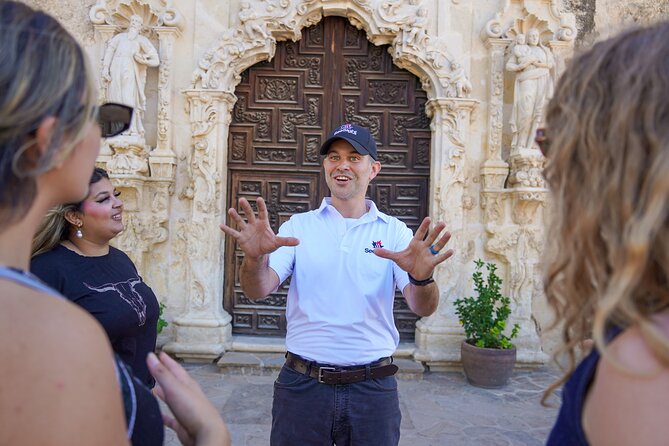
After the missions, the tour includes Alamo Plaza, home to the historic Alamo and the 1836 Battle of the Alamo. This stop is more about framing and orientation than a deep dive.
The Alamo area is also a lively public square, and the tour helps you place the missions in the bigger picture of Texas history—Spanish colonial roots leading into later chapters.
This part is helpful if you’re also planning to explore on your own later. You’ll get bearings fast and you can decide what deserves your extra time back in the afternoon.
Price and Value: What $107 Buys You
At $107 per person, this is not the cheapest option in town, but it’s also not just a ride. The value comes from several bundled pieces:
- Transportation between sites
- Fully narrated driving tour while you move
- Complimentary hotel pickup and drop-off in downtown
- Included admission at the missions (Espada, San Juan, San José, Concepción)
- Included admission at the UNESCO World Heritage Center
When you add that up, you’re paying for convenience plus entry fees, not only for a guide’s talking time. If you try to do this solo, the cost tends to creep upward once you factor in admissions, parking stress, and the time cost of getting from stop to stop.
The group size cap of 7 travelers is also part of the value. It usually leads to less rushing and better interaction, especially if you ask questions during transitions.
What the Guides Do Well (and Why It Changes the Feel of the Tour)
The tour experience depends a lot on the guide, and this one has strong signals. I’ve seen guides named Nancy, Victor, and Dylan linked to this route. Across those examples, the theme is consistent: friendly, clear explanations, and an ability to adjust to real conditions.
On a Sunday, for instance, Mass at some mission locations changes the flow. The guide can adapt and show extra things along the way instead of forcing everyone into a rigid schedule. That’s not just helpful—it often keeps the tour from feeling interrupted.
Another big plus from the way the tour is described is flexibility. On-the-fly customizing can matter when you have photo goals, accessibility concerns, or just a preference for which mission you want to linger at most.
Tips to Get More Out of Short Stops (Without Feeling Rushed)
Because multiple stops run around 30 minutes, you’ll get the most enjoyment if you prepare your priorities.
- Choose one “main photo” per mission so you don’t waste time deciding on the spot.
- Look for the connecting theme: trades and irrigation at Espada, community structure at San Juan, architecture and symbolism at San José, frescoes and parish life at Concepción.
- If a church service is happening, keep your expectations flexible. This is part of the deal at active parishes.
Also, wear shoes that work for walking in mission grounds. The tour notes moderate fitness level, and that’s generally code for uneven ground and a decent number of steps across multiple stops.
If you’re sensitive to time pressure, Mission Espada and Mission San Juan are the places you might find most “quick intro” feeling. Mission San José is the one where you’ll get more breathing room.
Who Should Book This Tour
This tour is a strong fit if you:
- Want the UNESCO missions in a single morning/half-day plan
- Like having guidance and narration so the buildings connect to meaning
- Appreciate included entry tickets rather than paying and scheduling separately
- Prefer smaller group dynamics over a big bus experience
It may be less ideal if you:
- Want long, quiet stays inside each mission church without pacing
- Plan to do serious reading at every sign and interpretive panel
If your style is slow and deep, you might treat this as the fast “starter course,” then go back to one mission on your own later.
A Quick Note on Missed Pickup Risk
One review includes a serious complaint about a pickup not happening at the scheduled time and place. Most likely, that’s rare, but it’s worth acting like a smart traveler.
If you’re relying on pickup, confirm your pickup details the day before and keep the meeting point address handy as a backup plan. If the tour starts from 515 S St Mary’s St and you’re not downtown, make sure you’ve arranged an alternative meeting location.
Should You Book the San Antonio UNESCO Premium Missions Tour?
Yes—if your goal is efficient, guided access to San Antonio’s five Spanish missions and the UNESCO context, this tour does the job. The combination of small group size, included admission, and pickup plus narration makes it feel more complete than many “drive-by” sightseeing options.
I’d especially recommend it if you want Mission San José and Concepción without spending your whole day juggling logistics. And if you’re traveling with mixed interests—history buffs plus people who just want the highlights—this route gives everyone something to grab onto.
FAQ
How long is the San Antonio UNESCO Premium Missions Tour?
It runs for about 3 hours.
What does the tour cost?
The price is $107.00 per person.
Is admission included for the missions?
Yes. Admission tickets are included for Mission Concepción, Mission San José, Mission San Juan, and Mission Espada, plus the UNESCO World Heritage Center.
Are pickup and drop-off included?
Yes. Complimentary hotel pickup and drop-off are included, with pickup available from downtown accommodations.
Where do I meet the tour?
The meeting point is 515 S St Mary’s St, San Antonio, TX 78205, and the tour ends back at that same meeting point.
What time does the tour start?
The tour start time is 9:30am.
Is the tour offered in English?
Yes. It’s offered in English.
How many people are in the group?
The tour has a maximum of 7 travelers.
Can I cancel and get a full refund?
Yes. You can cancel for a full refund up to 24 hours in advance. If you cancel less than 24 hours before the start time, the amount paid is not refunded.
Is the tour okay for someone with moderate physical fitness?
The tour is listed as suitable for travelers with moderate physical fitness, which usually means comfortable walking during the stops.