REVIEW · ST PETERSBURG
St. Petersburg Jungle Prada Site History Tour
Book on Viator →Operated by Jungle Prada Tour · Bookable on Viator
Peacocks and ancient mounds in St. Pete. On the Jungle Prada Site history tour, I love getting up close to a real Tocobaga midden that’s more than 900 feet long, then hearing how the story changes when Spanish explorers arrived in 1528. The setting is part archaeology walk, part living backyard, with shade, jungle greenery, and those comical birds wandering around like they own the place.
I also like the human touch: David (a third-generation owner) keeps the facts straight and the storytelling fun, including the big thread of Alvar Nunez Cabeza de Vaca’s survival journey from 1528 to 1536. One consideration is practical: the paths can be uneven, and Florida warmth builds fast, so you’ll want sturdy shoes and to pace yourself.
In This Review
- Key highlights at a glance
- Entering the Jungle Prada Site: timing, meeting point, and what you actually do
- The 900-foot Tocobaga midden: the main attraction you can walk through
- The onsite museum and midden artifacts: seeing history with your eyes
- Peacocks, shade, and jungle air: what the setting feels like
- 1528 and the Narvaez Expedition: how the Spanish chapter fits in
- Why David’s third-generation ownership changes the vibe
- Price and value: $14 for a historian-led walk with parking included
- Comfort and safety: uneven paths, pets rules, and water advice
- Who this tour suits best (and who might want to adjust expectations)
- Should you book the St. Petersburg Jungle Prada Site History Tour?
- FAQ
- How long is the Jungle Prada Site history tour?
- What does the tour cost?
- Where do I meet for the tour?
- Is parking available?
- Do I need to bring bottled water?
- Are pets allowed on the site?
- Is the tour good for families and kids?
- What’s the cancellation policy if weather is poor?
Key highlights at a glance
- Walk a Tocobaga midden mound built from tens of thousands of conch and whelk shells
- Climb to the top of a preserved mound for a better sense of scale and layout
- See artifacts at the onsite museum connected to the midden
- Small group size (max 25) so you can ask questions and get real attention
- Free-roaming peacocks that make the walk memorable, even when they’re loud
Entering the Jungle Prada Site: timing, meeting point, and what you actually do
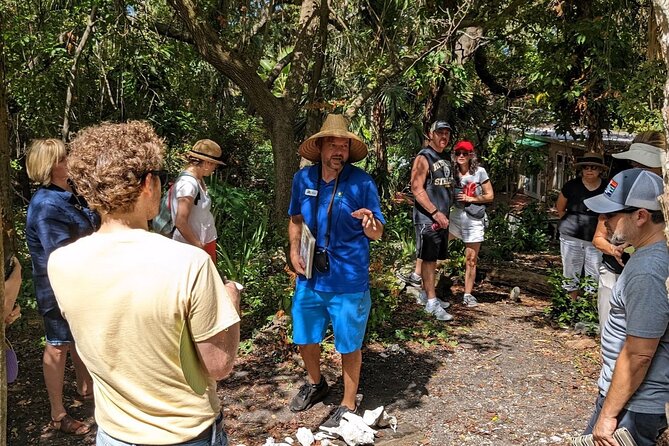
This is a simple, easy-to-fit outing. Expect about 2 hours total, with a 75-minute guided tour led by a historian. You can pick a morning or afternoon slot, which helps if you’re planning around heat or the rest of your day in St. Petersburg.
You’ll meet at 1700 Park St N, St. Petersburg, FL 33710. The tour starts there and ends back at the same spot, so you’re not guessing how to get oriented after the walk. Parking is available on-site, which matters because St. Pete traffic and parking hunts can eat time.
You’ll use a mobile ticket, and you’ll get confirmation when you book. The group cap is 25, so it doesn’t feel like a cattle-line history stop. That small size pairs well with the kind of tour this is: you’re moving through a real site, asking questions, and hearing the same story clearly without shouting over everyone.
If you’re doing this as part of a tight itinerary, the timing is the big win. It’s not a half-day commitment, but you still get a full guide-led walk with context.
You can also read our reviews of more tours and experiences in St Petersburg.


The 900-foot Tocobaga midden: the main attraction you can walk through
The heart of the tour is the Tocobaga archaeological site in Jungle Prada. This is often described as the best-preserved Native American site in the Tampa Bay area, and what you’ll notice right away is scale. The main feature is a huge shell mound made from tens of thousands of conch and whelk shells.
During the walk, you don’t just look at a mound from a distance. The highlight is that you’ll visit the top of a well-preserved Native American mound and see the adjoining village plaza. That change in viewpoint is huge for understanding. On ground level, it’s hard to grasp how long the mound system runs. From higher up, you start to see why it’s described as more than 900 feet long.
A big part of what makes this compelling is that it turns archaeology into something you can measure with your own body. You get a sense of where daily life likely clustered, how the mound shaped the space, and how people used the material over time. You’re also surrounded by the subtropical setting, so the site doesn’t feel like a sterile exhibit. It feels like a place that stayed a place.
Practical note: because this is an archaeological property with natural terrain, watch your step. Uneven surfaces come with the territory, and you’ll want shoes that grip.
The onsite museum and midden artifacts: seeing history with your eyes
The tour includes time to see artifacts connected to the site’s midden. That museum stop is where the whole experience gains depth. A mound tells you about material and scale. The artifacts help connect those materials to real people and real activities.
You’ll also get a better sense of how the shell deposits and the surrounding features fit together as one story, not random piles. Seeing items from the midden makes the tour feel less like a guided lecture and more like hands-on interpretation, even without touching anything.
If you like learning by “seeing it,” this is a smart format. You’ll leave with more than a memory of a place. You’ll have a clearer picture of what the site preserves, and what clues archaeologists can pull from those remains.
Peacocks, shade, and jungle air: what the setting feels like
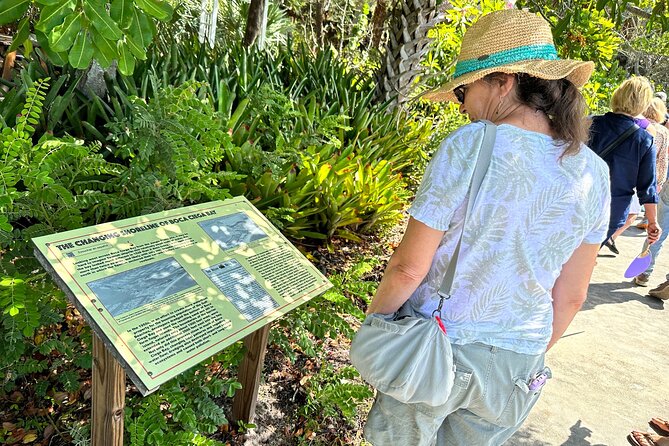
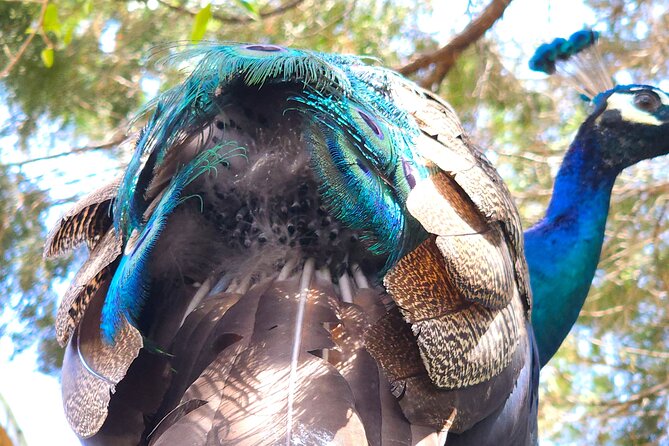
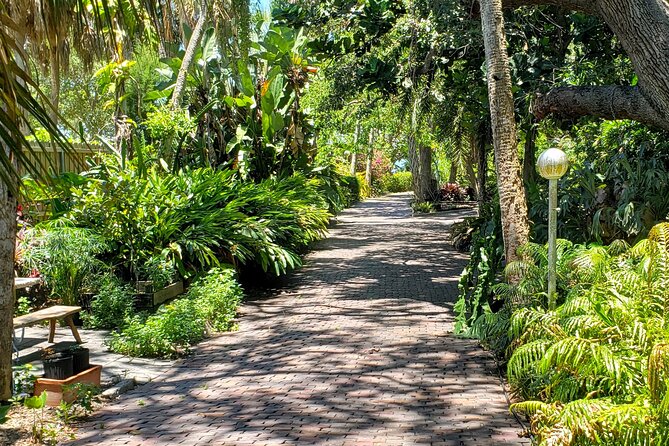
One reason this tour is such an easy recommendation in St. Pete is the atmosphere. The property is lush and outdoorsy, with a subtropical feel. And yes, there are peacocks—free-roaming—so the tour can pick up a little extra energy when one decides to wander into your path or announce itself loudly.
From a practical point of view, plan for heat. The site is shady, which helps, but Florida can still ramp up fast. The tour runs about 75 minutes of guided time, so you’ll be outside the whole way. Bring your water and take breaks when your body asks for them.
If you’re the type who loves travel that feels local—plants, birds, smells, real outdoor textures—this tour delivers. It’s not just history behind glass. It’s history in a living landscape, with animals doing what animals do.
1528 and the Narvaez Expedition: how the Spanish chapter fits in

After the Native American focus, the tour shifts to a key European arrival: the Spanish landing connected to the 1528 Narvaez Expedition. This matters because it frames a dramatic change in the region—new forces, new pressures, and new records.
One of the most memorable storylines is Alvar Nunez Cabeza de Vaca, a conquistador who landed at Jungle Prada as part of that 1528 expedition. The guide explains his survival journey, including the timeline that runs from 1528 to 1536, reaching the Pacific Ocean with a small group.
Why this section works is pacing and context. You’re not being dumped with dates. You’re hearing how the earlier story sets the stage for the later one—how contact happened, and why those years became part of Florida’s written history.
It’s also a good reminder that the story isn’t one neat line. The site contains layers: Native life over long timeframes, then later European arrival and documentation. The tour ties those layers together without losing you in details.
Why David’s third-generation ownership changes the vibe
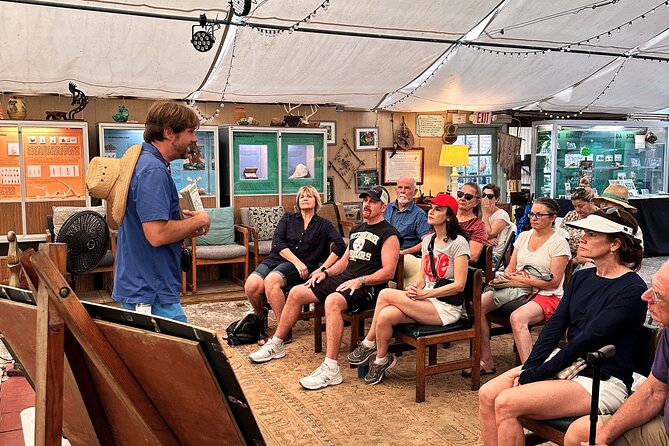
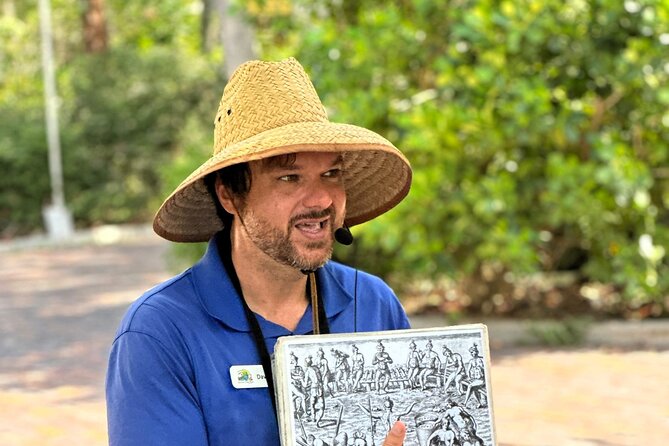
This is a family-owned site, and the guide’s connection shows. David is the grandson in the family that purchased and preserved the property decades ago. That kind of long-term stewardship is part of the emotional value of the tour.
You can feel it in how the tour is run. The small group size means questions don’t get swallowed. The guide can slow down when something matters to you, and you don’t feel rushed. Many people come back for a second visit, and that makes sense: a guided walk can land differently once you’ve seen the main features and want more detail on what you noticed the first time.
Also, the tour is built to be approachable. You don’t need a background in archaeology to follow it. The stories make the past understandable, and the details keep it from feeling like a generic walk-and-talk.
Price and value: $14 for a historian-led walk with parking included
At $14 per person, this is one of the easier-value history activities in the St. Petersburg area—especially because it’s not just a self-guided stop. You’re paying for a 75-minute guided tour with a historian and a real explanation of what you’re seeing.
Parking is included (on-site), and the tour stays compact in time. That means you spend less energy on logistics and more time on the site itself. If you’re comparing to bigger, more expensive guided tours around Florida, the price-to-time ratio here is excellent.
You also don’t need special gear beyond basic outdoor sense. You’re not renting equipment or paying extra for a museum pass. The cost stays straightforward.
Comfort and safety: uneven paths, pets rules, and water advice
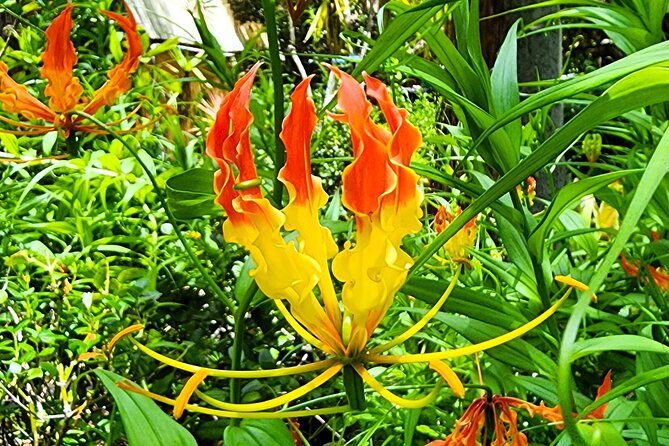
This tour involves walking outdoors through a wooded, natural setting. That’s the fun part, but it comes with a few clear reminders.
Wear sturdy shoes with good traction. Surfaces can be uneven, and you’ll want to feel stable when you’re moving up and around mounded terrain. It’s very manageable, but it’s not a flat sidewalk stroll.
Florida heat is real. The tour doesn’t include bottled water, so plan to bring your own. If you’re doing this in summer, start hydrated and take it slow.
Pets aren’t allowed on the site. Service animals are allowed, which is good to know for planning.
Who this tour suits best (and who might want to adjust expectations)
This is a strong fit if you like history you can walk through—Native American archaeology, early Florida encounters, and local preservation stories. The Spanish connection adds extra interest even if you’re not focused on archaeology.
It’s also a decent option for families, but keep in mind attention spans. The guided portion includes informational storytelling, and if you’re traveling with younger kids, the length of the talks might be tough. For kids who can handle a longer guided experience, it’s a good educational outing.
If you hate heat or you’re dealing with mobility limits that make uneven ground hard, consider whether you’ll be comfortable with a natural, outdoorsy setting. Most people can participate, but the uneven terrain is part of the property.
Should you book the St. Petersburg Jungle Prada Site History Tour?
If you want an inexpensive, guided history walk that feels real—mounds, artifacts, and a preserved place instead of a quick roadside stop—this is an easy yes. The mix of Tocobaga midden scale, the climb to the mound top, the artifact viewing, and the Spanish-era thread tied to Cabeza de Vaca gives you more than one type of interest.
Book it especially if you value small-group attention and you like guides who can connect local details to big historical events without losing the plot. At $14, you’re not gambling on a pricey experiment.
The only real reason to skip is comfort: uneven ground plus Florida warmth means you should be ready to walk carefully and bring water.
FAQ
How long is the Jungle Prada Site history tour?
The guided portion is about 75 minutes, and the overall experience runs about 2 hours.
What does the tour cost?
It costs $14.00 per person.
Where do I meet for the tour?
The tour meets at 1700 Park St N, St. Petersburg, FL 33710.
Is parking available?
Yes. Parking is available on-site.
Do I need to bring bottled water?
Yes. Bottled water is not included, and you’re advised to bring water to stay hydrated in Florida summer.
Are pets allowed on the site?
No. Pets are not allowed on the site.
Is the tour good for families and kids?
Most people can participate, but the tour involves walking and guided storytelling outdoors. If you’re traveling with younger children, the length of the informational talks may be a bit much.
What’s the cancellation policy if weather is poor?
You can cancel for a full refund up to 24 hours in advance. If the experience is canceled due to poor weather, you’ll be offered a different date or a full refund.