REVIEW · TOKYO
Imperial Palace East Garden and Edo Castle Walking Tour in Tokyo
Book on Viator →Operated by Localized Walking & Food Tours · Bookable on Viator
You’ll walk palace history in Tokyo, starting at Wadakura Fountain Park and easing into the Imperial East Gardens without needing palace-entry access. This is one of those smart Tokyo walks where the guide turns what looks like calm park scenery into a timeline you can actually picture.
I love how the tour focuses on what you can see on the ground: Edo Castle remnants in the East Gardens, plus the nearby Wadakura Fountain Park details that connect past royal events to today’s public space. The explanations are built for walking—short stops, clear directions, and plenty of time to look and take photos.
One possible drawback: the gardens are scenic, but it’s still a garden walk, so your best blooms depend on the season (and you should plan for some paths that feel hilly). If you’re expecting a palace-building tour, you’ll be adjusting your expectations fast.
In This Review
- Key things that make this tour work
- Imperial Palace East Gardens: What You See When You Don’t Go Inside
- Wadakura Fountain Park in 30 Minutes: Royal Wedding History Up Close
- Honmaru Area Ruins and Ninomaru Garden: Edo Castle on Foot
- Walking Logistics Around the Palace Grounds: Shoes, Hills, and Pace
- Guide Quality Is the Product Here: Storytelling That Stays Clear
- Value Check: Why the Price Feels Fair
- When This Tour Is a Great Fit (and When It Might Not Be)
- Should You Book This Imperial Palace East Garden and Edo Castle Walk?
- FAQ
- Do I enter the Imperial Palace buildings on this tour?
- How long is the walking tour?
- Is the tour admission free for the stops?
- What does the tour cost?
- Where do I meet the guide?
- Is this a large group tour?
- What should I wear?
- Is a mobile ticket used?
- Are snacks included?
- Is this tour run only in good weather?
- Are service animals allowed?
Key things that make this tour work
- Small group size (max 12) keeps questions easy and the pace comfortable
- Wadakura Fountain Park packs in royal-wedding history in about half an hour
- No palace buildings entered—you explore grounds, ruins, ponds, and viewpoints instead
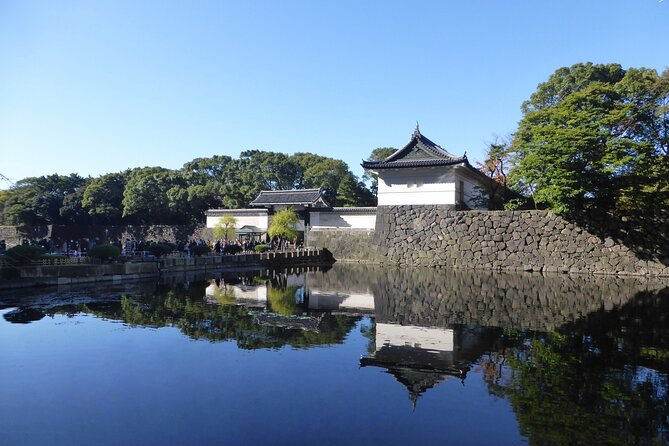
- Edo Castle remnants (Honmaru area and Ninomaru Garden) give concrete feudal context
- Guides with strong English and visual aids help facts stick as you walk
- Rain-tolerant pacing: guides keep moving and adjust the route when needed
Imperial Palace East Gardens: What You See When You Don’t Go Inside
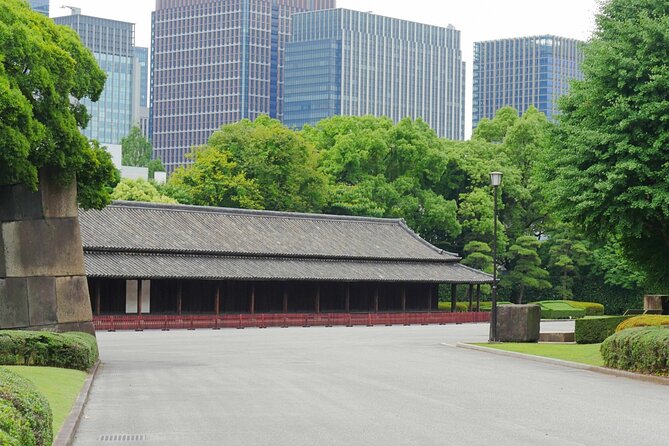
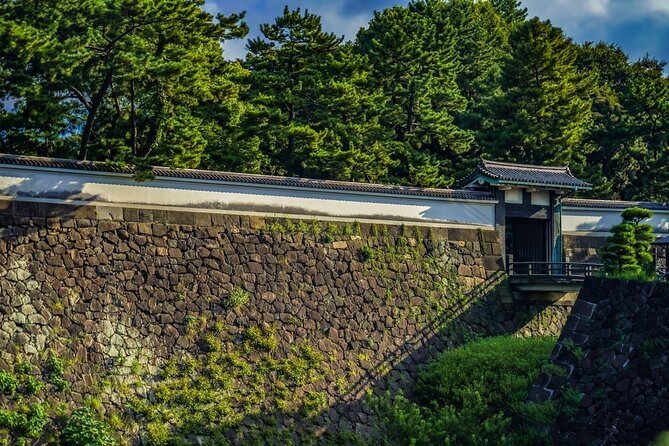
First, set the expectation correctly: you do not enter the Imperial Palace buildings. That access simply isn’t available to the public on this kind of outing. Instead, you’ll walk the Imperial Palace East Gardens and surrounding areas where the Edo Castle once stood.
This is a big reason the tour feels different from the usual checklist sightseeing. You’re not trying to squeeze through interior rooms. You’re learning how the grounds were shaped for defense, ceremonies, and movement—and then looking for the physical clues in the terrain and ruins.
If you like places where history shows up in the details—ponds, garden layouts, remnants, and named areas—this approach is a good match. And because you’re outdoors, the photos come naturally. You won’t feel like you’re holding your camera hostage while someone rushes you through doors.
You can also read our reviews of more tours and experiences in Tokyo.
Wadakura Fountain Park in 30 Minutes: Royal Wedding History Up Close
The walk begins at Starbucks Coffee – Kokyo Gaien Wadakura Fountain Park, then you head to Wadakura Fountain Park for about 30 minutes, with admission that’s free.
This park is more than a pretty water stop. It was originally constructed in 1961 to commemorate the royal wedding of Emperor Akihito and Empress Michiko. Later, it was redesigned and reopened in 1995 to celebrate the wedding of Crown Prince Naruhito and Crown Princess Masako.
What I like about this first stop is the rhythm. You start with something calm and easy to orient to—water features, open space, and time to settle before the heavier historical walk. The guide can also use the park’s timeline to set the tone for what comes next: how Tokyo’s major landmarks keep evolving while still carrying older layers forward.
Practical tip: this is a great place to reset your stamina. If you’re carrying a lot of Tokyo walking fatigue already, use this first stop as your warm-up.
Honmaru Area Ruins and Ninomaru Garden: Edo Castle on Foot
The main event is the East Gardens walk, roughly two hours on the grounds around what used to be Edo Castle. Admission here is also free, which is a nice bonus, because you’re paying mostly for the guide’s storytelling and direction—not ticket fees.
Inside the gardens, the tour focuses on named sections that help you connect the landscape to purpose:
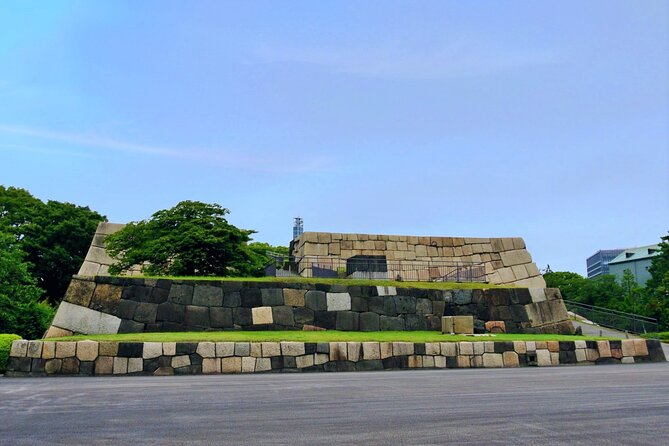
- The Honmaru area, where you’ll see castle remnants
- The Ninomaru Garden, known for more traditional Japanese garden scenery
This is where the tour earns its keep. The guide doesn’t just point at greenery. You learn what those spaces were used for—so when you look at the ponds, paths, and ruins, you’re not guessing. You’re reading the place.
Season matters. In spring, you might spot cherry blossoms. In autumn, the gardens can show colorful foliage. If you’re visiting outside peak bloom, the gardens can still be beautiful—but you may not get the same dramatic flower show.
One more fun detail you might catch: there’s mention of carp that can look striking in sunlight. If you time it right and the weather cooperates, you’ll see why the park-and-pond setting feels so serene.
Walking Logistics Around the Palace Grounds: Shoes, Hills, and Pace
This is a walking tour, so comfortable shoes are not optional. The route includes some hills, and while it’s not described as having stairs, expect the kind of terrain where you’d rather be wearing supportive footwear than fashion sneakers.
The other logistics are refreshingly simple:
- It’s a small-group format (up to 12 travelers)
- You’ll meet at the Starbucks at Kokyo Gaien Wadakura Fountain Park
- The tour ends back at the meeting point
Because you’re moving between outdoor points, your best friend is time. Plan for a slow, thoughtful walk, not a sprint. The tour is built for learning, and that takes minutes—especially when questions come up.
Weather is also part of the deal. The experience is described as one that requires good weather. And on rainy days, guides can adjust. In past experiences, rain didn’t stop the learning; the guide kept the group moving at a pace that made the timing work and helped avoid the worst of the weather.
Guide Quality Is the Product Here: Storytelling That Stays Clear
At $25, you’re not buying access. You’re buying interpretation. And the recurring theme is that the guide’s delivery matters a lot.
English-speaking local guides run this tour, and the descriptions of guide style are consistent: clear communication, friendly energy, and the ability to explain Japan’s historical layers in a way that feels easy to follow while you’re walking.
Guides named in experiences include people like Loc, Kenta, Glenda, Kaz, Miko, Kei, Sato, Satoko, Miyu, and Midori. Across those different names, the common thread is strong storytelling. Some guides are also described as using photos or visuals—and one guide stood out for coming well prepared with many visuals/pages to help the history make sense on the spot.
If you’re the type who likes context—samurai and the Edo period connections, plus how the current imperial family fits into the broader story—you’ll probably feel like the guide is doing more than giving trivia. The explanations are tied to what you see in the gardens and ruins.
Also, I appreciate when a guide answers questions directly. Several experiences highlight that guides respond to questions and keep the group engaged, rather than switching to a one-way lecture once everyone falls quiet.
Value Check: Why the Price Feels Fair

Let’s talk value without pretending it’s free money.
- Price: $25 per person
- Duration: about 2 hours 30 minutes
- What you’re paying for: the English-speaking guide, the walk coordination, and the historical interpretation
- What costs extra? Nothing for entry. The tour notes free admission for the key stops.
- Not included: snacks
So you’re paying for “time with a competent guide,” not for expensive tickets. In a city where a lot of sightseeing is self-guided, that can be a smart use of your limited trip hours.
And the small group size (max 12) helps justify the cost. If the group were larger, it’s harder to keep a conversational pace and easier to miss the details. Here, it sounds built to keep you from feeling like you’re being rushed.
One more value signal: the overall recommendation rate is 98% with a strong average rating (4.9). That doesn’t mean every moment will hit perfectly, but it does suggest the guide-driven experience is consistently satisfying.
When This Tour Is a Great Fit (and When It Might Not Be)
This is a great fit if you:
- Want an easy, central walk near the Imperial Palace area
- Like history that you can point to—ruins, named garden areas, and the physical clues of the Edo era
- Enjoy small groups and Q&A during a walk
- Prefer learning without the stress of figuring out what you’re looking at
It may be less satisfying if you:
- Expect to enter and tour Imperial Palace buildings (you won’t, and admission rules prevent that)
- Want a garden full of peak blooms on demand. Yes, cherry blossoms and autumn color are possible, but the tour is still weather-and-season dependent.
- Are hoping for something purely photogenic with no walking context. This is still a history-led stroll.
Should You Book This Imperial Palace East Garden and Edo Castle Walk?
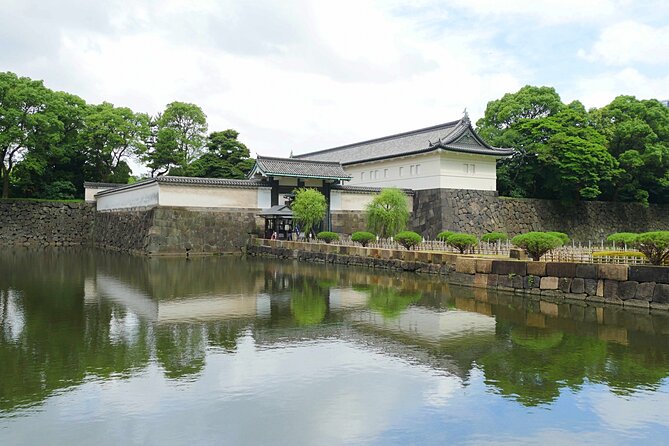
If you’re doing Tokyo for the first time, or you want one guided hour-and-a-half style experience that makes the palace grounds feel readable, I’d book it. The reason is simple: your guide turns free, public space into a guided timeline—and that’s where the best value lives.
Skip it only if you’re set on palace interiors. If you’re fine exploring the East Gardens and Edo Castle remnants, this is one of the most practical ways to understand why this area matters.
FAQ
Do I enter the Imperial Palace buildings on this tour?
No. The experience includes the Imperial Palace East Gardens and surrounding grounds, but it does not go inside the Imperial Palace buildings.
How long is the walking tour?
It’s about 2 hours 30 minutes total (approx.).
Is the tour admission free for the stops?
Yes. Both stops are listed with free admission.
What does the tour cost?
The price is $25.00 per person.
Where do I meet the guide?
You start at Starbucks Coffee – Kokyo Gaien Wadakura Fountain Park (3-1 Kōkyogaien, Chiyoda City, Tokyo 100-0002, Japan).
Is this a large group tour?
No. It has a maximum group size of 12 travelers.
What should I wear?
Wear comfortable shoes since it’s a walking tour, and there can be some hills.
Is a mobile ticket used?
Yes, the tour includes a mobile ticket.
Are snacks included?
No. Snacks are not included.
Is this tour run only in good weather?
Yes, the experience requires good weather. If it’s canceled due to poor weather, you’ll be offered a different date or a full refund.
Are service animals allowed?
Yes. Service animals are allowed.