REVIEW · ROME
Ancient Rome’s Ultimate Night Walk
Book on Viator →Operated by Rome's Ultimate Free Walking Tours · Bookable on Viator
Nighttime Rome tells stories in layers. This 2.5-hour night walk connects Italy’s modern power spots to ancient ruins, with Michelangelo front and center. You finish with a complimentary nightcap in the city center, which is a nice little exhale after all that square-hopping.
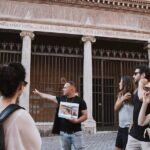
I love two things most: the small group size (max 15) keeps the pace human and questions welcome. I also like how the tour moves stop-by-stop through the city’s big ideas, with the guide Nick praised for bringing Rome’s history to life.
The only real consideration is that this experience requires good weather and it’s still a walking tour at 7:00 pm. If rain or slick streets are in the forecast, plan for slower going and bring the right gear.
In This Review
- Key highlights you’ll feel right away
- A 7:00 pm Rome walk you can actually enjoy
- Meeting at Via dei Serpenti: how to make the first 10 minutes smooth
- Piazza Venezia: unification monuments with a bigger meaning
- Piazza del Quirinale: power in the daytime, power after dark
- Piazza del Campidoglio: Michelangelo’s design and the Roman mayor’s hill
- Via dei Fori Imperiali: getting the Forum in one guided corridor
- Piazza Di Pietra: the Temple of Hadrian’s columns in plain sight
- Piazza Colonna: where sacred power and government history overlap
- The complimentary nightcap finish (and why it’s a smart ending)
- Price and value: what you’re really paying for
- Who this tour suits best
- Should you book Ancient Rome’s Ultimate Night Walk?
- FAQ
- Where does the tour start?
- What time does the tour begin?
- How long is the tour?
- Is the tour offered in English?
- Do I need admission tickets for the stops?
- What’s included at the end?
- What happens if the weather is poor or I need to cancel?
Key highlights you’ll feel right away
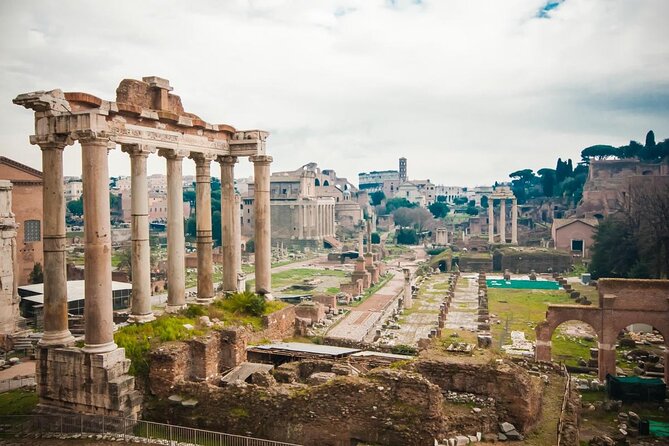
- A timeline you can walk: unification landmarks to imperial Rome views without sitting on a bus
- Michelangelo’s Piazza del Campidoglio: you see the mayor’s hill-design in a guided, meaningful way
- Forum views from Via dei Fori Imperiali: the route lets you intersect with the ancient center
- Historical eye-candy at every corner: Piazza Venezia, Quirinale, Pietra, and Colonna each carry distinct political stories
- Free-entry stops built into the route: each listed stop has admission ticket free
- A nightcap finish: the end point isn’t just a crowd dispersal, it’s a small treat in the center
A 7:00 pm Rome walk you can actually enjoy
Rome at night has a different tempo. Streets feel less like a checklist and more like a story you can follow step by step.
This tour starts at 7:00 pm and runs about 2 hours 30 minutes, which is a sweet length: long enough to connect themes, not so long you feel cooked. You’re also moving through major squares and viewpoints where evening lighting helps you see what the guide is describing.
Because it’s a guided English experience, you’re not just wandering. You get a narrative thread that helps you make sense of why these places matter, from Antiquity through modern Italy.
You can also read our reviews of more tours and experiences in Rome.
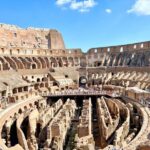
Meeting at Via dei Serpenti: how to make the first 10 minutes smooth
You start at Via dei Serpenti, 89, 00184 Roma RM. The tour ends at Piazza Colonna (where you’ll be ready to keep exploring on your own).
You’ll use a mobile ticket, so have your phone charged and ready. The group is kept to a maximum of 15 travelers, so it’s not a cattle-call kind of experience.
It’s also near public transportation, which matters if you’re juggling other plans that day. And since it’s a night walk, I’d treat it like an event: arrive with a little buffer so you don’t feel rushed when the group gathers.
One more practical note: the tour is marked as suitable for most travelers and allows service animals. Beyond that, you should still expect the normal reality of a 2.5-hour walk through city streets and stone-lined piazzas.
Piazza Venezia: unification monuments with a bigger meaning
Your first stop is Piazza Venezia, around 15 minutes. This is where you get the story of Italian unification, tied to a major monument symbolizing that moment.
What I like about beginning here is the framing. You’re not starting in the distant past first—you’re starting with modern identity, right in a place that’s loud with symbolism. Then the tour can step backward and forward across time without you getting lost.
This opening stop also sets up an easy way to read the rest of the night. You’ll start noticing how Rome keeps reusing space and meanings—old power, new power, and everything in between.
Piazza del Quirinale: power in the daytime, power after dark
Next is Piazza del Quirinale for about 15 minutes. Here, you learn what the area is today as the seat of the Italian president.
Then the story bends farther back: it also references a time when it was the main papal residence, before it was inhabited by the Italian royal family. That shift matters because it shows how Rome isn’t one fixed era. It’s a layered set of roles stacked on the same ground.
A drawback for some people: Quirinale-focused stops can be more about context and architecture than about hands-on ruins. If you’re expecting purely archaeological moments, this is more about Rome’s governance story. Still, it’s a key piece if you want the later “Forum corridor” scenes to land.
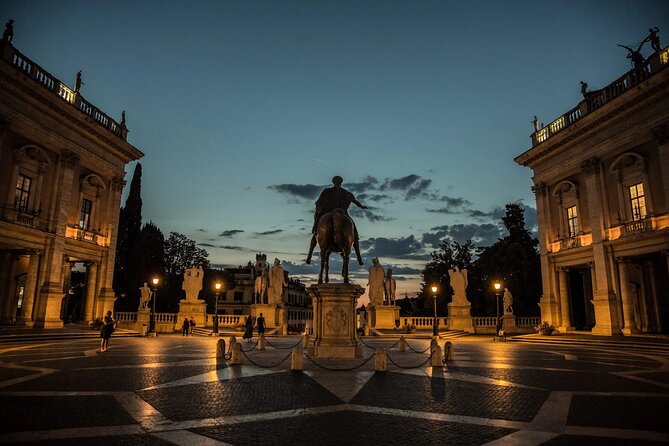
Piazza del Campidoglio: Michelangelo’s design and the Roman mayor’s hill
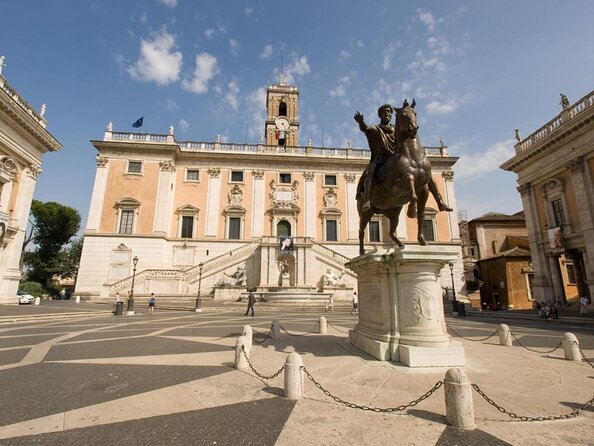
Stop three is Piazza del Campidoglio, again about 15 minutes. This is the square designed for the seat of the Roman mayor, and the tour specifically calls out Michelangelo’s stunning work.
Even if you’ve seen photos, it’s the kind of place that rewards standing still for a minute. The geometry and sightlines are part of why the square feels commanding, even when you’re surrounded by regular evening traffic.
Why this stop works so well on a night walk: Michelangelo’s work is meant to control how you look. Evening light tends to make lines and stone textures clearer, so it’s easier to connect the guide’s explanation to what you can actually see.
Also, the square acts like a stage between eras. You’re moving from modern political seats toward the older imperial world, and Campidoglio helps you transition without whiplash.
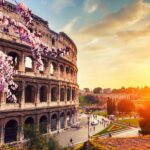
Via dei Fori Imperiali: getting the Forum in one guided corridor
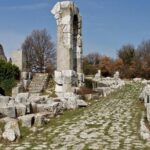
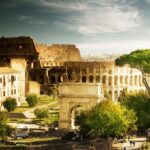
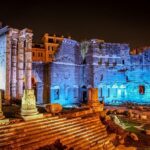
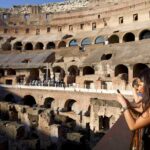
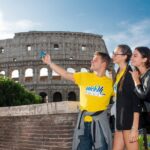
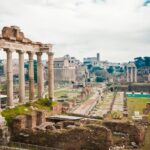
Then comes the biggest “stop in your head” moment: Via dei Fori Imperiali for about 15 minutes. The guide has you intersect the ancient center and view the Ancient Roman Forum, described as the once-central heart of the Western world, caput mundi.
Here’s the practical reason this portion is valuable: Rome’s ancient sites can be scattered. But this route gives you a focused line of sight toward the Forum area, so the ruins feel like a connected system rather than random stones.
What you’ll likely notice is that the walking route itself helps you understand layout. Instead of treating Antiquity like isolated landmarks, you start perceiving how Romans organized civic life—temples, public space, and political drama all in one complex.
One caution: because it’s an active walkway between sites, you’ll want to stay close to your group. At night, people naturally drift to take photos or read details, and that can break the flow of what the guide is pointing out.
Piazza Di Pietra: the Temple of Hadrian’s columns in plain sight
At Piazza Di Pietra, you get about 5 minutes. The highlight here is the facade of the Camera di Commercio, which still has the original columns of the Temple of Hadrian.
This is a quick stop, but it’s a powerful lesson in Roman continuity. You’re looking at a working modern building frontage where ancient elements survive. That kind of visible reuse is exactly what makes Rome feel like one long conversation between eras.
Drawback: because the stop is short, you won’t linger enough to feel like you did a deep architectural study. Think of it as a snapshot moment—fast, striking, and meant to keep the momentum of the night intact.
Piazza Colonna: where sacred power and government history overlap
Stop six is Piazza Colonna for about 15 minutes. This one is loaded. You’ll hear the history of Roman families who used to run the Catholic Church, and how the seat of the Italian Prime Minister relates to the same space.
That mix is what makes Piazza Colonna feel like more than a pretty square. It’s a reminder that Rome’s “centers of power” have swapped hands across centuries, and the city has kept the paperwork traces—so to speak—in stone, buildings, and ceremonial space.
This is also where the tour ends. So you get a satisfying final beat: you’ve traveled through unification identity, papal and royal roles, and imperial civic life, and you finish with modern leadership tied to the same geographic logic.
The complimentary nightcap finish (and why it’s a smart ending)
The tour ends with a complimentary nightcap in the city center. After 2.5 hours of narration and walking, a drink helps you reset your brain and mentally sort the big themes you heard.
It’s also a good time to ask one last question, since you’re not racing toward the next stop. If you’re the type who keeps thinking about what you just learned, this is the point where it tends to click.
Practical note: because the finish is in the city center and you’re meeting up at Piazza Colonna, it’s an easy launch pad to keep exploring afterward. You’re not stuck at some far-out meeting point when you’re done.
Price and value: what you’re really paying for
The price is listed at $84.33 per person. That isn’t “cheap,” but value in Rome isn’t just about entry fees—it’s about how much sense you make of the city in a limited window.
Here’s what you get that supports the cost:
- A guided story through major squares tied to both Antiquity and modern Italy
- A controlled pace across 6 stops, with time built in for orientation
- All stops are admission ticket free, so you’re not paying museum-style entry fees along the way
- A nightcap included at the end
- Small group size (max 15), which helps the guide keep the connection tight
Also, this is offered in English, and you use a mobile ticket, which reduces friction. If you’re trying to see a lot in one evening without wandering aimlessly, the structure matters.
One more detail: it’s booked on average 14 days in advance. That’s not a must-book rule, but it does suggest demand. If your trip dates are set, don’t wait for a miracle opening.
Who this tour suits best
This walk fits best if you want a guided thread connecting:
- Italy’s unification story
- papal and royal eras
- Michelangelo’s Campidoglio
- the Forum area through Via dei Fori Imperiali
It’s also a great option if you’re short on daytime hours. A night walk at 7:00 pm can be a strategic way to keep your Rome days moving while still getting core landmarks.
If you’re the type who loves quiet, slow museum visits, you might find the pace fast. But if you enjoy learning while walking, this is built for you.
The guide experience also seems to be a strong part of the appeal. One of the guide names you’ll hear in positive feedback is Nick, praised for narrative skill that helps history feel like more than dates on a sign.
Should you book Ancient Rome’s Ultimate Night Walk?
I’d book it if your priority is to understand Rome as a connected timeline. You’ll get unification symbolism, Michelangelo’s Campidoglio, and Forum-area sightlines, all without museum ticket stress at each stop.
I’d think twice if you’re sensitive to rain and slick streets. The tour depends on good weather, and it’s still a walk through multiple outdoor piazzas. If you’re traveling in a season with unpredictable evenings, keep an eye on conditions and build in a little flexibility.
Bottom line: this is a well-shaped, evening-first way to see how Rome keeps rewriting its own power—old stones carrying new meaning.
FAQ
Where does the tour start?
The tour starts at Via dei Serpenti, 89, 00184 Roma RM, Italy.
What time does the tour begin?
It starts at 7:00 pm.
How long is the tour?
The duration is approximately 2 hours 30 minutes.
Is the tour offered in English?
Yes, it’s offered in English.
Do I need admission tickets for the stops?
No—each listed stop shows admission ticket free.
What’s included at the end?
You’ll end the tour with a complimentary nightcap in the city center.
What happens if the weather is poor or I need to cancel?
The experience requires good weather. If it’s canceled due to poor weather, you’ll be offered a different date or a full refund. You can also cancel for a full refund up to 24 hours in advance of the start time.