REVIEW · ST AUGUSTINE
Walking History Tour of St. Augustine’s Historic District
Book on Viator →Operated by Spyglass Tours · Bookable on Viator
St. Augustine history starts right on the street. I love how this small-group walk turns famous landmarks into a clear timeline, and I also like that it spans everything from the city’s founding to the Gilded Age without getting dry. The one catch: the tour is listed around 1 hour 30 minutes, but it often runs longer, so plan your day with some wiggle room.
You’ll cover nearly two miles at an easy-to-moderate pace, with stops that include Tolomato Cemetery, iconic church buildings, Flagler College (the former Ponce de Leon hotel), and key spots around Plaza de la Constitución and the fort. Even better, you’re not stuck listening at a bus stop; you’re moving through the places where power, religion, and ambition shaped the city.
Bring comfortable shoes and a water bottle, because you will be walking. The tour runs in English, uses a mobile ticket, and fits a moderate fitness level. And if you’re lucky enough to have a guide like Kevin Rose, expect humor, real questions answered, and stories that make you see the streets differently.
In This Review
- Key highlights worth your time
- The $25 value: what you really get
- The big story: founding to the early 1900s
- Tolomato Cemetery: the city’s earliest layers
- Flagler-era churches and the human stories behind them
- Flagler College (former Ponce de Leon Hotel): opulence with context
- Plaza de la Constitución: Florida’s power center
- Castillo de San Marcos: why the fort story is bigger than the fort
- City Gate Spirits: a traditional entrance saved from erasing
- Pacing, group size, and your guide’s Q&A style
- Where to meet, what to bring, and how to plan your walk
- Who should book this tour in St. Augustine
- Should you book the St. Augustine walking history tour?
- FAQ
- How long is the Walking History Tour of St. Augustine’s Historic District?
- What’s the walking distance?
- Is the tour offered in English?
- What does the tour include at major stops like the Castillo?
- Are admission tickets included for the stops?
- Where does the tour start and end?
- Is there a limit on group size?
- What should I bring?
- Can I get a refund if weather cancels the tour?
Key highlights worth your time
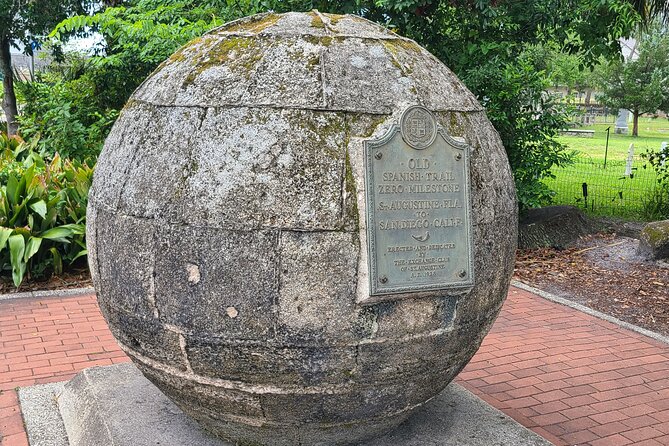
- From Tolomato Cemetery to the Castillo walls: a tight route through the city’s biggest eras
- Henry Flagler’s era in real places: Flagler College and Flagler-era churches show the Gilded Age vibe
- Plaza de la Constitución context: learn how government power worked here for nearly 250 years
- A licensed fort guide at the Castillo: construction and national importance explained while you walk the exterior
- Small maximum group size: more back-and-forth, not just one-way talking
The $25 value: what you really get

At $25 per person for about 1.5 hours, this tour is priced like an easy add-on that can still change how you understand St. Augustine. The value comes from the pacing and the focus: you’re not trying to memorize everything on your own, and you’re not doing the slow shuffle of a large bus crowd.
It also helps that several stops are outside and free to enjoy on your own time, like Plaza de la Constitución and the City Gate area. Admission tickets are not included for some stops, but you’re paying mainly for the guided storytelling and interpretation that turns separate sites into one connected narrative.
The group size matters here. With a cap of 15, you can ask questions without feeling like you’re talking to a megaphone. That’s usually what separates a worthwhile walking tour from a nice stroll with a speaker.
You can also read our reviews of more tours and experiences in St Augustine.


The big story: founding to the early 1900s
St. Augustine has a habit of showing up in people’s minds as mostly Spanish. This tour nudges you past that shortcut. You’re guided through the city’s evolution from its earliest roots into later periods, including the Gilded Age—when Henry Flagler helped reshape St. Augustine into a fashionable destination.
What I like about this approach is that each stop answers a different question you might have while wandering the historic district:
- Who held power, and where did it happen?
- How did religion and community life show up in architecture?
- How did wealth and tourism change the city’s look and priorities?
Instead of treating each site like a random postcard, the guide connects themes: fortifications and strategy, civic leadership, and prosperity. You leave with a mental map that makes your next self-guided walk feel sharper.
Tolomato Cemetery: the city’s earliest layers
The tour starts at Tolomato Cemetery, known for being the oldest cemetery in the city. What makes it compelling is the timeline angle: you’re looking at burial history that predates the Spanish arrival in 1562. That alone helps you understand St. Augustine as more than a colonial stop.
There’s also the Love Tree, which the tour mentions—though it also comes with a warning to go at your own risk. If you’re someone who hates surprises on the ground, just know that the cemetery is a working historic space with its own rules and quirks. Take care of your footing and follow what the site allows.
Time is short at each stop, around five minutes here. That’s good if you want momentum, but it means you’re not going to linger for a deep personal read of the grounds. If you want more time in a cemetery setting, use the tour as your orientation and then plan a longer visit later.
Flagler-era churches and the human stories behind them
After the cemetery, you’ll see Grace United Methodist Church, described as a Flagler Era church with a direct connection to Henry Flagler’s revitalization efforts in the late 1800s. This stop is a good reminder that the city’s transformation wasn’t only about grand hotels and rail connections. It also shows up in institutions that served daily life.
Next is Memorial Presbyterian Church, highlighted as one of the most beautiful buildings in the city, with a heartbreaking story tied to how it came to be. This is the kind of stop that works better with a guide than on your own, because you’re not just looking at architecture—you’re learning what it represents in local memory.
Both church stops are brief. Expect a quick visual scan plus a story you can carry forward. If you like slow, detailed interior visits, you’ll probably want to add separate time to revisit the buildings afterward.
Flagler College (former Ponce de Leon Hotel): opulence with context
The tour then heads toward Historic Tours of Flagler College, where you’ll learn that the college is the former Ponce de Leon hotel. This is the Gilded Age link that turns St. Augustine into a vacation brand—built on wealth, spectacle, and a promise of glamour.
Even if you’ve seen pictures online, the value here is context. You’re not just admiring a building; you’re understanding why it mattered and how it signaled St. Augustine’s shift toward prosperity and tourism.
This stop is also short, about five minutes. Think of it as a “set the stage” moment. If you’re interested in architecture or hotel history, plan a later pass when you can slow down.






Plaza de la Constitución: Florida’s power center
Plaza de la Constitución is one of those places where you can feel the history just by looking around. The tour frames it with a specific origin story: founded by Royal Decree in 1599. That’s the Spanish government era in a nutshell, and the guide connects it to what followed.
The Government House is a key part of the picture. It served as the seat of power in Florida for nearly 250 years. Even if you don’t know the details before you arrive, the guide’s job is to help you see the place as a working center of rule, not a decorative square.
One detail that stands out in the way the tour explains the plaza: it was lovingly recreated in 1933 as part of the WPA projects. That means you’re seeing not only history, but also how later Americans chose to preserve and re-create what they believed the past should look like.
This stop is around ten minutes. It’s long enough to connect the dots, but short enough that you keep moving. If you want to sit and absorb the square, I’d treat this as your perfect pause point during your overall walking day.
Castillo de San Marcos: why the fort story is bigger than the fort
At the Castillo de San Marcos National Monument, you get the full fort framing. The tour includes a licensed fort guide who explains the complete history of the forts of St. Augustine and talks about construction and importance to the history of the city and the nation.
What you’ll do here is important for planning: the tour focuses on the exterior of the structure. That can still be very worthwhile, because forts are about geography, materials, and strategy, and those are often best understood by seeing the walls and imagining how they functioned.
If forts are your thing, this stop will likely feel like the highlight. You get the big picture, plus enough specifics to make your own reading of the site much more productive afterward.
One practical note: you’re going to be standing and walking a bit more than at the church stops. Comfortable shoes matter here, and water helps because the tour is longer than it looks on paper.
City Gate Spirits: a traditional entrance saved from erasing
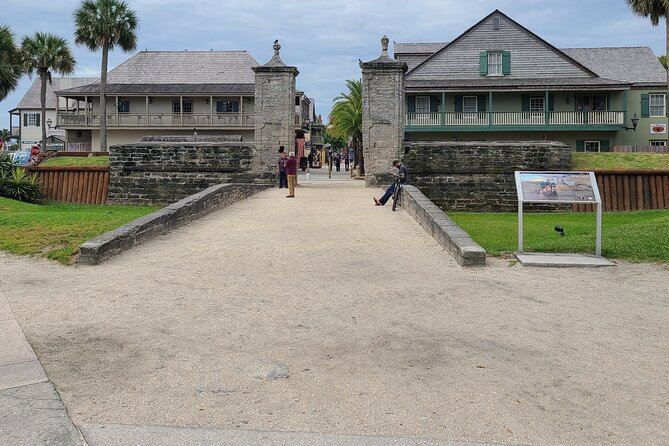
The final site is City Gate Spirits, tied to a story of the traditional entrance to St. Augustine dating back to 1762. The tour’s focus is on both construction and the brave effort that saved it from demolition.
This is a nice ending because it brings your walking route full circle. You started with burial history and civic buildings; now you end with a gateway idea—who entered the city, what changed at thresholds, and what it takes to protect historic structures in a living town.
This stop is brief, about five minutes, and it’s free. So it works as a last hit of context before you go wandering on your own with a clearer sense of where the edges of the city used to be.
Pacing, group size, and your guide’s Q&A style
This is designed as a casual walking tour, not a lecture you’re trapped inside. With a maximum group size of 15, it tends to feel more conversational. And the most common praise centers on the guide’s delivery—friendly, funny, and willing to answer questions instead of rushing past them.
One pattern shows up strongly: even when the tour is scheduled for around 1 hour 30 minutes, it can run well beyond that. In practical terms, treat it like a roughly 2-hour experience, especially if your group talks a lot or asks follow-up questions.
That’s a good thing if you enjoy learning in motion. It can be a small drawback if you have a tight timed commitment right after, like a museum ticket or a dinner reservation you can’t move.
Where to meet, what to bring, and how to plan your walk
You meet at the St. Augustine and St. Johns County Visitor Information Center at 10 S Castillo Dr. The tour ends back at the meeting point.
A mobile ticket is used, so make sure you can access it on your phone before you arrive. The tour is in English, and it’s near public transportation, which helps if you’re trying not to fight for parking.
Bring bottled water or plan to buy it nearby, since the tour asks you to do so and you will be walking close to two miles. Wear comfortable shoes. This is especially important because you’ll be stopping frequently, then moving again—good for sightseeing, harder on footwear if you picked the wrong pair.
Service animals are allowed, and the tour expects a moderate physical fitness level. If you have mobility limits, the frequent stop-start rhythm may be manageable, but it’s still a steady walk across historic streets.
Who should book this tour in St. Augustine
This is a great match if you want:
- A guided intro to the Historic District that connects multiple eras
- A small-group walk where questions are welcome
- A history lesson that includes the Gilded Age and Henry Flagler, not just colonial snapshots
It also fits well for couples and families who want an organized way to see major sites without spending half the day decoding directions. One of the strongest selling points is that the route is structured but not stiff.
You might think twice if you need a strict schedule right down to the minute, because the tour can run longer than advertised. Also consider whether walking nearly two miles is your idea of a good time.
Should you book the St. Augustine walking history tour?
If you’re planning your first (or second) visit to St. Augustine and you want a real framework for what you’re seeing, I’d book it. For $25, a small-group guide-led route through Tolomato Cemetery, Flagler College, Plaza de la Constitución, and the Castillo exterior is a smart way to get your bearings fast.
Just go in with the right expectations. Wear good shoes, bring water, and give yourself extra time after the tour. If you do that, you’ll come away with a clearer sense of why the city looks the way it does—and where the stories live in the streets.
FAQ
How long is the Walking History Tour of St. Augustine’s Historic District?
It’s listed at about 1 hour 30 minutes. Based on how the experience is delivered, it may run longer than that scheduled time.
What’s the walking distance?
The route covers nearly two miles.
Is the tour offered in English?
Yes, it’s offered in English.
What does the tour include at major stops like the Castillo?
At the Castillo de San Marcos National Monument, you get a licensed fort guide covering the history and construction, while touring the exterior of the structure.
Are admission tickets included for the stops?
Admission tickets are not included for certain stops like Tolomato Cemetery, Memorial Presbyterian Church, and the Castillo. Plaza de la Constitución and City Gate Spirits are listed as free.
Where does the tour start and end?
You start at the St. Augustine and St. Johns County Visitor Information Center, 10 S Castillo Dr, St. Augustine, FL 32084. The tour ends back at the same meeting point.
Is there a limit on group size?
Yes. The tour has a maximum of 15 travelers.
What should I bring?
Wear comfortable shoes and bring bottled water.
Can I get a refund if weather cancels the tour?
If it’s canceled due to poor weather, you’ll be offered a different date or a full refund.