REVIEW · VIENNA
Time Travel-Magic Vienna History Tour Ticket
Book on Viator →Operated by Time Travel Vienna · Bookable on Viator
Vienna history, in motion and sound. This 1-hour Time Travel Vienna show uses 5D cinema, VR, animatronics, and guided storytelling inside the historic vaults of the Michaelerkloster. You step through multiple time periods without leaving the building, from Roman Vienna to a WWII air-raid shelter.
I especially like the way the show mixes major eras with memorable set pieces. You get big-name composers like Mozart and Strauss in the experience, plus a spinning waltz ride that connects Vienna to its musical identity.
One consideration: it is built as an effects-first, family-friendly history lesson, so if you’re chasing total realism or deep detail, you may find the pace a bit quick for the darker chapters.
In This Review
- Key Things I’d Put on Your Short List
- Inside Michaelerkloster Vaults: Vienna’s Past Gets a Stage
- Price and What You Really Get for About $27.76
- Languages and Headsets: How You’ll Follow the Story
- Stop-by-Stop: Your One-Hour Time Travel Through Vienna
- Roman Vienna: The Camp at Vindobona
- Plague-Era Vienna: A Medieval City With Teeth
- Mozart and Strauss Moments: Vienna’s Musical Heritage
- The Spinning Waltz Car
- Habsburg Days and an Austria You Can Name
- WWII: Refuge in an Air-Raid Shelter and the Austria Is Free Line
- A Virtual Fiaker Ride: Vienna Landmarks From a New Angle
- 5D Cinema, VR, Animatronics, and Comfort Tips That Matter
- Who Should Book This Time Travel Vienna Show
- Should You Book Time Travel Vienna?
- FAQ
- How long is the Time Travel Vienna History Show?
- What languages are available for the tour?
- Do I need to bring anything to use the ticket?
- What is included in the ticket price?
- Is there hotel pickup or drop-off?
- Is the tour near public transportation?
- Are animals allowed?
- Can I cancel for a full refund?
Key Things I’d Put on Your Short List
- Michaelerkloster vault setting: a 400-year-old venue that makes the “time travel” feeling more convincing.
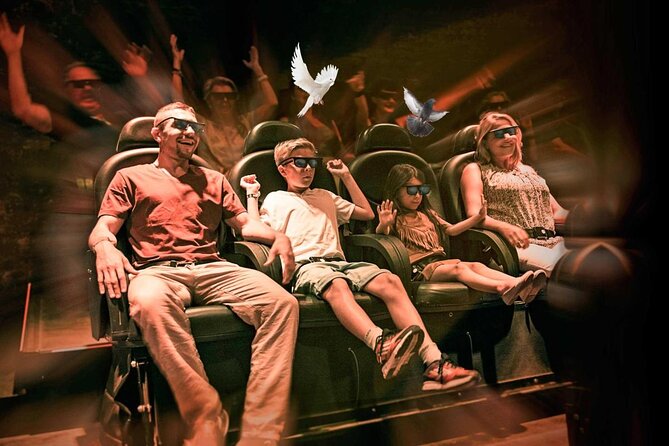
- 5D cinema + VR + animatronics in one hour, so you’re not waiting around for the good parts.
- Many languages via audio: English is offered, with full translation in 10 languages.
- Big Vienna eras in sequence: Roman camp, plague-era scenes, Habsburg courts, and WWII bombing context.
- Hands-on style experience: virtual fiaker ride and a spinning waltz car keep it active, not lecture-y.
Inside Michaelerkloster Vaults: Vienna’s Past Gets a Stage
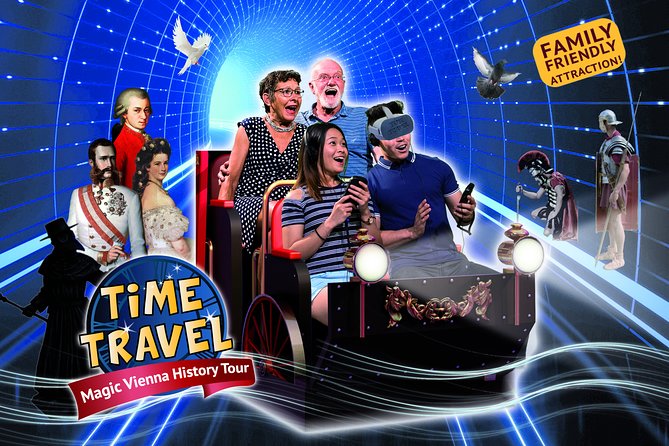
Time Travel Vienna is staged in the historic vaults of the Michaelerkloster, a setting that already feels old in the best way. Even before the high-tech moments, the space helps you buy into the idea that you’re moving through time rather than watching slides.
The show is designed like a guided walk-through with repeated “stop and react” moments. Instead of one long presentation, you get multiple rooms and transitions, which is great if you’d like your attention to stay engaged without constantly checking the clock.
You’ll also notice the format is straightforward: you follow the flow, use headsets when needed, and keep moving through scenes. That matters in Vienna, where many attractions are either long or scattered. Here, you can get a lot of variety in a single concentrated block.
You can also read our reviews of more tours and experiences in Vienna.

Price and What You Really Get for About $27.76
At about $27.76 per person for roughly 1 hour, this isn’t a “budget museum ticket.” It’s closer to buying admission to a multimedia production that uses specialty tech: 5D effects, VR headsets, animatronics, and themed rides.
Here’s the value logic that works for many visitors: you’re paying for structure and conversion. Instead of you piecing together Roman Vienna, the Habsburgs, and WWII on your own from separate sources, the show provides a curated timeline you can actually remember. It also saves you energy. One hour inside keeps you from losing time to transit and line hopping.
That said, it’s still a show. If you’re hoping for quiet, scholarly detail at your own pace, you might end up wanting something else right after. This is best approached as a fun orientation to Vienna’s big story, not the final word.
The show’s group limit is 32 travelers, and that tends to support a smoother run time. I like experiences where you can expect the crowd size not to explode, especially if VR and headset stations are involved.
Languages and Headsets: How You’ll Follow the Story
The experience is offered in English, and there’s also a way to listen in German with live commentary and translated audio through headphones. On top of that, audio guides are available in 10 languages (English, Spanish, Italian, French, Japanese, Chinese, Russian, Hungarian, Polish, and Czech).
This matters because Vienna history can shift gears fast. One minute you’re in Roman Vienna (Vindobona), then you’re in Habsburg-era spaces, and then you’re in a WWII air-raid shelter setting. Having translation support keeps you from missing key names and lines.
If you’re sensitive to language gaps, you’ll likely appreciate that you’re not locked into just one language option. You can choose how you want to follow along, and the show is built to support that.
Also worth noting: the experience provides audio guidance, not just written signage. That usually helps a lot in themed attractions where the visuals are doing most of the work.
Stop-by-Stop: Your One-Hour Time Travel Through Vienna
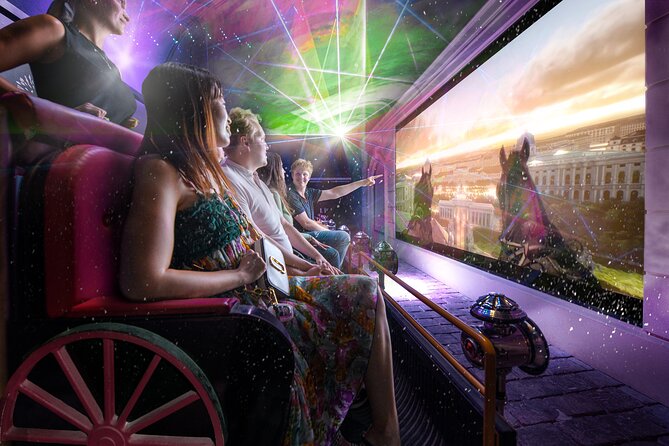
This show is built as a rapid sequence of worlds. Here’s what you should expect as you move through the experience.
Roman Vienna: The Camp at Vindobona
You start with a jump back to Roman Vienna, specifically the setting of Vindobona. This part is about getting you oriented to the idea that Vienna wasn’t always the imperial capital. You’re shown daily life and the Roman footprint in a way that aims to be felt through visuals and special effects.
The practical benefit for you: Roman Vienna is often a tough topic to grasp quickly from books alone. In a show like this, the timeline is simplified, which is helpful when you’re short on time.

Plague-Era Vienna: A Medieval City With Teeth
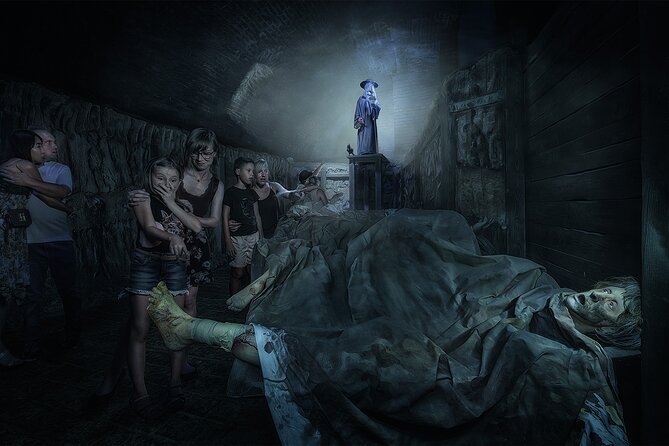
Next comes a plague-hit medieval city segment, including a plague pit scene. This is one of those moments where the show leans into atmosphere. If you don’t want dark topics, you’ll want to be ready for a heavier mood here than in the musical or royal sections.
The good news is that it’s framed for understanding, not shock value. The intent feels educational and story-driven, with the special effects doing the hard work of communicating fear, hardship, and historical context fast.
Mozart and Strauss Moments: Vienna’s Musical Heritage
You then meet famous composers Mozart and Strauss as part of the guided journey. That’s a smart choice for many people. Vienna’s music identity is real, but it can feel abstract when you’re outside the right stories. Here, the composers are part of the timeline, not just names on a poster.
If you love classical music, this section will likely feel like a “lightbulb moment.” If you don’t, you can still enjoy it as a character-driven way to understand why Vienna developed its cultural reputation.
The Spinning Waltz Car
A signature ride follows: a spinning waltz car that ties the experience to Vienna’s musical heritage. Expect motion and a playful tone here. It’s the kind of moment that keeps the show from feeling like a textbook with screens.
For parents, teens, and anyone who gets restless during “history talk,” this is the kind of break that helps people stay engaged.
Habsburg Days and an Austria You Can Name
You move through eras tied to the Habsburg emperors. This portion is meant to give you recognizable anchors: the court world, the long shadow of imperial power, and how Vienna functioned as a capital.
You’ll also get a stronger sense of why the Habsburg period matters for everything you’ll see later around the city. Even if you only remember a few key facts, those details can help you interpret the palaces, churches, and monuments you run into on your own.
WWII: Refuge in an Air-Raid Shelter and the Austria Is Free Line
One of the heavier segments is a WWII bombing raid context and an air-raid shelter scene. This is where the show tries to make the era personal through staging and immersive-style effects.
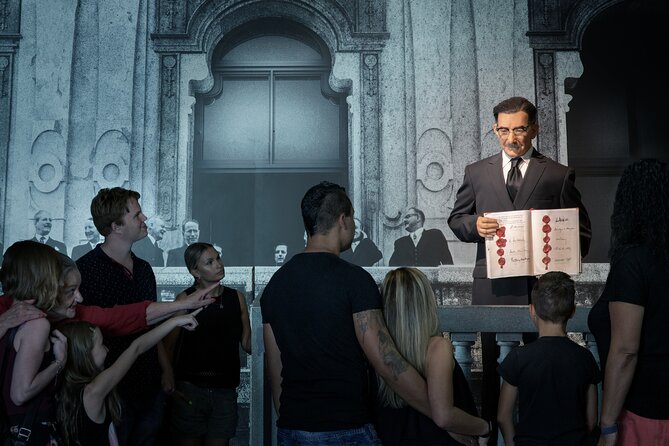
The show includes the famous line by Leopold Figl: Austria is free. Even if you already know that moment, hearing it in a themed historical context can stick better than reading it quickly in a summary.
Just manage your expectations: it’s one-hour and effects-driven, so it won’t replace a proper WWII museum visit if that’s your main goal. It can, however, give you a helpful emotional and historical starting point.
A Virtual Fiaker Ride: Vienna Landmarks From a New Angle
After the darker stretch, you shift into a more upbeat view of the city via a virtual fiaker ride. Fiakers are the classic horse-drawn carriage image of Vienna, so using that concept is clever. You get a sense of where the major landmarks fit into the broader city story.
This section is especially useful if you’re only in Vienna for a short time. It helps you build mental geography fast, so later, when you’re outside, you can connect the dots without staring at a map every five minutes.
5D Cinema, VR, Animatronics, and Comfort Tips That Matter
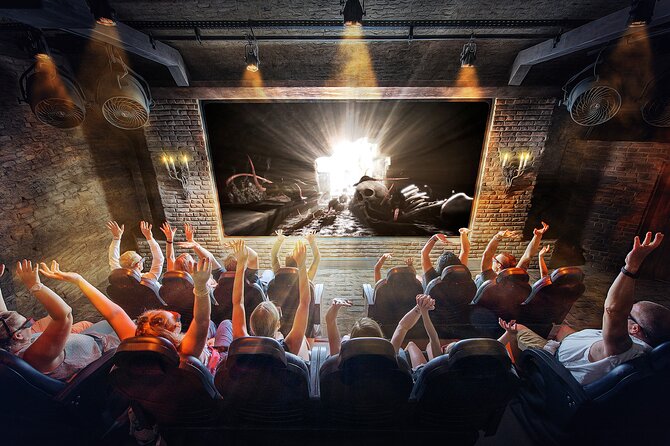
The tech is the engine of this experience. You’ll encounter multiple forms of media and staging: 5D cinema, VR, animatronics, and visuals designed to make the scenes feel immediate rather than narrated from a distance.
A few practical things you’ll want to keep in mind:
- Time and attention: it moves. You’ll get scenes in quick succession, so plan to arrive a little early and settle without stress.
- VR fit: VR usually means a headset moment where you’re not doing much except watching. If you’re claustrophobic or uncomfortable with headgear, you might want to consider whether this style works for you.
- Your group mood: this is a show where people are meant to listen and watch. If your group has lots of energy (especially kids), that can affect how much you enjoy the narration. The experience is interactive, but it still depends on a calm listening environment.
If you want a “break from the sights” that still teaches you something, the mix of tech is exactly what you’re paying for.
Who Should Book This Time Travel Vienna Show
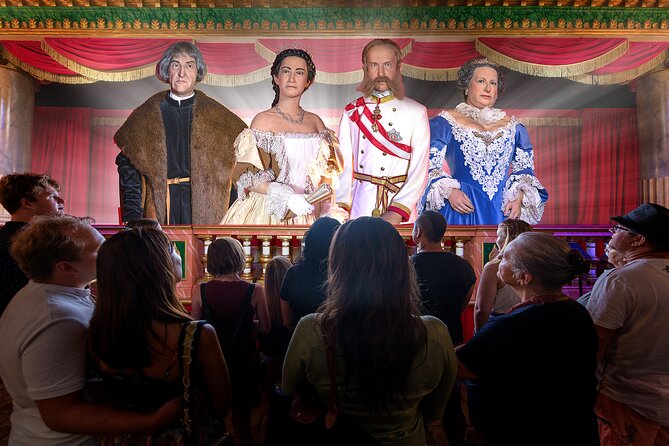
This is a strong choice if you want a compact, indoor, multimedia introduction to Vienna’s history. It’s also excellent when you’re traveling with kids or teens who might not sit through a traditional museum-style audio tour.
You’ll probably be happiest with this if:
- you want to connect Vienna landmarks to larger historical themes
- you like interactive experiences more than lecture formats
- you value multilingual audio support and easy navigation inside a single venue
- you want an hour-long plan that doesn’t require planning routes across the city
It might be less satisfying if:
- you’re hoping for deep historical detail in a serious, realistic way
- you want WWII coverage to be a central, extended focus
- you prefer quiet viewing without lots of media pacing
The overall feel is educational but light on heavy academic weight. That’s a feature for many people and a limitation for others.
Should You Book Time Travel Vienna?
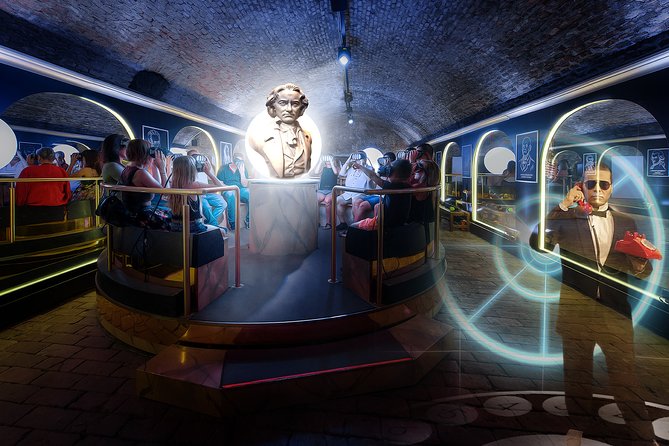
If you’re short on time in Vienna and want a fun, guided overview that explains how Roman, Habsburg, musical, and WWII-era stories fit together, I’d say this is a smart use of your hours. The 5D cinema, VR, and the themed rides like the waltz car and virtual fiaker are the kind of moments that make the history stick.
Book it if you want an indoor plan that covers major eras in one go and keeps the energy up. Consider skipping or pairing it with a more detailed museum visit if you’re traveling for deep, serious history and you don’t enjoy effects-heavy presentations.
In short: it’s a practical “Vienna basics in one hour” ticket, wrapped in tech and storytelling, in a real historic setting.
FAQ
How long is the Time Travel Vienna History Show?
It lasts about 1 hour.
What languages are available for the tour?
The tour is offered in English, and audio guides are available in 10 languages.
Do I need to bring anything to use the ticket?
Your ticket is available as a mobile ticket.
What is included in the ticket price?
Admission to the Time Travel: The Vienna History Show is included.
Is there hotel pickup or drop-off?
No, hotel pickup and drop-off are not included.
Is the tour near public transportation?
Yes, it’s near public transportation.
Are animals allowed?
No, bringing animals is not allowed at Time Travel.
Can I cancel for a full refund?
Yes. You can cancel up to 24 hours in advance for a full refund.