REVIEW · KANAZAWA
World Heritage Shirakawa-go Perfect Guided Tour from Kanazawa
Book on Viator →Operated by Japan Panoramic Tours · Bookable on Viator
Shirakawa-go feels different at sunrise. This early-morning tour from Kanazawa sends you to UNESCO-listed gassho-style houses before tour buses multiply, then gives you context on the ride and time to wander on your own. I like that it mixes guided storytelling with the freedom to roam at your pace.
I love two things most. First, the English-speaking guide (with multilingual audio support) helps you understand what you’re seeing beyond postcard photos. Second, the air-conditioned coach comes with onboard Wi‑Fi, so the journey feels easy instead of exhausting.
The main drawback is simple: it’s a half-day structure. You get about 2 hours in Shirakawa-go, plus short stops for viewpoints, so if you want a slow meal, long museum-style visits, or deep hiking, you’ll need extra time after the tour.
In This Review
- Key highlights at a glance
- Why a 7:50am start makes Shirakawa-go feel magical
- Getting there from Kanazawa: comfort on the coach matters
- Kanazawa Station to Shirakawa-go: what the guidance does for you
- Inside Shirakawa-go: 2 hours to explore gassho-style houses your way
- Ogimachi Castle Observation Deck: quick views that help you orient
- Kenrokuen Garden finish: turn the tour into a smooth Kanazawa day
- Price and value: is $81.63 worth it?
- Who this morning Shirakawa-go tour fits best
- Practical tips so your morning goes smoothly
- Should you book this tour?
- FAQ
- What time does the tour start?
- How long is the tour?
- Where does the tour start and finish?
- Is admission included for Shirakawa-go and the observation deck?
- Is lunch included?
- What’s included in the tour price?
Key highlights at a glance
- A 7:50am departure to reach Shirakawa-go before the biggest crowds
- English-speaking guide + multilingual audio guidance for clear context
- Air-conditioned coach with onboard Wi‑Fi for a calmer ride up the mountain road
- About 2 hours of free time in the gassho-style village to explore your way
- Quick viewpoint stop at Ogimachi Castle Observation Deck for wide views
- Finish at Kenrokuen Garden for an easy add-on day in Kanazawa
Why a 7:50am start makes Shirakawa-go feel magical
Shirakawa-go gets crowded. That’s not news. The smart move is to arrive early, when the village streets are quieter and you can actually take in details. This tour starts at 7:50am from Kanazawa Station’s West Plaza, which means you’re on the road while other plans are still waking up.
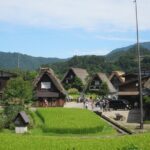
You’ll reach the village bright and early with time to look, photograph, and settle into the atmosphere before it turns into a conveyor belt of checkmarks. The best part of going first is not just crowd avoidance. It’s that you can notice what makes the gassho houses work: their steep thatched roofs, the compact street layout, and how the buildings sit in the mountain valley.
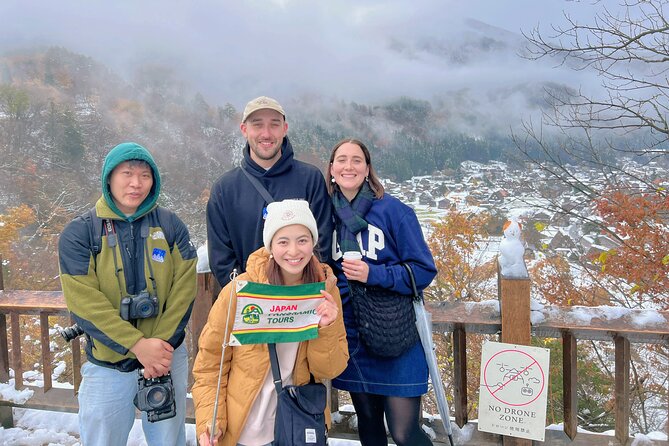
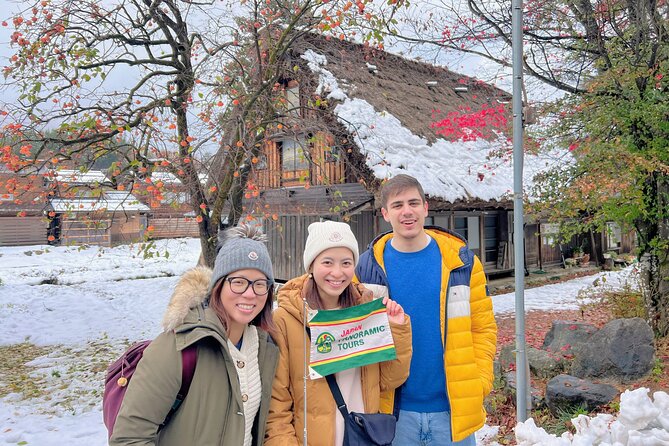
And yes, timing also helps if weather adds drama. In past departures, people have specifically mentioned snowy mornings, which can make the village feel almost unreal. Even when it’s clear, morning light tends to make textures pop—wood grain, roof lines, and small street scenes you might otherwise miss.
You can also read our reviews of more tours and experiences in Kanazawa.
Getting there from Kanazawa: comfort on the coach matters
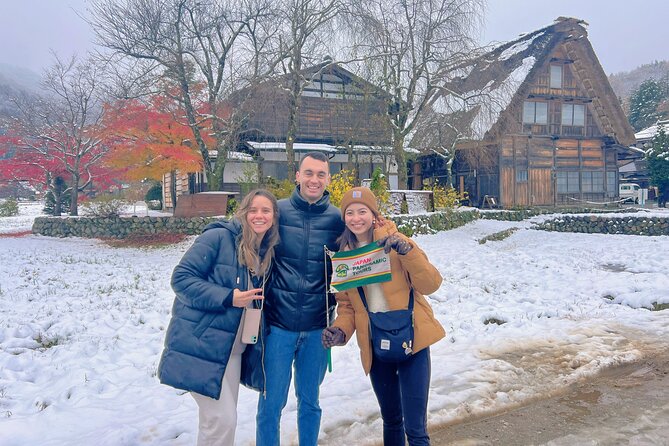
The trip is short enough to feel like a day trip, but long enough that comfort affects your whole experience. This tour uses an air-conditioned vehicle with onboard Wi‑Fi, so you’re not sweltering or stuck completely offline.
What I also appreciate is the way the ride is used. You get multilingual audio guidance and live guiding in English (and Japanese), so you’re not just transported—you’re set up to understand what you’ll see. That matters in Shirakawa-go, because it’s easy to treat it like a scenery backdrop. The guide helps you connect the look of the houses to why they exist in a snowy mountain region.
Group size stays reasonable too. The maximum is 42 travelers, so you should be able to hear explanations and still move around when you reach the village.
Kanazawa Station to Shirakawa-go: what the guidance does for you
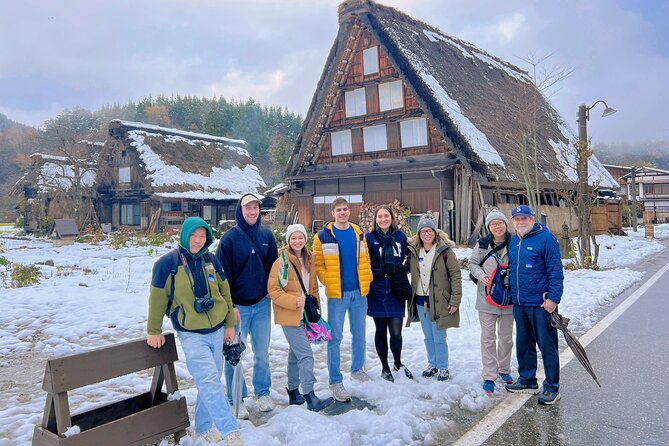
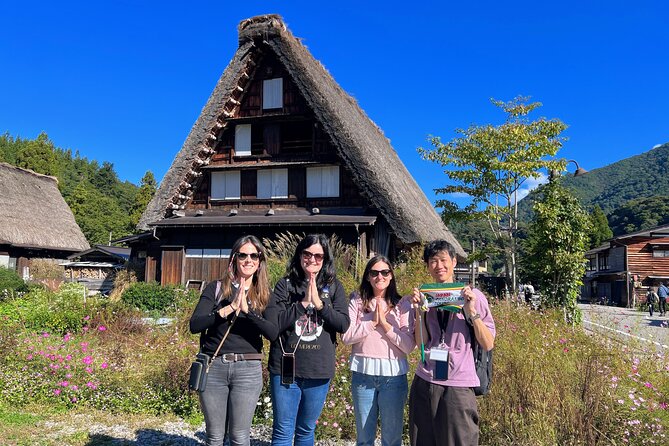
At the start, you meet at Kanazawa Station West Plaza (short-term car park). You’ll then transfer up to the historic mountain settlement of Shirakawa-go, known for its gassho-style houses—the ones shaped like hands joined in prayer.
The value here is the “mental set” you get before you walk into the village. Instead of wandering and hoping things make sense, you arrive with a map of ideas: what’s important, what to look for, and how to spot features that reflect local life and climate challenges.
This is also where the guide names and energy show up. In multiple departures, guides such as Aiko, Yasushi, and Aito have been highlighted for being engaging and helpful, with lots of context and practical suggestions during the bus ride. Even if your guide is someone else, you’re likely to feel the same approach: explain first, then let you explore.
Inside Shirakawa-go: 2 hours to explore gassho-style houses your way
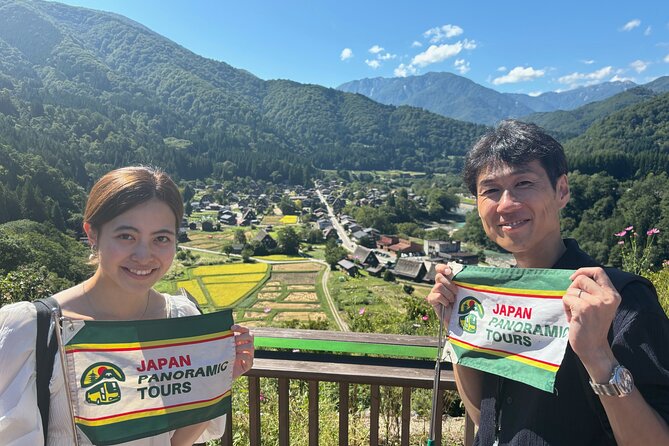
Once you arrive, you get about 2 hours in the Historic Villages of Shirakawa-go area. This is the heart of the tour, and it’s designed for balance: enough structure to orient you, enough free time to move at your own speed.
Here’s how I’d use your time:
- Start with the main photo angles, but don’t rush past side lanes.
- Walk slowly enough to notice rooflines, not just the overall shape of the houses.
- Pause to take in street scenes—small details make the village feel lived-in.
The guide will point you toward what’s worth seeing, but you’re still in charge. That’s a big deal in a place like Shirakawa-go, where crowds can change how you move from moment to moment.
Food is also part of the experience. You can pick up local sweets and snacks on your own, and some options get mentioned often, like ice cream made with sake and Hida beef items (both at your own expense). If you’re the type who likes to eat while sightseeing, this tour gives you a good opening without forcing a sit-down lunch.
One more helpful idea from real experiences: people have enjoyed stepping into at least one of the open houses when available, such as the Kanda house. Since this depends on what’s open that day, treat it as a possible bonus. If a house interior is accessible, it’s one of the fastest ways to turn the “pretty roofs” into a fuller understanding of how life worked there.
Ogimachi Castle Observation Deck: quick views that help you orient
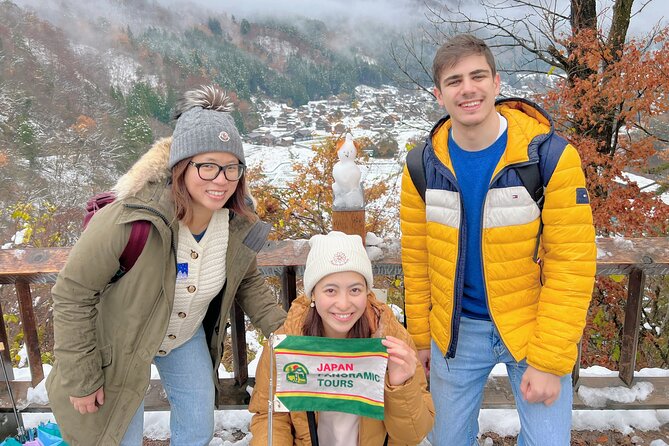
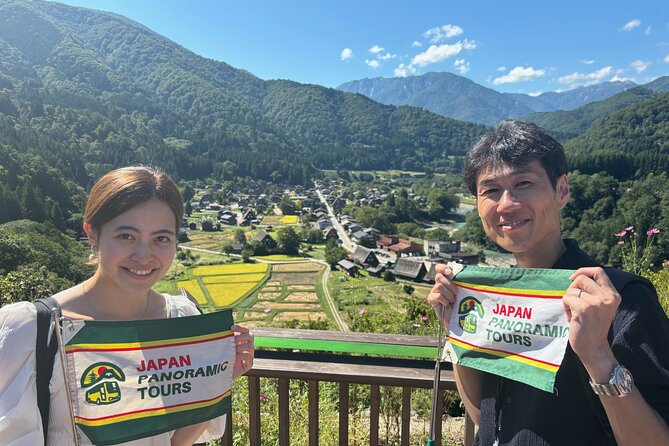
You’ll also stop at the Ogimachi Castle Observation Deck for about 20 minutes. This is short, but it plays an important role. From up high, the village layout makes more sense—where the main settlement sits, how streets connect, and how the roof clusters line up across the valley.
The value of a viewpoint stop is that it changes the way you look when you’re back down on the streets. After you’ve seen the village from above, you’ll recognize patterns you couldn’t fully grasp just from ground level.
If you’re into photos, this is often where your “wide shot” comes from. If you’re less into photography, it’s still worth it for orientation and breathing room.
Kenrokuen Garden finish: turn the tour into a smooth Kanazawa day
The tour ends at Kenrokuen Garden. The finish is short—about 5 minutes at the listed stop time—but it’s a smart ending point because Kenrokuen is one of Kanazawa’s top places to keep exploring.
The important detail: Kenrokuen Garden admission is not included. So if you want to actually go inside and stroll, plan to pay the entry fee separately. Still, ending here is convenient. You’re not sent to a random roadside drop-off and left to figure out your next move.
Also note a calendar quirk: on certain dates (October 12 and 16, and November 1, 3, and 13), the tour ends at the Higashi Chaya District instead. If you’d rather finish by returning to a historic tea-house neighborhood vibe, those dates can work nicely.
Price and value: is $81.63 worth it?
At $81.63 per person, this is not the cheapest way to get to Shirakawa-go—but it’s also not trying to be a budget bus with zero help. You’re paying for three things that add real value: guided context, comfortable transportation, and time management.
What you get includes:
- A professional tour guide in English and Japanese
- An air-conditioned coach with onboard Wi‑Fi
- Multilingual audio guidance
- Entry marked as free for the main Shirakawa-go visit and the stop to the observation deck
- A format that arrives early and then gives you free time
What you don’t get includes hotel pickup/drop-off and lunch, so you’ll want to grab snacks or plan a meal on your own.
For me, the value question comes down to this: do you want to handle transportation headaches and decide your own route, or do you want to show up early with someone explaining what you’re seeing and letting you explore once you’re there? If you’re short on time, the guided early start often beats “DIY stress,” even if you could theoretically find cheaper transport.
And that free time matters. A guided tour that doesn’t leave you room to wander can feel rushed. This one gives you a meaningful window to move, eat, and photograph without a constant “follow me” pressure.
Who this morning Shirakawa-go tour fits best
This tour suits you if:
- You want UNESCO Shirakawa-go with an English-speaking guide rather than pure self-guided wandering
- You’re aiming for an easy day trip from Kanazawa with comfort and Wi‑Fi
- You like having structure for orientation, then time to explore on your own
- You can handle light walking and a mountain village setting (the tour asks for moderate physical fitness)
You might choose something else if:
- You need a slower schedule with long meals or extended indoor visits
- You’re hoping to spend most of the day hiking beyond the village
- You want a tour that includes lunch or hotel pickup (those are not included here)
It’s also a good match for first-timers in Japan who want a smooth introduction to rural heritage without jumping between multiple tickets and transfers.
Practical tips so your morning goes smoothly
A few small choices can make a big difference in a mountain village.
- Wear comfortable shoes. Even if the stops are short, you’ll be walking around uneven areas and climbing for viewpoint angles.
- Bring a light layer. Morning temperatures can feel cooler than you expect, especially with mountain air.
- If you care about photos, plan to take some early shots before the busiest lanes thicken later.
- Budget for snacks. Expect to pay for local food and drinks on your own, including items like sweet treats and possible Hida beef snacks.
- If you’re finishing at Kenrokuen, decide ahead of time if you’ll buy garden admission or if you just want a quick look from outside.
One small logistics note: the tour uses a mobile ticket. Have your phone ready and your ticket accessible.
Should you book this tour?
Book it if you want the smart timing—early arrival before the crowds—and you’d rather spend your energy exploring than figuring out transit. The combination of a guided introduction, a comfortable coach ride with Wi‑Fi, and about 2 hours of free time in Shirakawa-go makes it a strong use of a half day from Kanazawa.
Skip it if you’re looking for a long, unhurried day with lunch included and lots of extra stops. This is a tight, efficient morning experience, and that can be a feature or a bug depending on your style.
If your goal is to see the iconic gassho houses with context and then wander at your own pace, this tour is an easy yes.
FAQ
What time does the tour start?
The start time is 7:50am at Kanazawa Station West Plaza.
How long is the tour?
The tour duration is about 5 hours.
Where does the tour start and finish?
It starts at Kanazawa Station West Plaza and finishes at Kenrokuen Garden. On certain dates, it finishes at the Higashi Chaya District instead.
Is admission included for Shirakawa-go and the observation deck?
The Shirakawa-go historic village stop and the Ogimachi Castle Observation Deck stop list admission tickets as free.
Is lunch included?
No, lunch is not included.
What’s included in the tour price?
The tour includes a professional guide (English/Japanese), an air-conditioned vehicle, Wi‑Fi on the bus, and multilingual audio guidance. Tickets for Shirakawa-go are marked as free, but Kenrokuen Garden admission is not included.