REVIEW · UDAIPUR
Heritage & Cultural Walk of Udaipur -Guided Walking Tour
Book on GetYourGuide →Operated by Yo Tours · Bookable on GetYourGuide
Udaipur’s clocks tick through royal stories. This 2-hour walk turns famous landmarks into street-level scenes, with storytelling history and chai and local food stops built into the flow.
I also like how guide Yash can explain what you’re looking at while keeping the tone light, even with mild, no-boring small talk about royals past and present. The main drawback to plan for: it’s on foot, with no hotel pickup, so wear comfortable clothes and make it easy to start near the old city.
In This Review
- Key highlights you should care about
- The sweet spot: a 2-hour heritage walk that keeps moving
- Clock Tower: the city’s first public timepiece with a Mewar twist
- Old market lanes: narrow, crooked, and full of meaning
- Bagore Ki Haveli: an 18th-century mansion seen through its original power
- Lake Pichola waterfront: Gangori Ghat and Lal Ghat for classic Udaipur views
- City Palace: balconies and towers that dominate the shoreline
- Tripolia Gate and Jagat Shiromani: the 1711 three-arch story
- The guide factor: why Yash’s storytelling matters
- What you actually get for $14: value comes from focus and flow
- Timing, pacing, and what to bring for comfortable walking
- Who should book this walk (and who should choose differently)
- Should you book this Heritage & Cultural Walk of Udaipur?
- FAQ
- How long is the Heritage & Cultural Walk of Udaipur?
- What does the tour cost?
- Is this a private tour?
- What languages is the guide able to speak?
- What’s included in the tour?
- Do I need hotel pickup or drop-off?
- Is a water bottle provided?
- What stops are covered during the walk?
- What is the cancellation policy?
Key highlights you should care about
- Clock Tower stop with a royal connection: the first public clock of the city, built as a souvenir to the royal family of Mewar
- Old market lane time: narrow, crooked streets and heritage buildings that show how the city really works
- Bagore Ki Haveli + Jagdish Temple focus: look at 18th-century design and ornate carvings up close
- Two Lake Pichola waterfronts: Gangori Ghat and Lal Ghat for classic views by the water
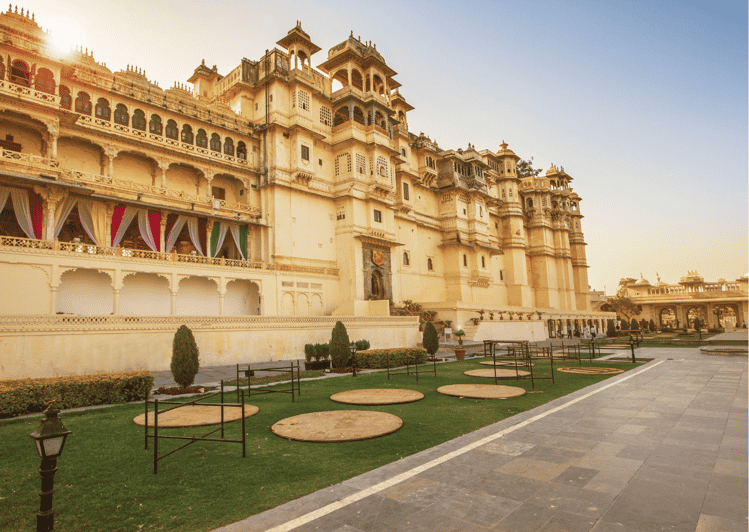
- City Palace under the balconies and towers: a palace complex that visually crowds the shoreline
- Tripolia Gate and Jagat Shiromani details: the 1711 three-arched gate plus marble torana and related structures
The sweet spot: a 2-hour heritage walk that keeps moving
Two hours sounds short, but Udaipur rewards pacing. This tour is designed as an easy-to-follow circuit through the old city, so you’re not stuck for long in any one spot, and you still hit the places that make Udaipur feel unmistakably itself.
I like the format because it doesn’t pretend monuments live in isolation. You connect City Palace, temples, and ghats back to the lanes and everyday life between them, which is how the city makes sense.
One more plus: it’s a private group with a live guide who speaks English and Hindi. You can ask questions, and the guide can steer the pace toward what you care about, whether that’s architecture, temple details, or just getting your bearings fast.
You can also read our reviews of more tours and experiences in Udaipur.



Clock Tower: the city’s first public timepiece with a Mewar twist
The walk starts at the Clock Tower, described as the first public clock of Udaipur. What makes it more than a photo stop is the story behind it: it was built as a souvenir to the royal family of Mewar.
That detail matters because it reframes timekeeping as a political and cultural move, not just a convenience. When you see the tower early, you get a feel for how the city’s royal past shows up even in functional public structures.
From there, you’re set up for the rest of the tour: Udaipur isn’t only about grand palaces. It’s also about small civic markers and the way rulers used the city as their stage.
Old market lanes: narrow, crooked, and full of meaning
Next comes a stretch through the old market area—narrow, crooked, timeless streets with heritage buildings around you. This is the part many first-time visitors rush past, because it’s not one big monument. But it’s where you learn what to notice.
As the lanes tighten, you’ll likely spot the scale shift in Udaipur. Big structures loom above you, while daily life happens at your shoulder level. That contrast is one of the best ways to understand why Udaipur’s architecture feels dramatic: the city was built to impress, but it still needs to function day to day.
You’ll also get access to places you might miss wandering solo. The tour promises access to hidden lanes and places, which usually means quieter side streets, small heritage corners, and view angles that aren’t obvious from main roads.
Practical tip: keep your phone handy for quick reference shots, but also keep your eyes up. With alleys this tight, it’s easy to only film what’s in front of you and miss the upper details.
Bagore Ki Haveli: an 18th-century mansion seen through its original power
A major stop is Bagore Ki Haveli, linked here to a Mewar prime minister. Even if you don’t know every name, the idea is clear: you’re looking at a residence connected to political influence, not just a pretty building.
What makes this stop worthwhile is the way the guide frames the architecture as a social language. Haveli design often signals status through space and ornament—balconies, carved sections, and the way rooms relate to the outdoors.
You also get an adjacent temple stop: Jagdish temple, highlighted for its beautiful ornate carvings. The pairing works well. One building teaches you how elites lived and presented themselves. The temple shows you how devotion and artistry shaped the city’s visual identity.
If you like architecture details, this is where the tour earns its keep. You’re not just walking past. You’re learning what to look for.
Lake Pichola waterfront: Gangori Ghat and Lal Ghat for classic Udaipur views
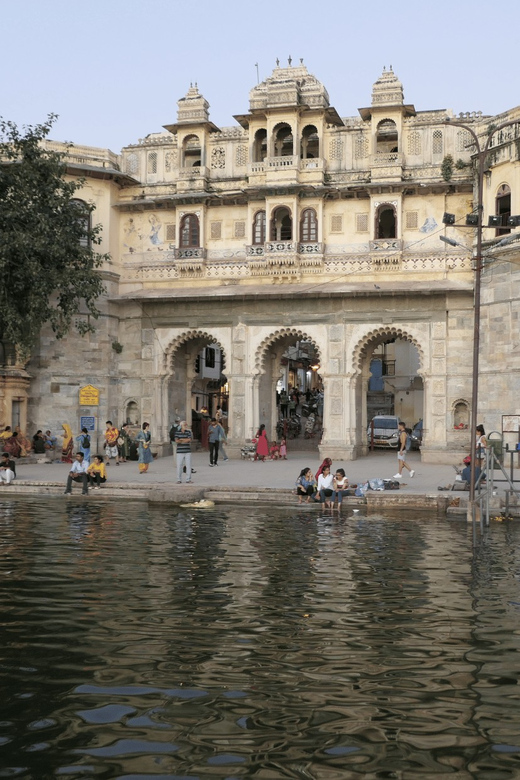
Then the tour turns toward water: Gangori Ghat and Lal Ghat, both well-known waterfronts on Lake Pichola. This is where Udaipur’s geometry shows up—temple and palace lines reflected against calm water is the kind of visual that sticks with you.
Waterfront time also changes the pace. After narrow lanes and carving-heavy stops, you get breathing room. The views help you mentally map the rest of the route, especially when you later face the City Palace from a perspective that finally puts its scale into context.
Even if you’ve seen Udaipur photos before, these ghats are often where reality feels different. The skyline seems closer. The lake feels like a real working boundary between city and water, not just a scenic postcard.



City Palace: balconies and towers that dominate the shoreline
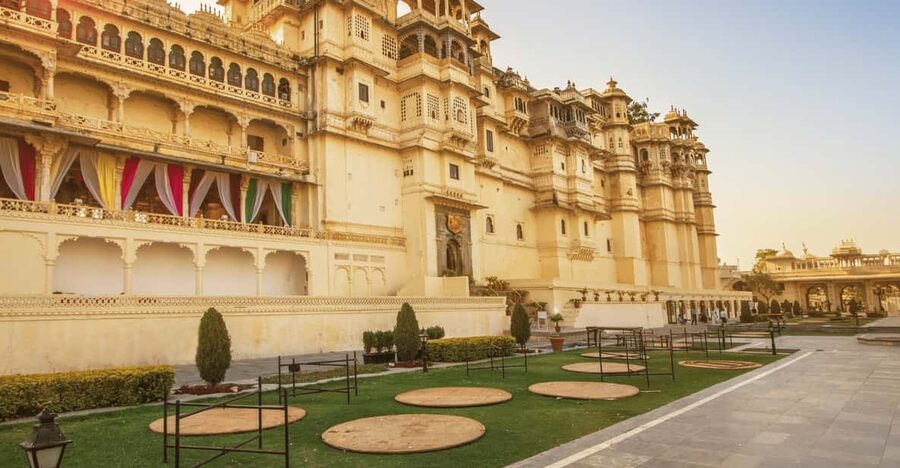
Next up is the City Palace of Udaipur, described as overwhelming in the best way—balconies, towers, cupolas, all towering over the lake. This is the “wow” stop, but the guide’s job is to keep it from becoming only a single big stare.
Why the City Palace matters on a walking tour is simple: on foot, you see transitions. From one angle, you understand the palace as a layered complex. From another, you understand it as a backdrop that shapes the lakefront experience.
Also, City Palace doesn’t sit alone. On this tour, it comes after the ghats, which means you’re viewing it with the lake in your mental frame. That makes the palace feel less like an isolated ticketed attraction and more like part of a wider city system.
If you want photos, this is where you’ll naturally stand longer. Just remember: Udaipur’s streets can be steep and uneven in places, so stay mindful if you’re wearing sandals or shoes that slip.
Tripolia Gate and Jagat Shiromani: the 1711 three-arch story
The tour finishes with the Tripolia Gate, described as a three-arched gate built in 1711. That 1711 detail gives the stop a clear timeline anchor. It’s not just a decorative entrance; it’s a historical marker showing how Udaipur’s built form evolved over time.
You also visit the Jagat Shiromani Temple, noted for an exquisitely carved marble torana. The stop also includes the Garuda chhatri and a mandapa. When a guide points out these specific components, the whole gate area starts to feel like a designed religious and ceremonial landscape, not simply an old archway.
This is the kind of stop that rewards attention to small features. Marble carvings and architectural elements can look busy at first, so the guide’s role is crucial—helping you slow down just enough to see the craftsmanship.
And because this is at the end of a walking circuit, it also feels satisfying. You’ve worked your way from timekeeping in public space, through daily city lanes, across haveli and temple art, to lakefront viewpoints, and now back into formal city entry symbolism.
The guide factor: why Yash’s storytelling matters
This tour isn’t only about hitting landmarks. It’s built around the guide’s ability to connect facts to atmosphere. The tour describes a blend of historical explanation and anecdote, including mildly scurrilous talk about past and present celebrities and defunct royals—keep it playful, not disrespectful.
The best part is how the guide uses humor to make the past feel present. Old structures can turn into a blur of dates and labels if your guide reads a script. Here, the guide seems to guide you visually and verbally at the same time.
Yash, in particular, stands out in the tour style: energetic, enthusiastic, and able to explain history and culture in a way that feels fun instead of formal. I also like that the experience is oriented toward practical understanding—learning the city and getting your bearings, not just collecting stops.
Another real-world win is the food angle. One of the tour’s perks is getting introduced to local food specialties and different chai spots. That’s valuable because it helps you plan what to eat after the tour without guessing or paying tourist prices blindly.
What you actually get for $14: value comes from focus and flow
At $14 per person for a 2-hour walk, the value is mainly in the concentration. You’re guided to multiple major points—Clock Tower, Bagore Ki Haveli area, Jagdish temple, Lake Pichola ghats, City Palace, Tripolia Gate region—without spending hours figuring out routes on your own.
Where this price feels fair is the guide-driven context. Without a storyteller, you might stand in front of a palace façade and take photos, but miss the why behind the design. With a good guide, you turn a short time into a clearer sense of how Udaipur fits together.
Also, it’s a private group, which typically makes the experience more responsive. Even for couples or small groups, the guide can adjust questions and pacing. That usually improves the quality more than a lower cost would.
One careful note: the tour price is low, so don’t assume it includes everything. The essentials are covered (guide, tips, access to lanes and places, conversations), but you should bring the basics yourself—especially if you’re sensitive to heat or thirst.
Timing, pacing, and what to bring for comfortable walking
This is a walking tour in the old city fabric, and that means you should plan for uneven surfaces and tight turns. The tour calls for comfortable clothes, which is sensible advice more than marketing.
Here’s what you should do before you go:
- Wear shoes you trust on stones and slopes.
- Bring a light layer or sun protection if the weather is bright.
- Bring your own water bottle since it’s not included.
If you can, start earlier in the day. Morning walking tends to feel easier in old-city streets, and you’ll appreciate the ghats and palace views with less crowding around your vantage points.
Duration is 2 hours, so you won’t be exhausted by the end—assuming you’re moving at a steady walking pace and taking your stops seriously.
Who should book this walk (and who should choose differently)
I think this tour suits you if you want the Udaipur overview without wasting time. It’s ideal for first-timers who want to understand what to look for next, and for repeat visitors who want a guide’s eye for details and side lanes.
It’s also a good choice if you enjoy story-driven travel. The guide’s mix of history, culture, and light scandalous anecdotes works well if you like your travel with some personality.
You might prefer a different style of tour if you’re looking for a slow, museum-like pace or if you want a lot of free time sitting down for long rests. This walk moves, and it’s structured around specific stops.
Should you book this Heritage & Cultural Walk of Udaipur?
Yes, if your goal is to get a guided “sense of the city” in a short time. The stop selection hits Udaipur’s main storytelling engines—royal timekeeping at the Clock Tower, elite design at Bagore Ki Haveli, temple carving at Jagdish, Lake Pichola ghats, and City Palace + Tripolia Gate for the grand architecture payoff.
I’d especially lean toward booking if you like when a guide helps you connect monuments to everyday life. When the guide also points you toward chai spots and local food specialties, that turns the tour from a photo circuit into something you can keep using after you finish walking.
If you’re ready to swap map stress for a guided route with off-the-main-lane access, this one is a smart, low-cost way to see Udaipur with more clarity.
FAQ
How long is the Heritage & Cultural Walk of Udaipur?
The tour lasts 2 hours.
What does the tour cost?
The price is $14 per person.
Is this a private tour?
Yes, it’s listed as a private group.
What languages is the guide able to speak?
The live guide speaks English and Hindi.
What’s included in the tour?
It includes a trained and friendly story teller/guide (English & Hindi), great local tips and recommendations, access to hidden lanes and places, and conversation-led storytelling.
Do I need hotel pickup or drop-off?
No. Hotel pickup and drop-off are not included.
Is a water bottle provided?
No. A water bottle is not included.
What stops are covered during the walk?
You’ll cover the Clock Tower, old market streets, Bagore Ki Haveli and Jagdish temple, Gangori Ghat and Lal Ghat on Lake Pichola, Udaipur City Palace, and Tripolia Gate with related temple features.
What is the cancellation policy?
Free cancellation is available up to 24 hours in advance for a full refund.